

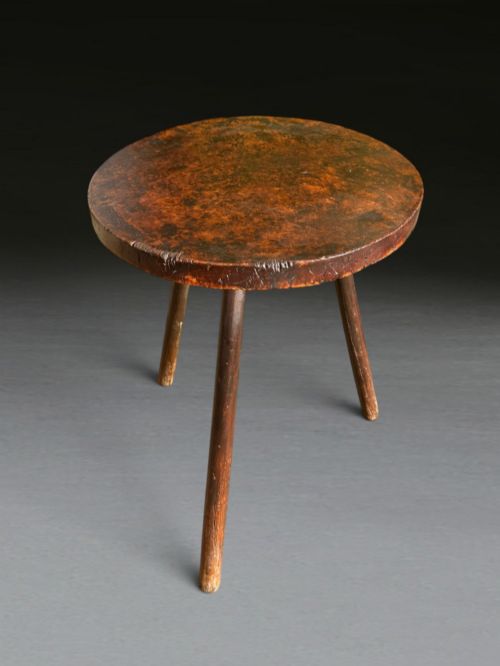
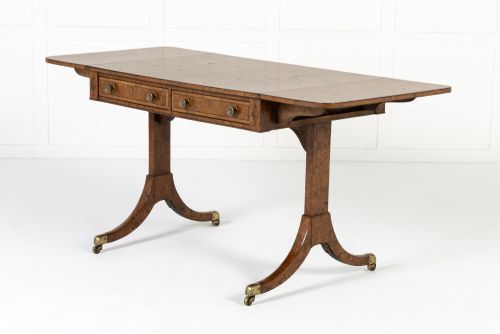
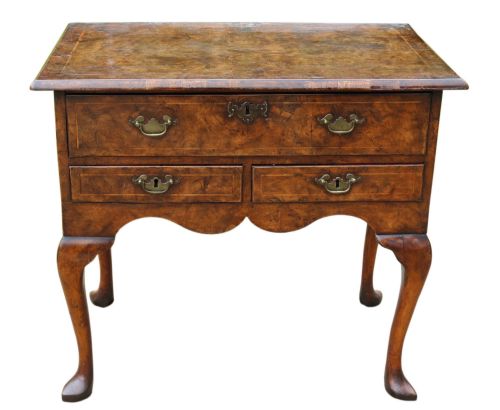


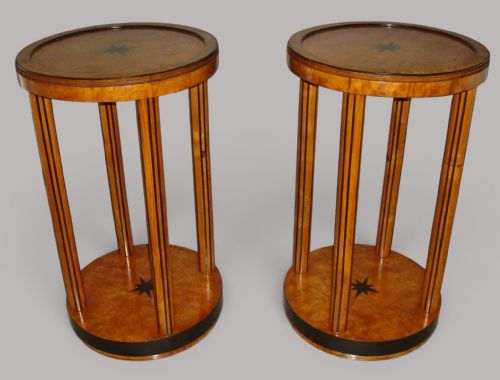


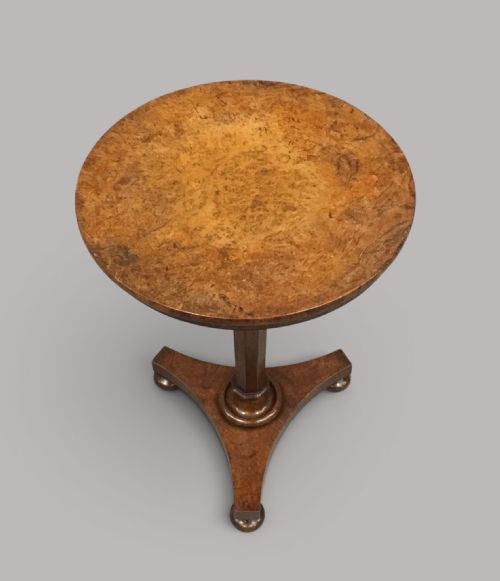
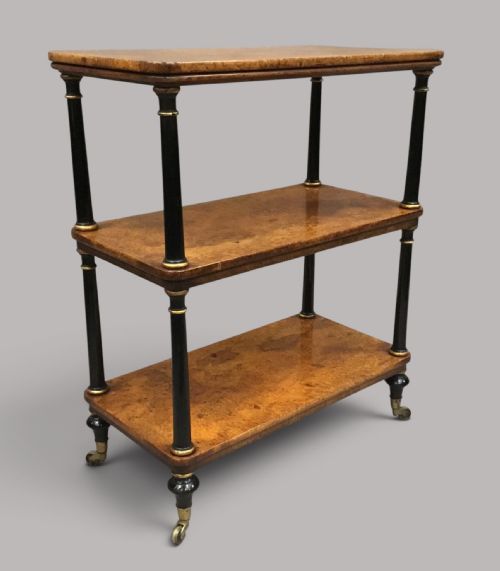
Burr Elm Side Table
A burr elm side table brings swirling, highly figured grain and rich warmth into a room.
Burr Elm Side Table
A burr elm side table is a compact surface defined by the swirling, knotted growth patterns of the timber. These tables appear in forms such as occasional tables, lamp tables, coffee tables, and compact writing desks.
The pieces on this page span the Regency period, the nineteenth century, and the early twentieth century, including the 1920s and 1930s. Regional variations range from French provincial and Scandinavian country pieces to Biedermeier revival and Art Deco designs.
Buyers most frequently encounter nineteenth-century examples and compact 1920s or 1930s forms such as lamp tables and octagonal side tables. These smaller tables suit modern interiors while retaining traditional character.
How they were made
Cabinetmakers constructed these tables using solid elm or wood frames applied with burr elm veneer. The distinctively figured grain comes from the excrescences or burls on the elm tree, which produce complex, swirling patterns when sliced.
Selected pieces incorporate contrasting materials alongside the timber, such as ebony details, brass mounts, gilt bronze, and marble tops. These additions highlight the natural golden-brown tones of the burr wood.
Burr Elm Side Table Retail Price Guide 2026
Typical asking prices for burr elm side table among the pieces listed under this phrase on Sellingantiques today, from the lower quarter to the upper quarter. They describe what is for sale here now, not the wider market.
Elm trees grow burls as a reaction to stress or injury, turning nature's distress into swirling timber masterpieces.
What varies in quality
Quality in a burr elm side table rests on the selection and symmetry of the veneer grain. Master makers arranged the swirling figures thoughtfully across the top surface, whereas lesser examples show broken patterns or mismatched sections.
Construction methods and secondary details dictate the standing of a piece. The integration of fine contrasting timbers like ebony or the inclusion of cast brass elements elevates a table above simpler country vernacular furniture.
The Burr Elm Side Table Glossary
- Burr elm
- Wood taken from the wart-like growths on elm trees, prized for its intricate and chaotic grain patterns. It provides a highly decorative surface for tabletops.
- Veneer
- Thin slices of fine wood applied to a stable underlying timber base. This technique allows cabinetmakers to display expensive burr figures without warping.
- Guéridon
- A small French round table supported by a central pillar or multiple legs. The evidence shows nineteenth-century examples in burr elm.
- Biedermeier
- A Central European style from the first half of the nineteenth century emphasising utility and clean lines. Revival pieces from the twentieth century frequently use burr veneers.
Burr Elm Side Table: Frequently Asked Questions
Where should I place a burr elm side table?
These compact tables fit easily beside a sofa, as a lamp table in a corner, or as an accent piece in a hallway. Their rich grain patterns draw the eye, making them effective focal points in neutral rooms.
Because they occupy a small footprint, they function well in tighter spaces where larger furniture would overwhelm the room.
How do I care for burr elm veneer?
Keep the wood away from direct sunlight and excessive heat sources to prevent the veneer from drying out or lifting. Dust gently with a dry or slightly damp cloth.
Applying a traditional beeswax polish periodically helps maintain the lustre of the timber without building up heavy chemical layers.
Are these tables sturdy enough for daily use?
Most pieces are built for regular household tasks such as holding lamps, books, or drinks. The underlying woods provide stable support for the decorative surfaces.
Care should still be taken with moisture, using coasters to protect the polished wood from water rings.
What is the difference between Regency and later revival styles?
Regency tables date from the early nineteenth century and often feature classical proportions, sometimes with brass or ebony accents. Later revival pieces from the 1920s and 1930s often adopt cleaner geometric lines influenced by Art Deco.
Examining the construction methods and secondary timbers helps determine whether a piece belongs to the original period or a later revival.