




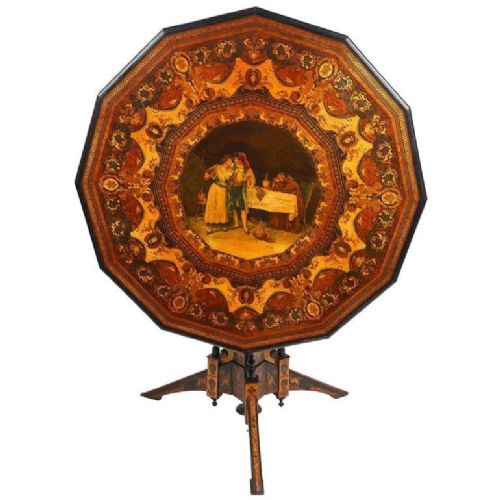

Sorrento Inlay Table
A sorrento inlay table brings nineteenth-century Italian craftsmanship into a room with intricate floral and geometric marquetry.
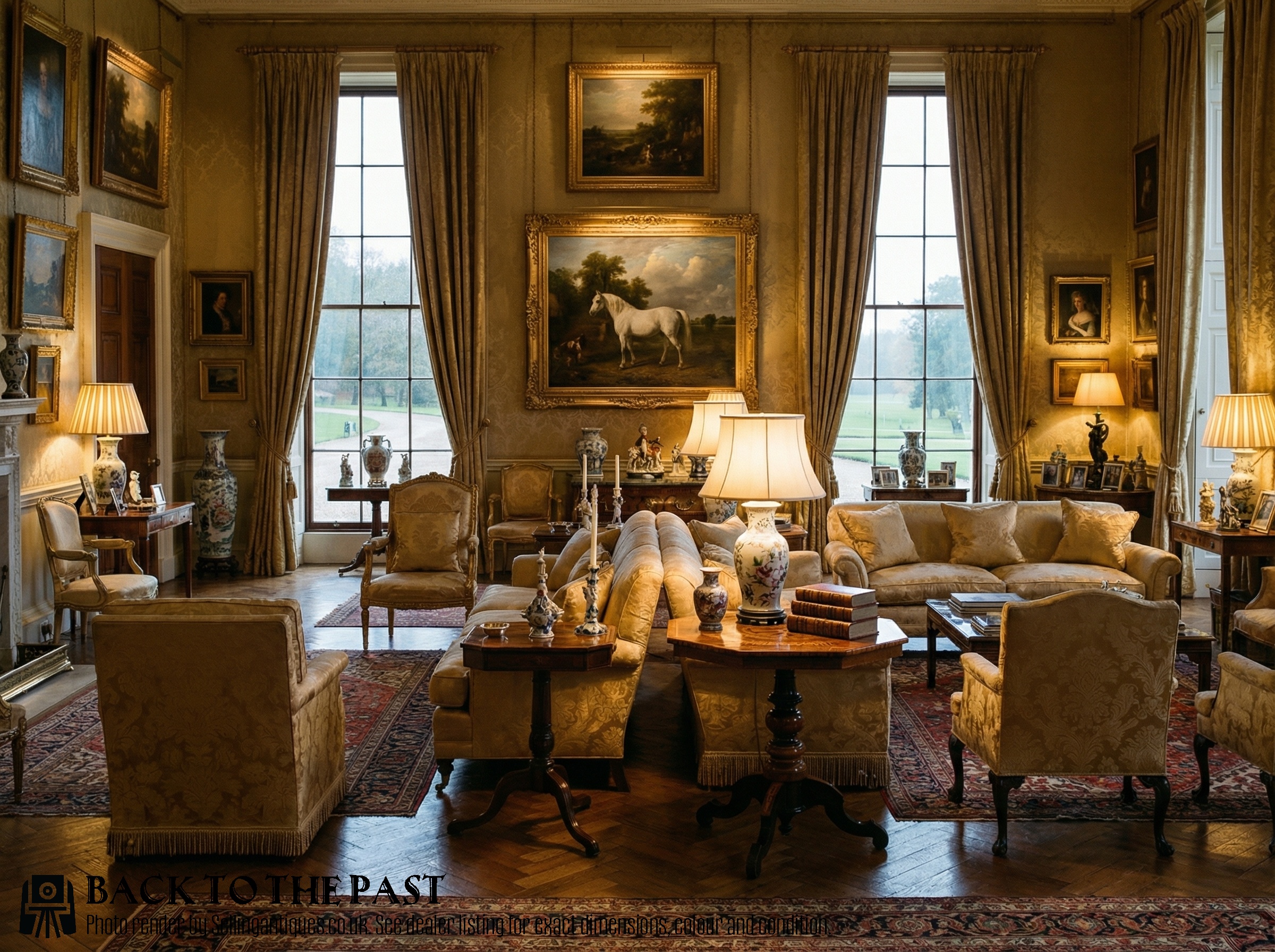
Sorrento Inlay Table
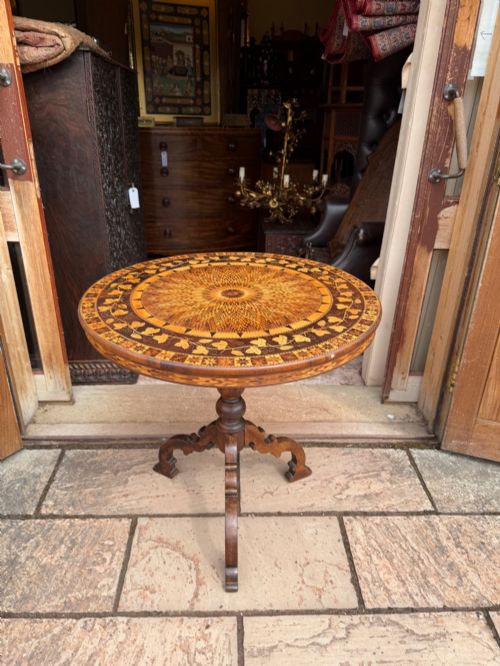
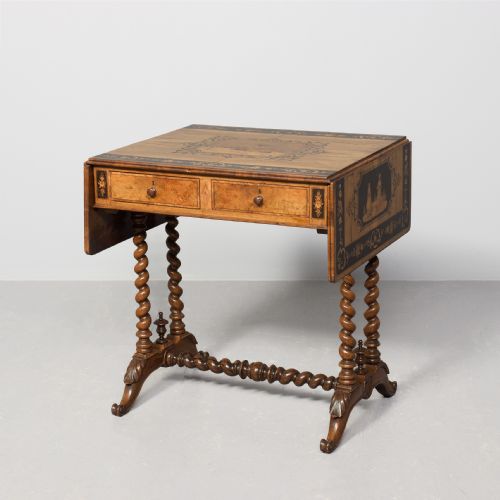
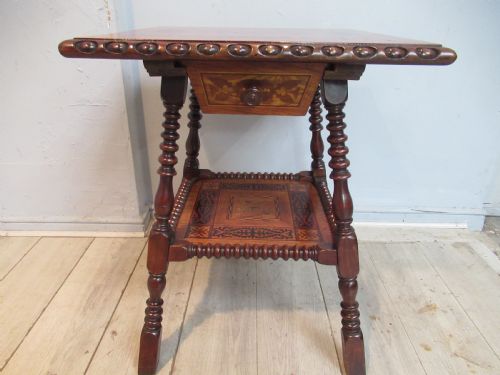
A sorrento inlay table is an example of nineteenth-century Italian woodworking, typically encountered as a side, occasional, or tilt-top table from the Victorian or Edwardian periods.
These pieces showcase intricate marquetry and parquetry tops, often created in Italy as souvenirs for travellers on the Grand Tour.
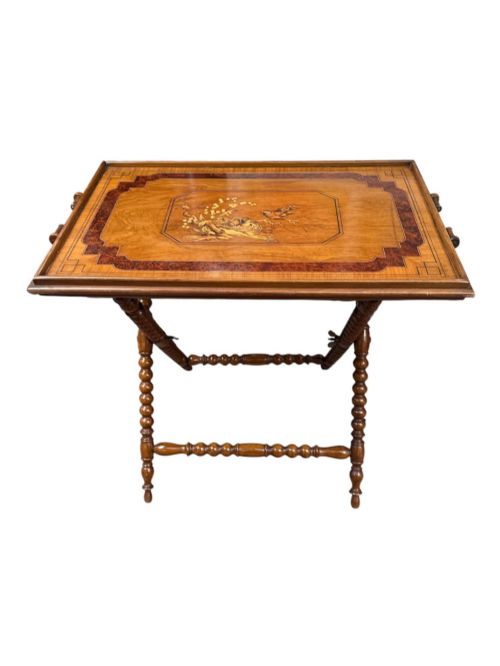
The form varies from folding travel mirrors and butler's tray tables to pedestal centre tables and low occasional tables.
How they were made
Cabinet makers utilised walnut, olive wood, and fruitwoods as the primary structural and decorative timbers for these tables.
Mixed hardwood veneers were precisely cut and fitted together by hand to form complex geometric patterns and pictorial marquetry scenes.
Some nineteenth-century makers packed entire Italian landscapes into a tabletop using nothing more than applewood and walnut.
What varies in quality
The precision and complexity of the marquetry design dictate the standing of a piece, with pictorial scenes and multi-wood parquetry representing superior skill.
The choice of base timbers, such as figured walnut or select olive wood, alongside the integrity of the underlying joinery, separates standard production from exceptional examples.
Almerico Gargiulo
The Sorrento Inlay Table Glossary
- Marquetry inlay
- Decorative woodwork where small pieces of veneer are fitted into a ground material to form pictures or patterns. This technique defines the surface decoration of Sorrento pieces.
- Parquetry
- Geometric mosaic woodwork arranged in regular patterns like cubes or stripes. It often frames the central pictorial panels on tabletop surfaces.
- Grand Tour
- The traditional travel of Europe undertaken by upper-class European young men of the 18th and 19th centuries. Sorrento items were popular purchases brought home from these journeys.
- Tilt top
- A table construction featuring a mechanism that allows the top to pivot vertically when not in use. This design saved space in nineteenth-century interiors.
Sorrento Inlay Table: Frequently Asked Questions
What is a sorrento inlay table?
A sorrento inlay table is a nineteenth-century Italian occasional or side table decorated with detailed wood veneers. These pieces originate from the town of Sorrento near Naples.
Craftsmen used local and imported timbers to create elaborate geometric patterns and pictorial scenes on the tabletops. They gained popularity among British travellers visiting Italy during the Victorian era.
How do I date a sorrento table?
Dating relies on the structural form, timber choices, and historical stylistic markers. Most surviving examples date from the nineteenth century, spanning the Victorian and Edwardian periods.
Later pieces from the early twentieth century often show shifts in timber selection and simpler internal construction methods compared to mid-nineteenth-century items.
Were these tables used daily?
These tables served primarily as decorative furnishings in nineteenth-century drawing rooms and reception spaces. Many were designed for light tasks such as holding lamps, books, or tea.
Formats like butler's tray tables and folding travel mirrors indicate specific functional uses for hosting or personal grooming during the period.
How should I care for the wood?
Maintenance involves keeping the wooden surfaces away from direct sunlight and maintaining stable room humidity. Natural timbers and delicate veneers react poorly to extreme environmental changes.
Applying occasional appropriate wax polish helps nourish the grain and protects the historic polished finish without harming the intricate marquetry.