

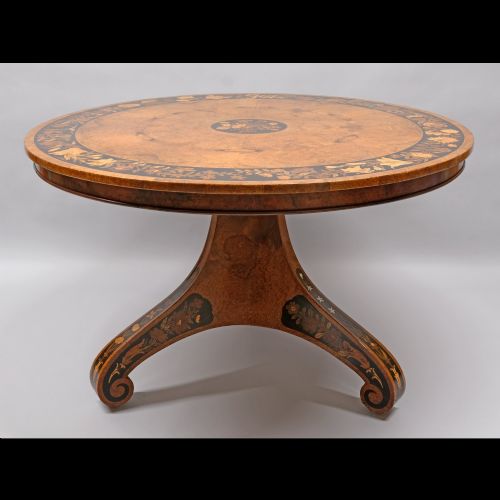
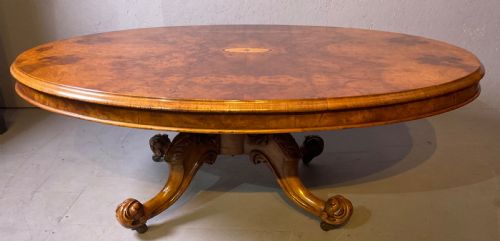
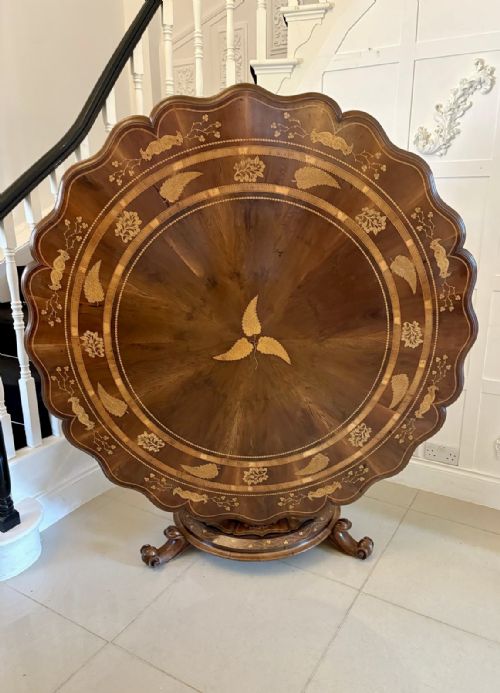
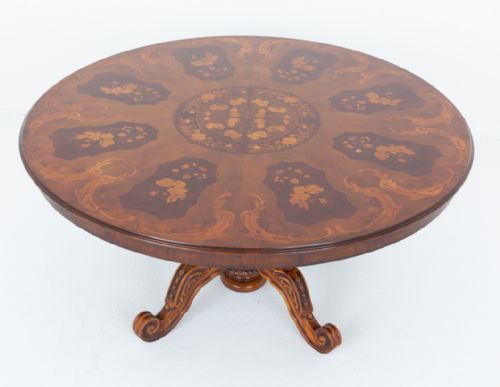

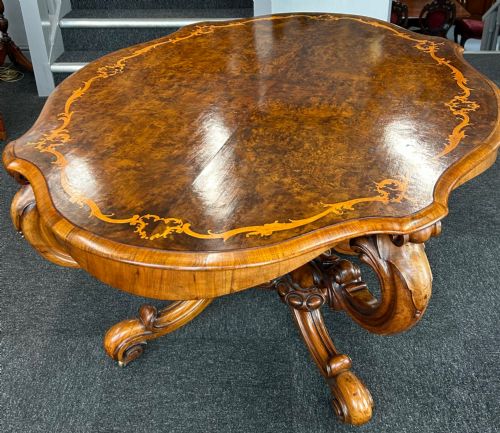


Brown Marquetry Tilt Table
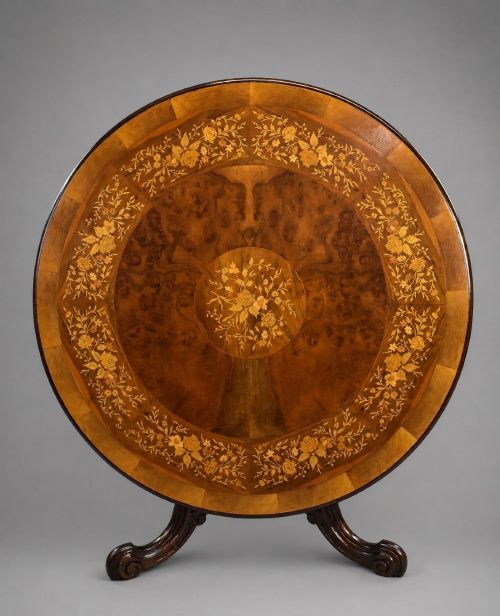
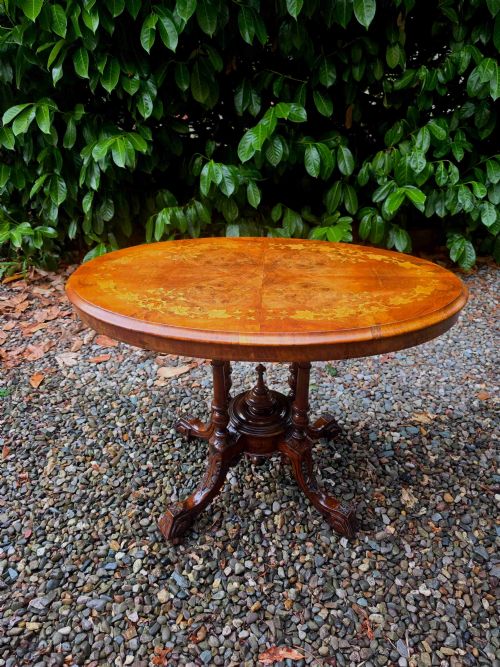
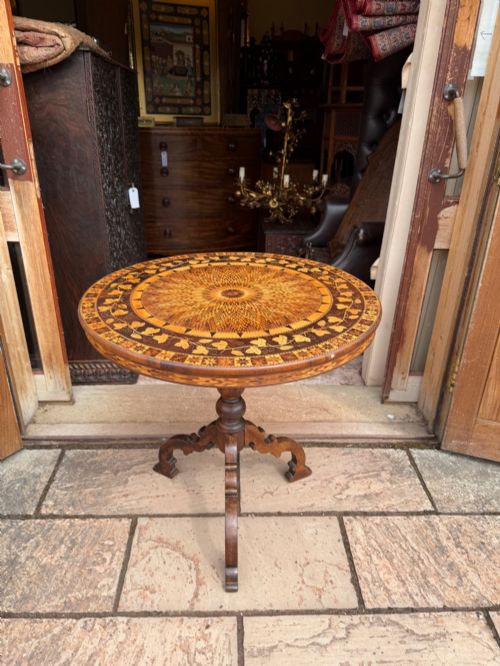
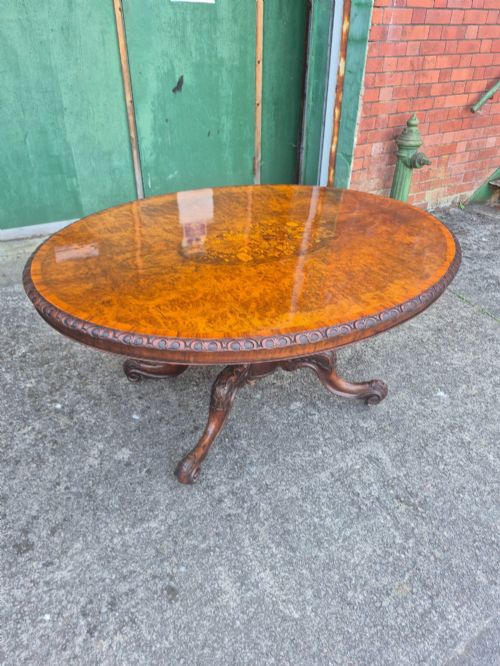
A brown marquetry tilt table brings intricate timber patterns and functional pivoting surfaces to a room.
Brown Marquetry Tilt Table
A brown marquetry tilt table combines decorative wood inlay with a pivoting mechanism designed for convenient storage against a wall when not in use. These pieces appear frequently in Victorian designs, often utilising rich timbers such as burr walnut, mahogany, and rosewood.
The assortment includes forms functioning as centre tables, breakfast tables, and occasional tables. Makers employed varied regional styles, ranging from Italian Sorrento ware to Irish Killarney work and French marquetry, creating distinct visual identities.
Most examples date from the nineteenth century, reflecting the Victorian preference for figured veneers and elaborate floral or geometric inlay. Buyers encounter circular and oval formats supported by pedestals or tripod bases.
Materials and Construction
Cabinetmakers constructed these tables using a solid secondary timber frame overlaid with decorative veneers such as burr walnut, rosewood, or kingwood. Marquetry inlay was meticulously sawn from contrasting fruitwoods and exotic timbers, then fitted into recessed channels on the top surface.
The tilting mechanism relied on a wooden or brass catch beneath the table top, allowing the surface to pivot from horizontal to vertical. Pedestal shafts typically turned from solid timber and met tripod or platform bases fitted with brass castors.
Some nineteenth-century makers concealed subtle locking catches beneath the top, requiring a deliberate press to reveal the table's pivoting secret.
Assessing Craftsmanship
Quality rests in the precision of the marquetry and the choice of veneer. Finer tables display crisp, tightly fitted wood inlays without excessive filler, using highly figured burr walnut or specialised specimen woods across the entire top surface.
The structural integrity of the tilt mechanism and pedestal base dictates everyday utility. Superior examples maintain a rigid connection when locked flat, whilst lesser pieces show play in the pivot block or warp along the timber grain.
Holmes Baldock·Egan Workshop
The Brown Marquetry Tilt Table Glossary
- Marquetry
- A decorative technique where small pieces of contrasting veneer are assembled into pictorial or geometric patterns on a surface.
- Tilt top
- A hinged table top that pivots to a vertical position for storage or movement.
- Burr walnut
- A prized timber harvested from the wart-like growths on walnut trees, yielding complex swirling grain patterns.
- Sorrento ware
- Inlaid woodwork originating from the Italian town of Sorrento, frequently depicting figures, buildings, or floral motifs.
- Pedestal table
- A table supported by a single central pillar rising from a base rather than four corner legs.
Brown Marquetry Tilt Table: Frequently Asked Questions
How does a tilt top table work?
A wooden or metal catch beneath the surface releases to let the table top pivot ninety degrees. This allows the piece to stand flat against a wall when floor space is needed.
Most mechanisms use a simple latch system that locks securely into place when the surface returns to the horizontal position.
Where were Sorrento tables made?
These pieces originated in the coastal town of Sorrento in Italy, where workshops specialised in intricate wood inlay. Craftsmen utilised local timbers to create detailed geometric and pictorial designs.
Exported widely during the nineteenth century, they became popular additions to British drawing rooms and studies.
What is Killarney ware?
Killarney ware refers to decorative wooden items produced in Ireland, typically featuring arbutus, yew, and other native timbers. The surfaces often display elaborate marquetry motifs such as harps or local ruins.
These tables represent a distinct regional tradition within nineteenth-century cabinet making.
How do I care for a marquetry table?
Keep the wood away from direct sunlight and steady heat sources to prevent the veneers from drying and lifting. Regular dusting with a dry cloth maintains the finish without moisture damage.
Apply a traditional wax polish sparingly to nourish the timber and protect the inlaid surface over time.