

Walnut Marble Top Chest
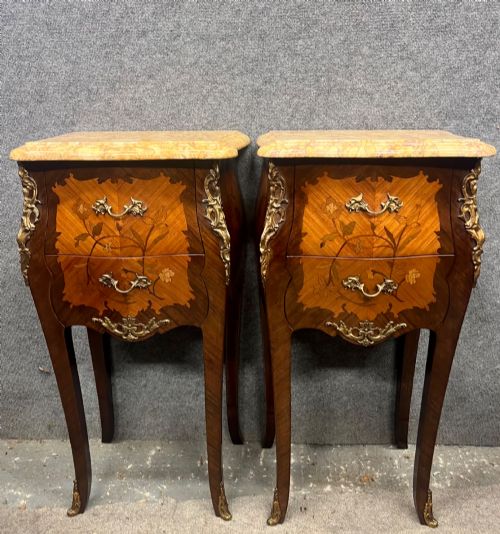
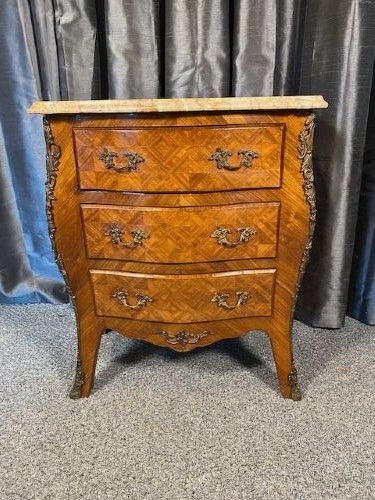
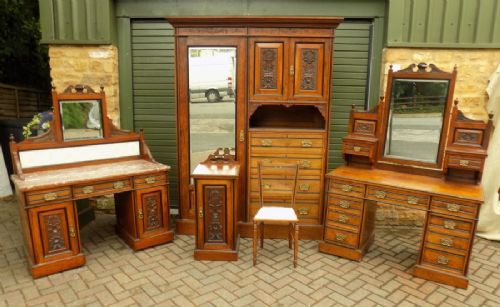
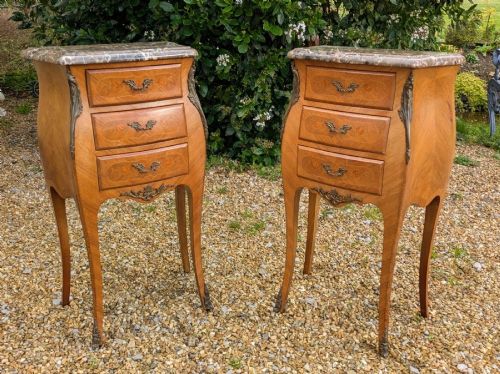
When searching for a walnut marble top chest, you encounter continental commodes and bedside cabinets combining heavy stone surfaces with figured wood.
Walnut Marble Top Chest
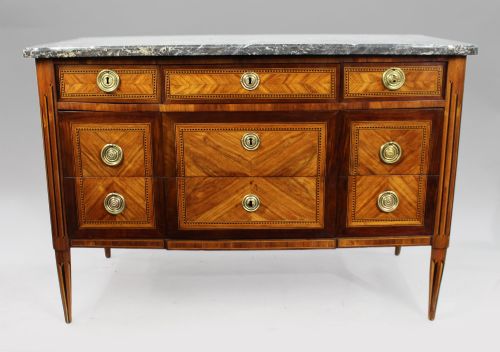
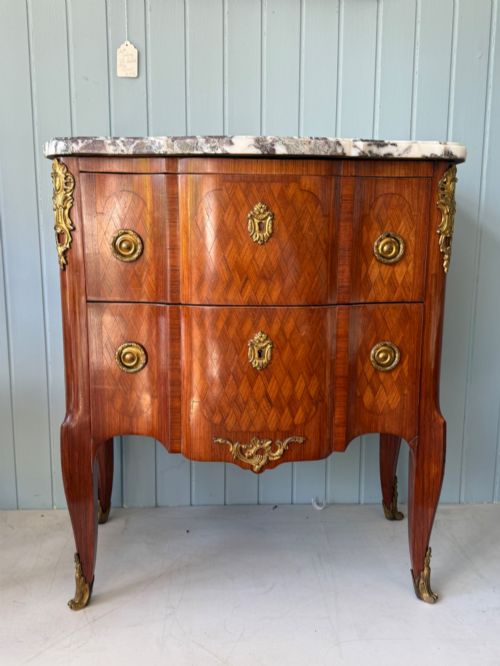
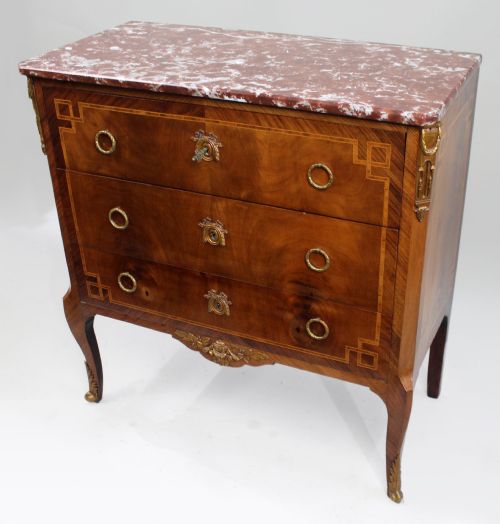
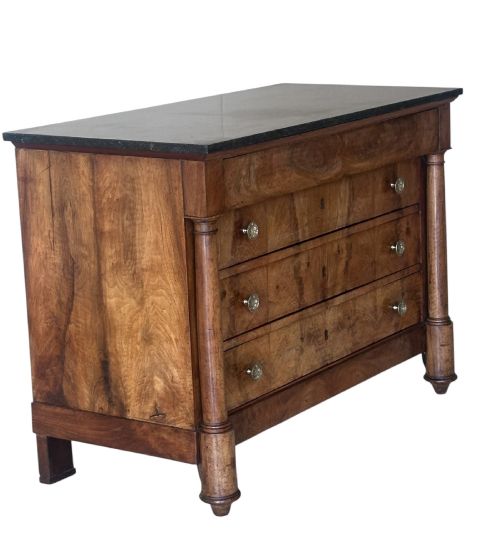
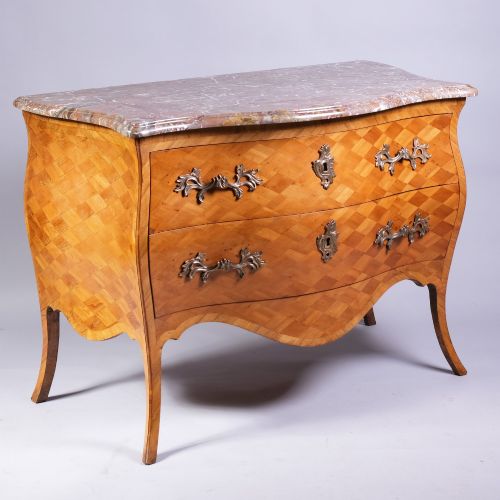
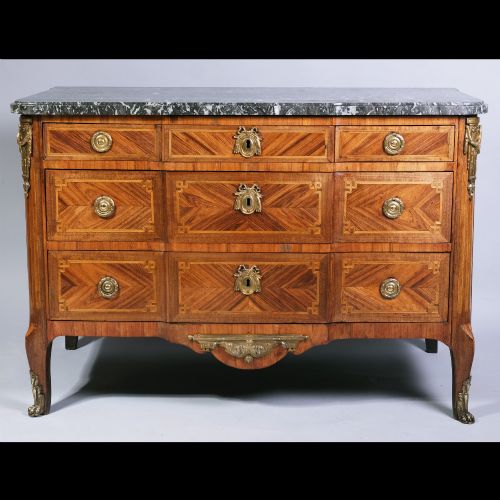
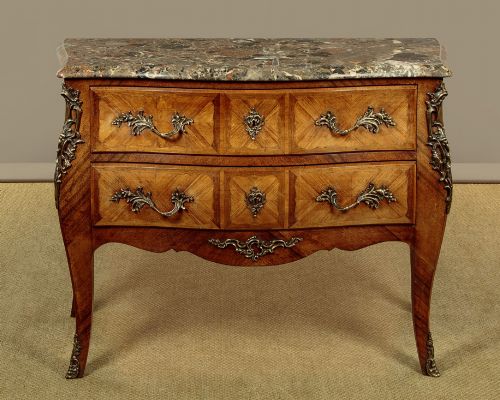
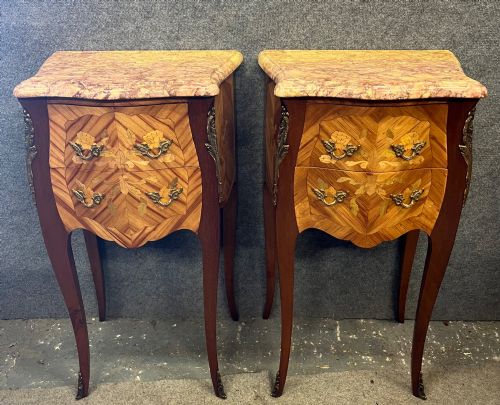
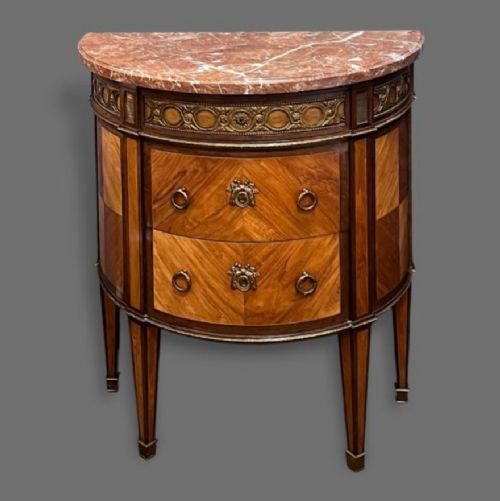
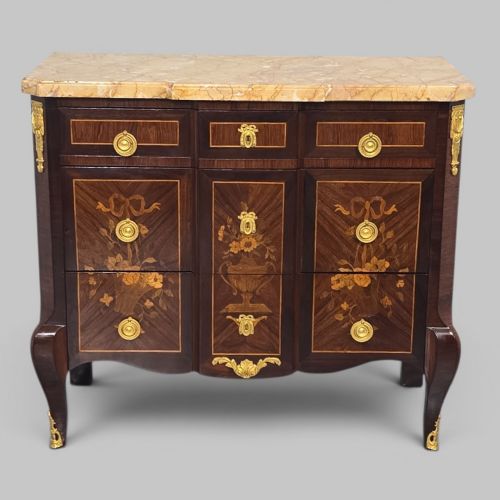
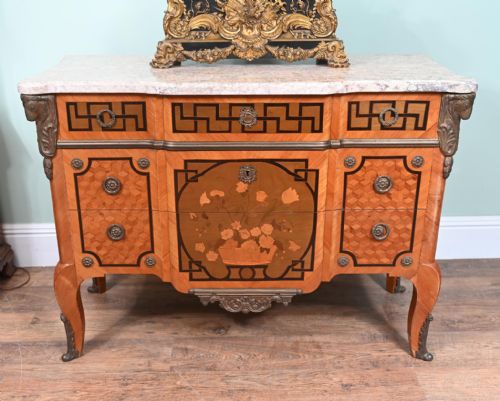
A walnut marble top chest most frequently appears as a French commode or bedside cabinet originating from the eighteenth, nineteenth, or early twentieth centuries. These forms serve primarily as bedroom storage or decorative side pieces, featuring multi-drawer carcases topped with fitted slabs of grey, white, or coloured marble.
The inventory ranges from grand Louis Philippe and Louis XV style commodes to narrower semainiers and pairs of low bedside chests. Continental cabinetmakers built these pieces using walnut, burr walnut, and exotic veneers, adapting baroque and neoclassical styles across generations.
How they were made
Cabinetmakers constructed the carcases from native timbers such as walnut, layering figured burr walnut, kingwood, or rosewood veneers in geometric parquetry or floral marquetry designs. These wooden frames support heavy slabs of shaped grey, white, or rouge marble cut to follow the serpentine or straight contours of the top.
Many examples incorporate cast brass and gilt ormolu mounts along the corners, drawer edges, and apron handles, framing the timber surfaces. Joinery relies on traditional dovetailed drawer construction and framed panels designed to accommodate seasonal wood movement beneath the stone.
Listings feature walnut, burr walnut, rosewood, and kingwood veneers paired with grey, white, and rouge marble slabs.
What varies in quality
The refinement of the timber work separates standard storage pieces from exceptional examples, seen in the symmetry and depth of the burr walnut grain or the intricacy of the marquetry inlay. Superior execution shows in the crispness of the hand-chased ormolu mounts and the precise thickness and polish of the marble slab.
Structural integrity and proportion dictate the standing of a commode, with better pieces maintaining tight joints, smooth drawer action, and untouched original marble tops that sit flush against the carcase.
The Walnut Marble Top Chest Glossary
- Commode
- A low chest of drawers or cabinet, typically originating from France and standing on relatively tall legs. These pieces frequently feature decorative veneer work and stone tops.
- Ormolu
- Gilt bronze mounts applied to furniture for decorative and protective purposes along corners and handles. This technique was widely utilised during the eighteenth and nineteenth centuries.
- Marquetry
- The art of applying small pieces of veneer to a structure to form decorative patterns and pictures. Makers used various contrasting woods to achieve botanical or geometric designs.
- Parquetry
- Geometric mosaic woodwork used to surface furniture carcases in repeating patterns like cubes or chequers. This technique highlights the natural grain variations of walnut and kingwood.
- Bombe
- A swelling, convex curved shape found on the sides and fronts of certain eighteenth and nineteenth-century furniture. This undulating profile requires advanced skill in veneer shaping.
Walnut Marble Top Chest: Frequently Asked Questions
What is a commode?
A commode is a decorative chest of drawers or cabinet designed in continental Europe, particularly France. These pieces typically stand lower than British chests and feature finished backs and sides.
In modern interiors, they function as statement storage units in hallways, living rooms, or bedrooms, often paired with a mirror or lamp.
How do I care for the marble top?
Marble tops require gentle cleaning with warm water and a neutral soap to avoid dulling the polished surface. Acidic liquids like wine or citrus juice can etch the stone if left standing.
Applying a specialist stone wax helps protect the surface from moisture rings and daily wear while maintaining its natural sheen.
How do I date these pieces?
Dating relies on examining construction methods, timber choices, and stylistic revival markers such as Louis XV or Louis XVI influences. Eighteenth-century pieces display hand-cut joinery and aged patination, while later nineteenth-century examples often incorporate burr walnut veneers and standardised hardware.
Comparing the style of the marble edge and internal drawer linings provides further clues to the manufacturing era.