




Marble Top Side Chest
A marble top side chest provides a solid stone surface above practical storage, drawing buyers who seek continental elegance and robust utility.
Marble Top Side Chest
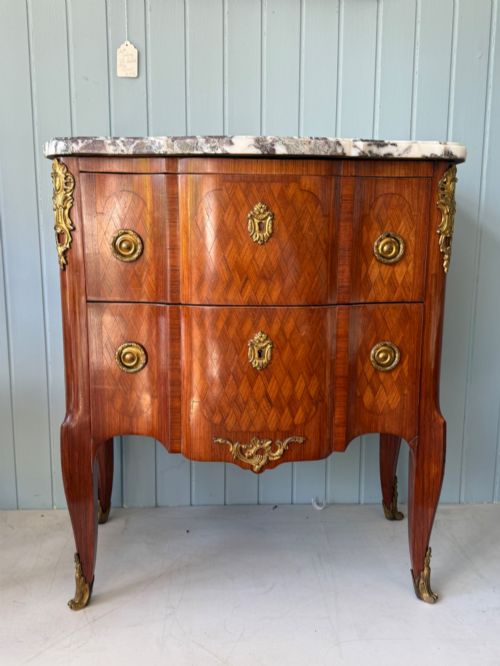
A marble top side chest encompasses commodes, bedside tables, and small cabinets designed for domestic utility and display. The pieces span from the eighteenth century through the nineteenth century and into the early twentieth century, with a strong emphasis on continental, particularly French, cabinet-making traditions.
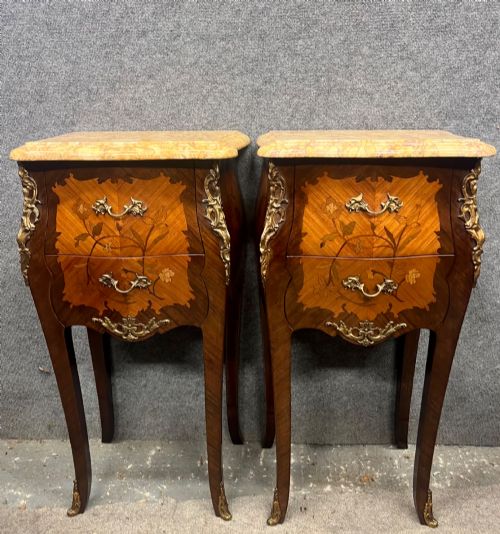
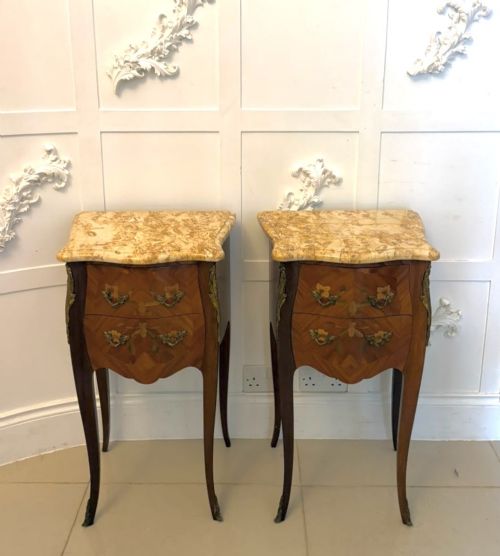
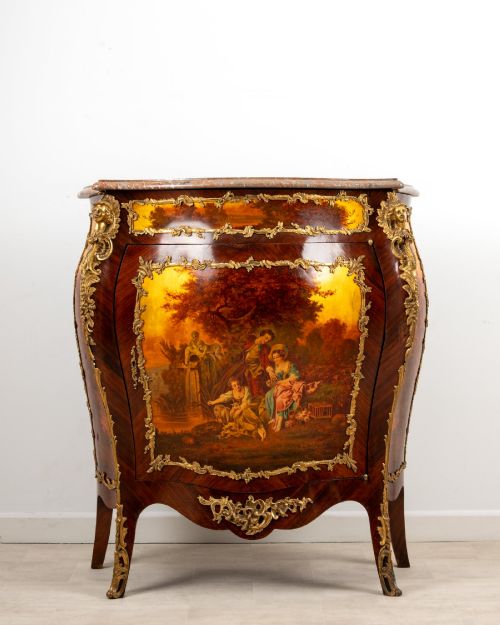
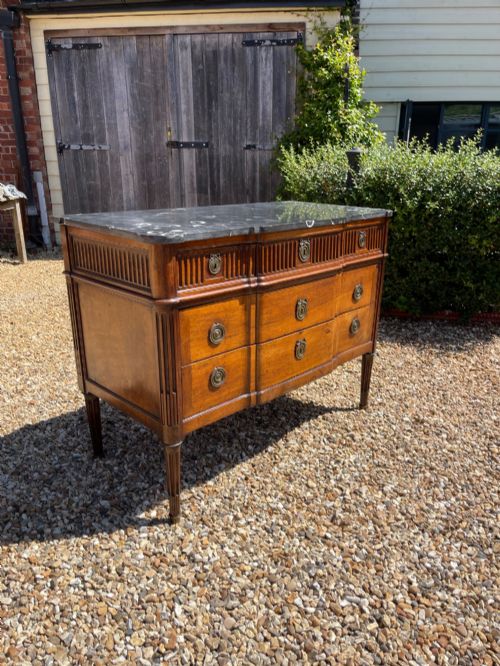
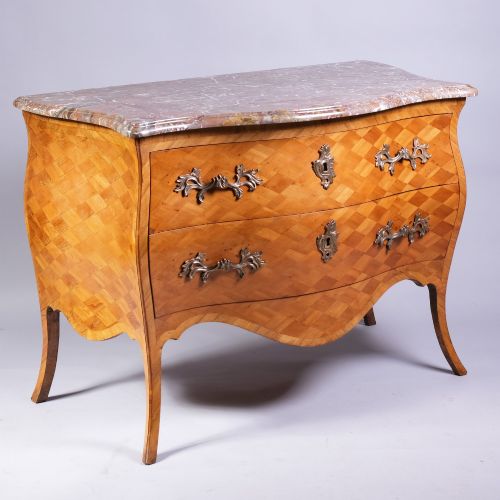
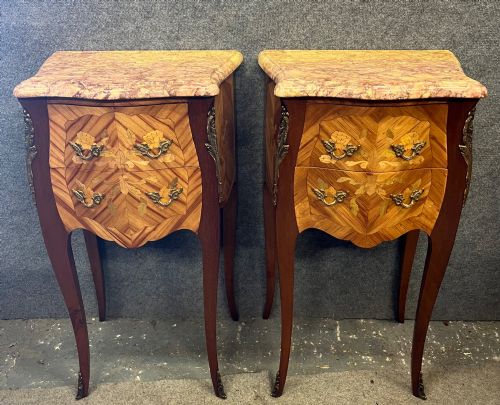
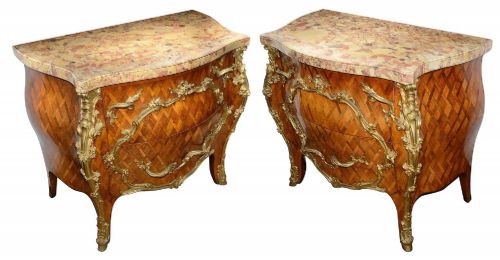
The most common formats on this page are bedside chests and larger commodes featuring fitted stone slabs. Examples range from simple walnut and cherrywood drawer units to elaborate bombé and marquetry cabinets framed by revival styles.
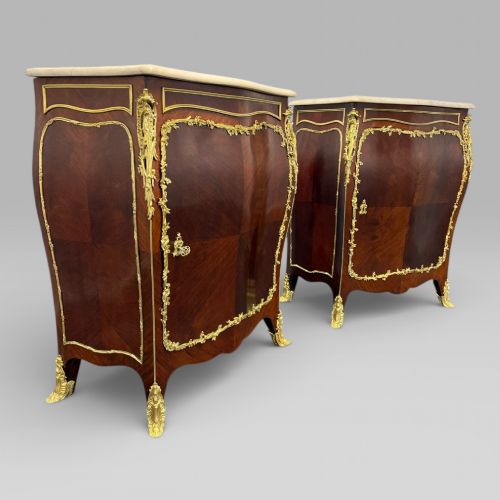
Makers and designers drew upon established historical idioms, yielding pieces that vary from utilitarian pine and mahogany bedside cupboards to sculptural reception pieces adorned with gilt bronze mounts.
Materials and construction
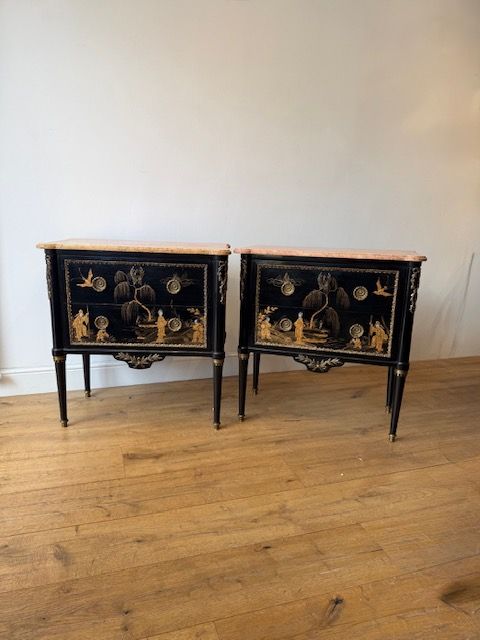
Cabinet-makers constructed carcass frames from native and exotic timbers including walnut, kingwood, rosewood, mahogany, and cherrywood. Surfaces frequently display intricate marquetry inlays or painted lacquered finishes such as vernis martin and chinoiserie.
Heavy stone slabs, including grey marble and scagliola, rest directly upon the timber tops to provide durable, waterproof surfaces. Metal ornamentation relies upon cast ormolu and gilt bronze mounts secured to corners, handles, and aprons.
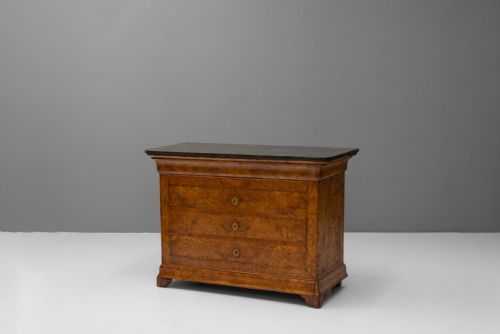
Some nineteenth-century dentists evidently required considerable luxury, judging by the survival of burr walnut cabinetry designed for dental work.
Craftsmanship and distinction
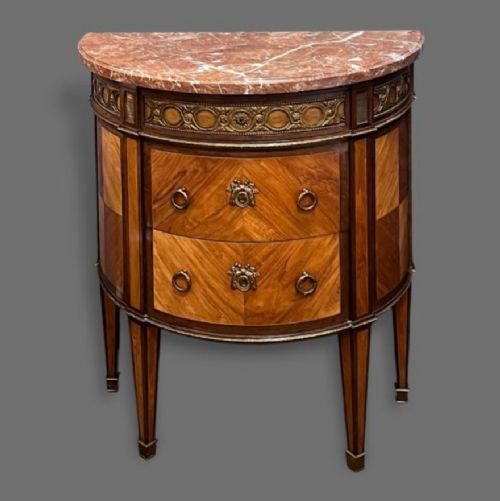
Quality reveals itself in the precision of the timber matching and the execution of the marquetry patterns across the drawer fronts and sides. Superior examples demonstrate fluid joinery on complex curved forms like bombé and demi-lune carcasses.
The grade of the stone slab and the weight of the cast ormolu mounts dictate the overall stature of the piece. Finer items exhibit hand-chased bronze detailing and perfectly fitted marble slabs that integrate seamlessly with the wooden framing.
E. Kahn·Jean-Henri Riesener·Charles Cressant
The Marble Top Side Chest Glossary
- Commode
- A low chest of drawers or cabinet, typically dating from the eighteenth or nineteenth century. These units serve as decorative storage furniture in reception rooms and bedrooms.
- Kingwood
- A dense, heavily figured South American timber utilised extensively in French cabinet-making. It displays rich brown tones with dark contrasting grain patterns.
- Ormolu
- Gilt bronze ornamentation applied to furniture mounts. The technique involves treating bronze with a gold amalgam to produce a bright metallic finish.
- Marquetry
- The art of applying small pieces of veneer to a structure to form decorative patterns. Craftsmen use varied timbers to create pictorial or geometric designs.
- Bombé
- A swelling or outward curving contour characteristic of Rococo furniture forms. This bulbous profile requires advanced carpentry to maintain structural integrity.
- Scagliola
- A composite material made from plaster, glue, and pigments. It mimics the appearance of natural marble and other high-end stones.
Marble Top Side Chest: Frequently Asked Questions
What is a marble top side chest used for?
These pieces function primarily as bedside tables, lamp stands, or small commodes for bedroom and hallway storage. The stone surface provides a practical, heat-resistant table top for lamps and decorative items.
The enclosed drawers and cabinets offer concealed storage for personal items, linens, or bedside essentials while maintaining a formal decorative presence.
How do I identify a French commode?
French commodes typically feature distinct regional proportions, curvilinear aprons, and prominent timber veneers like kingwood or walnut. Many incorporate shaped marble tops and cast ormolu mounts.
They frequently align with specific historical design movements such as the Louis XV or Louis XVI revival styles popular in the nineteenth century.
Are marble tops removable?
Most marble slabs rest on top of the wooden carcass by their own weight, allowing them to be lifted off for transport and cleaning. Some earlier or heavier pieces may be secured with plaster or wooden battens.
Care must be taken when lifting these stone slabs due to their substantial weight and the risk of chipping the edges.
How do I care for antique wood and marble?
Clean wooden surfaces with a soft, dry cloth and apply occasional high-grade wax to nourish the antique veneer. Avoid placing hot items directly onto the polished wood.
Wipe marble tops promptly with mild soap and water to prevent staining from acidic liquids, and avoid harsh chemical cleaners that can etch the stone.