
French Inlaid Chest
A french inlaid chest brings continental elegance to an interior through meticulous cabinet work and ornamental timber surfaces.
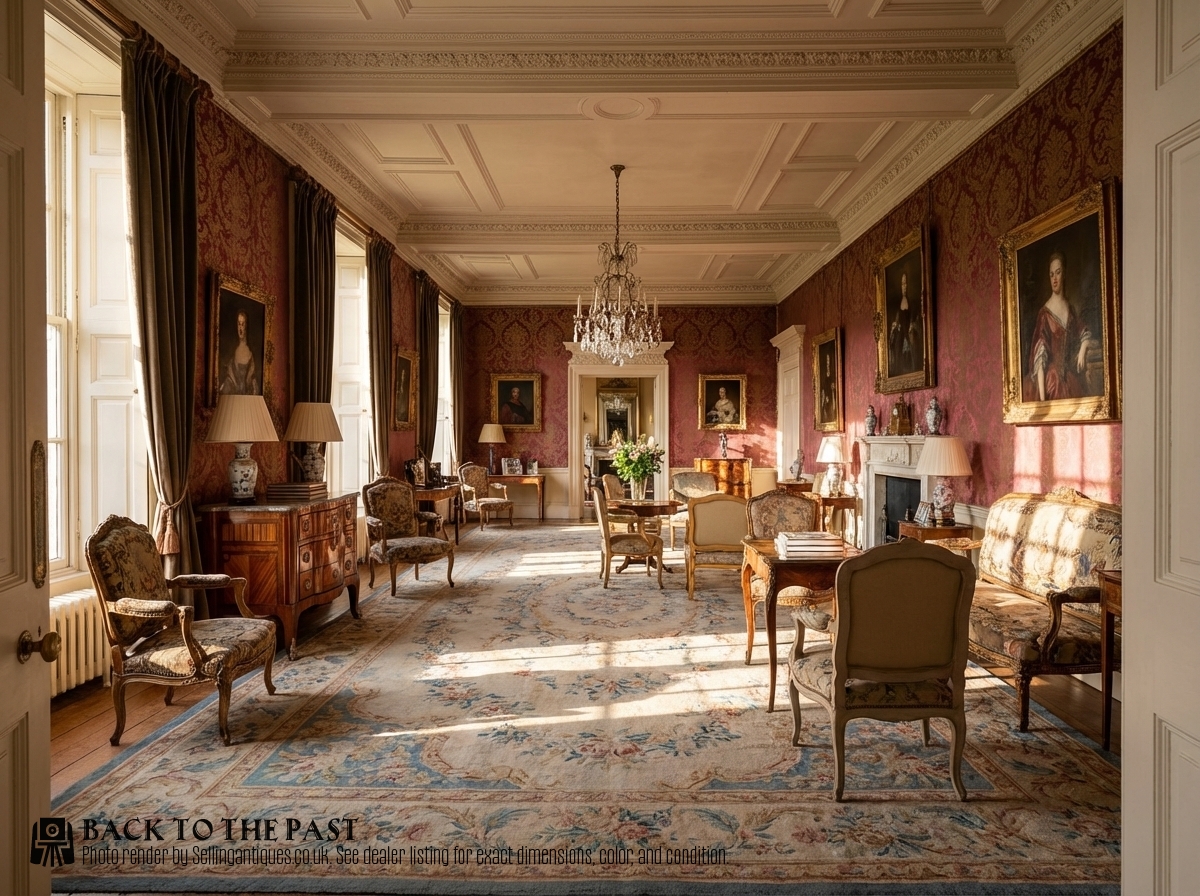
French Inlaid Chest
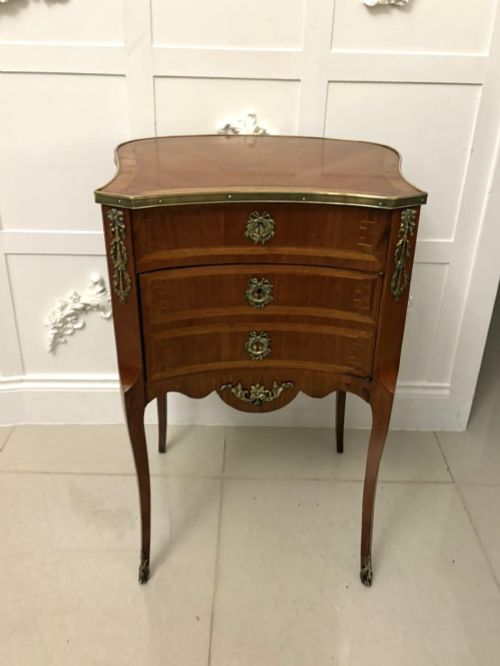
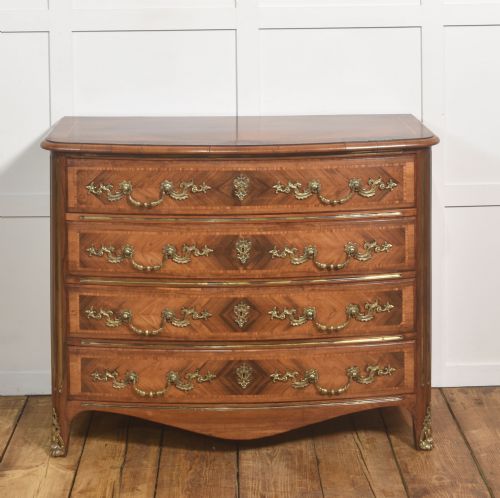
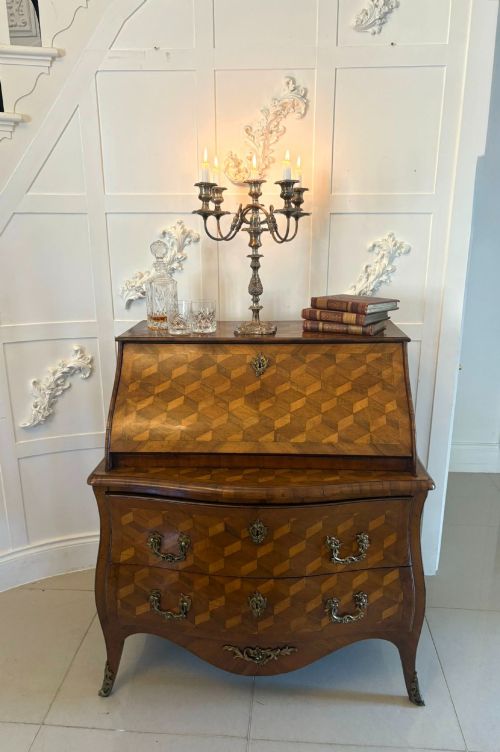
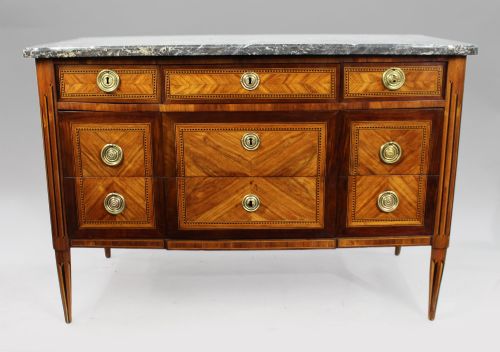
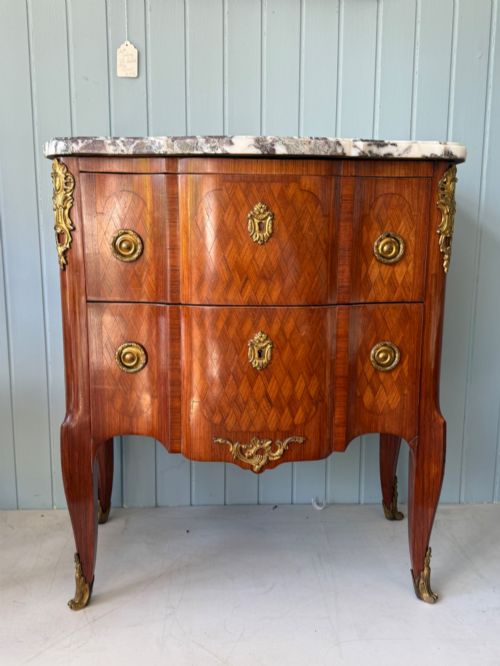
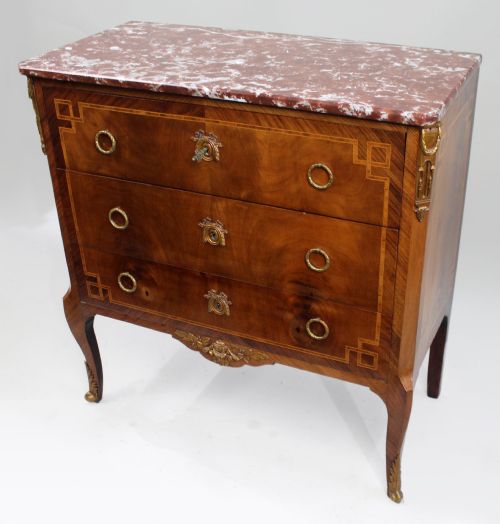
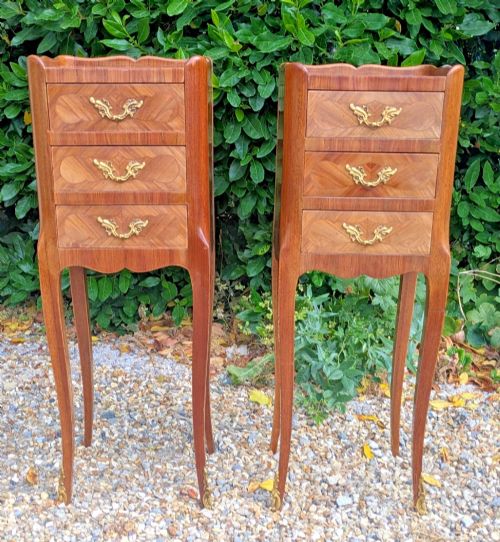
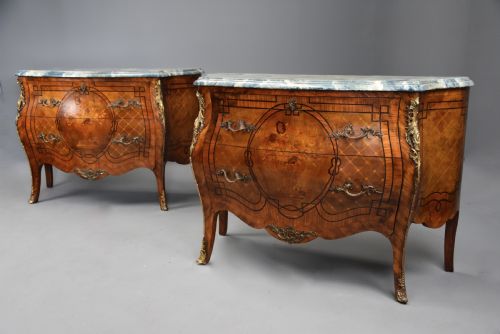
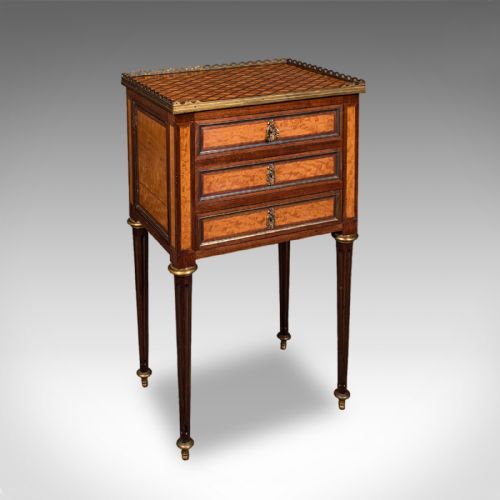
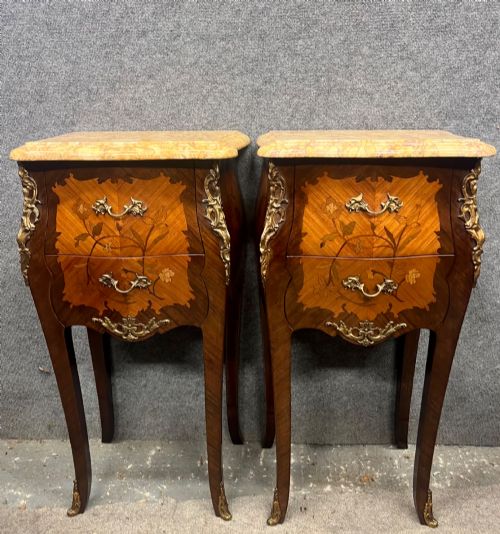
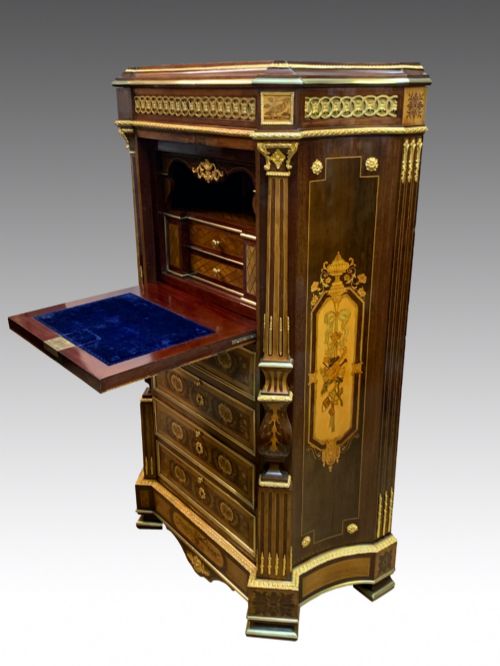
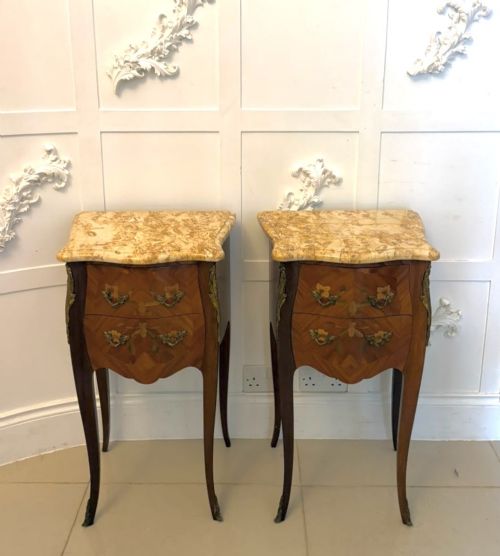
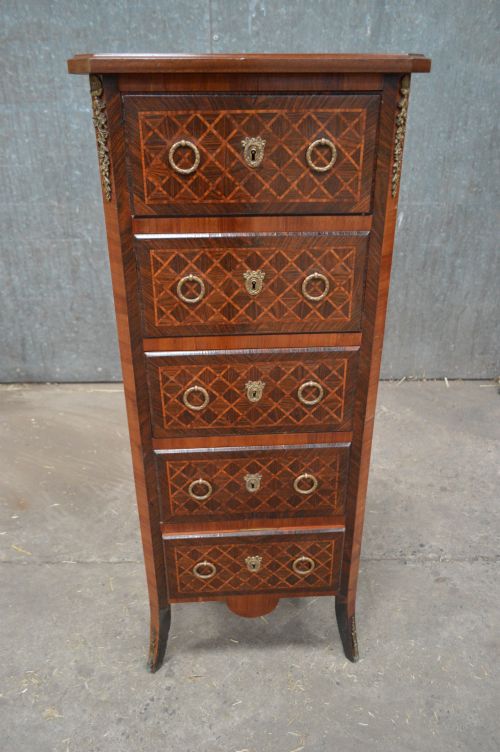
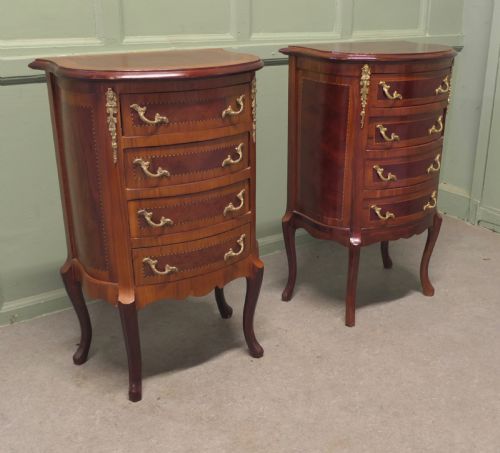
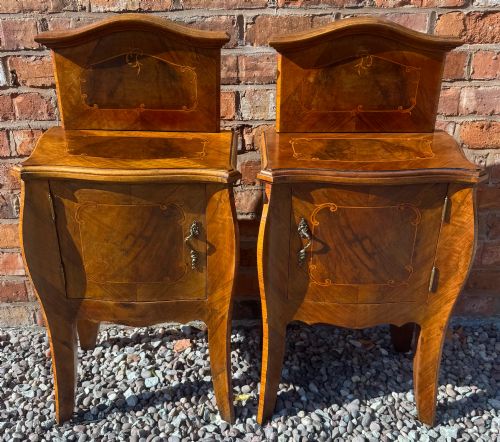
When searching for a french inlaid chest, buyers encounter a variety of forms designed for domestic utility and display. The selection ranges from grand commodes and serpentine chests of drawers to compact bedside cabinets and tall semainiers.
Most examples originate from the nineteenth and early twentieth centuries, drawing heavily upon earlier Louis XV and Louis XVI revival aesthetics. Pieces span from substantial bureau desks to intimate lamp tables, reflecting diverse provincial and metropolitan workshop traditions.
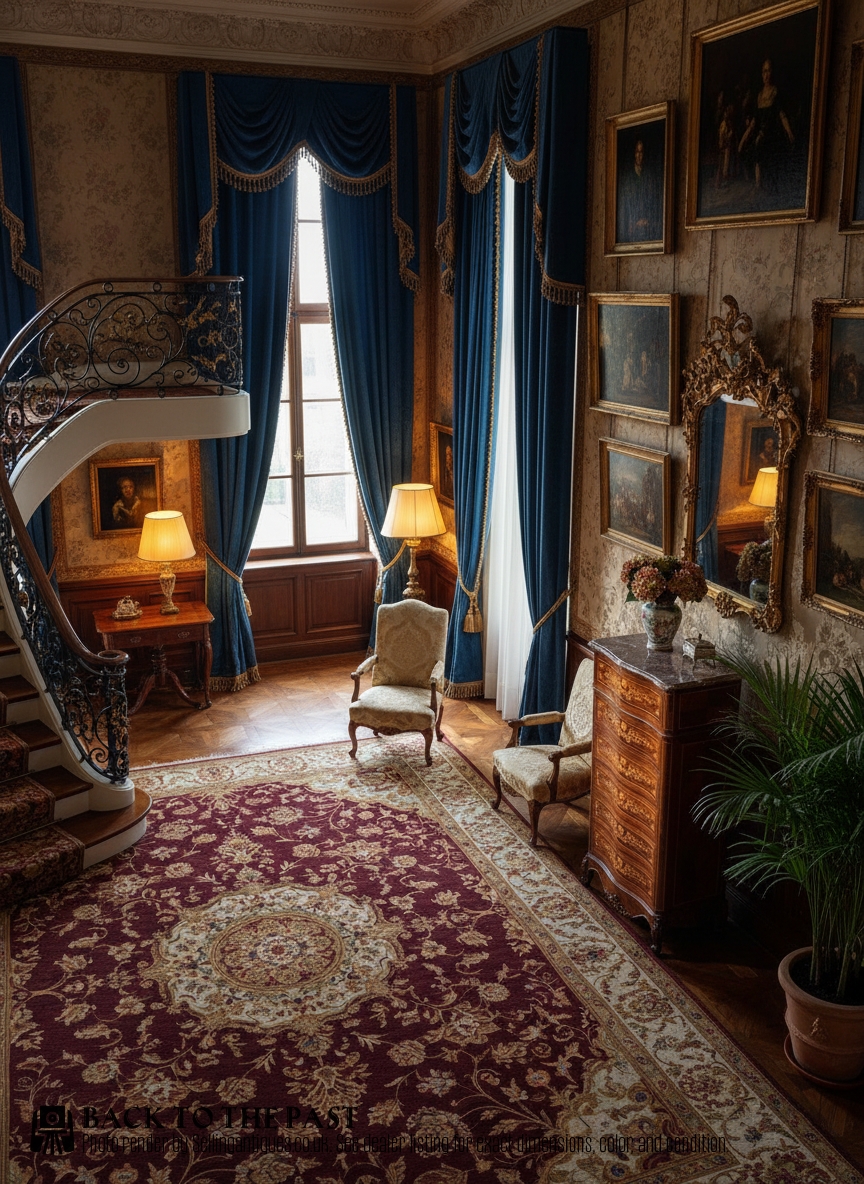
Materials and Construction
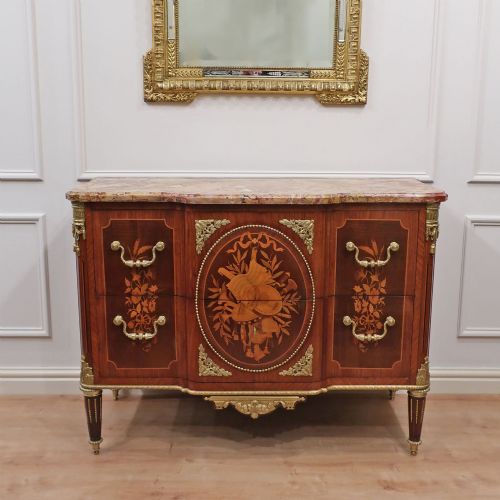
Carcase structures rely on dense native and exotic timbers including walnut, kingwood, rosewood, and mahogany. Skilled artisans applied contrasting veneers in geometric parquetry or intricate floral marquetry patterns across the drawer fronts and sides.
Mounts in cast ormolu and gilt bronze frequently accent the corners and handles, while many commodes and bedside tables feature fitted tops of polished marble in shades of white or rouge.
Some nineteenth-century pieces conceal liquor bottles behind secret panels, proving that prior generations appreciated a quiet nightcap.
Assessing Execution
Quality rests upon the precision of the cabinet work, particularly the snugness of the drawer joints and the crispness of the veneer cutting. Superior examples display seamless integration of ormolu mounts and heavy, well-figured marble slabs.
The sophistication of the marquetry design separates standard production from exceptional pieces. Finer work utilises varied tonal woods to create depth and movement within floral or geometric motifs.
Maison Krieger·Sormani
The French Inlaid Chest Glossary
- Marquetry
- Decorative veneer work arranged in pictorial or floral patterns. Artisans cut thin slices of various coloured woods to form detailed surface designs.
- Parquetry
- Geometric patterns formed of fitted veneer tiles. Squares, cubes, and diagonals create structured architectural ornamentation across the drawer fronts.
- Ormolu
- Gilt bronze mounts applied to cabinet corners and aprons. This decorative metalwork provides contrast against dark exotic woods.
- Bombe
- A swelling, outward-curved contour found on commodes and chests. This serpentine profile demands advanced shaping techniques from the cabinet maker.
- Semainier
- A tall, narrow seven-drawer chest designed for weekly linen storage. These vertical pieces maximise storage space within compact footprints.
French Inlaid Chest: Frequently Asked Questions
How do I care for a marble top?
Clean the stone surface with a soft, damp cloth using mild soap. Avoid acidic liquids that can etch the polished finish over time.
Protect the marble from heavy impacts and harsh chemical cleaners to preserve the original sheen and natural veining.
Are these chests suitable for modern bedrooms?
Compact bedside chests and narrow commodes integrate easily into contemporary sleeping quarters. Their varied heights and proportions offer practical bedside storage.
The warm tones of walnut and kingwood complement both minimalist and traditional interior schemes.
What is the difference between commodes and standard chests?
Commodes traditionally refer to low, decorative French storage cabinets featuring wide drawer configurations and prominent ormolu mounts. They were designed for reception rooms as well as sleeping chambers.
Standard chests of drawers often feature taller, more utilitarian proportions without the ornate serpentine shaping characteristic of revival commodes.
How can I distinguish revival styles from earlier periods?
Eighteenth-century originals display construction techniques and timber patination consistent with age-related wear. Revival pieces from the nineteenth and twentieth centuries often utilise machine-sawn secondary woods.
Stylistic markers such as exaggerated bombe curves and crisp ormolu casting usually point towards nineteenth-century interpretation rather than strict period output.