


Walnut Marble Bedside Tables
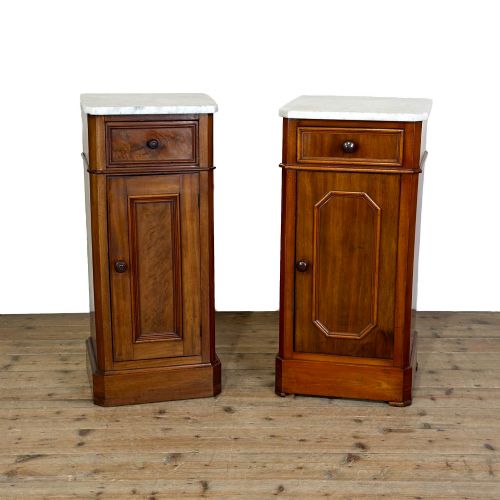
These walnut marble bedside tables combine rich timber frames with cool stone tops for a classic bedroom surface.
Walnut Marble Bedside Tables
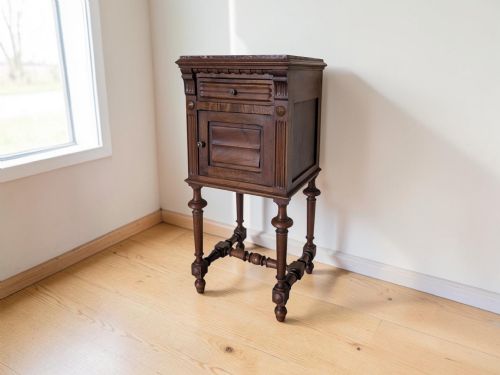
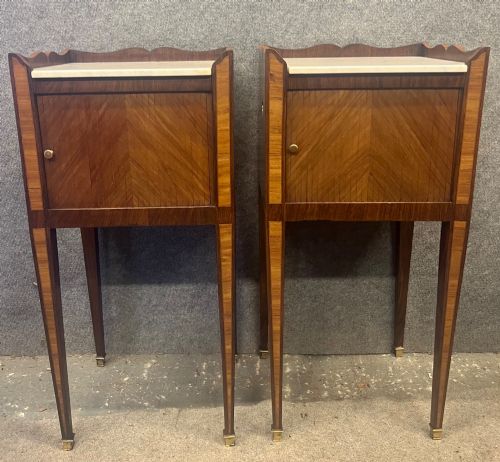
Walnut marble bedside tables are compact bedroom cabinets and lamp tables, most commonly found as matched pairs originating from France during the nineteenth and early twentieth centuries. These pieces typically combine a fitted stone surface with timber cabinetry, serving both functional storage and decorative roles beside a bed.
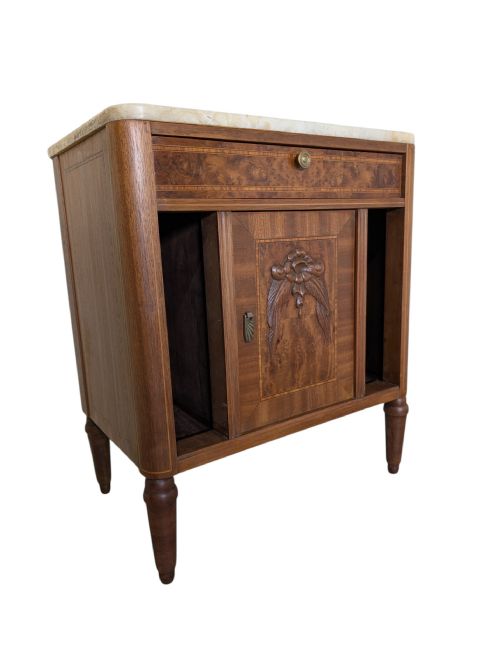
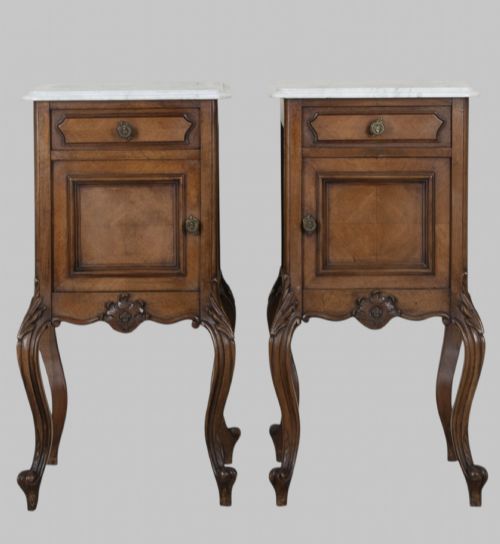
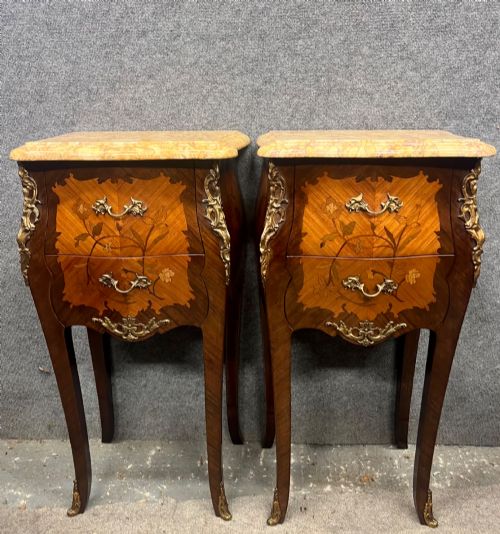
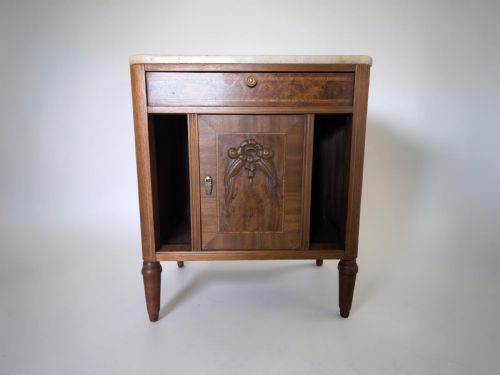
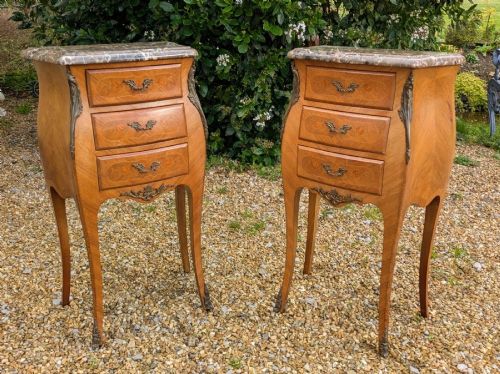
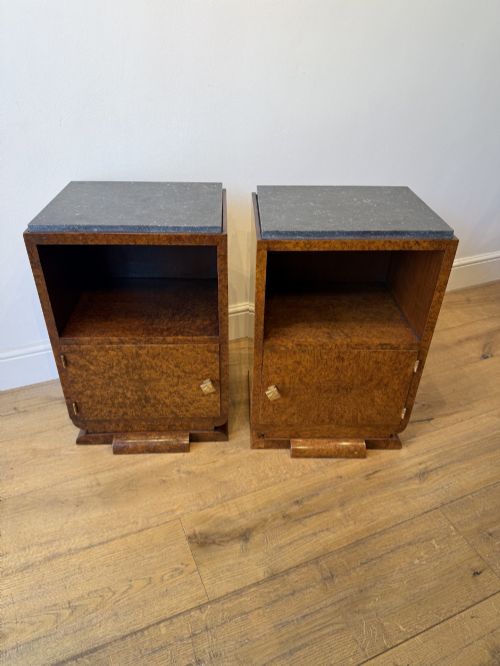
The selection ranges from Victorian designs and Edwardian pieces to later items from the nineteen-twenties and thirties, spanning styles such as French Louis XV, Louis XVI, and art deco. Cabinets often take the form of enclosed bedside cupboards, three-drawer chests, or cylindrical commodes.
How they were made
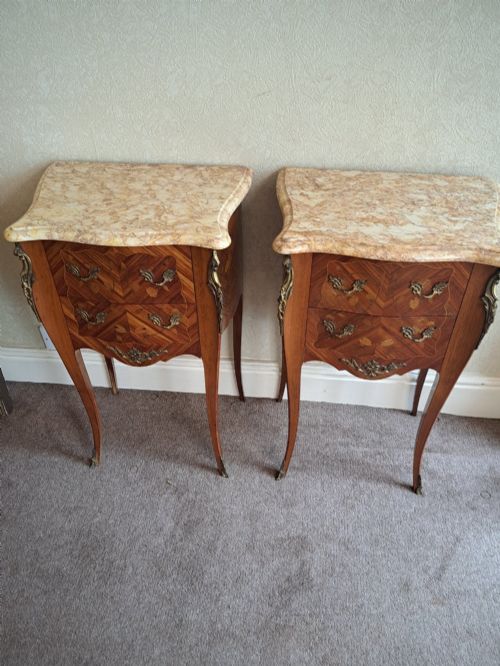
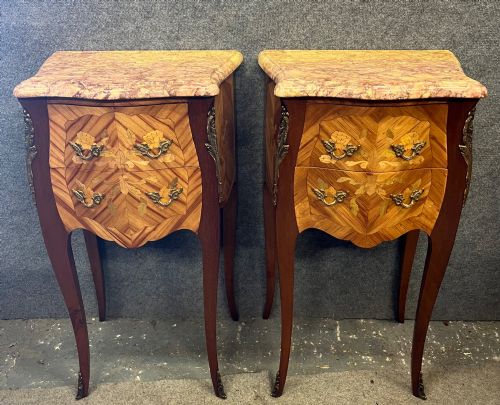
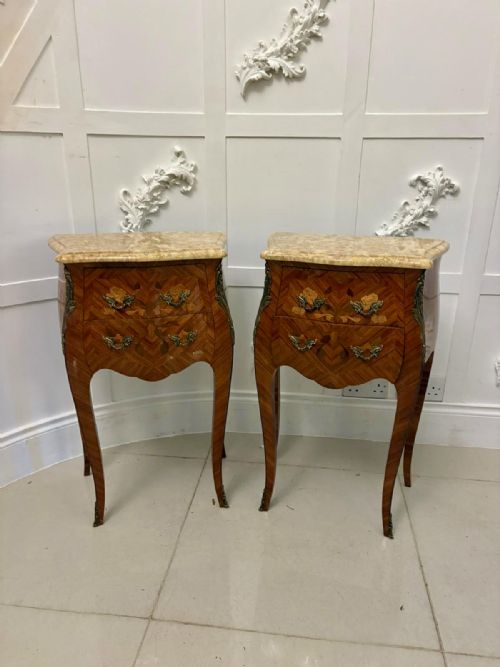
Cabinet makers utilised solid walnut, burr walnut, and kingwood veneers applied over secondary timbers, frequently incorporating intricate marquetry and parquetry inlay patterns. Structural strength was maintained through traditional joinery, while decorative mounts in brass and ormolu were added to specific revival styles.
The characteristic stone surfaces employ heavy marble tops, including varieties such as Belgian Sainte-Anne marble, shaped to follow the contours of the cabinet base. These tops were cut and polished to provide a durable, water-resistant surface suited to daily bedroom use.
Materials recorded across these cabinets include solid walnut, burr walnut, tulipwood, kingwood, brass, ormolu, and Belgian Sainte-Anne marble.
What varies in quality
Quality in these tables is defined by the selection of timber figures, such as burr walnut or figured grain, matched against the precise execution of marquetry inlay work. Superior examples demonstrate rigorous attention to cabinet proportions and the seamless integration of heavy marble slabs into the wooden frame.
The presence of fine decorative details, including chased ormolu mounts, well-executed parquetry, and substantial structural weight, separates standard production pieces from higher-tier workshop output.
The Walnut Marble Bedside Tables Glossary
- Chevet
- A French term for a small bedside table or nightstand.
- Marquetry
- Decorative veneer work forming pictorial or geometric patterns using various coloured woods.
- Parquetry
- A geometric mosaic of wood pieces used for decorative floors and cabinet surfaces.
- Ormolu
- Gilt bronze applied as a decorative mount on furniture.
- Bombe
- A swollen or bulging out-curved shape characteristic of certain continental cabinet styles.
Walnut Marble Bedside Tables: Frequently Asked Questions
How are walnut marble bedside tables cleaned?
Clean the wooden sections using a dry or barely damp cloth, avoiding harsh chemical polishes that might damage the French polish or wax finish.
Treat the marble top separately with mild soapy water and dry it immediately to prevent water spots on the stone surface.
Were these tables originally made in pairs?
Many examples were produced as matched pairs for twin beds, which remains a common format found in period listings today.
Single tables also appear, having been manufactured as individual bedside cabinets or small side cupboards.
What periods do these tables come from?
The available pieces predominantly date from the nineteenth century through to the nineteen-thirties, covering Victorian, Edwardian, and art deco eras.
Stylistic influences span French provincial designs alongside more formal Louis XV and Louis XVI revival pieces.
How do I identify different styles?
Louis XV and related revival styles often display curved cabriole legs and serpentine fronts with ormolu mounts, while art deco pieces feature cleaner geometric lines and burr walnut grain.
Parquetry and marquetry inlay point towards specific French cabinet-making traditions from the late nineteenth century onward.