




Walnut Ladies Desk
When you search for walnut ladies desk, you encounter compact writing furniture designed for private correspondence, spanning Victorian and later revival periods.
Walnut Ladies Desk
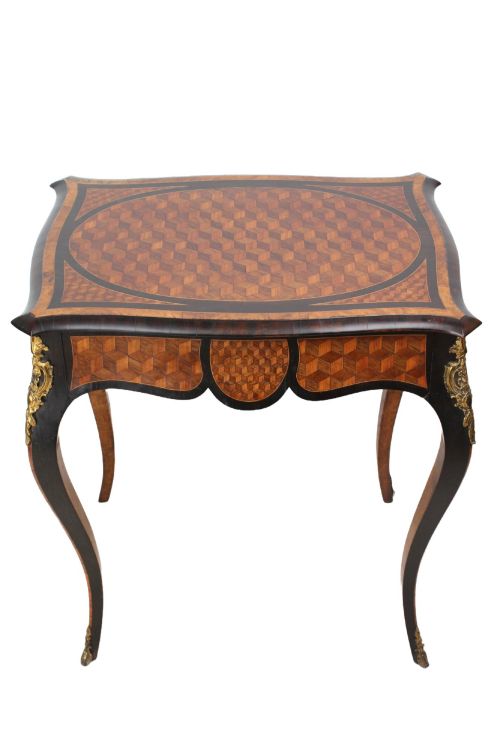
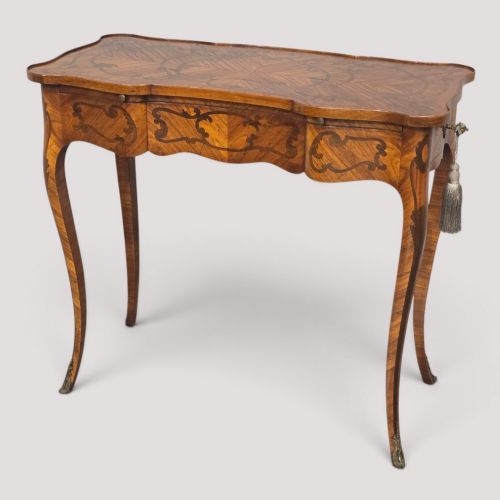
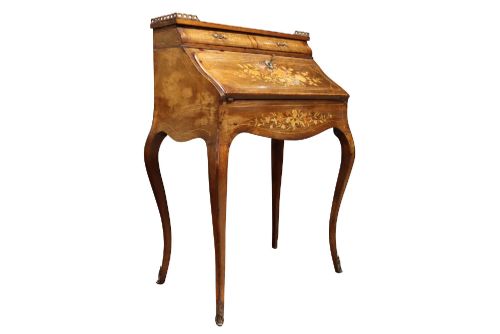
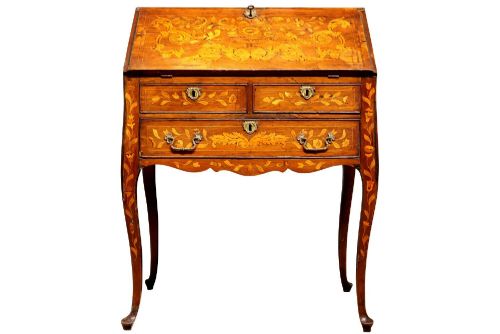
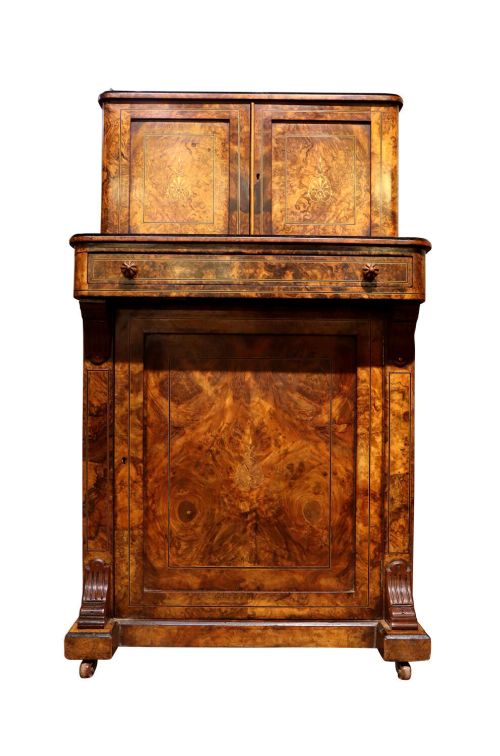
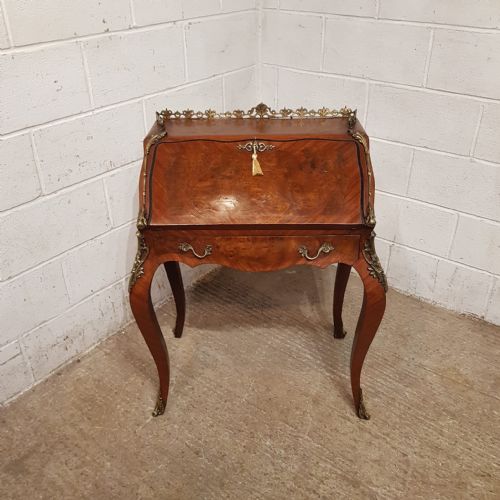
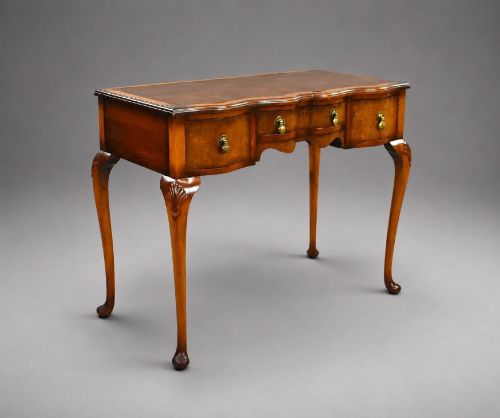
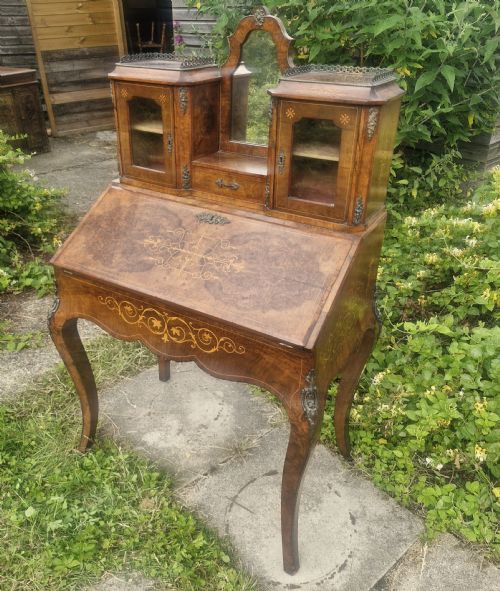
A walnut ladies desk encompasses several distinct forms designed for private correspondence and light paperwork, most frequently appearing as Victorian writing tables, compact bureaus, and tiered bonheur-du-jour cabinets. These pieces often feature neat proportions suited for smaller rooms, combining a writing surface with small drawers, pigeonholes, or enclosed compartments.
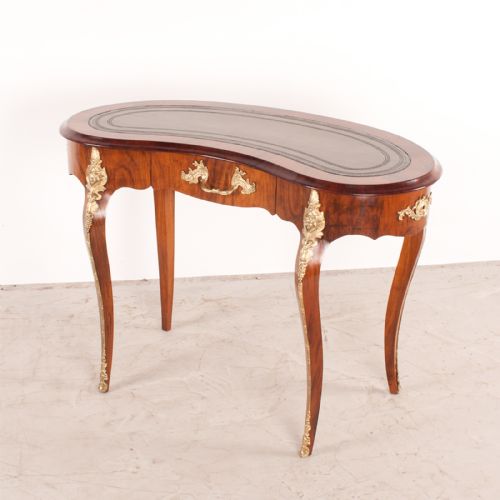
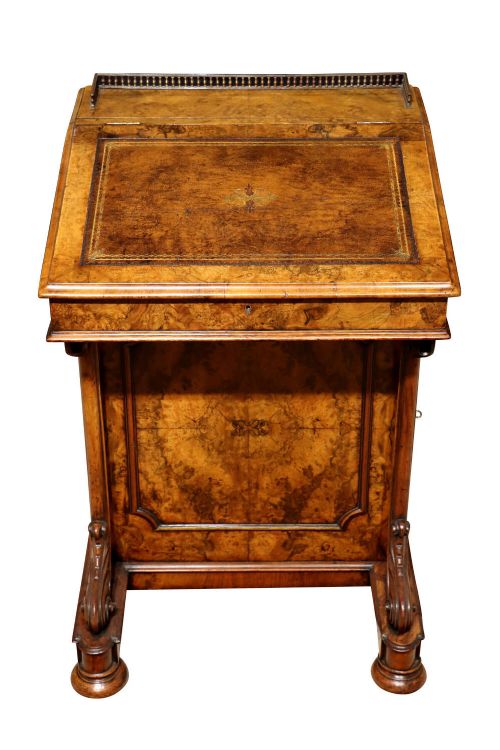
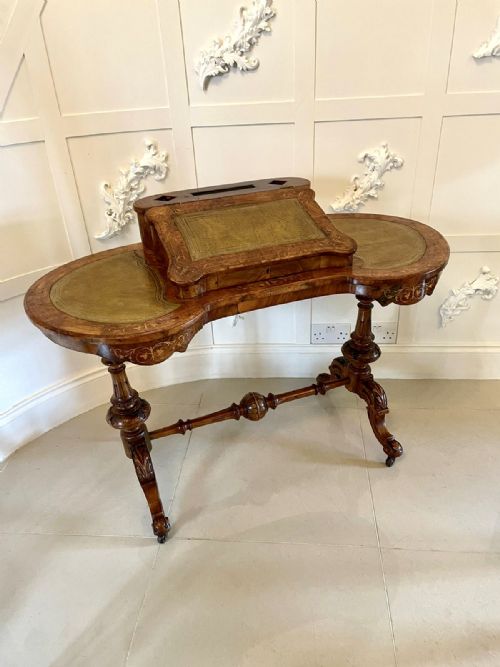
The pieces on this page emerge primarily from the nineteenth and early twentieth centuries, spanning Victorian production alongside Edwardian and later revival movements. French influence appears repeatedly through Louis XV revival designs, alongside English interpretations utilising classic forms such as the Davenport and the kidney-shaped writing table.
Materials and Construction
Makers utilised solid walnut and figured burr walnut veneers over secondary timbers, exploiting the rich, swirling grain patterns of the wood on primary surfaces such as desk lids and table tops. Inlays of satinwood, floral marquetry, and delicate brass stringing frequently decorate the exterior panels, while secondary woods line the interior drawers.
Writing surfaces are frequently inset with panels of tooled leather, providing a durable platform for pen work. Structural enrichment includes cast or chased ormolu mounts, brass gallery rails, and fitted satinwood interiors containing miniature drawers and compartments.
Walnut Ladies Desk Retail Price Guide 2026
Typical asking prices for walnut ladies desk among the pieces listed under this phrase on Sellingantiques today, from the lower quarter to the upper quarter. They describe what is for sale here now, not the wider market.
Listings feature walnut, burr walnut, and satinwood across Victorian, Edwardian, and twentieth-century periods.
Craftsmanship and Detail
Quality reveals itself in the selection of timber veneers, where symmetrical burr walnut figuring across a desk lid demonstrates deliberate matching by the cabinetmaker. Finer examples display meticulous hand-cut marquetry and precise inlay work rather than simpler printed or stamped decoration.
Internal construction further separates tiers of execution, seen in the use of secondary timbers for drawer linings, hand-cut dovetail joints, and the precision with which small internal compartments and miniature drawers operate within a bonheur-du-jour.
JAS Shoolbred
The Walnut Ladies Desk Glossary
- Bonheur-du-jour
- A small, light ladies desk featuring a raised superstructure of small drawers and shelves above a writing surface. This French form gained popularity during the nineteenth century for private correspondence.
- Davenport
- A compact desk comprising a sloping, hinged writing lid above a pedestal of side drawers. Early versions often incorporated internal stationery storage accessed from the side.
- Burr walnut
- Wood harvested from the warted growths on walnut trees, yielding highly figured grain patterns with intricate swirls. Cabinetmakers sliced this timber into thin veneers to ornament prominent desk surfaces.
- Ormolu
- Gilded bronze used for decorative mounts, feet, and gallery rails on nineteenth-century revival furniture. This material provides metallic contrast against dark walnut surfaces.
- Marquetry
- The art of forming decorative patterns by fitting together contrasting pieces of wood veneer. Artisans utilised this technique to create floral and geometric designs on desk lids.
Walnut Ladies Desk: Frequently Asked Questions
What is a bonheur du jour?
A bonheur du jour is a small, light writing desk featuring a raised set of drawers and shelves above the main writing surface. It originated in France and became a fashionable piece of boudoir furniture during the Victorian period.
The upper section typically houses small pigeonholes and miniature drawers intended for holding stationery, letters, and stamps. Lower writing areas often lift or pull out to reveal additional compartments.
How do I identify burr walnut?
Burr walnut is recognizable by its dense, swirling grain patterns filled with small knot formations and circular eyes. It comes from specific growths on the tree and creates a highly decorative surface when sliced into veneer.
Cabinetmakers applied these figured veneers to the primary display surfaces of desks, contrasting them with straighter-grained walnut borders or banding.
Were these desks used for writing letters?
These pieces were specifically designed for private correspondence, diary keeping, and managing household accounts rather than heavy administrative work. Their compact proportions suited sitting rooms and private bedrooms.
The integration of leather writing surfaces provided a smooth, durable platform for dipping quill or steel nib pens into inkwells.
How do I care for a leather desk top?
Leather desk inserts require gentle cleaning with a dry or slightly damp cloth to prevent the material from drying out. Avoid harsh chemical cleaners or excess moisture.
Applying specialised leather balms periodically helps preserve the suppleness and colour of the writing surface without damaging the surrounding wood.