
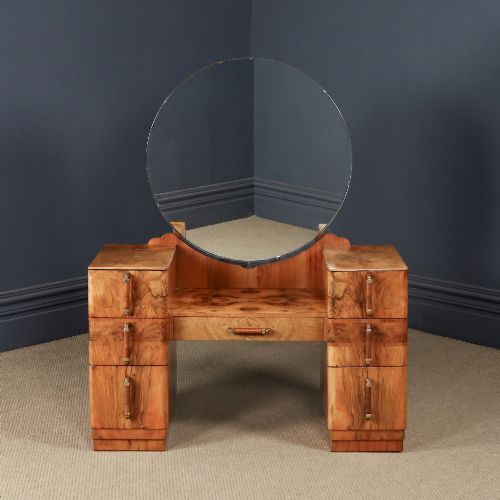
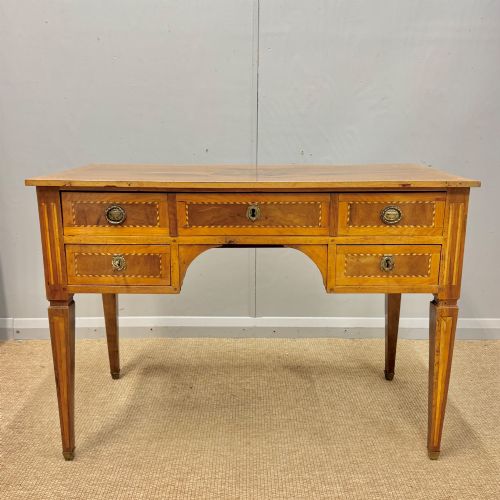
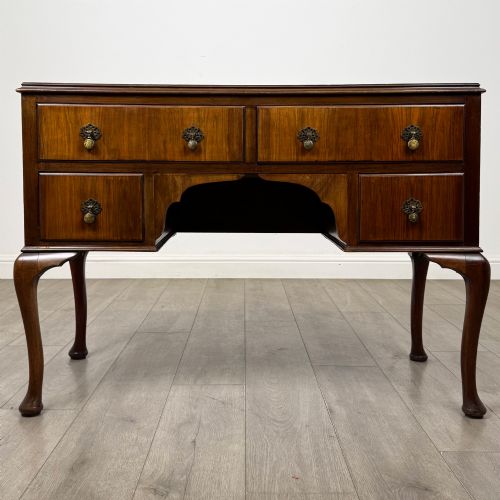
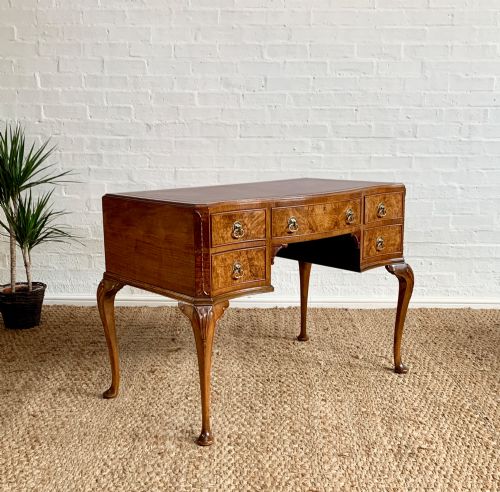

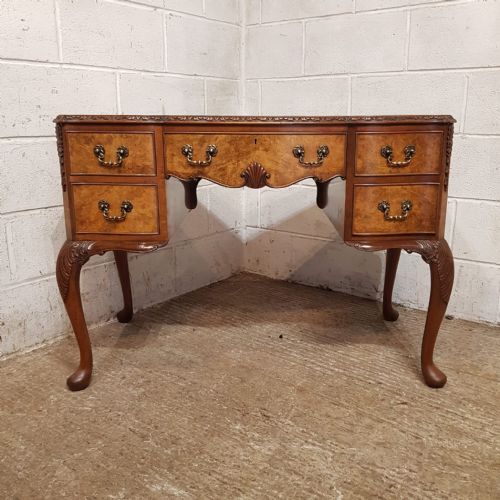
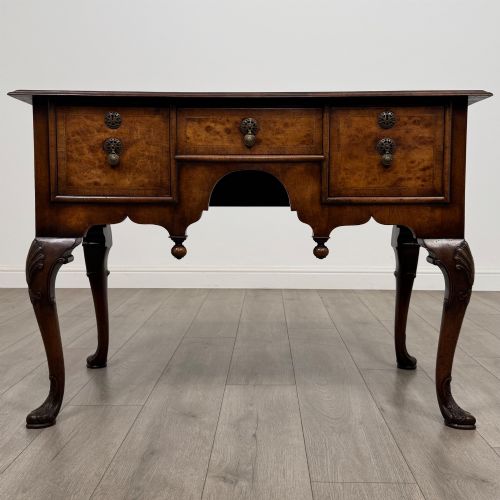
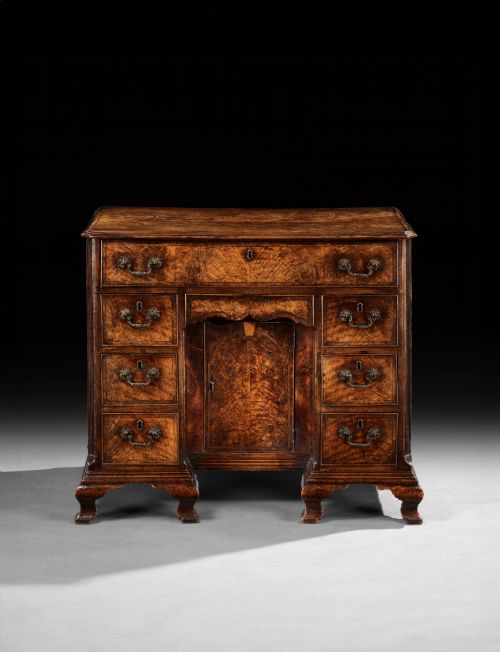
Walnut Kneehole Dressing Table
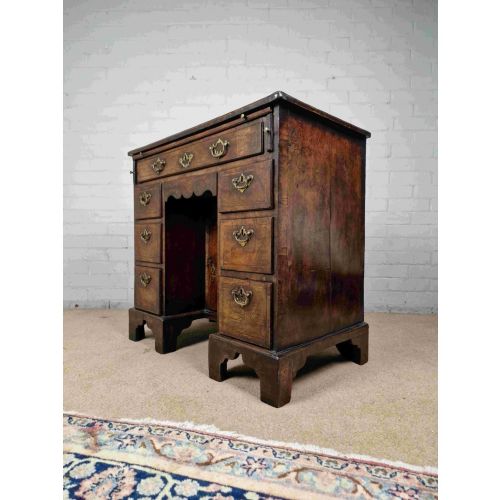
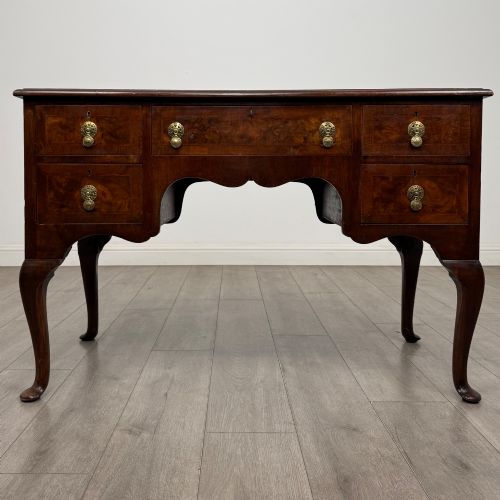
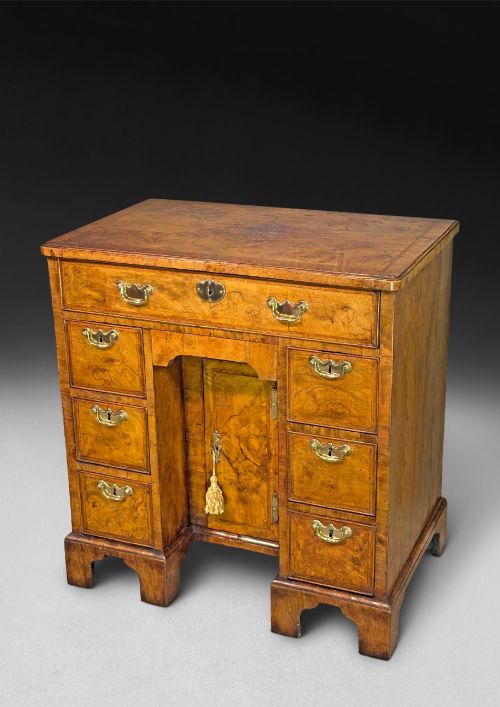
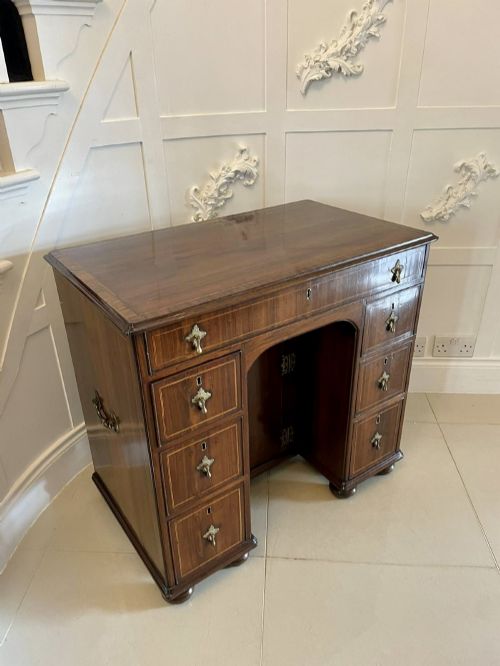
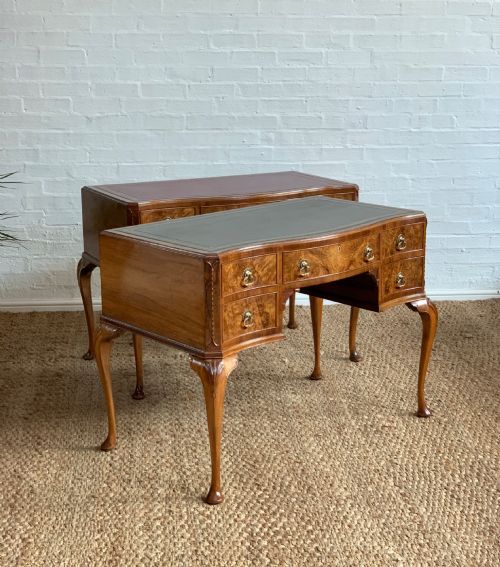
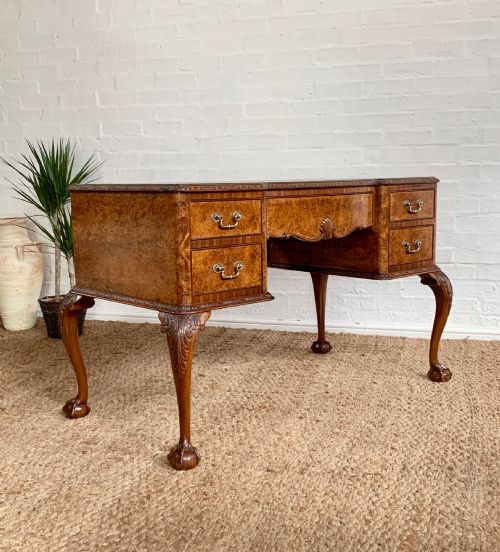
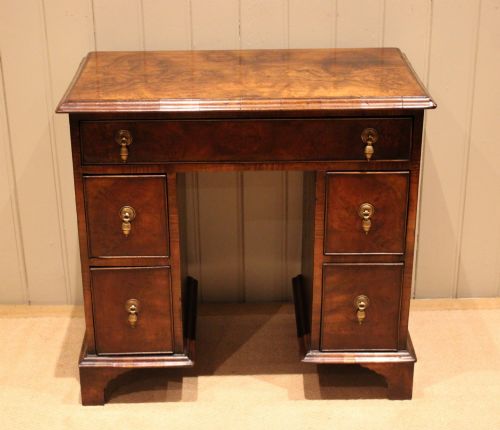
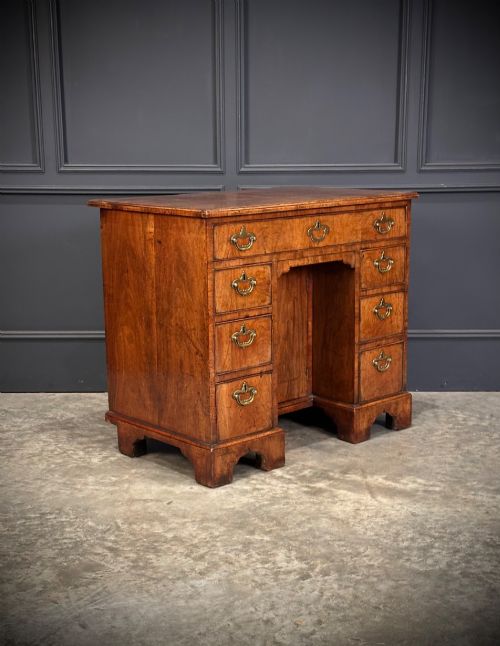
These pieces of walnut kneehole dressing table combine recessed central cupboards with flanking drawer pedestals.
Walnut Kneehole Dressing Table
A walnut kneehole dressing table offers a compact surface for grooming or writing, supported by pedestals of small drawers and a central recess. This page brings together examples spanning the eighteenth century through to the art deco period and the nineteen-thirties.
Early forms originate in the Georgian and Queen Anne eras, constructed with figured or fiddleback timbers and traditional proportions. Later interpretations draw upon these earlier styles during the Edwardian period and the twentieth century.
The layout typically incorporates a kneehole space containing a concealed drawer or cupboard door, flanked by banks of multiple small drawers.
Craftsmanship and timber selection
The standard of a walnut kneehole dressing table depends heavily on the choice of timber, with highly figured burr walnut and fiddleback grain commanding attention for its visual depth. Matching veneers across drawer fronts demonstrate deliberate planning by the maker.
Refined execution is visible in the neatness of the dovetailing, the retention of original brass furniture, and the integrity of the secondary timbers used inside the carcase.
Secret drawers occasionally hide behind the main kneehole compartment, waiting for someone to discover the concealed release mechanism.
Wylie & Lochhead Glasgow·Maple & Co
The Walnut Kneehole Dressing Table Glossary
- Kneehole
- A recessed space beneath the central part of a desk or dressing table, designed to accommodate the user's legs. This arrangement allows for flanking stacks of drawers.
- Burr walnut
- A veneer taken from the wart-like growth on a walnut tree, producing an intricate and swirling grain pattern. Cabinetmakers prize this material for decorative drawer fronts and top panels.
- Lowboy
- A small table with drawers, resembling a low dressing table or side table, often standing on cabriole legs. These pieces date from the early periods.
- Fiddleback
- A type of figured timber grain featuring horizontal ripples that resemble the back of a violin. This figure catches the light when polished.
- Escutcheon
- A protective plate surrounding a keyhole, usually fashioned from brass. It guards the surrounding wood from wear caused by the key.
Walnut Kneehole Dressing Table: Frequently Asked Questions
How were these tables originally used?
These pieces served primarily for personal grooming and morning toilette tasks in bedrooms and dressing rooms. The central kneehole provided comfortable seating while the surrounding drawers held small accessories and cosmetics.
Over time, many of these furniture items transitioned into writing desks and study tables. The surface accommodated correspondence while the drawers stored writing implements and papers.
What is the difference between an eighteenth century piece and a later revival version?
Eighteenth century examples display the original construction methods, timber ageing, and hand-cut dovetails characteristic of the Georgian and Queen Anne periods. They utilise specific primary and secondary woods native to their era.
Revival versions from the Edwardian period or the nineteen-thirties imitate these earlier styles or adopt art deco aesthetics. They feature twentieth-century mechanical sawing and construction techniques despite using walnut veneers.
How do I identify burr walnut?
Burr walnut exhibits a dense, swirling pattern filled with small knots and irregular grain formations. This visual texture results from abnormal tree growth rather than straight timber rings.
Cabinetmakers applied this figured wood as a veneer over stable carcase timbers to create decorative surfaces on drawer fronts and tops.
Can I use a kneehole dressing table as a desk?
These tables function effectively as writing desks because their kneehole clearance and surface area match standard desk proportions. Many surviving pieces feature leather writing inserts specifically suited for correspondence.
Checking the internal kneehole height ensures sufficient legroom for comfortable daily seating.