
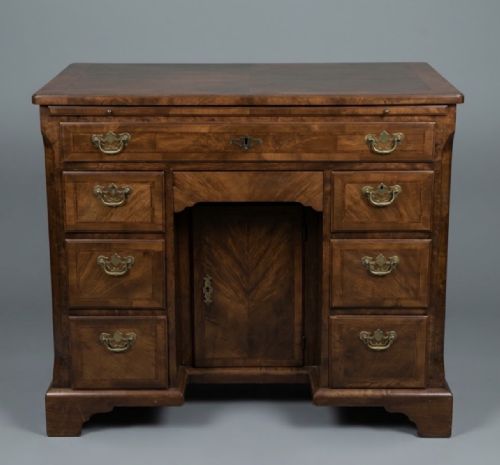
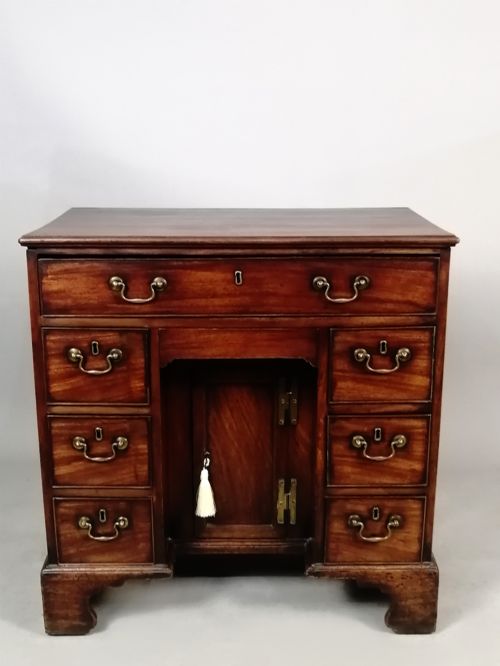
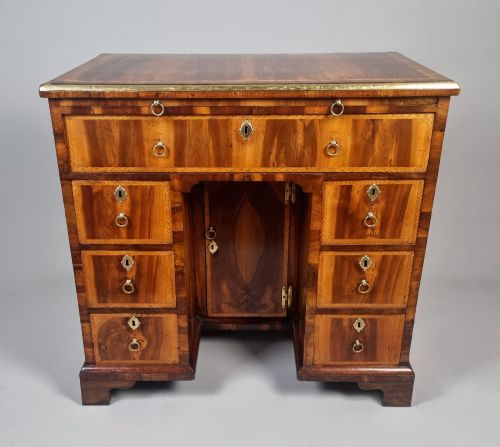
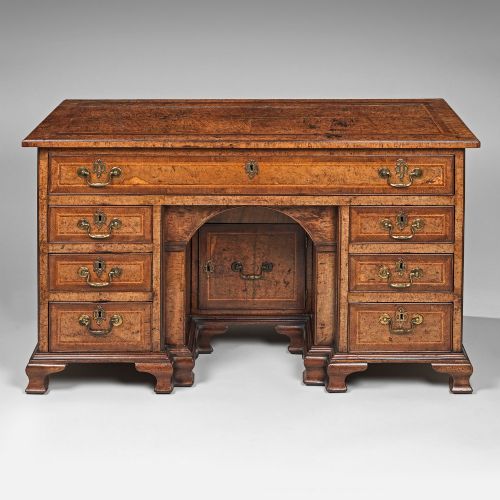
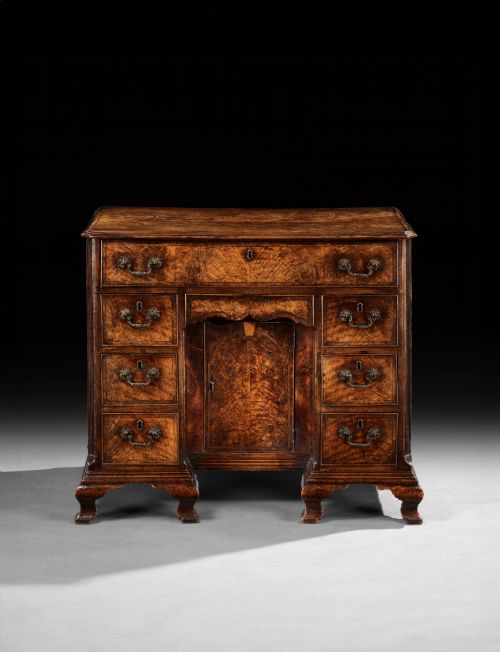


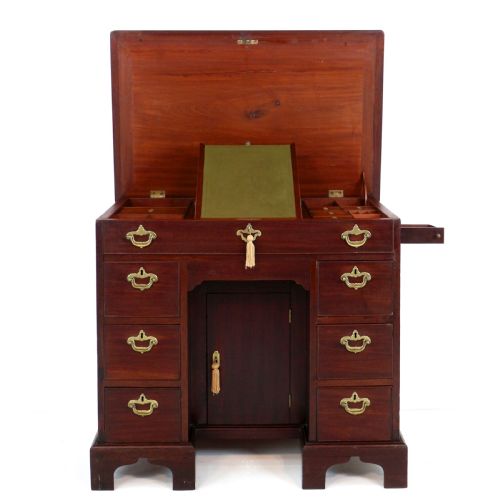


George II Kneehole Table
A george ii kneehole table is a compact writing or dressing desk with a central recessed cupboard, and you want one for its exceptional cabinetwork and timber figure.
George II Kneehole Table
A george ii kneehole table brings together practical drawers and a central kneehole recess behind a small cupboard door, forming a tidy writing or dressing station. These pieces appear in forms described as desks, dressing tables, dressing chests, and lowboys.
The examples gathered here span authentic eighteenth-century periods alongside later nineteenth-century revivals built in the george ii style. Walnut, mahogany, oak, yew wood, burr elm, and cherry wood recur across these forms.
Most pieces date to the eighteenth century, while others emerge from Victorian revival periods around eighteen-eighty to nineteen-hundred. Buyers encounter both diminutive proportions and fitted interiors containing various small drawers.
Materials and construction
Cabinetmakers utilised figured timbers such as walnut, mahogany, burr elm, and yew wood, often applying veneers and featherbanding to enrich the surfaces. These dense woods provided stable foundations for intricate cabinetry.
Brass hardware, including original brasses and handles, fastens to the drawer fronts and doors of these tables. Glass tops also appear on certain examples to protect the polished wood surfaces beneath.
One diminutive desk waits quietly to hold your smallest secrets.
Assessing quality
Quality rests upon the choice of timber figure, such as fiddleback walnut or burr elm, and the precision of the cabinet construction. Finer examples display meticulous featherbanding and harmonious proportions that elevate the piece.
The presence of original brasses and untouched timber patination distinguishes superior pieces from later revivals or heavily restored items. The integration of fitted interior compartments further marks out the upper tier of these tables.
The George II Kneehole Table Glossary
- Kneehole table
- A desk or dressing table featuring a recessed central space beneath the main surface, flanked by pedestals of small drawers. This compact arrangement creates a dedicated space for seated writing or grooming.
- Fiddleback walnut
- A figured variety of walnut wood showing a undulating grain pattern resembling the back of a violin. Cabinetmakers prized this decorative timber for high-status eighteenth-century furniture.
- Featherbanding
- A type of decorative inlay using small veneer segments arranged in a herringbone or feather-like pattern around drawer edges. This technique frames the primary wood surface with precise geometric borders.
- Lowboy
- A small side table or dressing table with one or more rows of drawers supported on four legs. These tables often share similar proportions and timber construction with kneehole desks.
- Burr elm
- A woody growth on an elm tree that produces complex, swirling grain patterns when sliced into veneer. Furniture makers selected these figured sections to create striking focal points on drawer fronts.
George II Kneehole Table: Frequently Asked Questions
What is a george ii kneehole table used for?
These pieces served historically as private writing desks or dressing tables for grooming and correspondence. Their compact footprint allowed them to sit comfortably in bedrooms or small closets.
Today, owners utilise them as functional writing desks in studies or as decorative console tables in living spaces. The internal drawers provide practical storage for modern stationery or personal items.
How do I spot an 18th-century piece?
Eighteenth-century examples display period construction methods, timber ageing, and specific design proportions characteristic of the georgian era. Examining the secondary woods inside the drawer construction helps confirm the period.
Later Victorian revivals built in the georgii style often employ different internal assembly techniques and modern hardware fixings. Comparing the timber patination and surface wear provides further clues to age.
Are these tables suitable for small rooms?
Their modest proportions and flat backs make them well suited to placement against walls or within compact spaces. The recessed kneehole ensures they occupy minimal floor area while offering multiple drawers.
Their shallow depth allows them to function effectively in hallways or bedrooms where larger desks would overwhelm the room. They combine surface utility with substantial enclosed storage.
What woods were used in these tables?
Cabinetmakers worked with a variety of native and imported timbers, most notably walnut, mahogany, oak, yew wood, burr elm, and cherry wood. Walnut and mahogany frequently appear with figured veneers.
Secondary timbers like oak often form the internal linings of the drawers. The choice of primary wood heavily influences the visual character and colour of each table.