



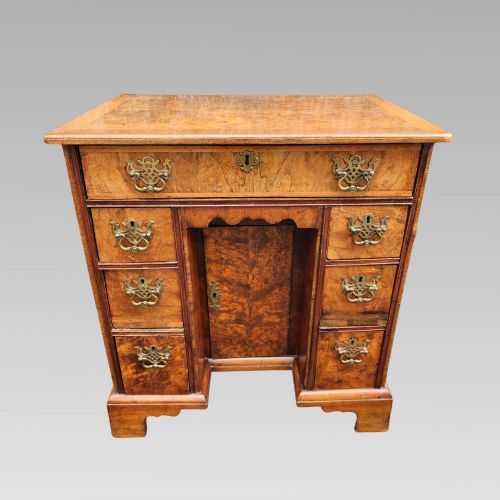
Georgian Walnut Pedestal Desk
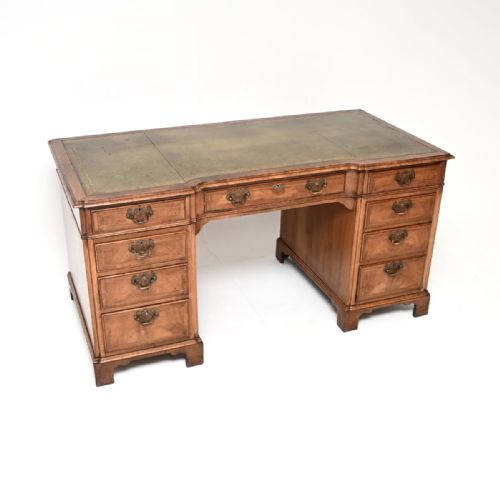
A georgian walnut pedestal desk is a substantial writing furniture piece featuring a central kneehole flanked by pedestals of drawers, sought after for its rich timber and historic presence.
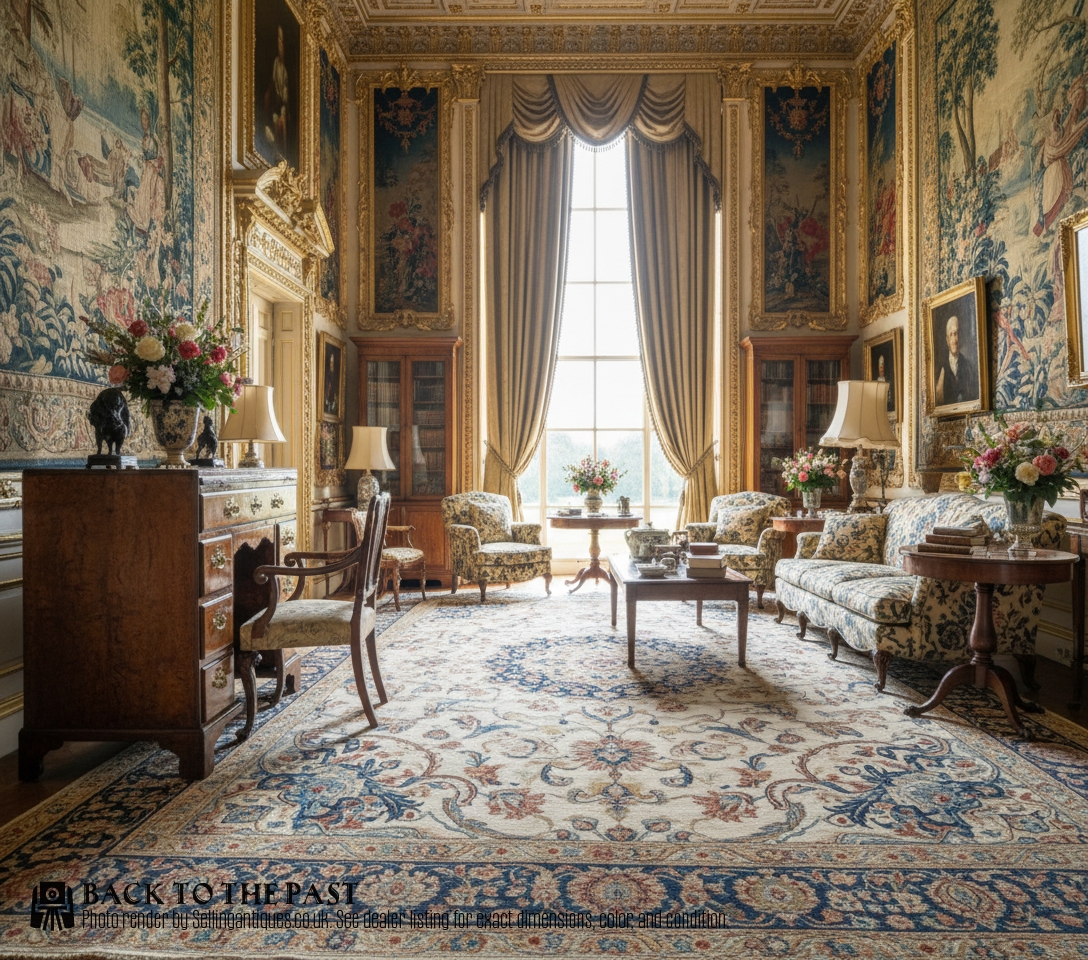
Georgian Walnut Pedestal Desk
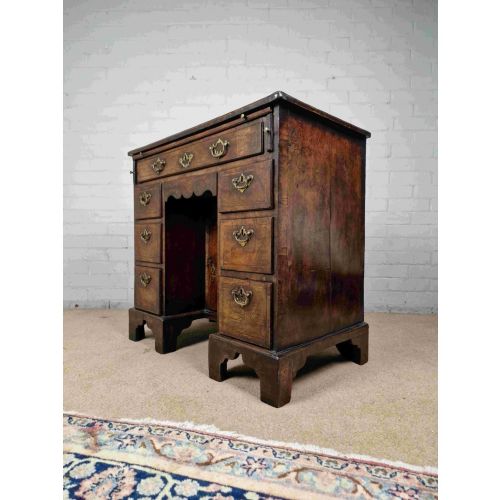
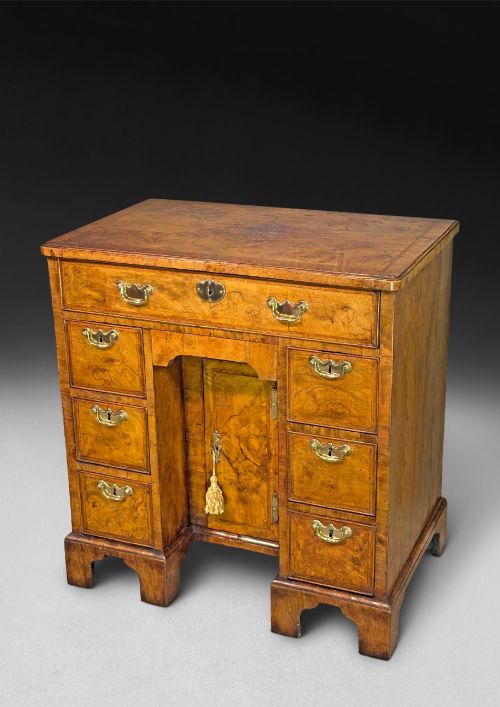
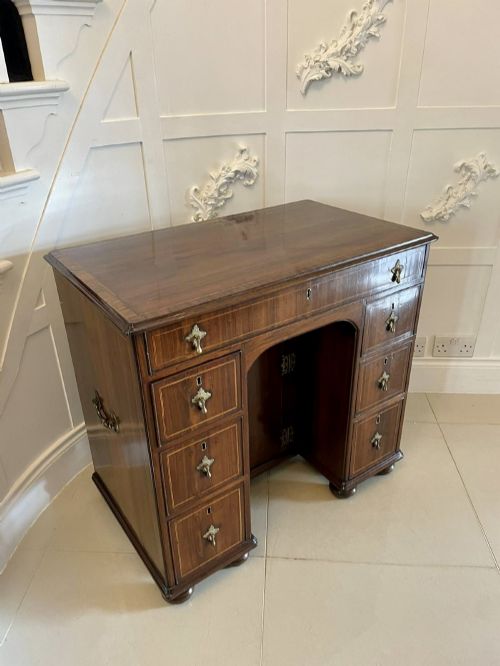
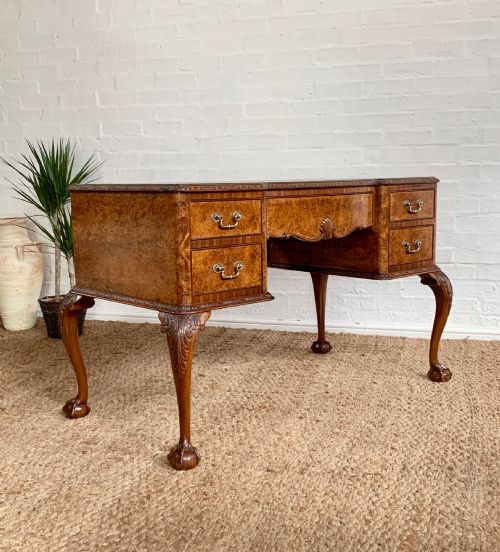
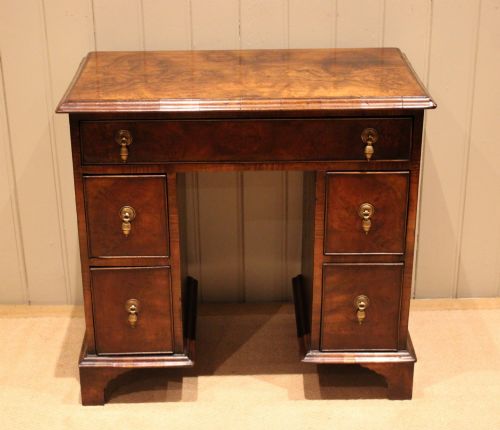
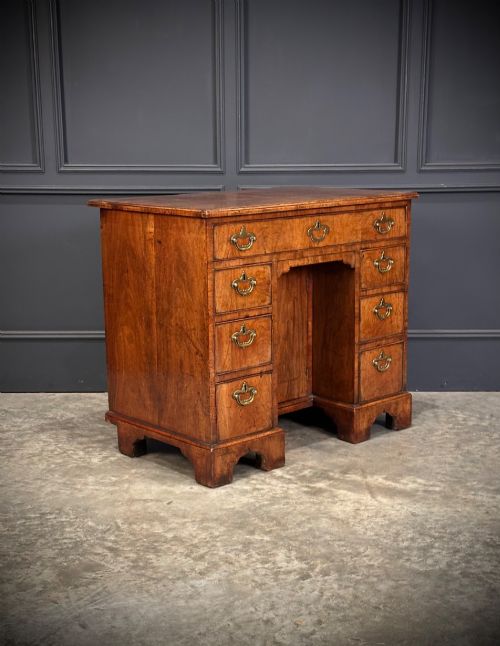
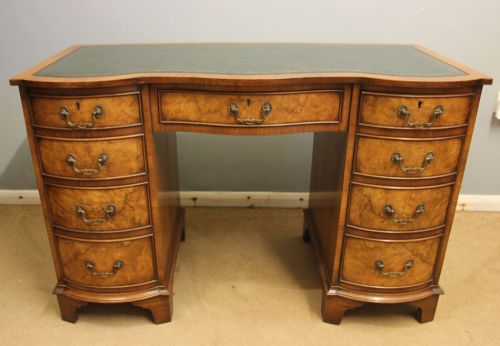
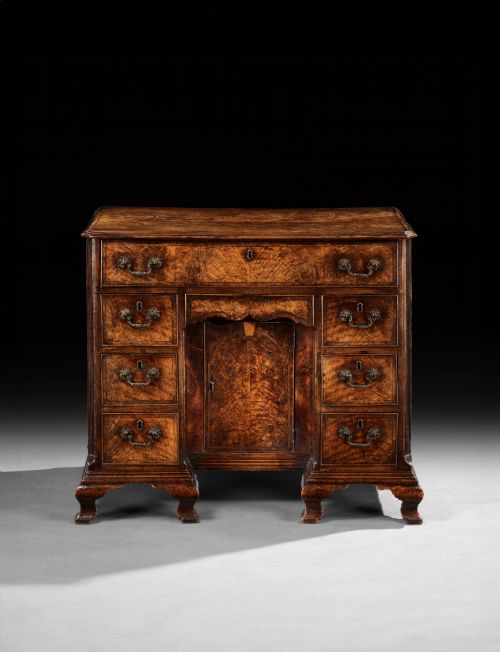
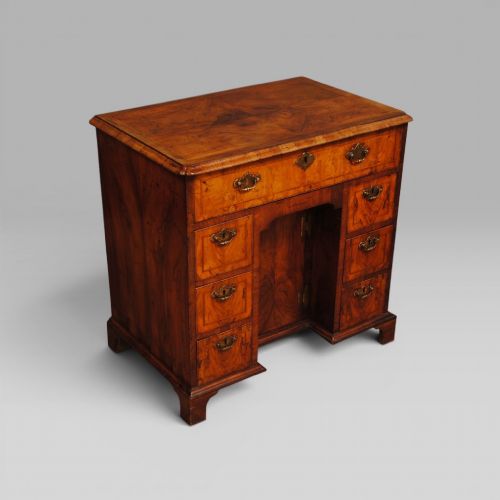
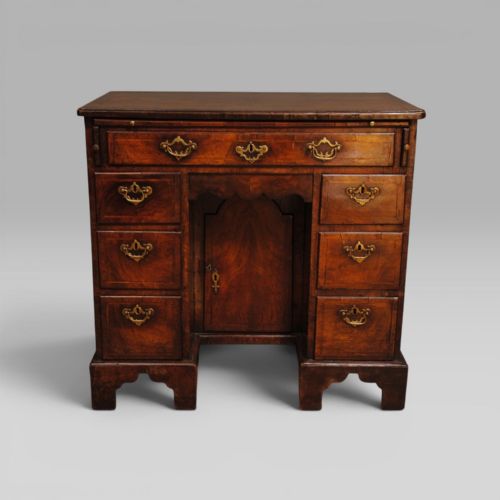
A georgian walnut pedestal desk typically presents as a compact kneehole form with a central recess, frequently housing a small cupboard door behind the pedestal drawers. These pieces emerge from the eighteenth century, aligned with periods like the reign of George I and George II, alongside later revival interpretations from the nineteenth and twentieth centuries.
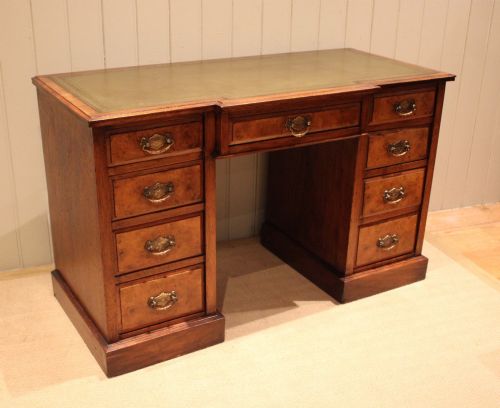
Buyers often encounter variations ranging from authentic eighteenth-century examples to later twentieth-century burr walnut pedestal desks and dressing tables. The form prioritises practical storage within twin pedestals whilst maintaining a formal architectural presence suitable for a study or library.
Materials and construction
Makers utilised solid walnut, figured walnut, and burr walnut veneer laid over secondary timbers such as oak and pine to achieve rich decorative grain patterns on the drawer fronts and top surfaces. Cabinet makers selected fiddleback and figured variations for their visual depth, often complemented by crossbanding and stringing.
Traditional construction involved dovetailed drawer boxes, bracket feet, and inset tooled leather writing surfaces framed by timber borders. Drawer furniture typically comprises cast brass drop handles and escutcheons secured to the drawer faces.
Georgian Walnut Pedestal Desk Retail Price Guide 2026
Typical asking prices for georgian walnut pedestal desk among the pieces listed under this phrase on Sellingantiques today, from the lower quarter to the upper quarter. They describe what is for sale here now, not the wider market.
Several kneehole desks secretly hide miniature drawers behind their central cupboard doors for keeping hidden notes.
Assessing quality in walnut desks
Quality rests principally on the choice of timber and the preservation of the original burr or figured walnut surfaces. Superior examples display carefully matched veneer veneers across the top and drawer fronts, maintaining natural colour and patina without excessive restoration.
Construction integrity defines the upper tier of desks, observable in the neatness of dovetails, the retention of original brass hardware, and the stability of the central kneehole cupboard door and internal fittings.
The Georgian Walnut Pedestal Desk Glossary
- Kneehole desk
- A writing table featuring a central recess or kneehole with banks of small drawers on either side. This configuration became prominent during the early eighteenth century.
- Burr walnut
- A prized timber harvested from walnut tree growths, yielding highly swirled and mottled grain patterns. Cabinet makers applied it as a veneer to important desk surfaces.
- Crossbanding
- A decorative border technique where strips of veneer are laid perpendicular to the main grain direction. It frames the perimeter of drawer fronts and desk tops.
- Bracket foot
- A simple, stable foot form shaped like a bracket, commonly supporting eighteenth-century case furniture. It lifts the pedestal bases slightly off the floor.
- Tooled leather
- A writing surface insert decorated with gold leaf impressions using heated brass rolls and stamps. It provides a durable and traditional writing medium.
Georgian Walnut Pedestal Desk: Frequently Asked Questions
How do I date a walnut desk?
Dating relies on examining the secondary timbers, construction methods like hand-cut dovetails, and the style of the brass hardware. Eighteenth-century pieces exhibit different timber shrinkage and joinery compared to later nineteenth or twentieth-century revivals.
Hardware placement and drawer linings also provide clear indicators of period manufacture. Comparing the carcass construction against known chronological benchmarks helps clarify the age.
Are these desks suitable for daily use?
These desks function well for daily writing and laptop work when treated with appropriate care for historic timber and leather surfaces. Their traditional proportions offer practical drawer storage while fitting comfortably into modern studies.
Placing them away from direct heat sources protects the walnut veneer from drying or cracking. Using desk pads preserves the antique leather writing surface during regular use.
What is a kneehole desk?
A kneehole desk is a form of writing furniture designed with a central open space for the user's legs, flanked by two pedestals containing small drawers. This layout allows for an organised workspace with ample storage close at hand.
Many examples include a small recessed cupboard behind the kneehole space. This enclosed section often hides pigeonholes or small hidden drawers.
How do I care for burr walnut veneer?
Maintenance involves dusting with a soft, dry cloth and applying appropriate beeswax sparingly to nourish the timber. Avoiding direct sunlight prevents the walnut from fading and protects the delicate veneers from lifting.
Maintaining stable room humidity stops the secondary oak and pine carcasses from expanding or contracting. This gentle routine preserves the natural sheen of the historic polish.