
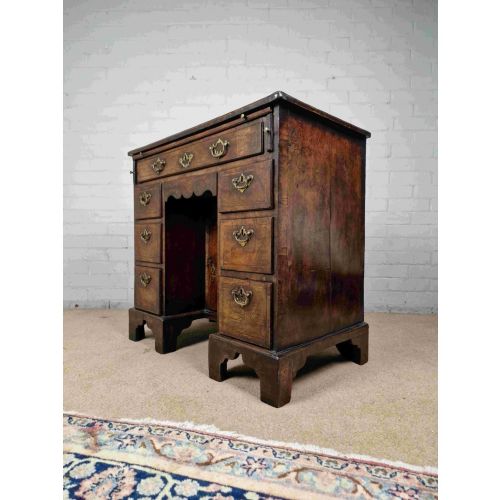
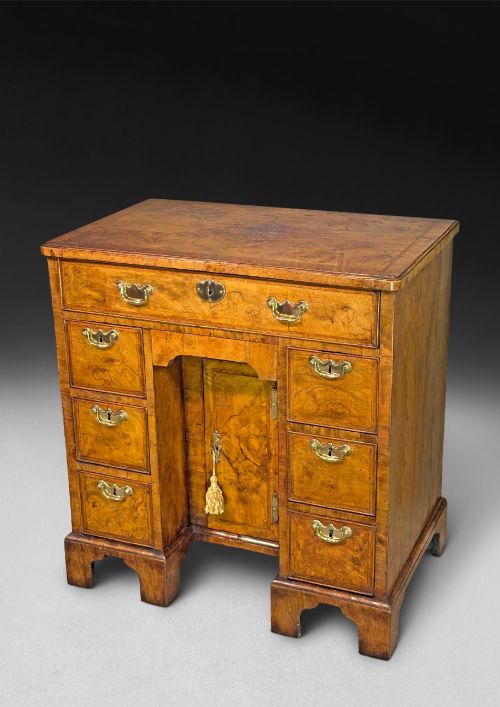
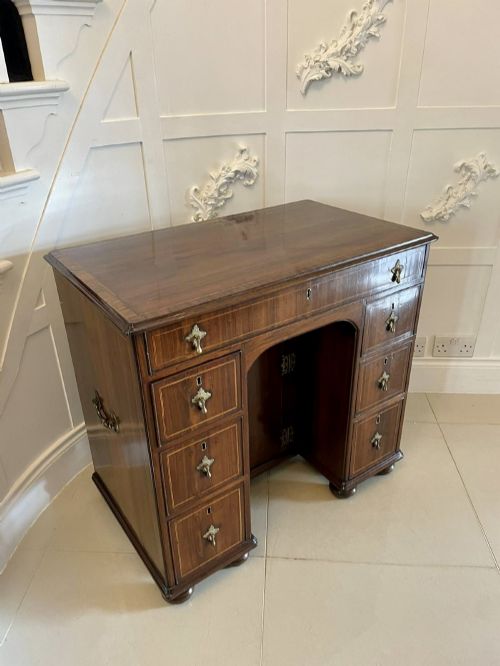
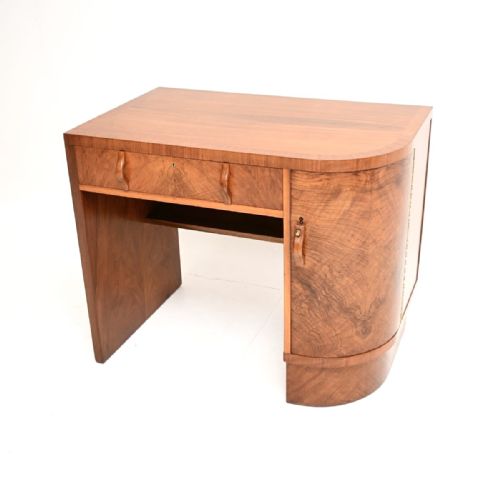

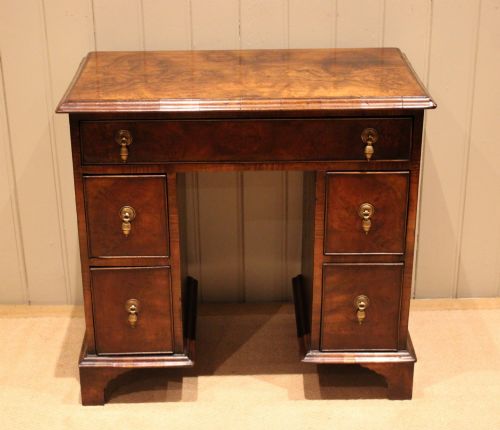
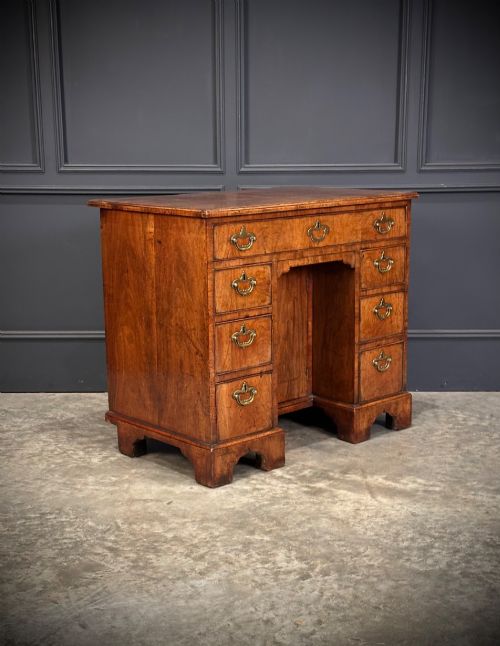
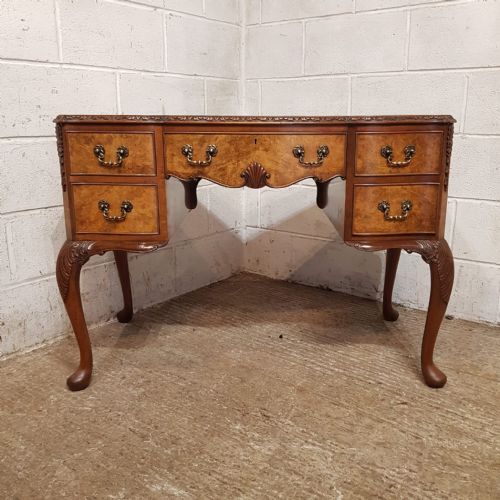
Walnut Kneehole Bureau
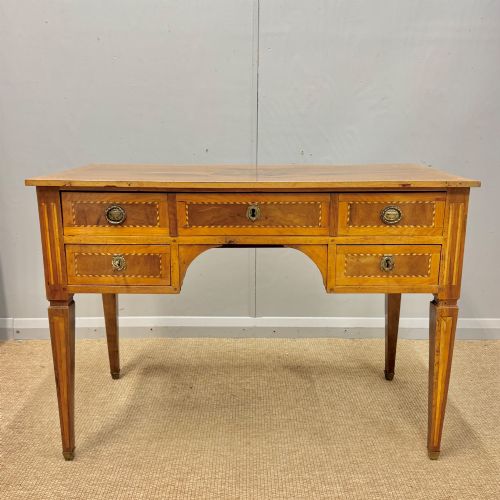
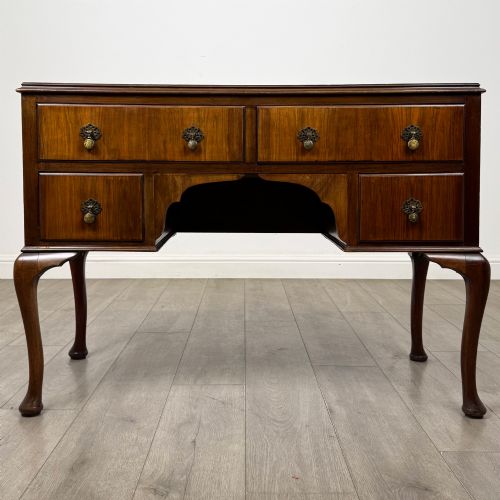
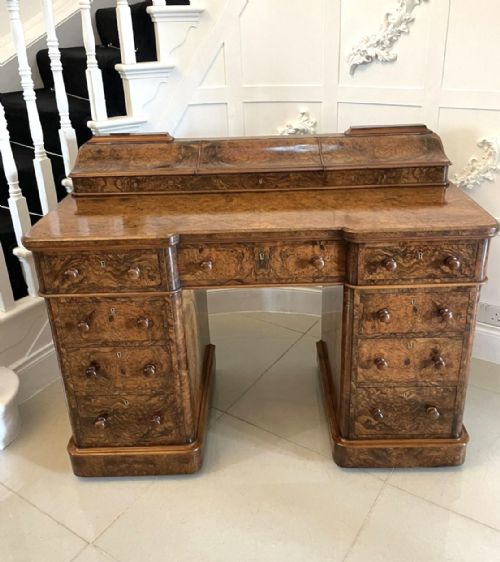
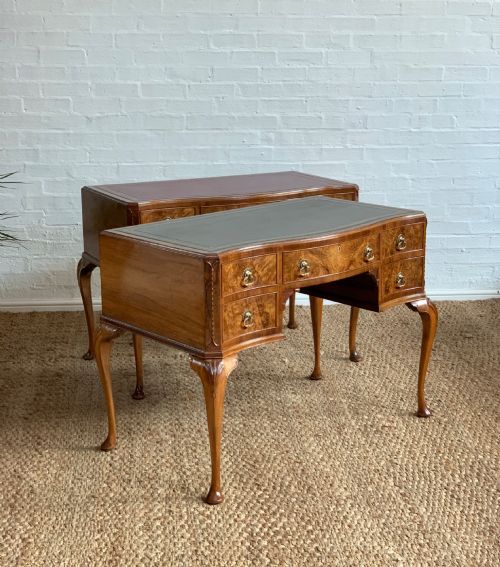
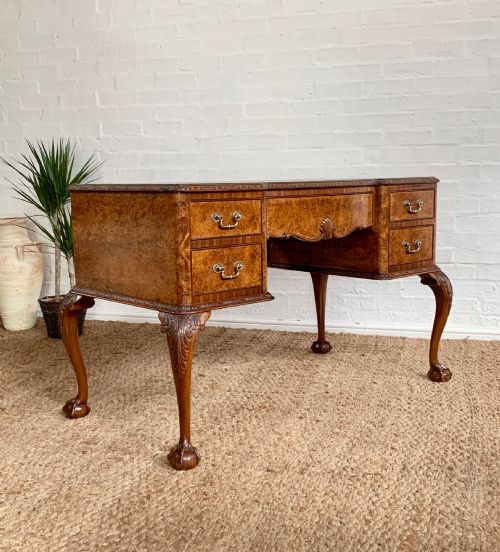
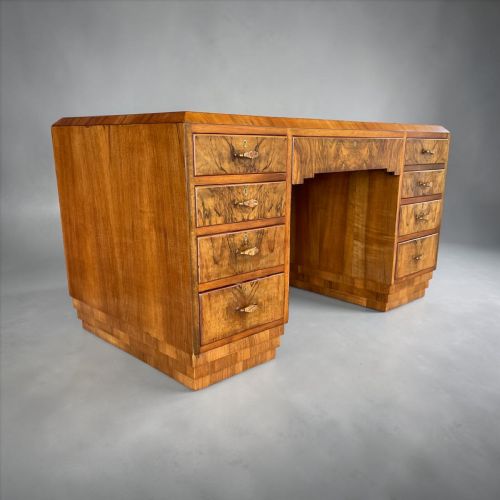
A walnut kneehole bureau offers a compact writing station with drawers flanking a recessed central recess, bringing timeless timber grain into a study.
Walnut Kneehole Bureau
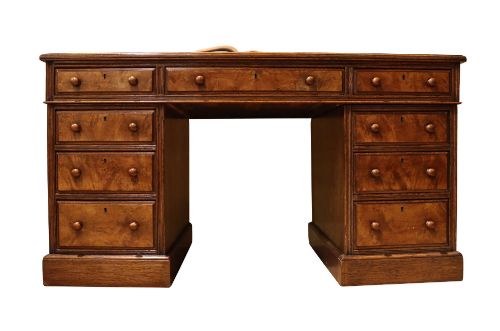
A walnut kneehole bureau brings together a recessed central cupboard or drawer flanked by small pedestal drawers, creating a compact writing station. When buyers search for a walnut kneehole bureau, they encounter forms spanning the eighteenth century through to later revivals.
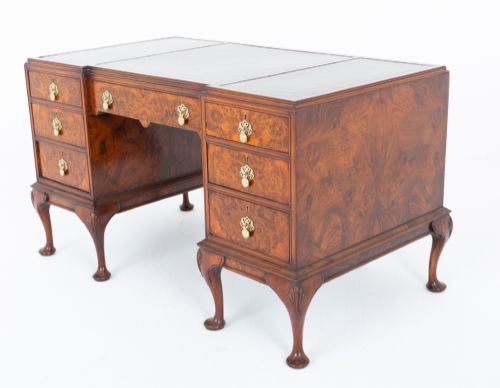
The pieces on this page range from early Georgian examples to later twentieth-century interpretations. Many items adopt the classic pedestal layout with quarter-veneered tops and fitted writing compartments.
Makers and craftsmen across various eras utilised distinct proportions, ranging from small-proportioned estate pieces to larger pedestal desks. The core arrangement of a central kneehole beneath a long top drawer remains consistent across periods.
Materials and construction methods
Cabinetmakers constructed these pieces using solid timbers and applied veneers over secondary woods like pine and oak. Burr walnut and figured walnut feature prominently, selected for their rich, swirling grain patterns.
Brass hardware, including batwing handles and escutcheons, secures the drawer fronts while leather writing surfaces appear on selected desk variations. Traditional dovetail joints secure the drawer construction throughout the various periods.
Materials across the selection include solid oak, pine, glass, leather, and decorative burr walnut veneers.
Distinguishing quality in construction and grain
Quality rests in the selection of the timber veneer and the precision of the cabinetwork. Pieces displaying matched burr walnut figures across the top and drawer fronts command greater attention than plain surfaces.
The integrity of the secondary woods, the execution of the dovetailing, and the retention of original brass hardware indicate the level of craftsmanship invested in the bureau.
Maple and Co·Wylie and Lochhead Glasgow·Étienne Kohlmann
The Walnut Kneehole Bureau Glossary
- Kneehole
- A recessed space beneath a desk or bureau designed to accommodate the user's legs while seated. This central void separates banks of small drawers on either side.
- Burr walnut
- A specialised timber cut from growth growths on walnut trees, yielding highly figured, swirling grain patterns. Cabinetmakers prize this material for decorative veneering.
- Veneer
- A thin slice of superior timber applied over a stable secondary wood such as oak or pine. This technique allows craftsmen to display striking grain figures economically.
- Escutcheon
- A protective plate surrounding a keyhole, usually fashioned from brass. It guards the surrounding wood from wear caused by the insertion of keys.
Walnut Kneehole Bureau: Frequently Asked Questions
How do I date a walnut kneehole bureau?
Dating relies on examining construction methods, timber choice, and hardware styles. Early eighteenth-century pieces often display fine dovetailing and candle slides, whereas later revivals incorporate twentieth-century manufacturing markers.
Examining the secondary woods inside the drawer linings provides additional clues to the period of origin.
What is the difference between a bureau and a desk?
A bureau traditionally incorporates a sloping fall-front that opens to reveal a fitted interior of pigeonholes and small drawers. A standard desk utilises a flat writing surface with fixed drawers.
Both forms appear within the kneehole configuration across various periods.
How do I care for walnut veneer?
Walnut veneer requires protection from direct sunlight and excessive humidity to prevent warping or fading. Regular dusting with a soft, dry cloth preserves the polished finish.
Application of appropriate furniture wax maintains the moisture and lustre of the timber grain.
Were these pieces used for writing or dressing?
Many kneehole forms served dual purposes as writing tables or dressing chests, depending on the interior fittings. Some examples include fitted drawers with compartments for documents or cosmetics.
Surviving hardware and internal layouts usually indicate the primary intended function of the piece.