
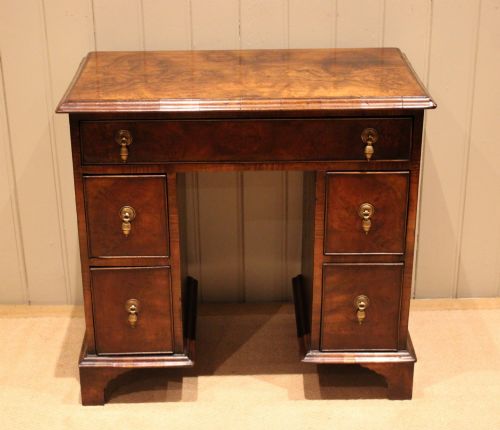
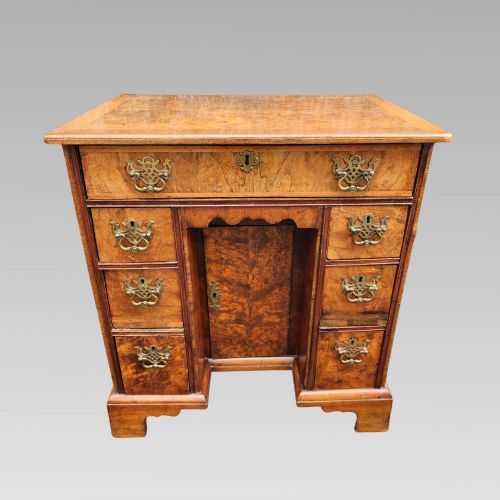


Small Walnut Kneehole Desk
A small walnut kneehole desk offers compact writing space and deep drawers, combining period timber with restrained domestic scale.
Small Walnut Kneehole Desk
A small walnut kneehole desk provides a compact writing surface set above a central recessed kneehole, flanked by banks of small drawers. When you search for this phrase, you find pieces intended for private chambers and dressing rooms rather than grand libraries.
The versions met most often on this page range from genuine 18th-century examples to later revival pieces from the 19th and early 20th centuries. These desks utilise figured veneers, burr walnut and oyster patterns over secondary timbers like oak and pine.
Makers and workshops constructed these writing tables in styles spanning Queen Anne, George I, George II, Georgian and later Art Deco interpretations. The proportions remain consistently modest, designed to fit tighter domestic spaces while offering substantial storage.
Materials and construction methods
Cabinet makers applied thin sheets of walnut, burr walnut or oyster veneer onto solid bases of oak or pine, securing the grain patterns across the primary surfaces. These timber choices provided rich figuring while maintaining structural stability.
Brass hardware, including drop handles and escutcheons, was fitted to the drawer fronts to complement the dark brown tones of the walnut. Traditional joinery methods secured the internal drawer boxes and structural frames.
Some tiny drawers conceal secret compartments behind the main storage rows for private correspondence.
Assessing quality in walnut writing furniture
The choice of timber veneer dictates much of the visual depth, with tightly figured burr walnut and matched oyster patterns sitting at the upper end of the scale. Plain timber surfaces present a simpler aesthetic that alters the overall presence of the piece.
The integrity of the construction, the retention of original brass hardware, and the crispness of the drawer linings separate standard examples from finer period works. Earlier pieces demonstrate meticulous hand-cut dovetailing and careful timber selection that survive centuries of use.
The Small Walnut Kneehole Desk Glossary
- Kneehole
- A recessed space beneath the central part of a desk designed to accommodate the user's legs while seated. This configuration allows for banks of drawers on either side without increasing the overall width of the furniture.
- Burr walnut
- Timber taken from a growth deformity on a walnut tree, producing swirling and knotted grain patterns. Cabinet makers prized this wood for its decorative qualities on drawer fronts and primary surfaces.
- Oyster veneer
- Slices of branch wood cut transversely to produce circular or oval patterns resembling oyster shells. This technique was popular in the late 17th and early 18th centuries for geometric tabletop designs.
- Dovetail
- A joint formed by interlocking wedge-shaped fingers used to secure drawer corners. Hand-cut dovetails indicate traditional craftsmanship and help date earlier pieces.
- Lowboy
- A small table with one or more rows of drawers, standing on four legs. These forms share similar proportions and construction details with small writing desks.
Small Walnut Kneehole Desk: Frequently Asked Questions
How do I date a walnut kneehole desk?
Examine the secondary timbers inside the drawer linings, such as oak or pine, alongside the construction of the dovetails and the style of the brass hardware. Earlier pieces often display hand-cut joinery and specific period proportions associated with the early 18th century.
Revival pieces from the 19th and 20th centuries frequently utilise machine-sawn elements or different internal construction methods while copying earlier Queen Anne or Georgian aesthetic forms.
Were these desks used for writing or dressing?
Many examples served multiple domestic functions, acting as writing tables, correspondence desks, or dressing chests within private bedchambers. The internal layout of drawers provided secure storage for letters, personal documents, and grooming items.
The inclusion of a central knee cupboard or shallow top drawer often adapted to the specific needs of the owner, whether writing or arranging personal effects.
How do I care for antique walnut furniture?
Keep walnut furniture away from direct sunlight and strong heat sources to prevent the timber veneers from drying out, cracking, or lifting from the base boards. Maintain a stable indoor environment with moderate humidity levels.
Apply a traditional wax polish occasionally to nourish the wood and preserve the lustre of the grain, avoiding harsh modern chemical cleaners that strip the finish.