

Walnut Executive Desk
A walnut executive desk provides a commanding workspace, bringing rich timber grain and period character to a professional room.
Walnut Executive Desk
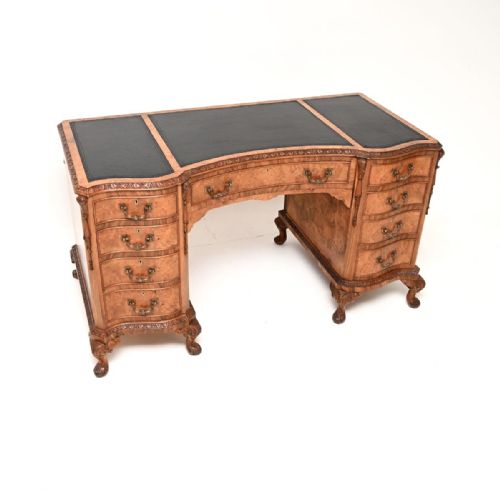
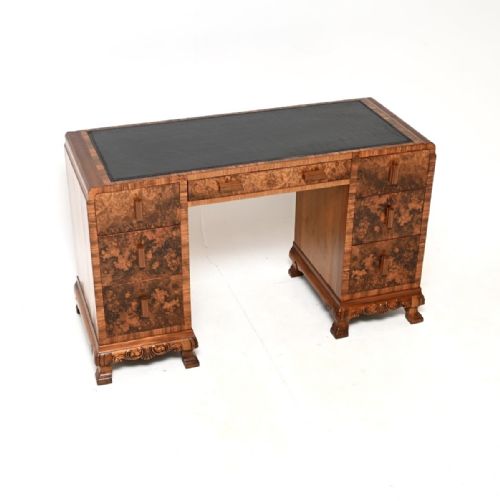
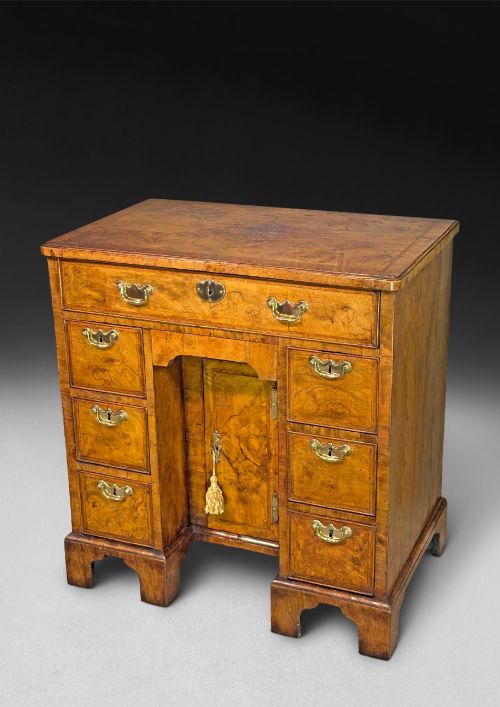
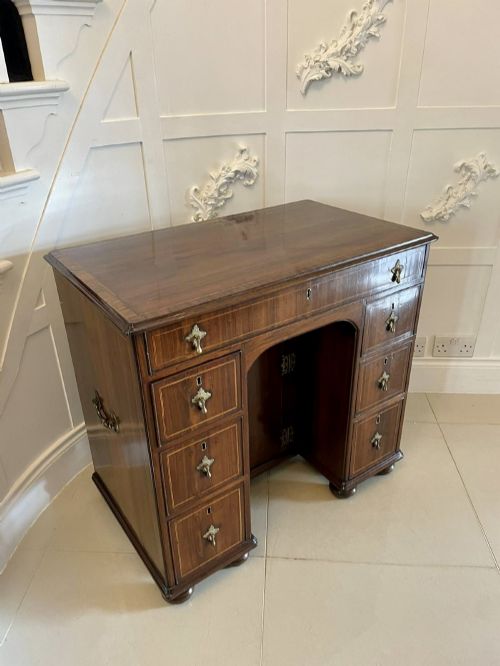
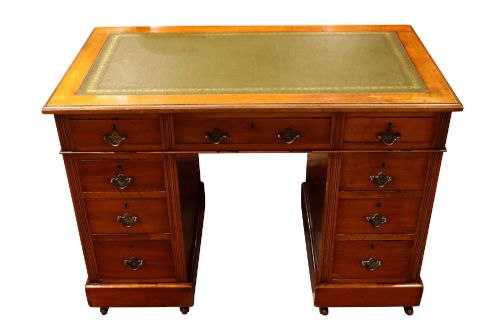
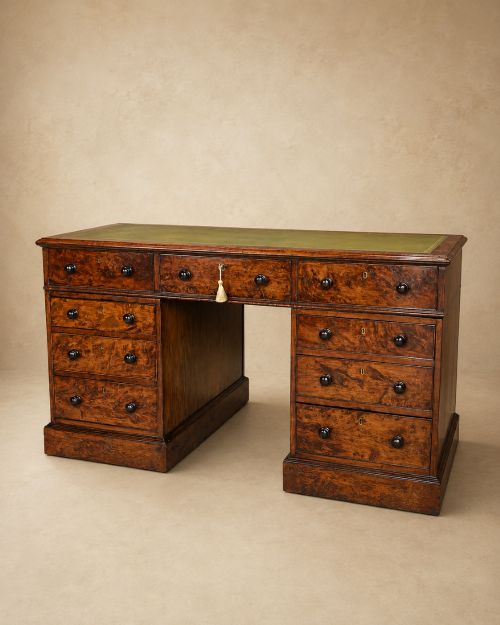
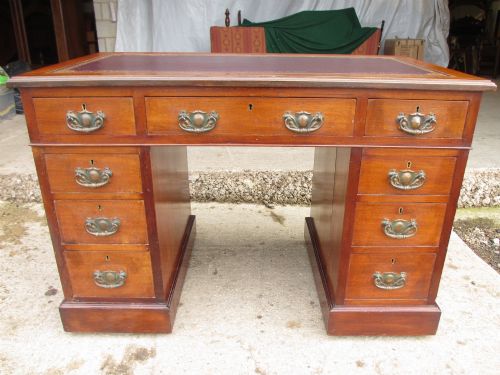
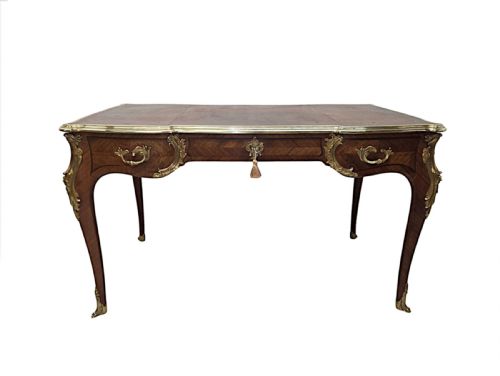
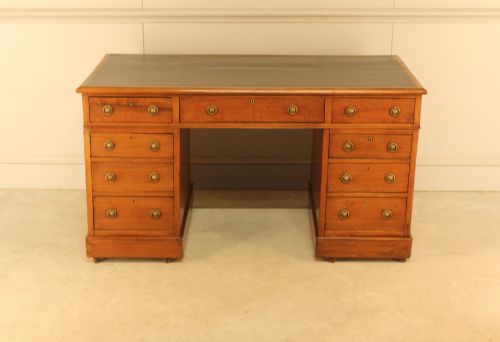
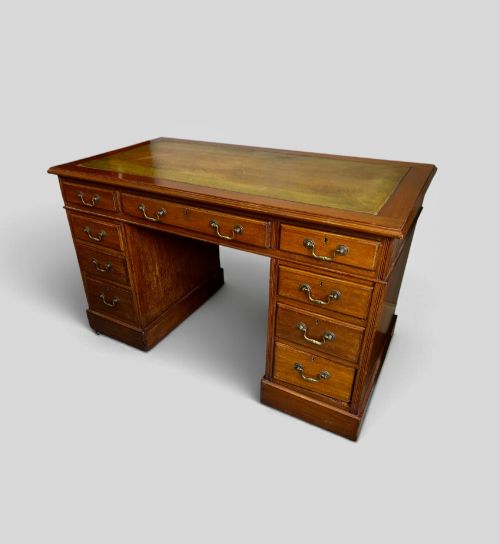
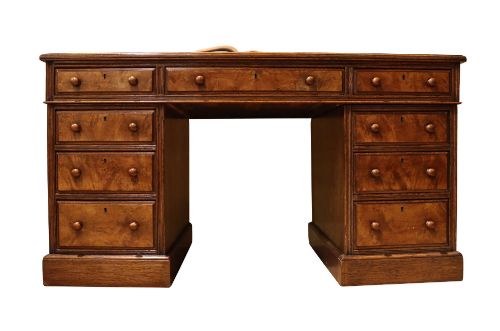
When searching for a walnut executive desk, you encounter substantial working furniture designed for private offices and libraries. The pieces listed here span pedestal desks, kneehole desks, partners desks, and bureau plat forms.
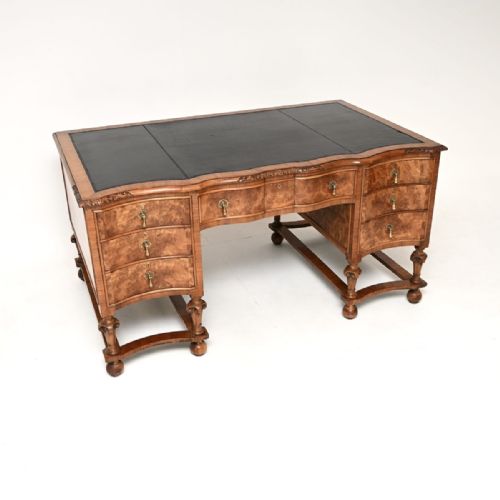
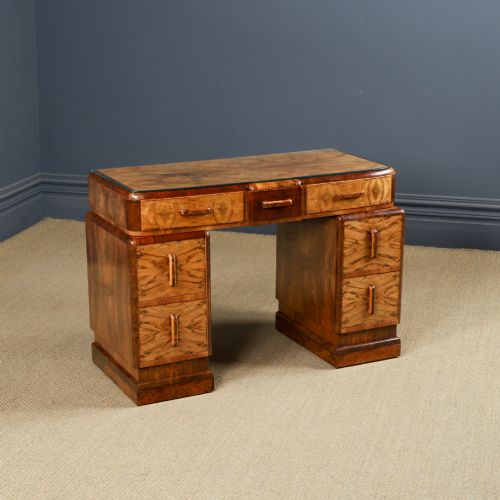
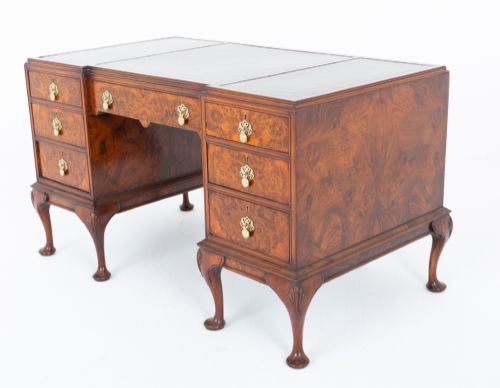
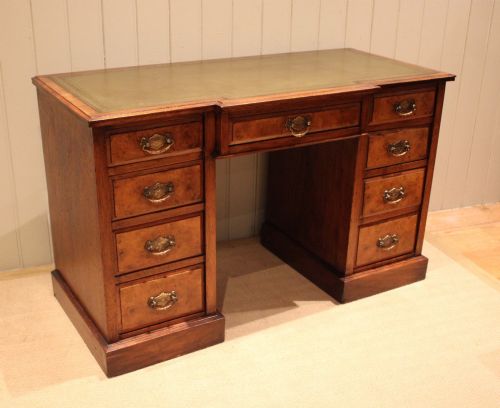
The version you are most likely to meet on this page is the pedestal desk or partners desk constructed during the Victorian, Edwardian, or Art Deco periods. These forms incorporate banks of drawers flanking a central kneehole or provide double-sided access for shared use.
Makers and workshops utilised figured timbers, burr walnut veneers, and inset leather writing surfaces to project authority and status. Styles range from Queen Anne revivals and Georgian interpretations to sleek 1930s modernist lines.
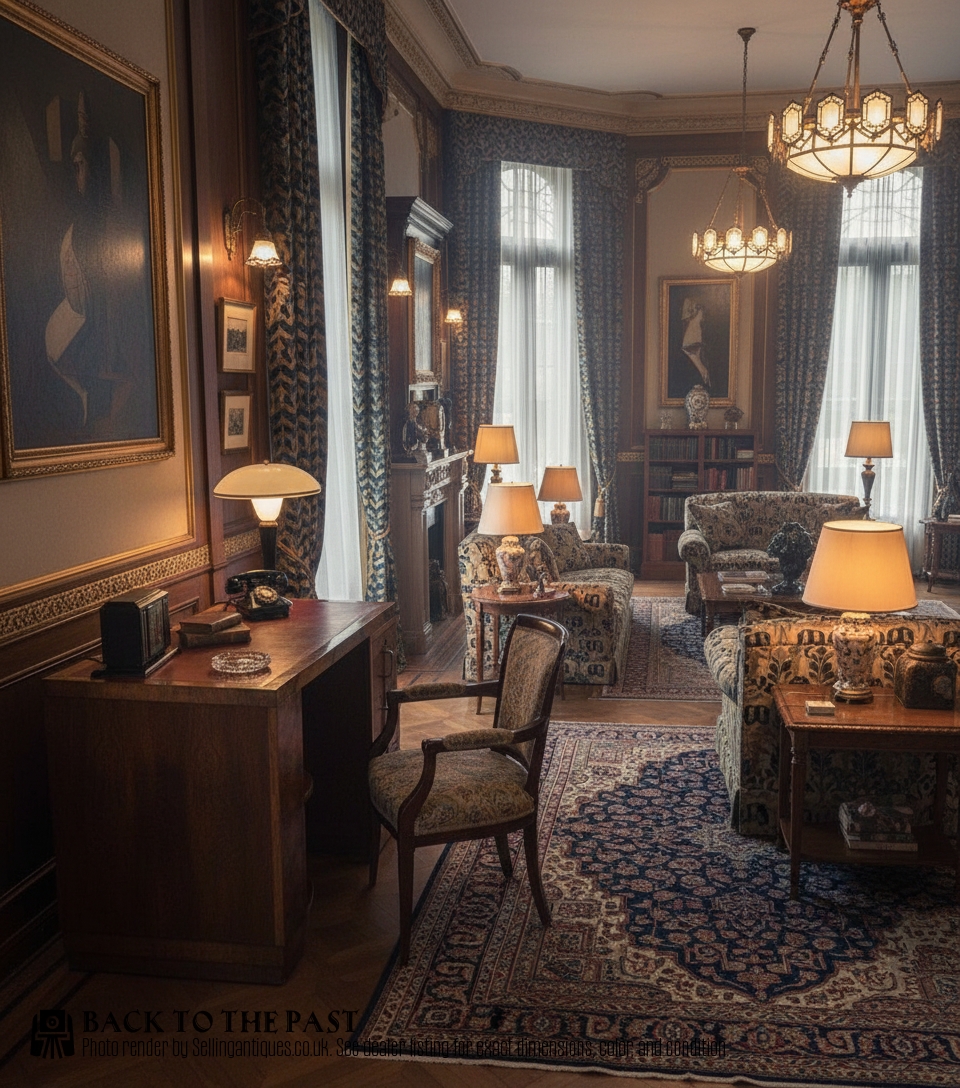
Materials and construction
Makers built these desks using solid structural carcases of oak or pine faced with rich walnut and burr walnut veneers, selecting cuts to display intense figuring across the primary surfaces. Secondary timbers appear in drawer linings and internal framing.
Writing surfaces feature tooled leather inserts, often edged in gilt tooling, while mounts and handles utilise cast brass or ormolu. Glass panels and inlay work also appear on specific Art Deco and French bureau plat examples.
Walnut Executive Desk Retail Price Guide 2026
Typical asking prices for walnut executive desk among the pieces listed under this phrase on Sellingantiques today, from the lower quarter to the upper quarter. They describe what is for sale here now, not the wider market.
A nineteenth-century walnut extending bookrest provides a portable reading slide designed to keep heavy ledgers upright on the desktop.
What separates the finest examples
Quality rests upon the selection and matching of the timber veneers, where continuous grain patterns across drawer fronts demonstrate superior cabinet-making. Lesser pieces rely on uniform, plain timber planks with minimal visual movement.
The complexity of the form and the integrity of secondary details also divide the range. Hand-cut dovetails in the drawer construction, original brass hardware, and finely tooled leather surfaces distinguish workshop output from mass-produced commercial furniture.
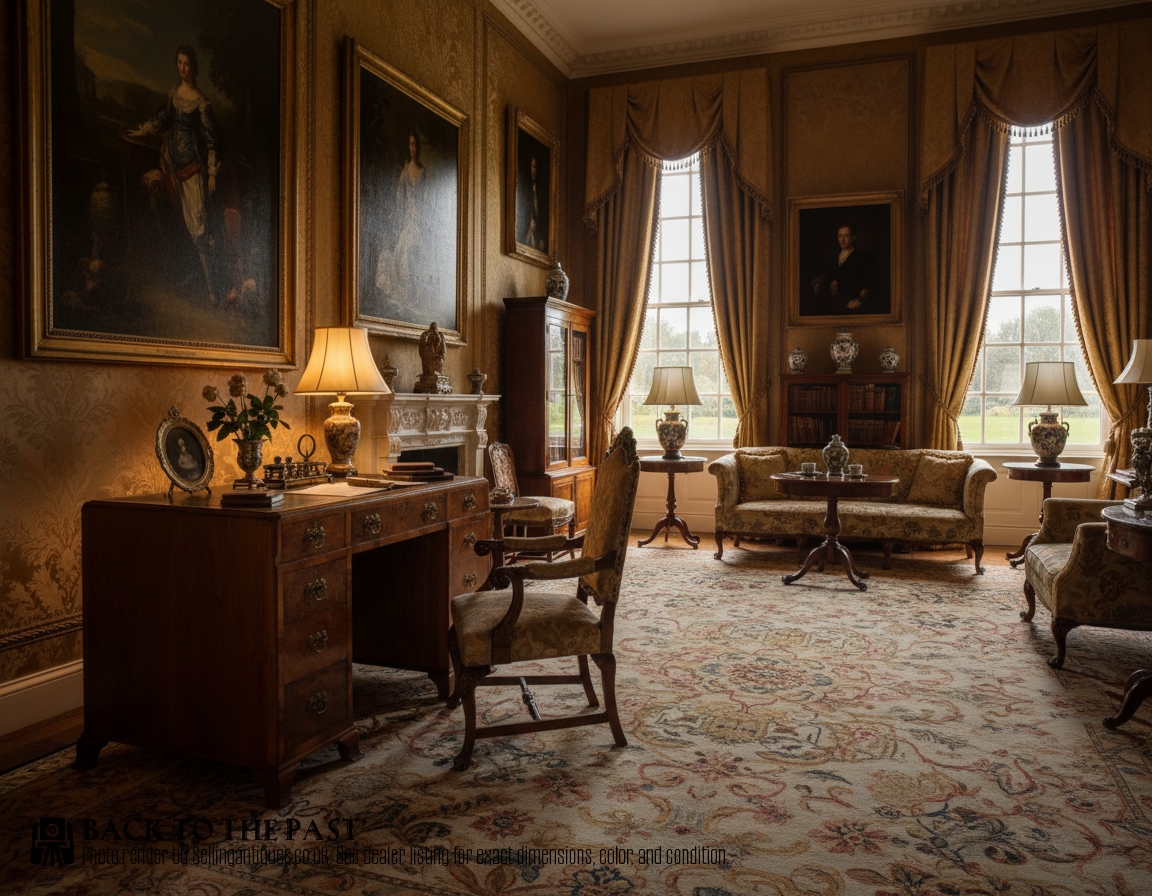
Maple and Co·Wylie and Lochhead Glasgow·Edwards and Roberts·Betty Joel
The Walnut Executive Desk Glossary
- Partners desk
- A large double-sided desk designed for two people to sit opposite each other. Cupboards and drawers occupy both sides of the pedestals.
- Kneehole desk
- A compact pedestal desk featuring a central recessed space for the legs. It often includes a small concealed drawer above the kneehole opening.
- Burr walnut
- A prized timber veneer taken from the grotesque growths on walnut trees. It yields a swirling, highly decorative grain pattern.
- Bureau plat
- A freestanding French writing table with a leather top and one or more drawers in the frieze. It lacks pedestals and stands on slender legs.
Walnut Executive Desk: Frequently Asked Questions
What is a partners desk?
A partners desk is a large, double-sided working table designed so that two people can sit opposite one another. The pedestals contain drawers and cupboards accessible from both the front and the back.
These pieces were traditionally manufactured for banking houses, legal practices, and large estate libraries. Their freestanding nature allows them to sit proudly in the middle of a room rather than against a wall.
How do I identify burr walnut?
Burr walnut is recognisable by its dense, swirling grain patterns filled with small circular clusters and dark knots. This decorative veneer comes from a tree growth or excrescence rather than straight timber.
Cabinet-makers sliced this wood thinly to cover the primary surfaces of superior desks. The resulting optical movement creates a rich, textured appearance across the desktop and drawer fronts.
Where were these desks used?
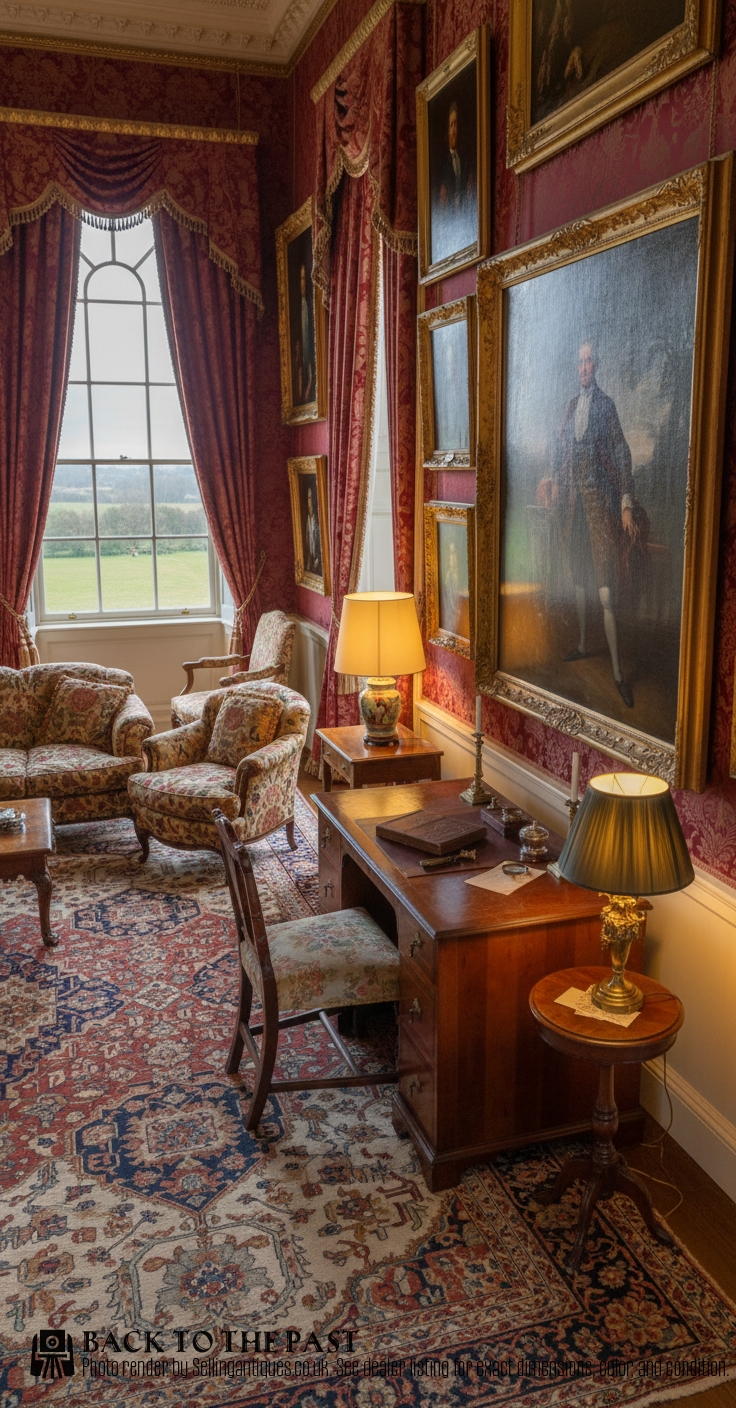
These desks served primarily in private studies, corporate offices, solicitors' chambers, and grand library rooms. They provided both a functional workspace and a symbol of professional status.
Because they were built for principal rooms, makers used decorative veneers and quality hardware to impress visitors. The inclusion of finished backs on many models allowed them to sit in the centre of an interior.
How do I care for leather tops?
Leather writing surfaces require gentle cleaning with a slightly damp cloth followed by neutral leather creams to prevent drying and cracking. Avoid harsh chemical cleaners and excessive moisture.
The gold tooling around the perimeter is delicate and can wear away with vigorous rubbing. Regular conditioning preserves the supple texture of the hide.