

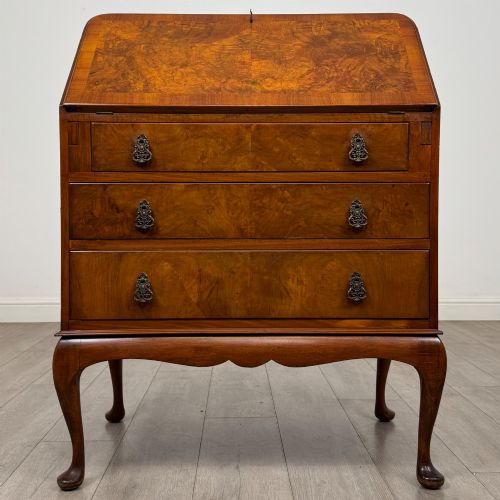
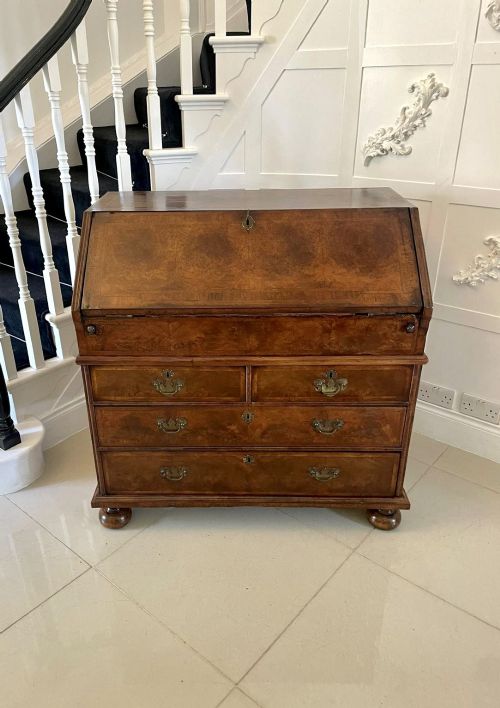
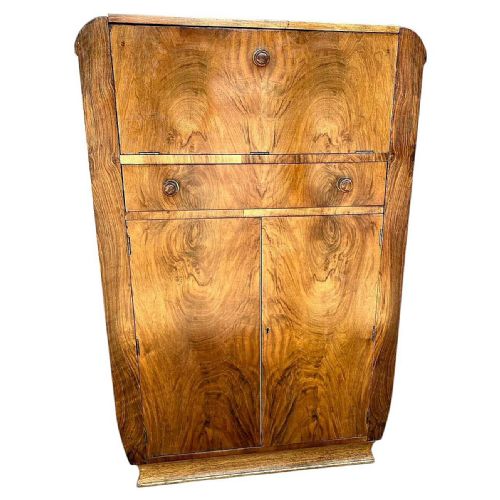
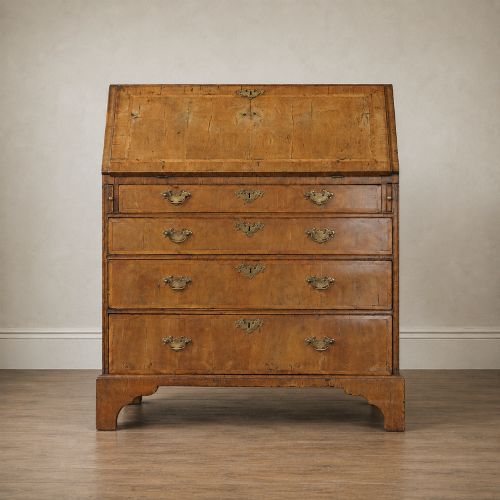

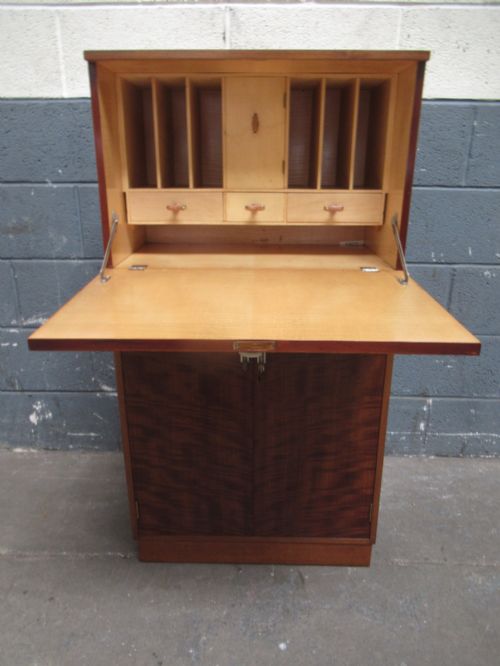
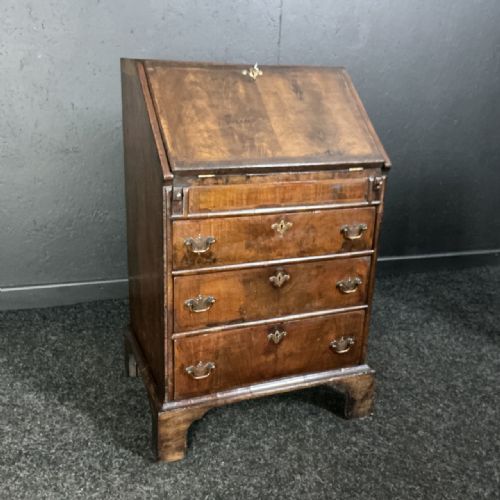
Walnut Drop Front Bureau
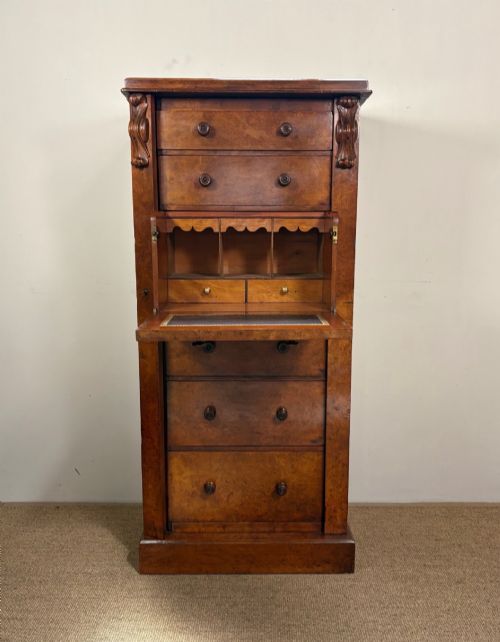
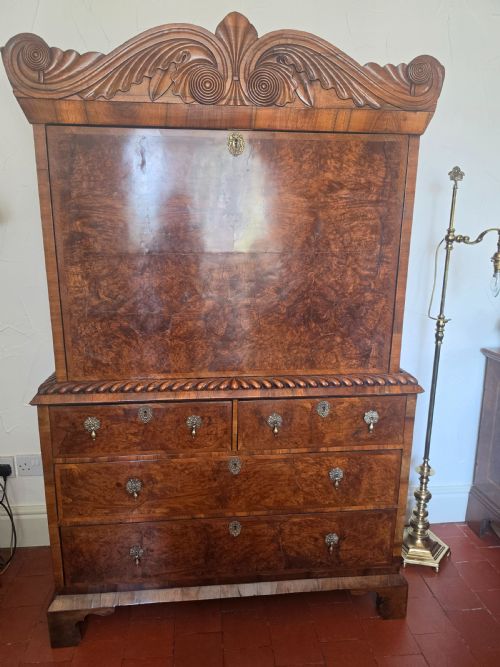
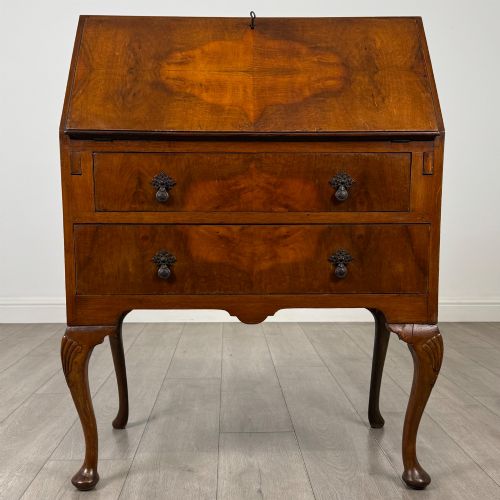
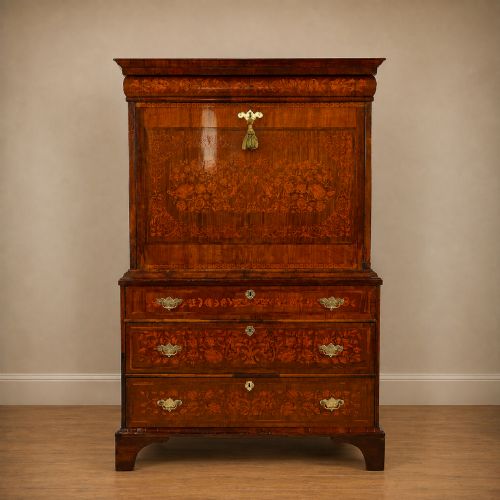
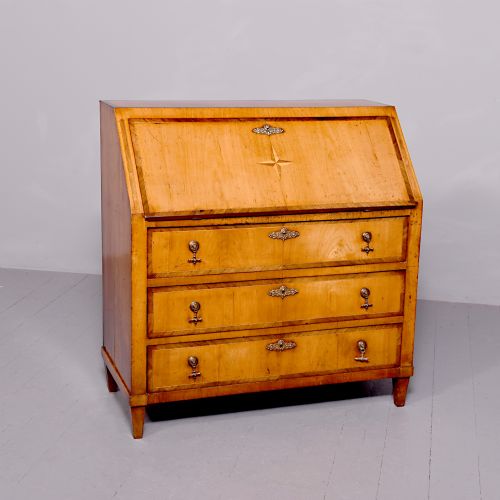
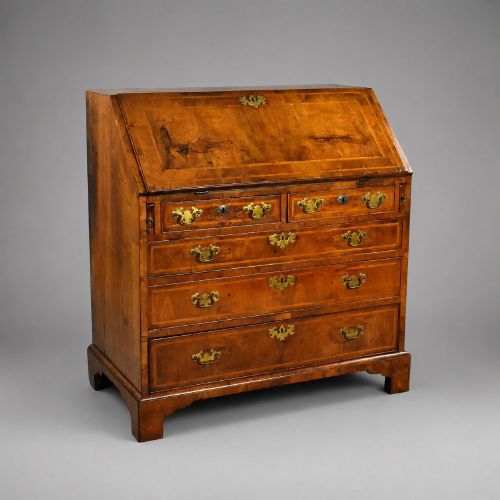
A walnut drop front bureau offers a sloping writing flap that opens to reveal fitted compartments, combining practical workspace with polished cabinetry.
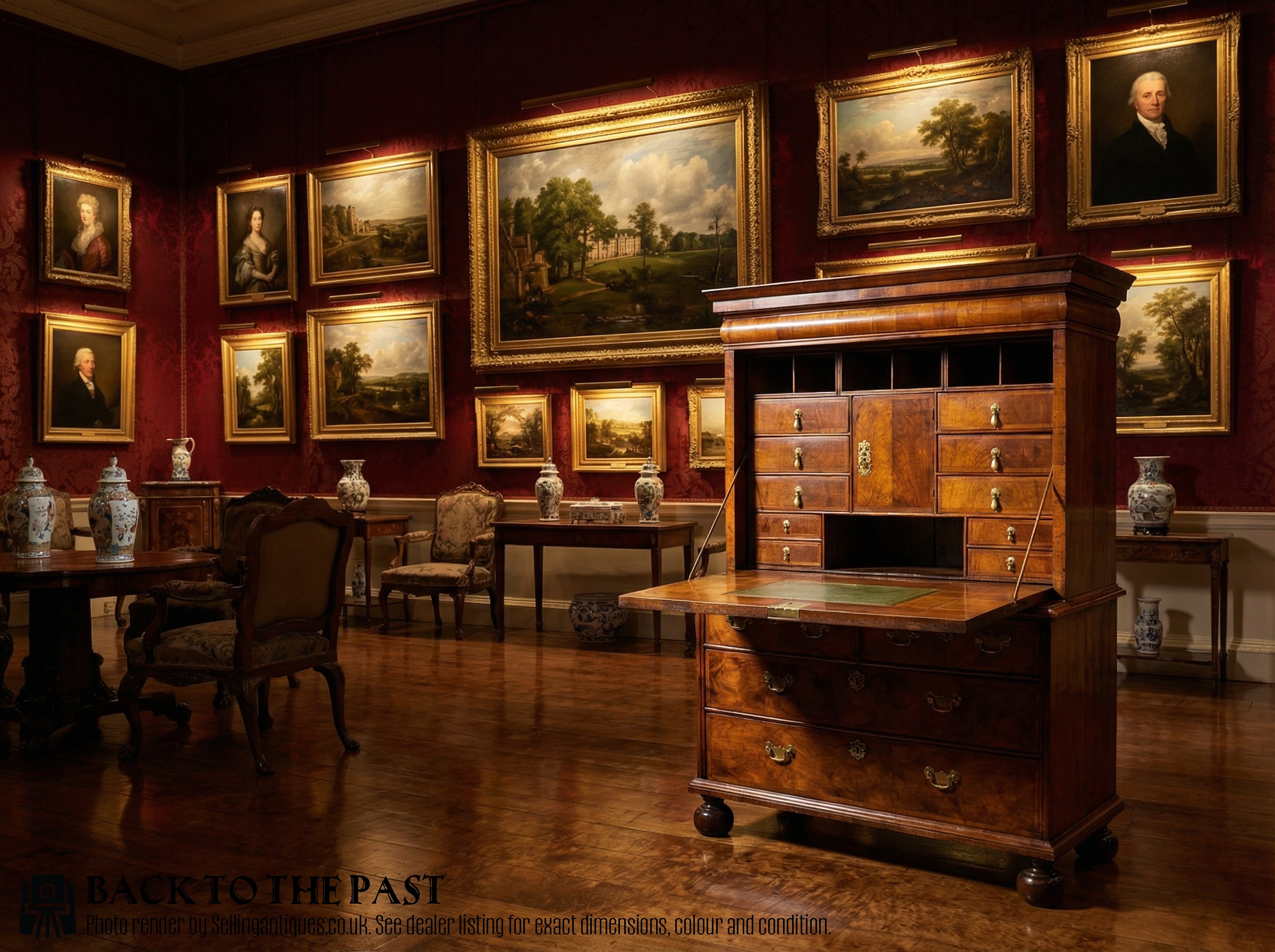
Walnut Drop Front Bureau
A walnut drop front bureau provides a private writing surface above drawers or a stand, folding shut to conceal correspondence and ledgers.
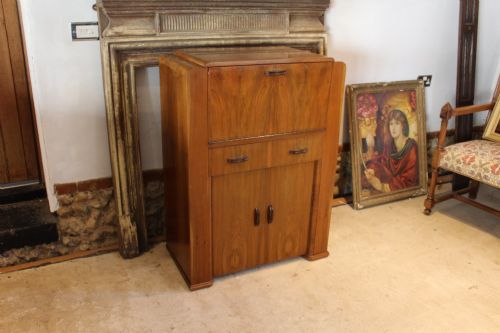
The pieces on this page span several centuries, reaching from seventeenth-century William and Mary examples through eighteenth-century Georgian and Queen Anne designs to nineteenth-century interpretations and twentieth-century Art Deco pieces.
Forms range from compact fall-front desks to taller bureau bookcases and escritoires, finished in figured veneers, marquetry, or plain timber.
Assessing quality
The value of a walnut drop front bureau rests largely on the choice and matching of timber veneers, where symmetrical grain patterns indicate greater care by the cabinetmaker.
The complexity of the interior fitting - such as secret drawers, pigeonholes, and small cupboards - distinguishes finer pieces from simpler utilitarian desks.
Originality of the brass hardware, stability of the fall-front hinges, and crispness of any marquetry or inlay separate the best examples from later alterations.
Several seventeenth-century pieces arrive with secret compartments hidden behind dummy drawers, designed to outsmart wandering hands.
F H Marshall and Co Glasgow
The Walnut Drop Front Bureau Glossary
- Bureau
- A desk featuring a sloping hinged lid that drops down to form a writing surface. This term also describes certain types of writing cabinets and chests.
- Escritoire
- A writing cabinet, typically featuring a fall-front panel that conceals drawers and pigeonholes. These often date from the seventeenth and eighteenth centuries.
- Marquetry
- Decorative patterns formed by inserting pieces of contrasting wood veneer into a background panel. Floral designs are especially common on Dutch and English examples.
- Oyster veneering
- The practice of cutting small branches or roots across the grain to produce circular or oval figures resembling oyster shells. This technique appears on seventeenth-century pieces.
- Secrétaire abattant
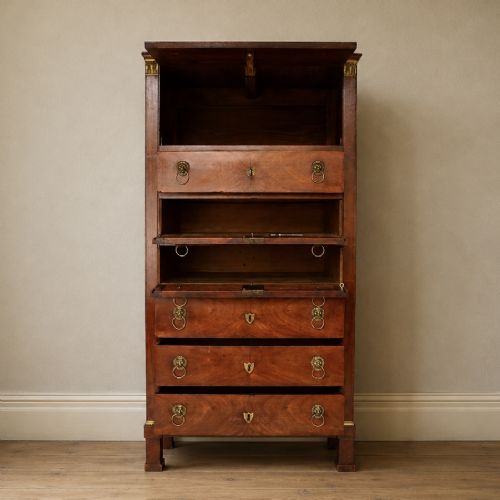
- A tall writing cabinet with a vertical drop-front panel rather than a sloping flap. These often incorporate marble tops and elaborate mounts.
Walnut Drop Front Bureau: Frequently Asked Questions
How do I use a drop front bureau?
Lower the hinged writing flap until it rests horizontal, supported by internal wooden arms or pulled-out lopers. This reveals an interior arrangement of small drawers and pigeonholes for correspondence.
When writing is finished, gather loose papers inside and lift the flap back to the vertical position, securing it with a key or catch to hide the workspace.
Where should I place a bureau?
Position the piece in a study, living room, or hallway away from direct sunlight and radiators. Walnut veneer reacts poorly to extreme temperature fluctuations and excessive heat.
Allow sufficient clearance in front of the cabinet so the drop flap can open fully without colliding with other furniture.
How do I distinguish eighteenth-century pieces?
Examine the construction methods inside the drawer boxes, looking for hand-cut dovetails and timber shrinkage consistent with age. Eighteenth-century walnut furniture often employs oak as a secondary wood.
Check for period hardware configurations and traditional patination on the walnut surfaces rather than modern synthetic finishes.
What is burr walnut?
Burr walnut is a specialised veneer taken from growths on walnut trees where the grain has grown in a distorted, swirling pattern. Cabinetmakers prized this material for its rich texture.
Because burr veneer is highly decorative, it usually appears on the primary focal points of a piece, such as the fall front or drawer faces.