
Walnut Dressers and Drawers
Walnut dressers and drawers offer rich figuring and deep tone, bringing centuries of cabinet-making craft directly into daily use.
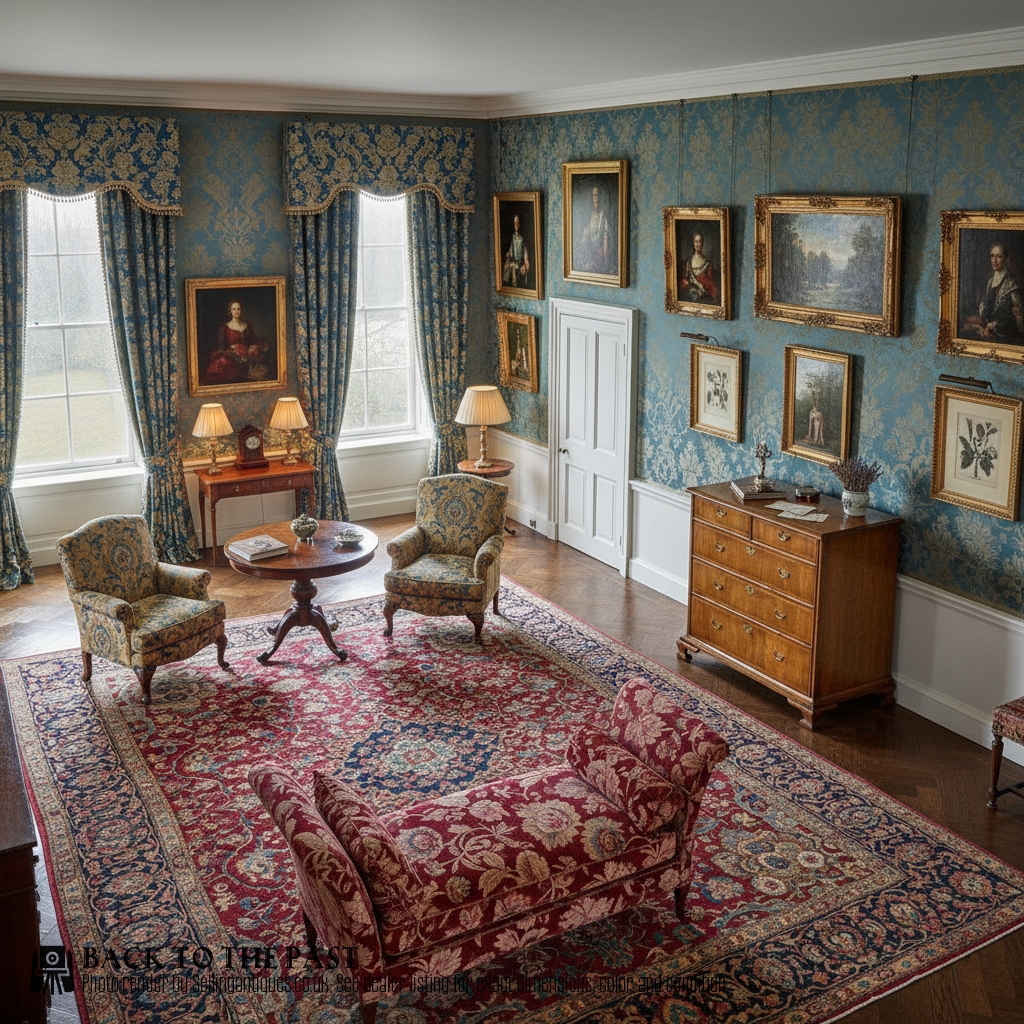
Walnut Dressers and Drawers
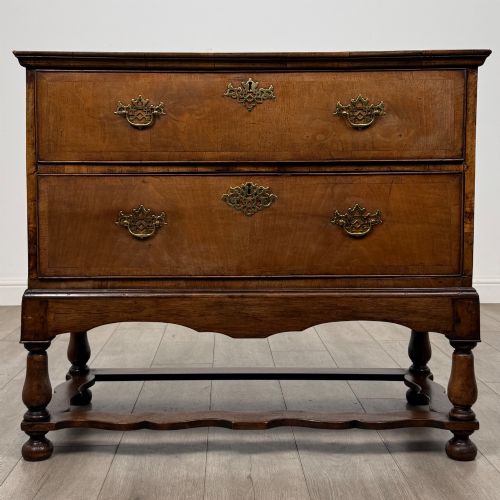
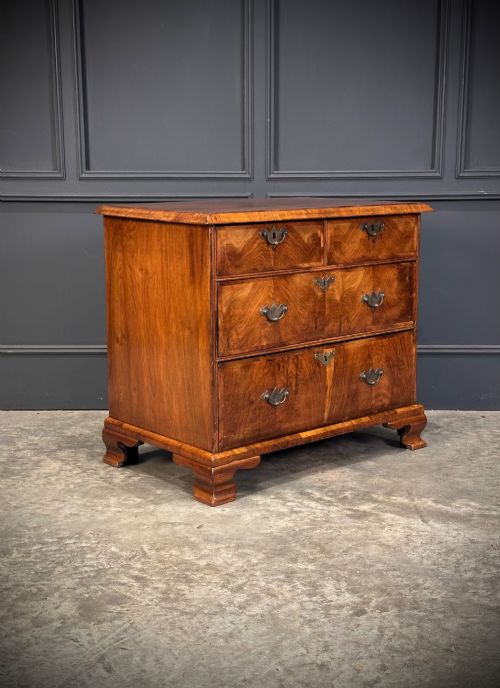
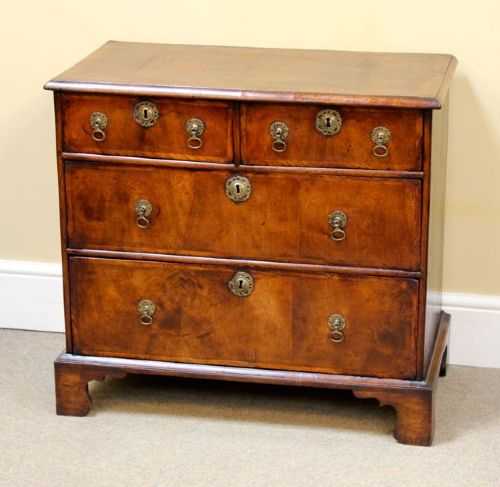
Walnut dressers and drawers encompass a variety of storage furniture including chests of drawers, commodes, dressers, and chests on stand. These pieces date from the seventeenth century through to the twentieth century, covering periods such as William and Mary, Queen Anne, Georgian, and Art Deco.
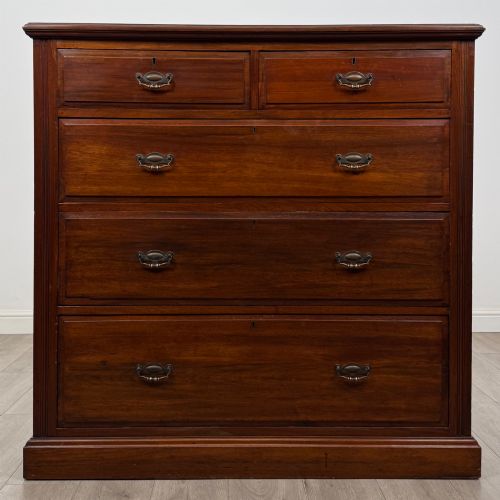
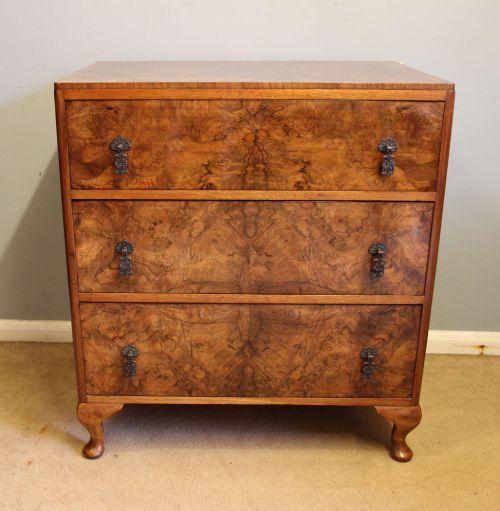
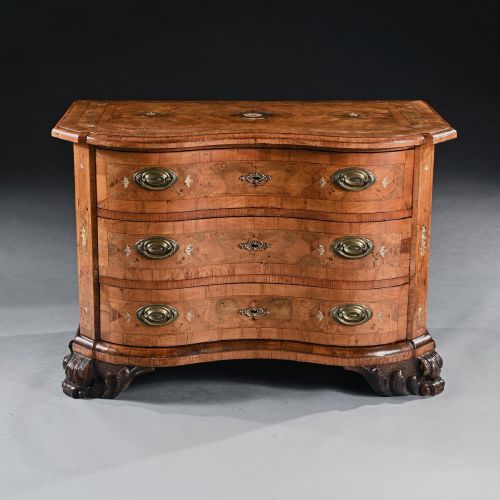
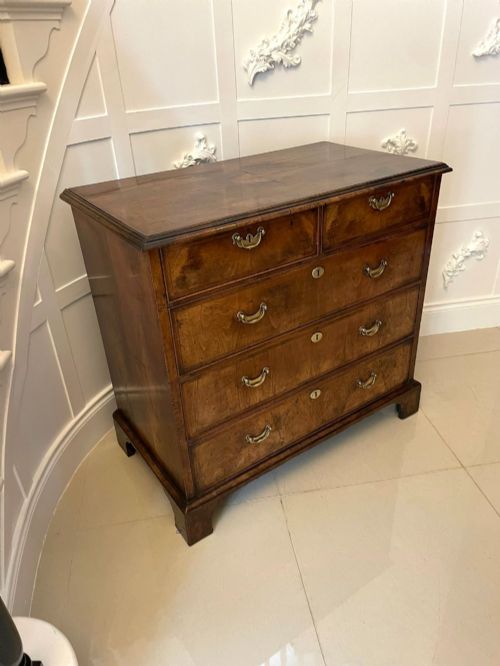
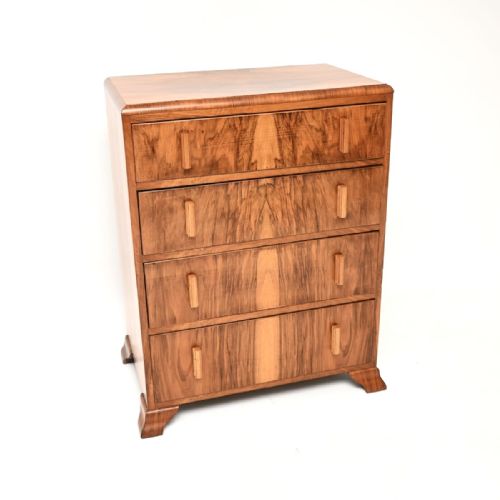
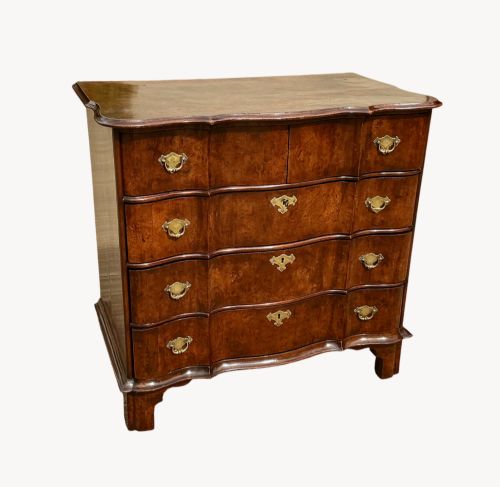
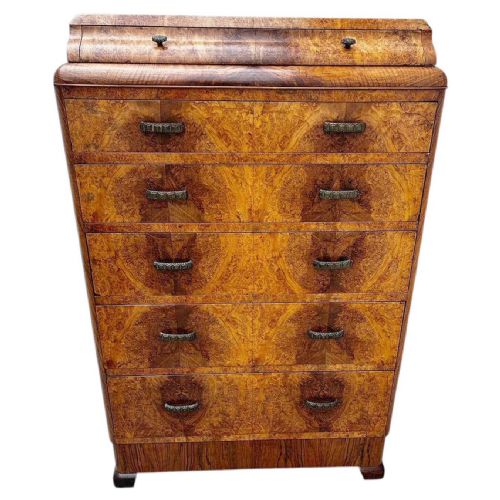
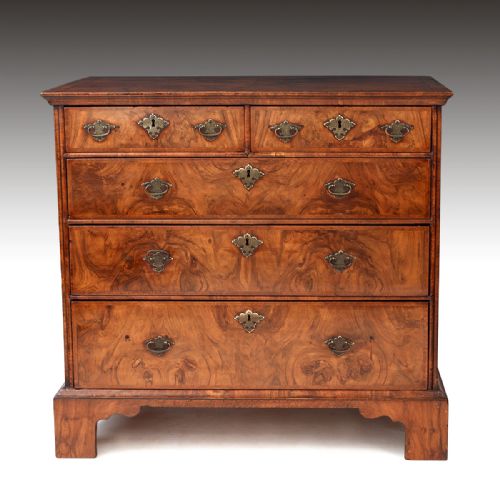
The version most frequently met on this page is the chest of drawers in figured or burr walnut, spanning early eighteenth-century Georgian designs to twentieth-century interpretations. Alongside these, buyers encounter specialised forms like serpentine commodes, dressers, and chests on stand incorporating oak or marble.
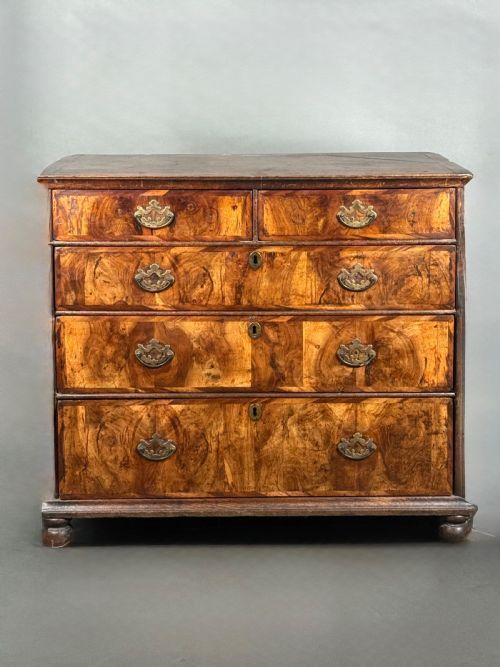
Originating from English, French, Dutch, German, and Italian workshops, these items demonstrate regional approaches to veneering and marquetry. The selection ranges from late seventeenth-century oyster veneered examples to twentieth-century Art Deco and revival pieces.
How they were made
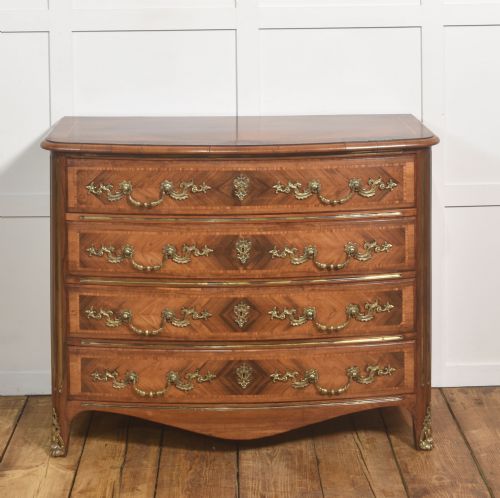
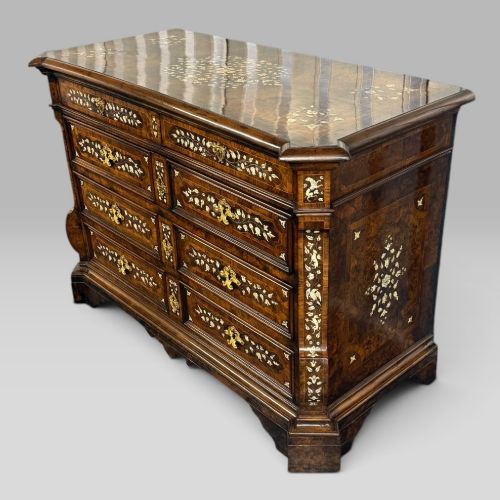
Cabinet-makers utilised solid walnut, oak as a secondary timber, and decorative veneers such as burr walnut and oyster cut. Surfaces were frequently enhanced with marquetry, parquetry, ivory, or pewter inlay, alongside herringbone banding to define drawer edges.
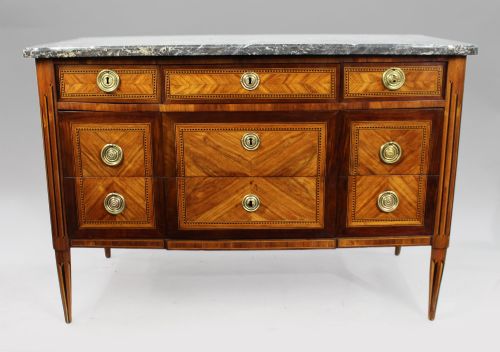
Construction techniques relied on meticulous timber selection to display natural grain patterns, paired with brass handles, escutcheons, and occasional ormolu mounts. Marble tops appear on specific continental commodes, adding weight and contrast to the wooden carcase.
Listings span multiple centuries, uniting 17th-century oyster veneers with 20th-century Art Deco burr walnut designs.
What varies in quality
The standard of walnut dressers and drawers depends primarily on the selection and matching of the veneer, particularly the symmetry of burr walnut or figured grain across drawer fronts. Superior pieces exhibit continuous grain alignment and precise marquetry detail.
Construction depth and the integrity of the secondary timbers, such as oak drawer linings, separate standard production from exceptional examples. The finesse of brass hardware and the crispness of banding further distinguish the upper tier of cabinet-making.
Jas Shoolbred
The Walnut Dressers and Drawers Glossary
- Burr walnut
- A prized wood harvested from walnut tree growths, producing swirling, intricate grain patterns used extensively for decorative veneering. Cabinet-makers select burr veneers to create dramatic visual movement on drawer fronts.
- Oyster veneering
- The practice of slicing small branches crosswise to produce circular, overlapping wooden discs resembling oyster shells. This technique creates a distinctive repeating pattern popular in late seventeenth-century pieces.
- Herringbone banding
- A decorative inlay of veneer strips laid in a V-shaped zig-zag pattern around drawer perimeters. It frames the central grain and indicates careful eighteenth-century craftsmanship.
- Commode
- A low chest of drawers or cabinet originating in France, often featuring a serpentine front and marble top. These pieces serve as both decorative furniture and functional storage.
- Chest on stand
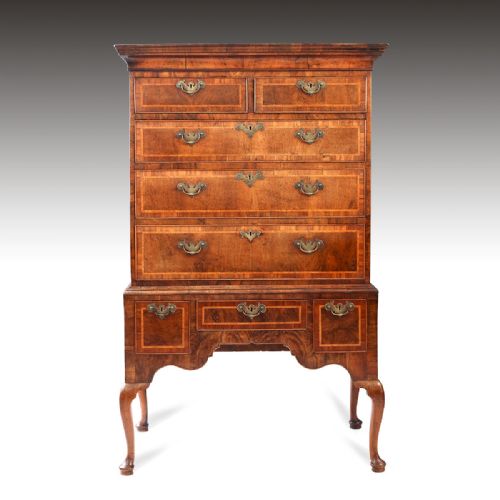
- A tall chest of drawers elevated on a separate supporting base with legs. This form lifts the primary storage compartment off the floor, characteristic of seventeenth and eighteenth-century design.
Walnut Dressers and Drawers: Frequently Asked Questions
What is a walnut chest on stand?
A walnut chest on stand combines a tall upper section of drawers with a distinct lower support frame possessing legs. This form elevates the main storage unit, creating a lighter visual profile.
Such pieces often date to the late seventeenth or early eighteenth century, showcasing significant cabinet-making skill in both the upper carcase and the supporting stand.
How do I identify an 18th-century piece?
Eighteenth-century walnut furniture typically displays traditional construction methods, including hand-cut dovetails, oak secondary timbers, and natural beeswax finishes. Period pieces often feature specific stylistic traits like herringbone banding and quarter-veneered tops.
Examining the interior drawer construction and the character of the walnut veneer helps distinguish eighteenth-century examples from later revival items.
What is burr walnut?
Burr walnut comes from a growth on the walnut tree where the grain has grown in a deformed, swirling manner. When sliced into veneer, it reveals complex, highly decorative patterns.
Cabinet-makers utilised burr walnut on prominent exterior surfaces to create striking visual impact on chests of drawers and commodes.
Where were serpentine commodes made?
Serpentine commodes with undulating front curves appear across various European traditions, including English, French, Dutch, and German workshops. Continental examples often incorporate marquetry, parquetry, or marble tops.
Regional differences in wood selection and inlay materials help identify the specific origin of these distinctive curved chests.
How should I care for walnut furniture?
Walnut furniture requires placement away from direct sunlight and heat sources to prevent the wood and delicate veneers from drying out. Regular dusting with a soft, dry cloth maintains the surface finish.
Occasional application of appropriate wax polish preserves the natural sheen of the walnut without building up heavy residue.