
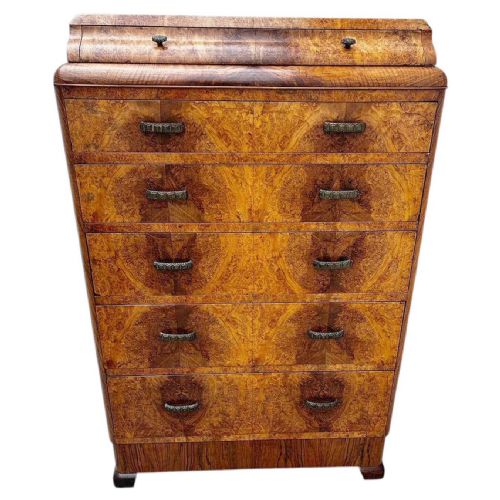
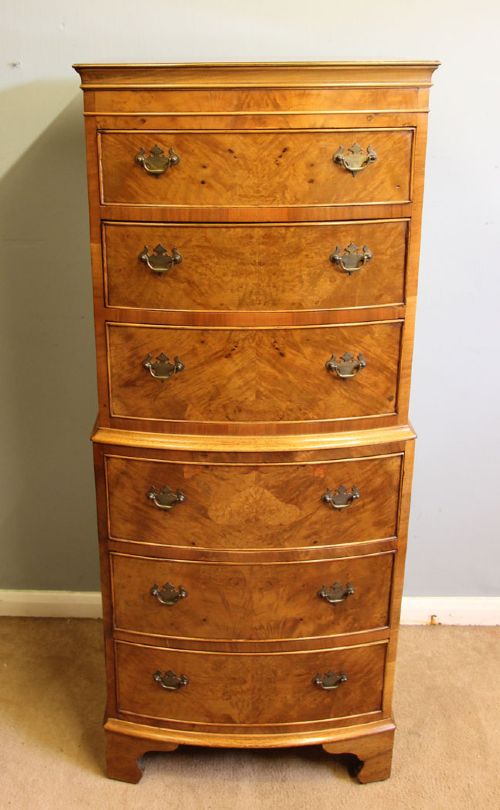


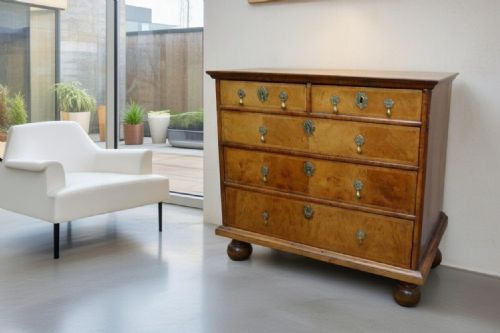


Golden Walnut Bedroom Chest
A golden walnut bedroom chest brings rich, figured grain and deep historical character to a room, ranging from simple Victorian pieces to striking Art Deco designs.
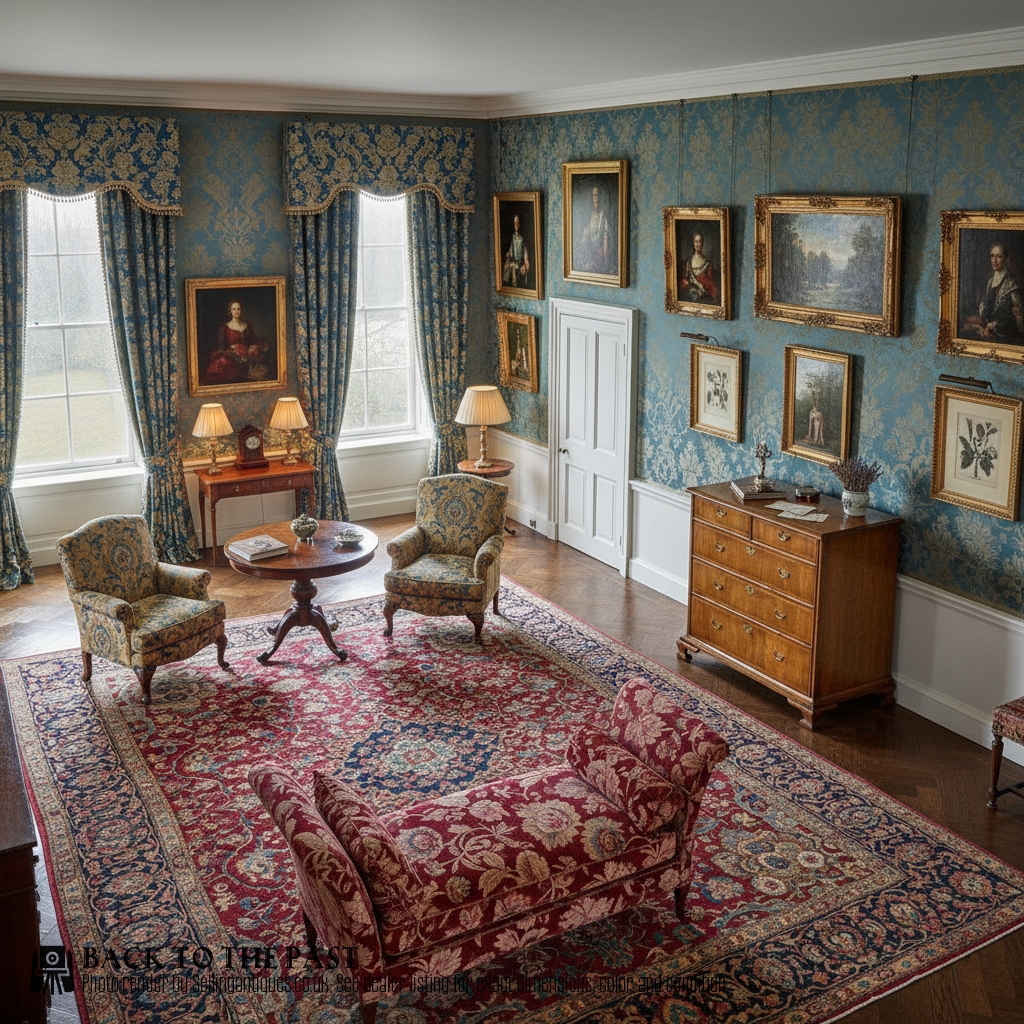
Golden Walnut Bedroom Chest
A golden walnut bedroom chest encompasses storage pieces designed for sleeping quarters, drawing from periods spanning the eighteenth century through to the Art Deco era. Buyers searching for a golden walnut bedroom chest will encounter various forms, including tall chests on chests, compact bedside cabinets, and dressing chests.
Makers and designers of note, such as Heals and Maurice Adams, appear among the broader range of traditional cabinet makers. The overarching characteristic remains the use of walnut, burr walnut, and satin walnut timber across chests of drawers and dressing tables.
Materials and construction
Construction relies heavily on walnut timber, enhanced by the intricate patterns of burr walnut veneer and contrasting accents of satinwood, oak, and brass hardware. Cabinet makers selected figured veneers to create striking symmetrical patterns across drawer fronts and top surfaces.
Traditional joinery techniques unite solid carcases with decorative veneers, metal drawer pulls, and locks. Secondary timbers such as oak frequently form the interior drawer linings of earlier eighteenth and nineteenth-century examples.
Listings feature walnut, burr walnut, and satin walnut, alongside accents of brass, metal, and oak.
Assessing quality and finish
Quality rests upon the selection and matching of the walnut veneer, where skilled grain alignment elevates the visual impact of the piece. Superior examples display seamless veneering across large expanses and meticulously fitted drawers with original brass furniture.
The integrity of the timber, the subtlety of the colouration, and the precision of the period joinery distinguish finer workshop output from more utilitarian bedroom furniture.
Maurice Adams·Heals
The Golden Walnut Bedroom Chest Glossary
- Burr walnut
- A specialised wood veneer taken from the wart-like growth on a walnut tree, prized for its swirling, highly figured grain patterns. It forms the decorative surface on many refined eighteenth and twentieth-century chests.
- Biedermeier
- A Central European style dating from the nineteenth century characterised by clean lines, restrained ornamentation, and polished fruitwood or walnut surfaces. Pieces from this movement focus on utility and warm wood tones.
- Wellington chest
- A tall, narrow chest of drawers secured by a locking hinged architectural stile on one side. This nineteenth-century form typically secures all internal drawers with a single mechanism.
- Satin walnut
- A timber derived from the American sweetgum tree, utilised during the Edwardian period for bedroom furniture. It offers a warm, golden appearance distinct from traditional European walnut.
Golden Walnut Bedroom Chest: Frequently Asked Questions
What periods do these chests come from?
The available pieces span multiple centuries, including the eighteenth century, the Victorian and Edwardian eras, and the nineteen-twenties and thirties. Each era brings distinct proportions and stylistic details to the bedroom.
Earlier pieces often display traditional bracket feet and figured veneers, while later Art Deco designs embrace geometric simplicity and streamlined forms.
Are bedside chests and dressing tables included?
Yes, alongside standard chests of drawers, the selection incorporates specialised bedroom pieces like bedside cabinets and dressing tables. Pairs of bedside chests also appear alongside larger drawer units.
These variations allow buyers to match complementary pieces within a bedroom scheme while retaining the unifying walnut material.
How should I care for a vintage walnut chest?
Walnut furniture benefits from stable indoor humidity and protection from direct sunlight to preserve the richness of the wood and veneer. Regular dusting with a soft, dry cloth maintains the polished surface.
Avoid placing damp items directly on the top surface, and use mild, wax-based polishes sparingly when the wood requires nourishment.