
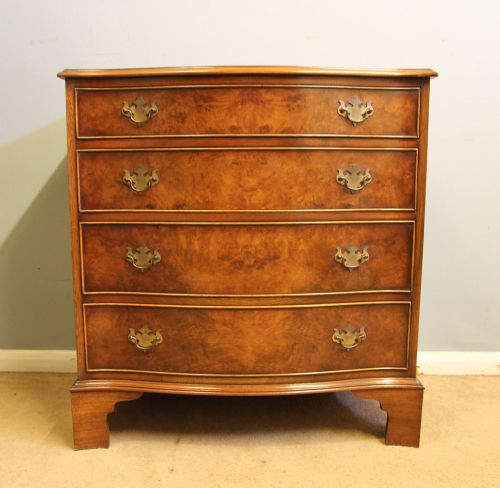
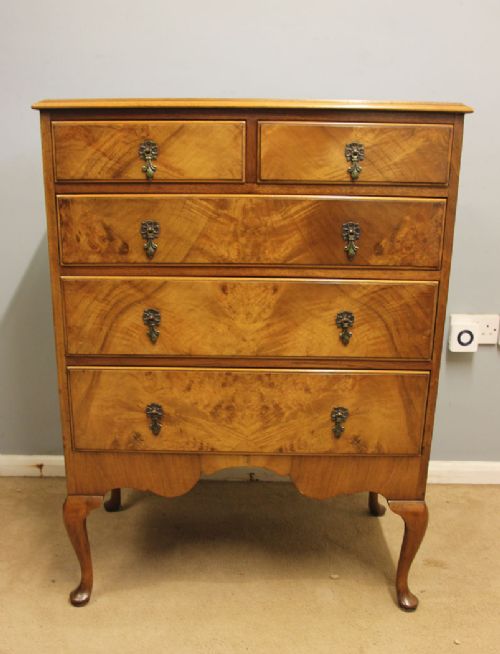


Traditional Walnut Bureau Chest
These traditional walnut bureau chest examples bring practical writing surfaces and deep drawers together in handsome figured timbers.
Traditional Walnut Bureau Chest
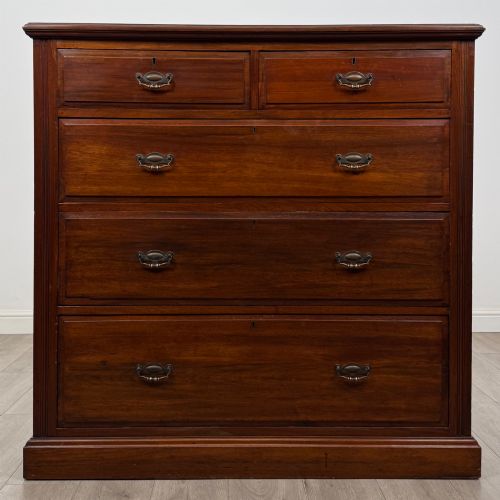
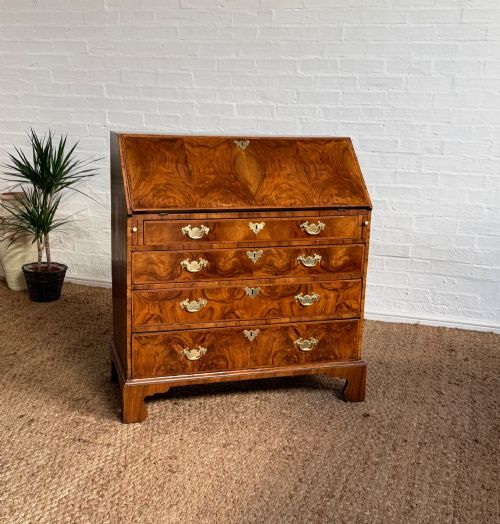
When you search for a traditional walnut bureau chest, you are looking at dual-purpose furniture designed for storage and correspondence. These pieces combine fitted writing compartments with deep lower drawers, offering both a desktop and a cabinet in a single footprint. On this page, the form appears primarily in eighteenth-century and nineteenth-century variations, alongside later twentieth-century interpretations.
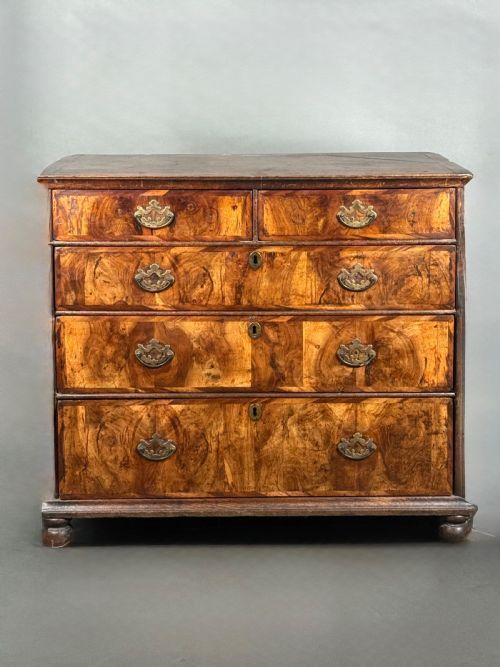
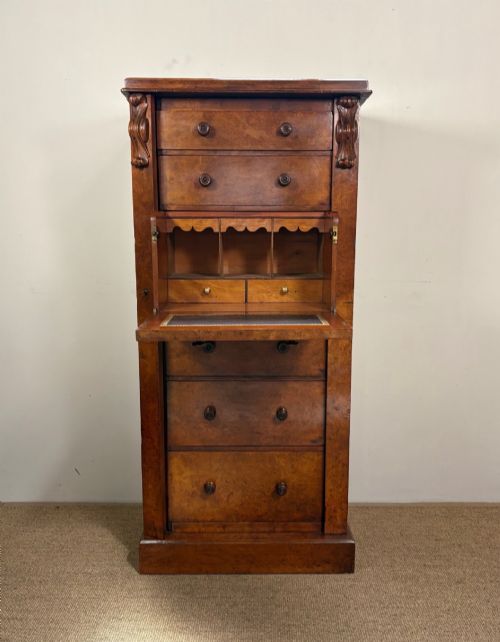
The selection ranges from early walnut veneers on oak carcasses to nineteenth-century Wellington secrwetaires and serpentine drawer configurations. You also encounter related forms such as dressing tables and chests of drawers that share the same timber palette. These items reflect stylistic shifts from Queen Anne lines to Georgian proportions and Dutch marquetry decoration.
How they were made
Cabinetmakers constructed these pieces using solid timbers and decorative veneers applied to secondary woods like oak. Figured walnut and burr walnut provided the striking surface patterns, while fruitwood marquetry added intricate floral and pictorial details. Brass hardware such as drop handles and escutcheons secured the drawers and fall fronts.
Writing surfaces were frequently lined with red leather to provide a durable and smooth plane for correspondence. The construction relied on traditional joinery methods that allowed timber to move naturally across seasons. Secondary woods formed the hidden drawer linings and internal dividers, ensuring structural stability without compromising the exterior appearance.
Some bureau interiors conceal secret compartment drawers behind sliding pigeonhole panels, designed for truly private correspondence.
What varies in quality
The grade of timber used for the exterior surfaces dictates much of the visual character across these examples. Highly figured walnut veneers and elaborate fruitwood marquetry indicate a more ambitious workshop execution than plain timber boards. Grain matching across drawer fronts and fall-front lids demonstrates the care taken by the original maker.
Proportion and decorative restraint also separate standard pieces from more refined specimens. The crispness of carved details, the quality of brass furniture, and the integrity of internal pigeonholes and small drawers all contribute to the standing of an individual piece.
The Traditional Walnut Bureau Chest Glossary
- Bureau
- A desk with a sloping hinged lid that covers a fitted interior of small drawers and pigeonholes. It usually sits atop a chest of drawers.
- Burr walnut
- A specialised timber cut from the abnormal growths of a walnut tree, yielding highly swirled and mottled grain patterns. Cabinetmakers prized it for prominent drawer fronts and lid panels.
- Marquetry
- The art of applying small pieces of veneer to form decorative patterns and pictures on a furniture surface. Fruitwood varieties often appear in Dutch interpretations.
- Wellington secretaire
- A tall, narrow chest of drawers featuring a locking side pilaster that secures all the internal drawers simultaneously. It frequently incorporates a hinged writing flap.
- Queen Anne
- A style spanning the late seventeenth and early eighteenth centuries, characterised by graceful curves and understated veneer work. Pieces from this period often display rich figured walnut surfaces.
Traditional Walnut Bureau Chest: Frequently Asked Questions
What is a bureau chest?
A bureau chest combines a sloping writing flap with a chest of drawers underneath. Opening the flap reveals a fitted interior containing small compartments and letter slots.
This format allowed owners to write letters and store documents while keeping household paperwork organised in the lower drawers.
How do I care for walnut furniture?
Walnut benefits from stable room temperatures away from direct sunlight and heat sources. Regular dusting with a soft, dry cloth preserves the finish.
Applying a traditional beeswax polish occasionally helps nourish the timber and maintain the depth of the grain.
What is burr walnut?
Burr walnut comes from a tree growth that produces highly twisted and knotted grain patterns. Craftsmen sliced this wood into thin veneers for decorative panels.
Its complex figuring made it the preferred choice for the most prominent surfaces of elite eighteenth- and twentieth-century furniture.
How do I distinguish periods?
Earlier pieces from the eighteenth century often feature rich figured walnut veneers and simpler, functional drawer proportions. Nineteenth-century examples introduce alternative formats like the Wellington secretaire and heavier mouldings.
Twentieth-century revivals replicate earlier Queen Anne and Georgian styles using seasoned timbers and traditional construction methods.