






Walnut Display Shelf
A walnut display shelf brings rich wood grain and tiering to a room, holding books and ornaments with understated British craftsmanship.
Walnut Display Shelf
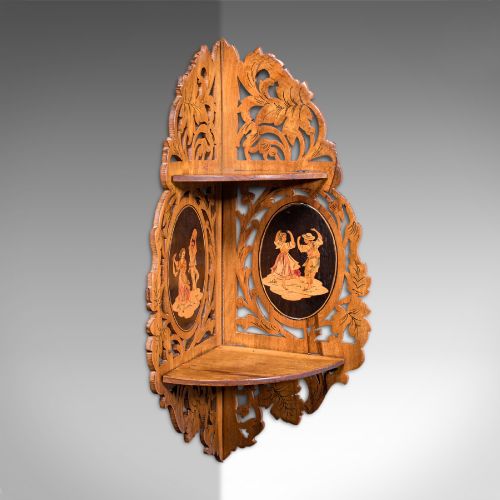
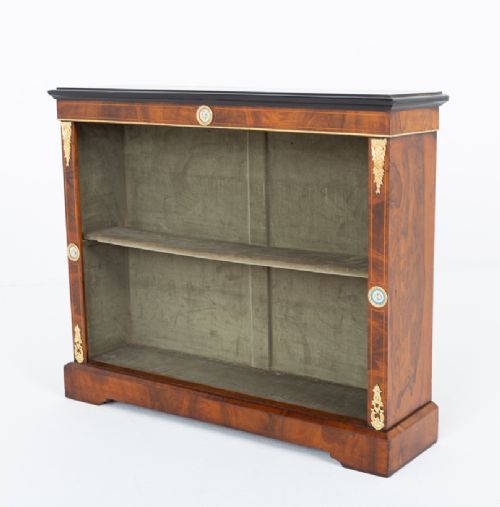
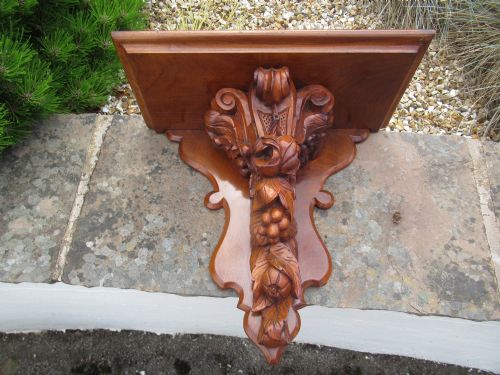
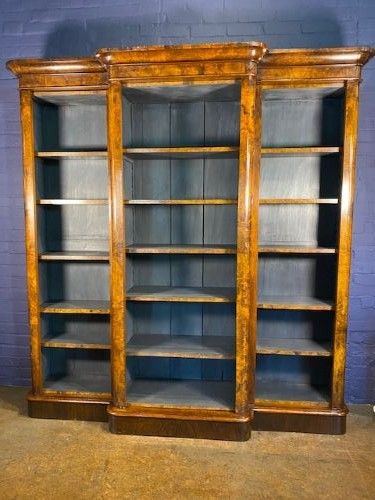
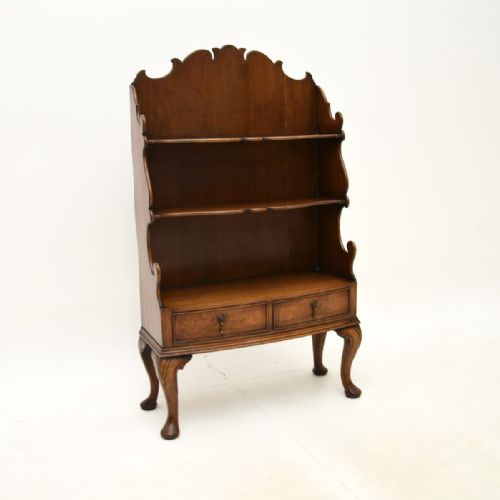
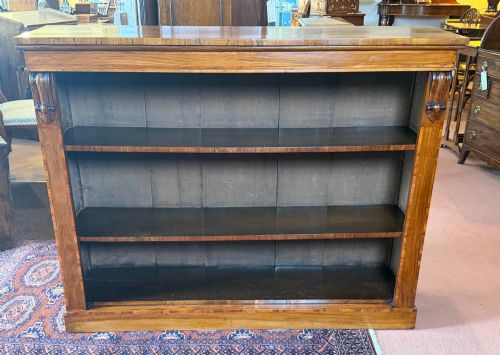
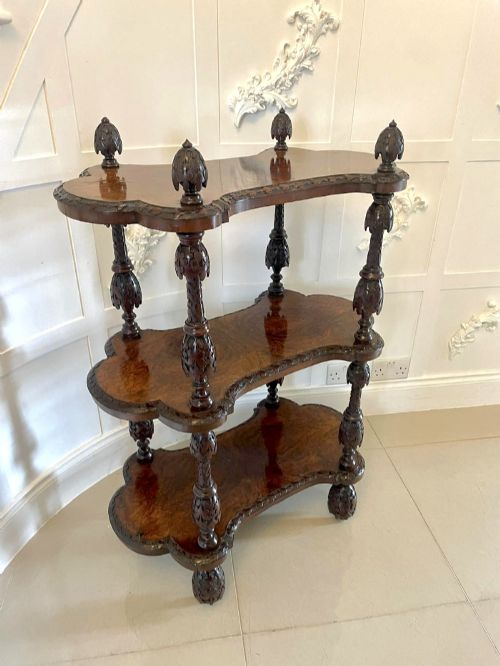
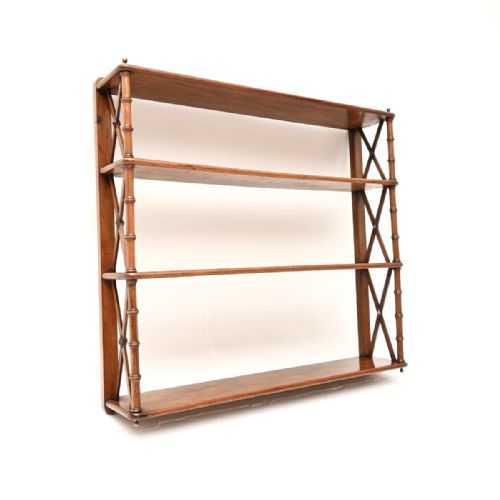
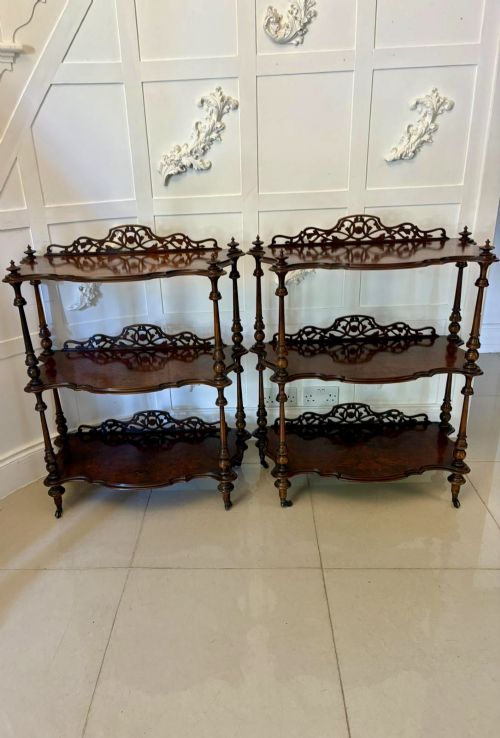
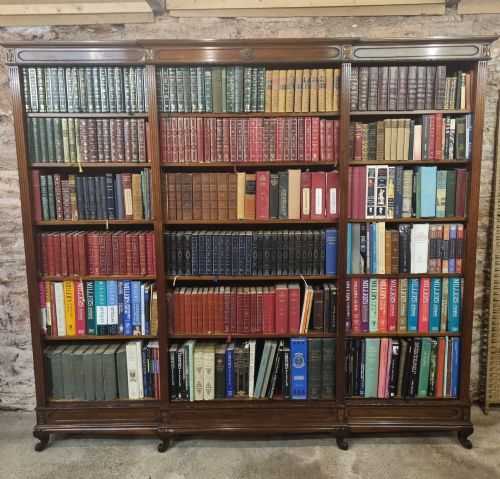
A walnut display shelf spans various practical formats, from compact wall-mounted brackets and corner cabinets to multi-tiered whatnots and open bookcases.
Victorian and Edwardian examples dominate the selection, bringing nineteenth- and early twentieth-century cabinet-making traditions into domestic spaces.
Buyers seeking a walnut display shelf frequently encounter pieces combining storage shelves with display surfaces for ceramics and books.
Materials and Construction
Cabinet-makers relied on solid walnut and decorative walnut veneer, often selecting burr walnut sections for striking, figured grain patterns on primary surfaces.
Structural elements frequently incorporated secondary woods like pine, while brass and gilt metal hardware provided functional hinges and mounts.
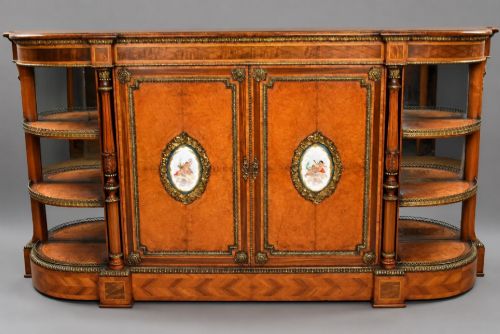
Ormolu mounts and mirrored glass panels appeared on high-status credenzas and cabinets, adding reflective depth and metallic contrast to the dark timber.
Walnut Display Shelf Retail Price Guide 2026
Typical asking prices for walnut display shelf among the pieces listed under this phrase on Sellingantiques today, from the lower quarter to the upper quarter. They describe what is for sale here now, not the wider market.
Judging Quality
Quality rests upon the selection of timber, where tightly figured burr walnut and matched veneers distinguish superior items from plain stock.
The finesse of turned supports, carved brackets, and secure joinery indicates the level of care invested by the original workshop.
Original glass panels, intact brass fittings, and well-executed serpentine shapes elevate the standing of a piece considerably.
Gabriel Viardot·Gillows
The Walnut Display Shelf Glossary
- Burr Walnut
- Timber taken from a tree growth, yielding highly figured, swirling grain patterns prized for cabinet facades.
- Whatnot
- A multi-tiered open piece of furniture designed for displaying ornaments, books, or small objects.
- Ormolu
- Gilded bronze or brass ornamentation applied to furniture, popular in Victorian and French-influenced cabinet-work.
- Credenza
- A low dining-room sideboard or cabinet, frequently featuring glass doors and decorative mounts in nineteenth-century designs.
- Etagere
- A French-derived piece of furniture consisting of a set of open shelves for displaying small objects.
Walnut Display Shelf: Frequently Asked Questions
What is a walnut display shelf used for?
These pieces serve to organise and display books, ceramics, and small decorative objects within living spaces or libraries. Their multi-tiered formats allow items to be arranged neatly while adding architectural interest to a wall.
Historically, they accommodated parlour ornaments and treasured volumes, functioning as both storage furniture and decorative display units in nineteenth-century homes.
How do I date a walnut display shelf?
Dating relies on observing construction methods, timber choice, and stylistic cues such as Victorian serpentine shaping or Edwardian proportions. Secondary woods like pine and the presence of specific hardware styles help narrow the period.
Makers' stamps, where present, offer definitive records of origin, while general design idioms align pieces with nineteenth- or early twentieth-century workshops.
Where should I place a wall-mounted shelf?
Wall-mounted versions suit compact rooms or hallways where floor space is limited, providing an elevated surface for small collections. They require secure fixing to wall studs or masonry to support the weight of the timber and displayed objects.
Pairing them with appropriate wall space allows the figured grain of the walnut to act as a focal point in the interior scheme.
Are shelves adjustable on antique bookcases?
Many Victorian and later open bookcases feature adjustable wooden shelves supported by pegged or slotted systems. This adaptability accommodates books of varying heights within the same cabinet structure.
Early nineteenth-century examples occasionally utilise fixed shelving, so checking the interior uprights reveals whether the height can be altered.