


Carved Walnut Display
When you search for carved walnut display, you are looking at cabinets, bookcases, and whatnots fashioned for showing treasured objects in domestic spaces.
Carved Walnut Display
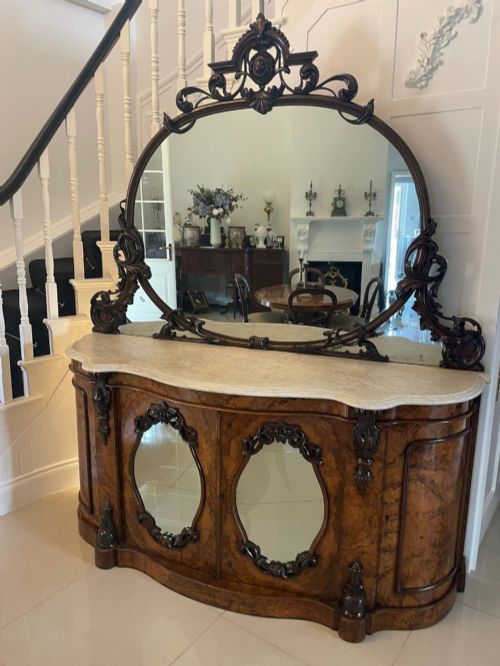
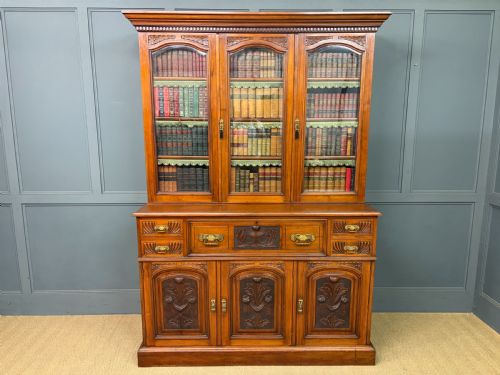
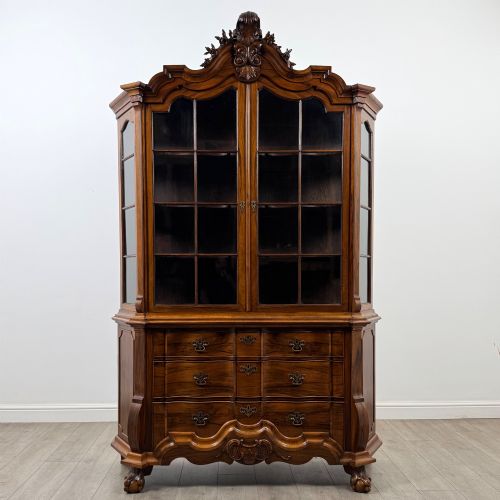
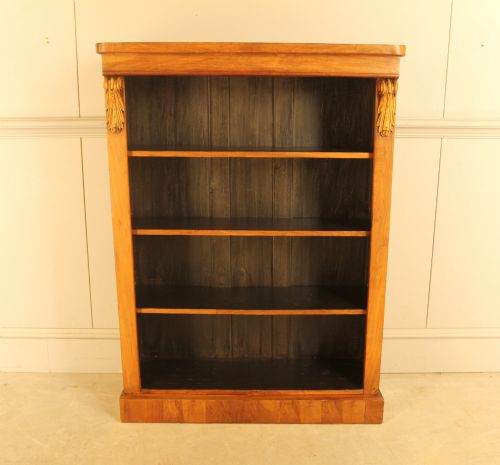
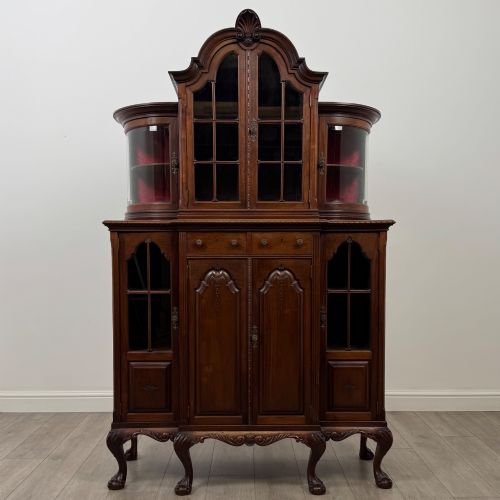
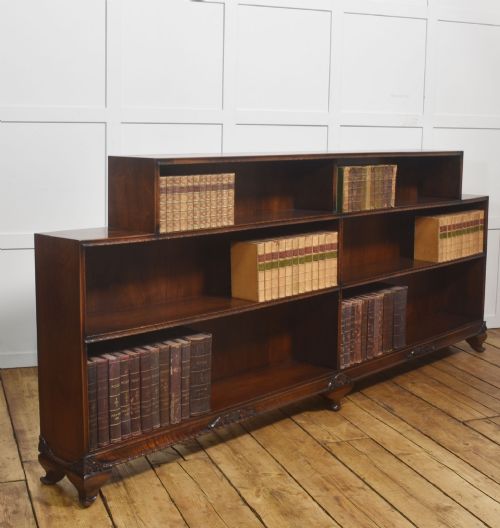
When searching for carved walnut display, collectors encounter pieces primarily originating from the nineteenth century, including Victorian examples alongside French Provincial and Queen Anne Revival forms. These items span a variety of functional shapes designed to exhibit possessions, from glazed bookcases and credenzas to tier-shelved whatnots and corner cabinets.
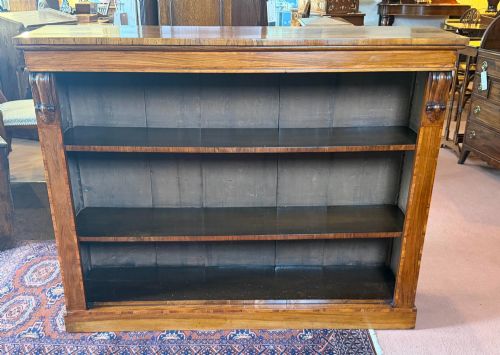
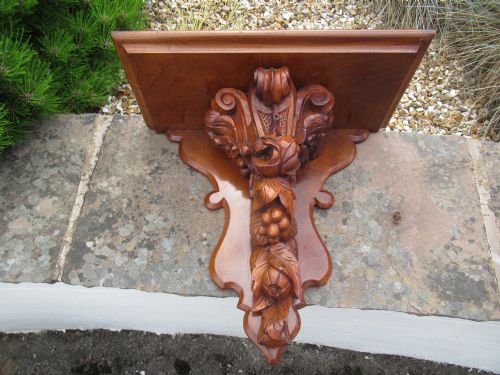
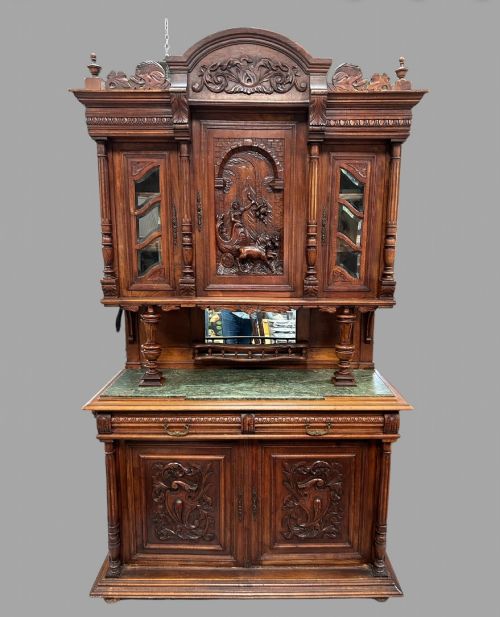
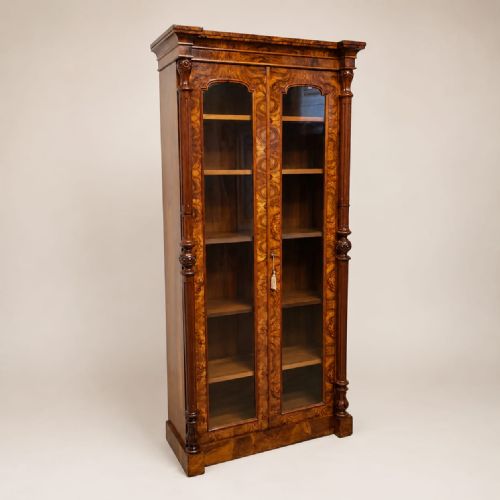
The dominant forms on this page take the shape of standing bookcases, wall brackets, music cabinets, and glazed display cabinets. Victorian pieces frequently employ burr walnut veneers to create rich figured surfaces, while continental items incorporate deeper relief carvings in solid timber.
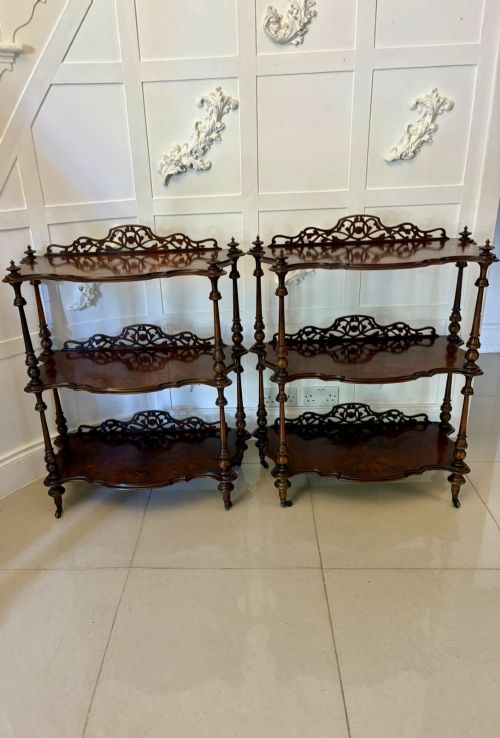
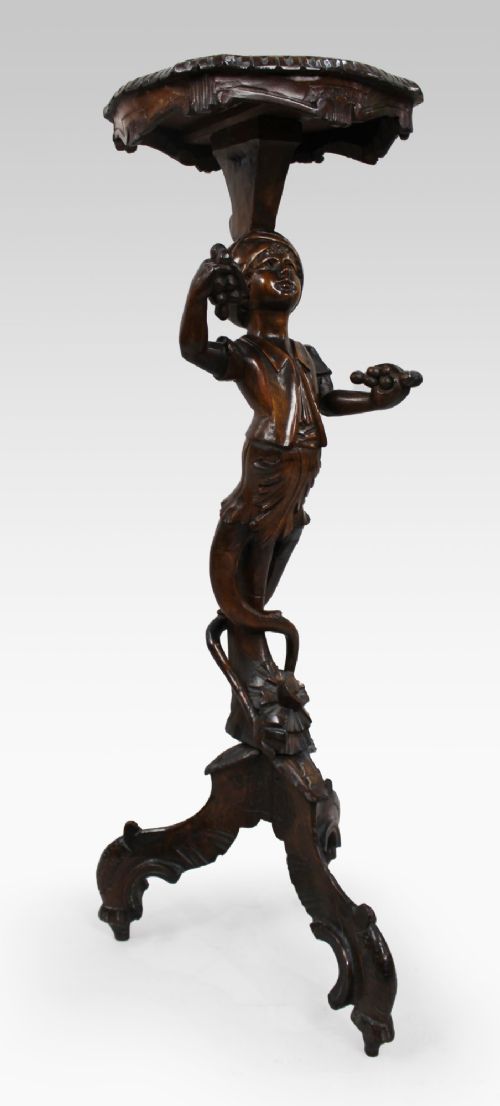
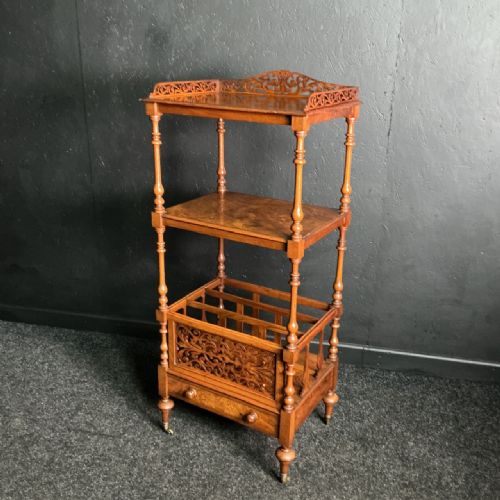
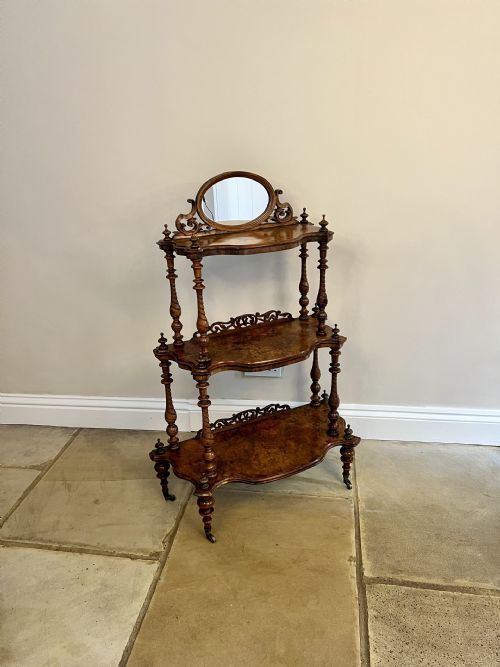
Smaller display items such as etageres, pedestals, and wall shelves also appear within this category. These serve the same fundamental purpose of elevation and display, utilising compact footprints suited to varied room layouts.
How they were made
Cabinet makers utilised walnut and burr walnut veneers applied over secondary timbers like pine, taking advantage of the wood's grain patterns to create decorative surface panels. Glazed doors feature timber framing, while open shelving relies on solid walnut boards supported by bracketed or turned uprights.
Structural embellishments involve hand carving applied directly to solid elements, including mirror backs, pediments, and shaped aprons. Additional materials such as brass fittings, marble tops, and ormolu mounts integrate with the timber framework on specific cabinets and stands.
A life-size walnut sculpture bust of a boy stands ready to converse silently with your collection.
What varies in quality
The degree of refinement in the carved ornamentation separates standard utility furniture from exhibition-grade pieces. Crisp, deep relief work executed by hand distinguishes superior cabinets from mechanical or shallow tooling.
Selection of timber veneer also determines distinction within the range. Closely matched burr walnut figuring across large expanses denotes careful workshop planning and superior material grading.
Gabriel Viardot·Maple & Co.·George Henry Paulin·James Pitkin London
The Carved Walnut Display Glossary
- Burr walnut
- A figured veneer sliced from the woody growths or burls of walnut trees, yielding intricate swirling grain patterns. Cabinet makers prized this material for the principal surfaces of Victorian display pieces.
- Whatnot
- An open shelved piece of furniture designed for displaying ornaments, books, or small objects. These tiered stands frequently feature turned supports and corner configurations.
- Ormolu
- Gilded bronze mounts applied to furniture as decorative enrichment on corners, feet, or pediments. This technique adds metallic contrast to dark walnut surfaces.
- Vitrine
- A glass-fronted cabinet specifically constructed for the display of porcelain, curiosities, or objects of art. These enclosures protect contents behind glazed doors while offering all-round visibility.
- Credenza
- A low sideboard or cabinet featuring central cupboards flanked by display space or shelving. Victorian iterations often incorporate mirror backs and carved architectural detailing.
Carved Walnut Display: Frequently Asked Questions
What is a walnut whatnot?
A whatnot is a multi-tiered shelving unit designed for displaying decorative objects, porcelain, or small books. These pieces appeared frequently in Victorian drawing rooms where floor space permitted open display.
They rely on slender turned uprights or corner brackets to support successive platforms. The open design allows light to reach the displayed items from multiple angles.
How do I identify burr walnut?
Burr walnut exhibits distinctive swirling grain patterns peppered with small dark cluster marks known as eyes. This appearance comes from gnarled growths on the tree rather than straight trunk timber.
Cabinet makers used these figured sheets as veneer on prominent doors and drawer fronts. The underlying structure typically consists of a stable secondary wood like pine.
Where were display cabinets placed?
Display cabinets and bookcases found placement in principal reception rooms such as morning rooms, libraries, and parlours. These areas received visitors where hosts could showcase collections of books and curiosities.
Corner cabinets and wall shelves utilised awkward architectural angles to maximise display capacity. Larger breakfront cabinets anchored the main walls of formal rooms.
How should I care for walnut furniture?
Walnut surfaces require protection from direct sunlight and dramatic fluctuations in temperature or humidity. Excessive light bleaches the natural dark tones and dries out old veneer adhesives.
Maintenance involves gentle dusting with a dry cloth, avoiding silicone-based polishes that build up over time. Natural wax applied sparingly preserves the sheen of antique timber.