

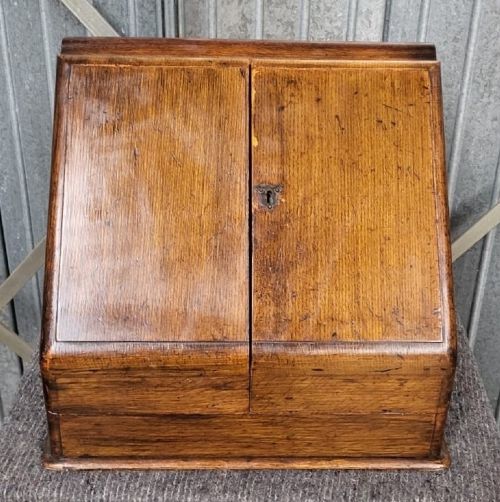
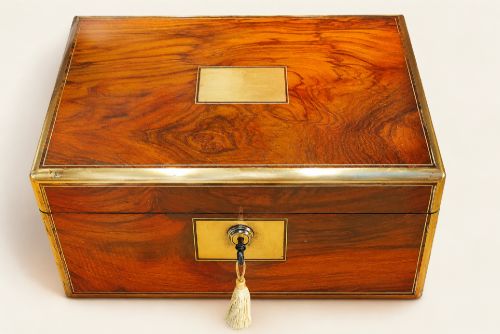
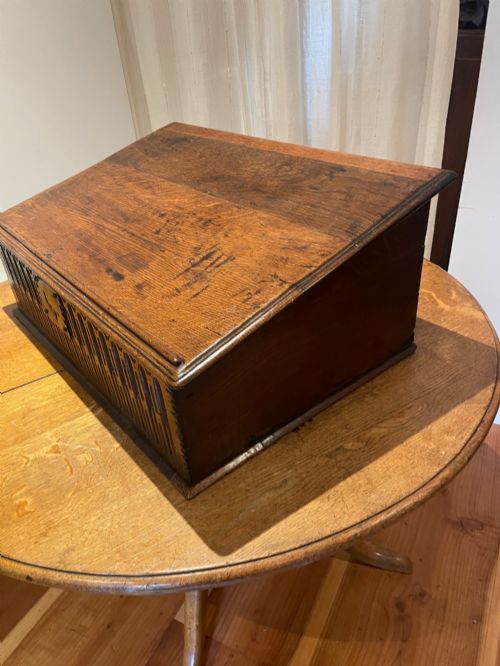
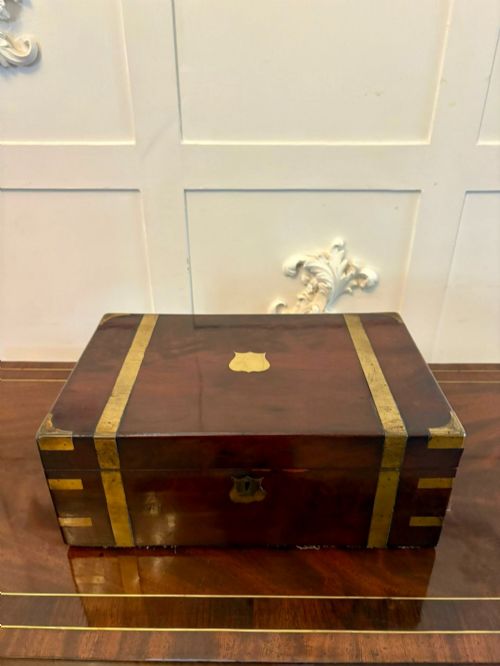

Vintage Writing Slope Box
A vintage writing slope box brings portable desktop organisation from Georgian and Victorian travels straight to modern rooms.
Vintage Writing Slope Box
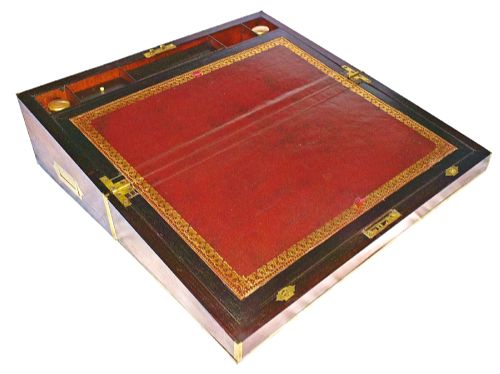
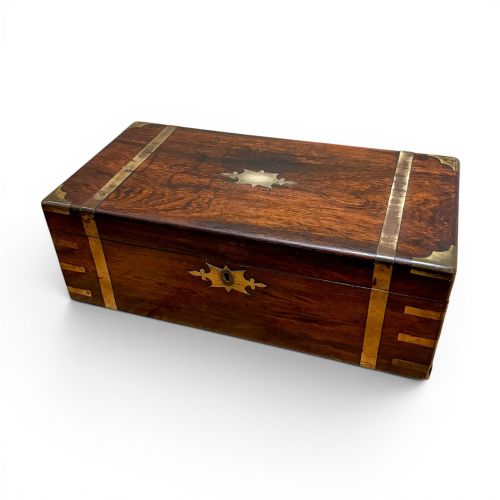
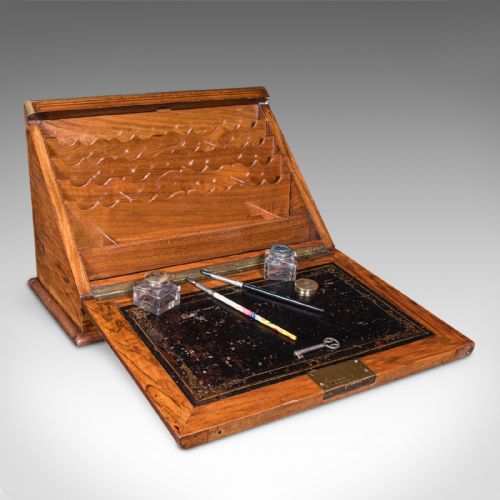
A vintage writing slope box is a portable desk designed for correspondence, featuring a slanted lid that folds down to create a writing surface. Buyers searching this phrase encounter hinged boxes equipped for ink and paper storage, often configured for travel.
The pieces listed on this page span the 17th, 18th, 19th, and early 20th centuries, including Georgian and Victorian examples. Common forms range from standard writing slopes and lap desks to stationery boxes and correspondence cases.
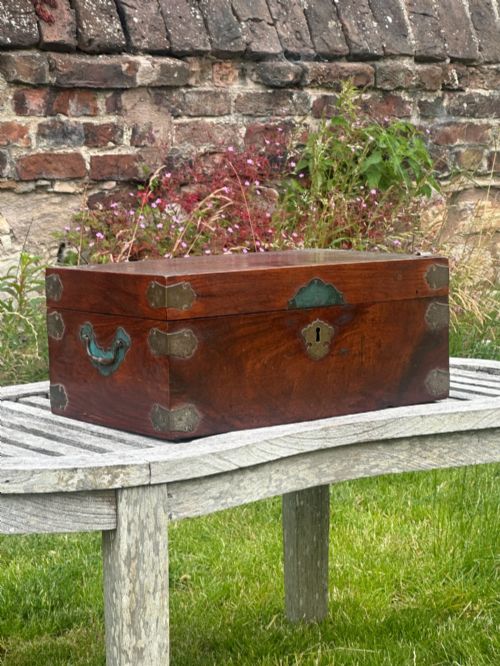
Materials vary widely across the selection, featuring mahogany, rosewood, walnut, and oak. Many incorporate campaign styling with brass corners and binding for durability during transport.
Materials and construction methods
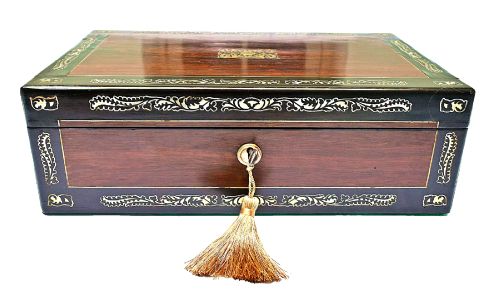
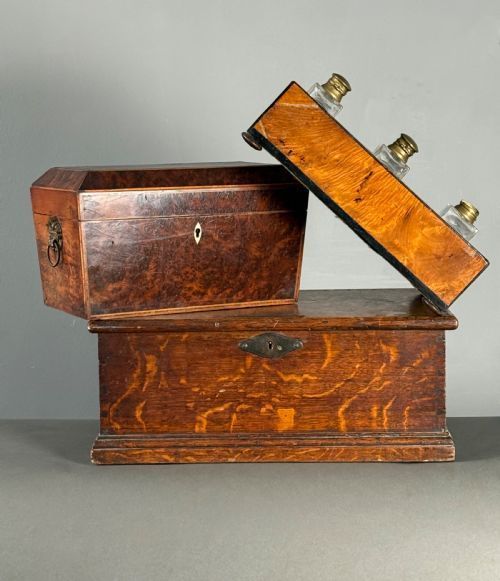
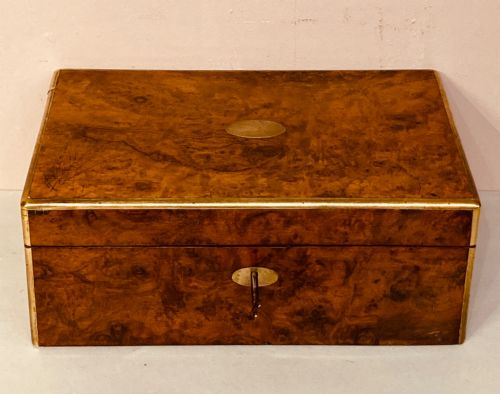
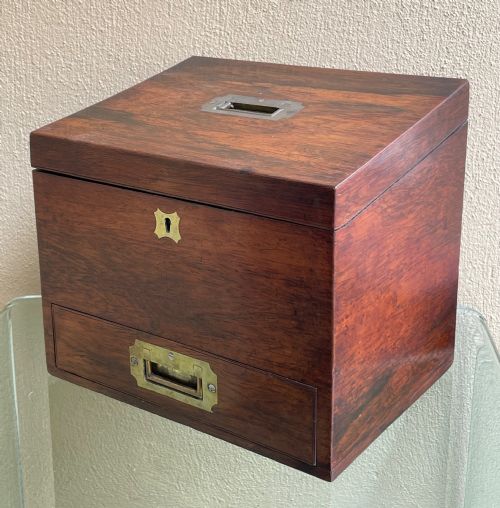
Cabinet makers utilised dense hardwoods such as mahogany, rosewood, walnut, and oak to construct the main body of each box. Figured veneers like flame mahogany and burr walnut frequently overlay the primary timbers for decorative impact.
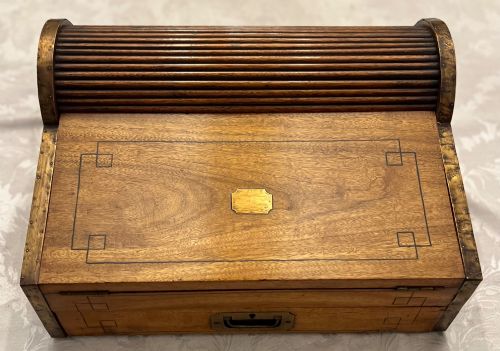
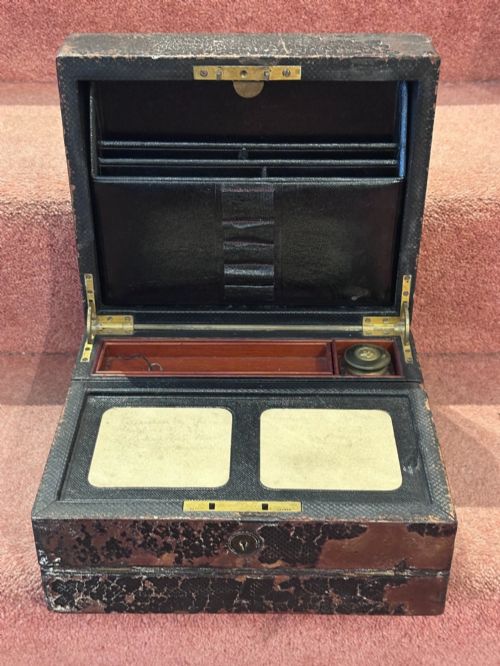
Brass corners, binding, and recessed carrying handles reinforced the structures for travel, particularly on campaign models. Interiors often feature fitted compartments, secret drawers, leather writing surfaces, and occasionally mother-of-pearl or bone details.
Vintage Writing Slope Box Retail Price Guide 2026
Typical asking prices for vintage writing slope box among the pieces listed under this phrase on Sellingantiques today, from the lower quarter to the upper quarter. They describe what is for sale here now, not the wider market.
The listings on this site feature timbers including mahogany, rosewood, walnut, oak, coromandel, and padouk, spanning the Georgian, Victorian, and Edwardian periods.
Determinants of quality
Quality rests on the selection of timber and the precision of the cabinet work, particularly in figured veneers and tight joinery. Superior examples display carefully matched grain patterns and robust internal fittings that operate smoothly.
The presence of original brass hardware, working locks with keys, and intact leather inserts elevates a piece. Elaborate internal organisation, secret compartments, and specialised stationary sections indicate higher grade production.
The Vintage Writing Slope Box Glossary
- Writing slope
- A portable box with an angled lid that opens to reveal a flat or sloping surface for writing. Inside, compartments store paper, pens, and inkwells.
- Campaign box
- A piece of furniture or storage box built for military use, typically reinforced with brass corners and recessed handles for transport. These boxes prioritize sturdy construction and protective edging.
- Secret compartment
- A hidden drawer or compartment concealed behind removable panels within the interior fittings. Makers incorporated these to secure valuables and confidential letters.
- Flame mahogany
- A veneer cut from the fork of a mahogany tree where the branch meets the trunk, producing a distinctive flickering flame pattern. Cabinet makers used this to create decorative visual movement on box lids.
- Stationery box
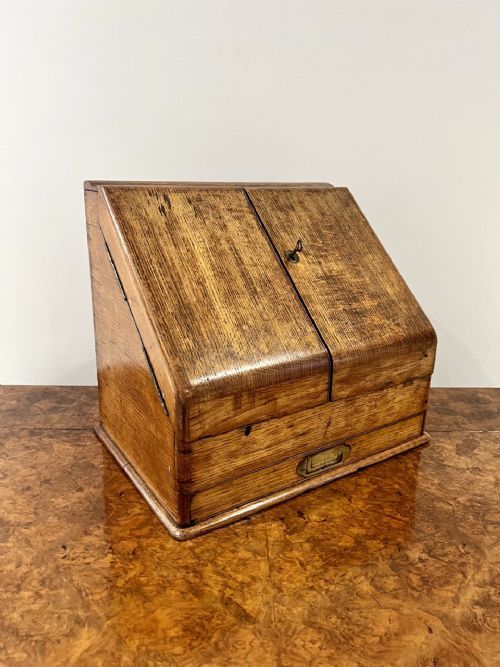
- A desk accessory designed to hold envelopes, paper, and writing implements upright or in stacked tiers. These differ from flat slopes by emphasising vertical organisation.
Vintage Writing Slope Box: Frequently Asked Questions
How do I use a writing slope today?
A vintage writing slope box serves as a functional desktop organizer or a decorative accent piece for storing letters and stationery.
The folding lid opens to provide a firm writing surface, while internal compartments keep modern correspondence supplies neatly contained.
How do I distinguish Georgian boxes from Victorian ones?
Georgian writing slopes, dating from the 18th and early 19th centuries, typically exhibit restrained lines with straight-grained or flame mahogany and simple brass escutcheons. The internal fittings lean towards functional craftsmanship with secret drawers and concealed wells.
Victorian boxes from the mid-to-late 19th century frequently showcase more ornate treatments, including heavier brass binding, coromandel or burr walnut veneers, and elaborate mother-of-pearl inlay. They often feature more complex internal stationery arrangements and leather-bound writing surfaces.
Were these boxes really used in military campaigns?
Campaign boxes were specifically constructed for officers on military service, designed to withstand the rigours of travel across the British Empire. The brass corners and binding protected the timber from knocks during transit.
Recessed handles allowed the boxes to pack tightly into baggage wagons or ship cabins without snagging on other equipment.