



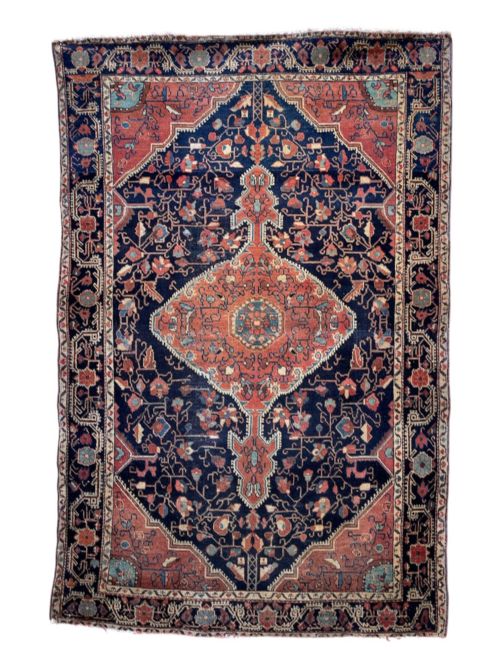
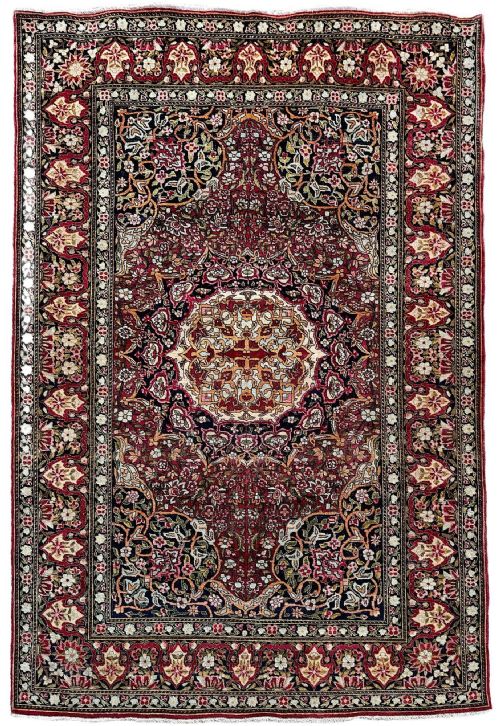
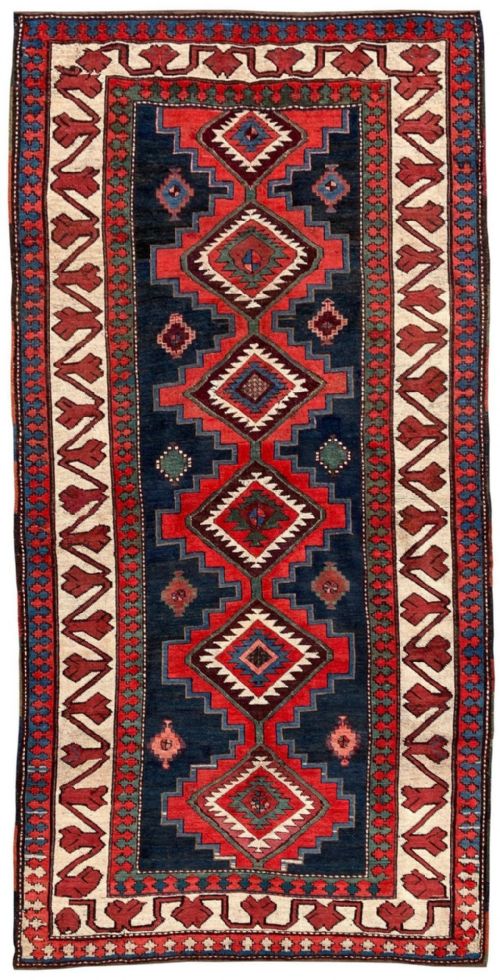
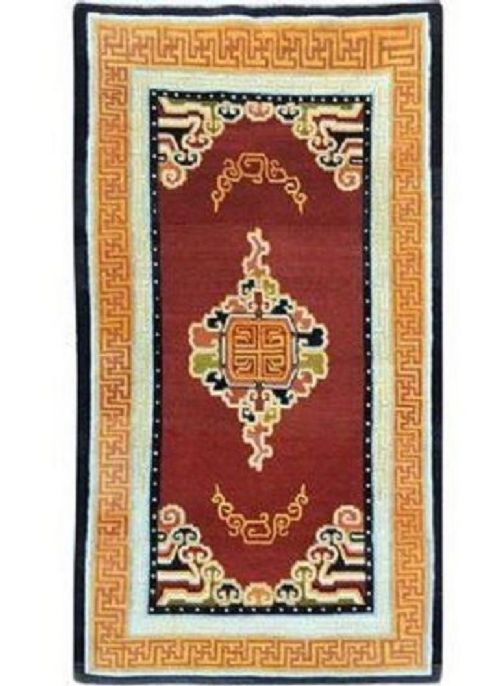
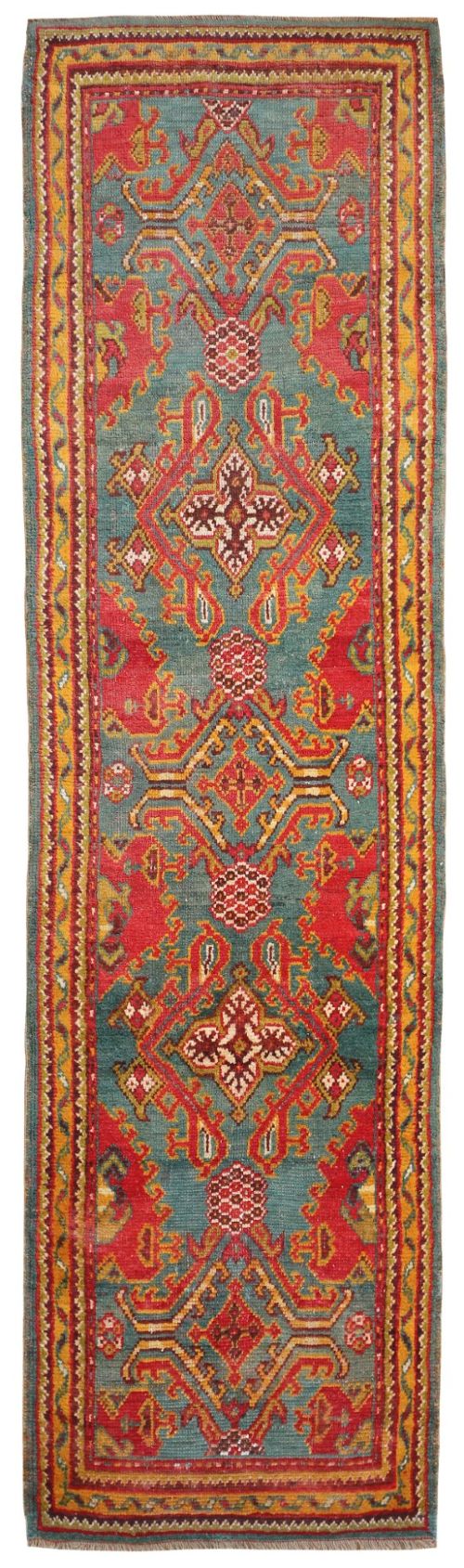
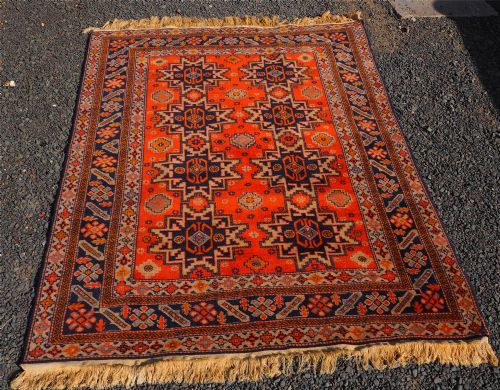
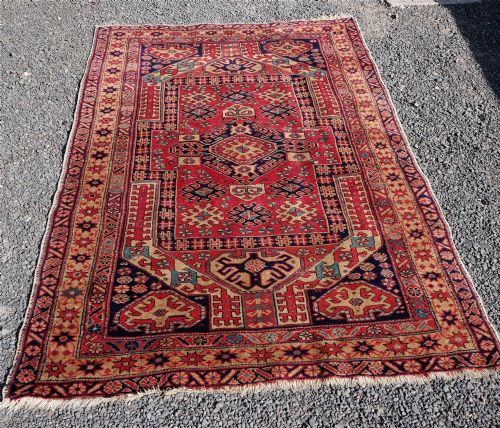
Vintage Wool Area Rug
These vintage wool area rugs bring together Persian, Caucasian, Turkmen, and Tibetan designs woven with natural dyes and hand-spun wool.
Vintage Wool Area Rug
A vintage wool area rug covers a broad spectrum of woven floor coverings originating from Central Asia, Persia, the Caucasus, and Tibet. Buyers searching this phrase encounter formats ranging from hearth-sized mats and runners to room-sized carpets dating from the nineteenth and early twentieth centuries.
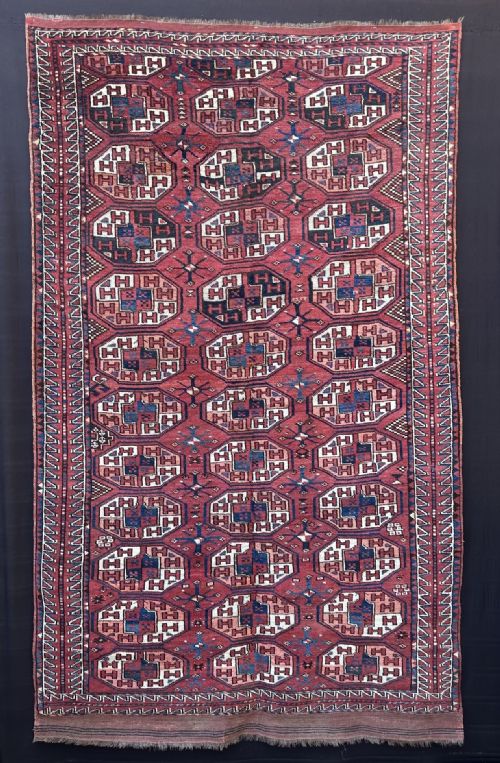
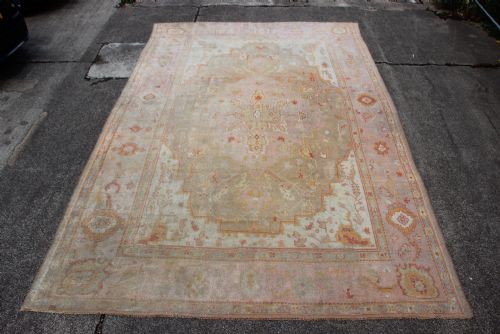
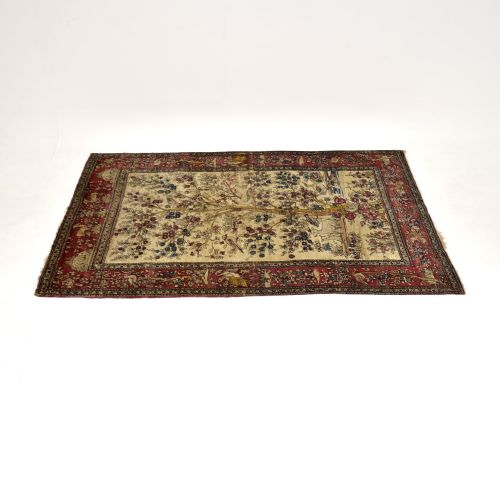
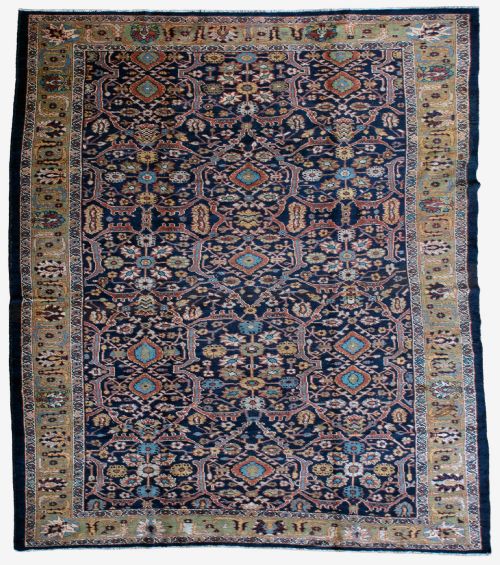
The selection encompasses tribal and village pieces such as Kazak, Afshar, Baluch, and Yomut works, alongside city carpets from centres like Isfahan, Saroukh, and Oushak. Traditional formats include specific regional prayer rugs and kilims alongside standard area rugs.
Pieces from this category draw on distinct regional motifs, including geometric medallions, all-over field patterns, tree of life designs, and tribal symbols. These floor coverings bridge historical weaving traditions and domestic interiors.
How they were made
Makers utilised wool, cotton, and silk foundations and piles, frequently employing hand-spun wool combined with natural dyes to achieve varied colour palettes. Many examples incorporate silk highlights to accentuate specific details within the design.
Weavers constructed these carpets using traditional hand-knotting and flat-weaving techniques particular to specific tribes and workshops across Persia, Turkey, the Caucasus, Turkmenistan, and Tibet.
Vintage Wool Area Rug Retail Price Guide 2026
Typical asking prices for vintage wool area rug among the pieces listed under this phrase on Sellingantiques today, from the lower quarter to the upper quarter. They describe what is for sale here now, not the wider market.
Listings feature wool, cotton, and silk materials across rugs dated from the nineteenth century through the 1930s.
What varies in quality
Quality differentiates by the precision of the knotting, the complexity of the design, and the integrity of the materials used in the foundation and pile. Finer examples display tighter knot densities and crisper execution of traditional motifs.
The depth and nuance of the colour palette, derived from natural dyes, separate standard village productions from master workshop carpets. The condition of the wool and the structural stability of the edges and ends also influence the standing of an individual piece.
The Vintage Wool Area Rug Glossary
- Pile
- The upright yarn loops or tufts that form the usable surface of a rug. This forms the soft layer walked upon and carries the visual design.
- Kilim
- A flat-woven carpet or rug produced without a pile. These pieces rely on interlocking weft threads to create geometric patterns.
- Natural Dyes
- Colourants derived from plants, insects, and minerals rather than synthetic chemical sources. These materials yield complex, mellow tones that age distinctively.
- Knot Density
- The measurement of individual knots per square unit of a rug. Higher counts typically indicate greater technical skill and finer detail.
- Warp
- The vertical threads stretched lengthwise on a loom before weaving begins. The pile knots are tied around these foundational elements.
Vintage Wool Area Rug: Frequently Asked Questions
How do I clean an old wool rug?
Gentle surface cleaning and professional immersion washing preserve the wool pile and natural dyes. Avoid harsh chemical detergents that strip natural oils from the fibres.
Regular light vacuuming without a rotating brush roll prevents dust accumulation in the base of the pile. Specialist restoration prevents minor edge wear from spreading.
Are these rugs suitable for high-traffic areas?
Wool possesses inherent resilience and natural lanolin that resists everyday dirt and wear. This makes hand-knotted wool floor coverings durable additions to hallways and living spaces.
Purchasing a suitable underlay prevents unnecessary friction and movement against hard flooring. Proper placement distributes foot traffic evenly across the surface.
How can I identify a tribal rug?
Tribal carpets often display geometric motifs, repeating medallions, and informal field arrangements reflecting nomadic or village traditions. Artisans wove these pieces from memory using locally sourced materials and natural dyes.
Structural irregularities in the weave and asymmetric borders often point toward tribal origins rather than urban workshop production. Regional characteristics link specific styles to groups such as the Baluch, Afshar, or Yomut.
What is the difference between a rug and a carpet?
Terminology often distinguishes pieces by physical scale, where smaller formats function as area rugs or mats while larger formats serve as carpets. Both share identical hand-knotting and flat-weaving construction techniques.
Historical records and marketplace listings apply both terms interchangeably depending on room placement and dimensions.