
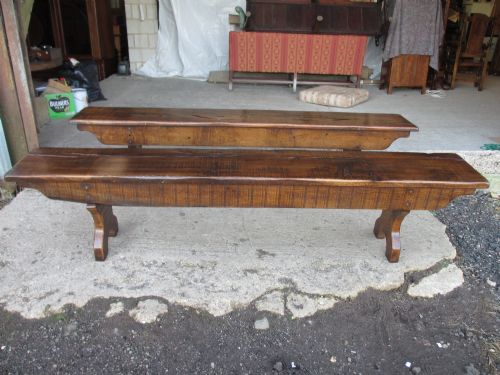
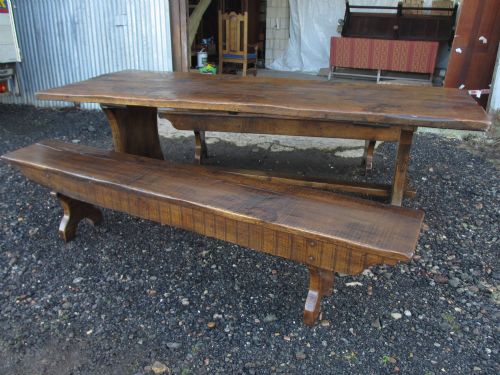
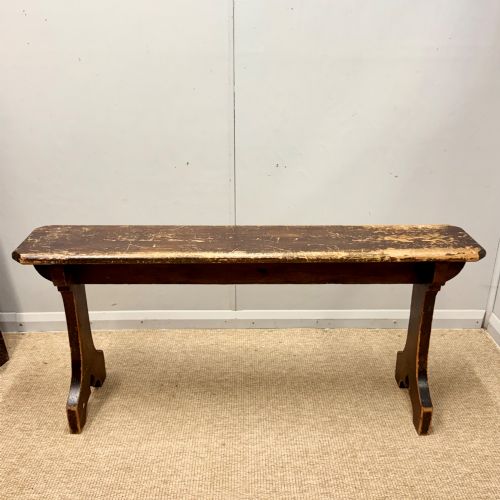
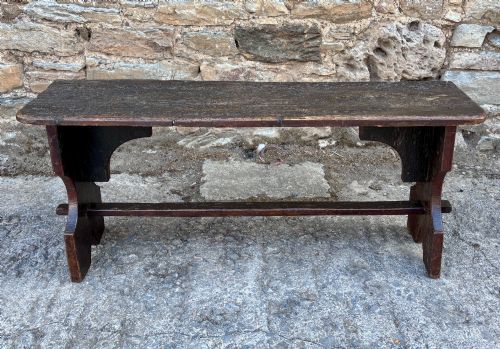





Vintage Wooden Trestle Bench
A vintage wooden trestle bench brings hard-wearing utility and honest regional character to a modern dining room or hallway.
Vintage Wooden Trestle Bench
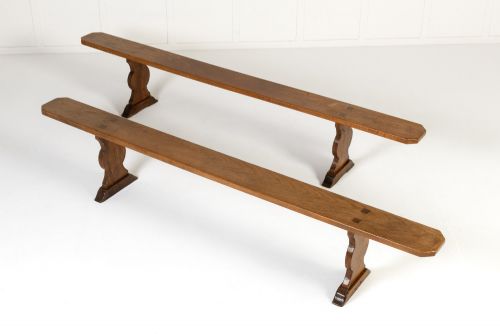
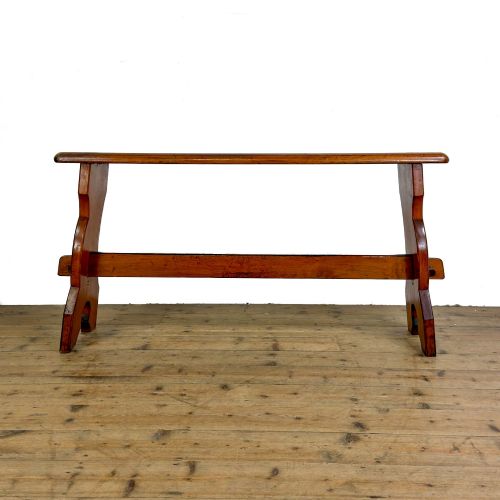
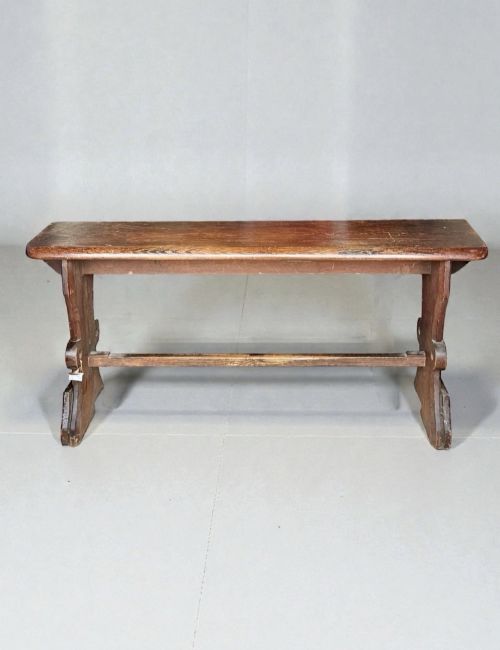
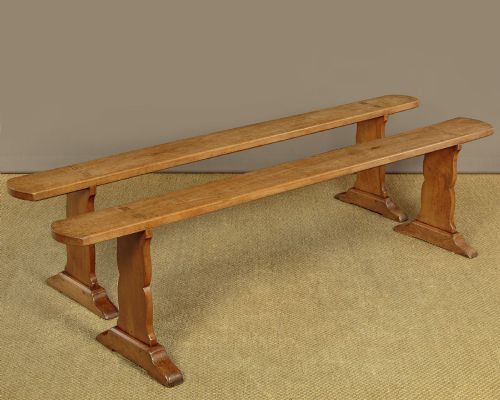
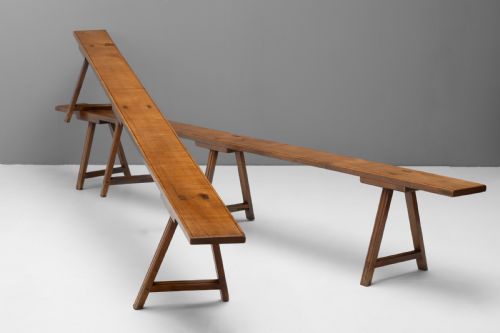
A vintage wooden trestle bench provides long, linear seating supported by distinct end frames rather than four corner legs. These pieces emerge primarily from the nineteenth and early twentieth centuries, spanning periods from the Victorian era through the Edwardian years.
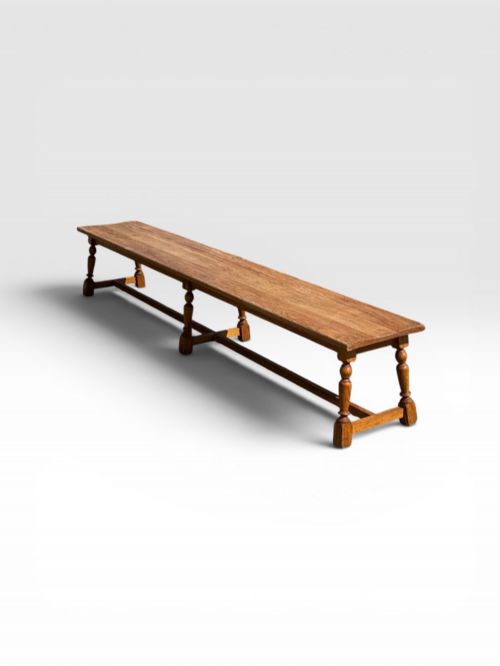
Buyers encounter various regional styles, including rustic country, French provincial, and Gothic revival forms. The selections range from utilitarian school and church seating to grand oak refectory furniture and scrubbed fruitwood tavern designs.
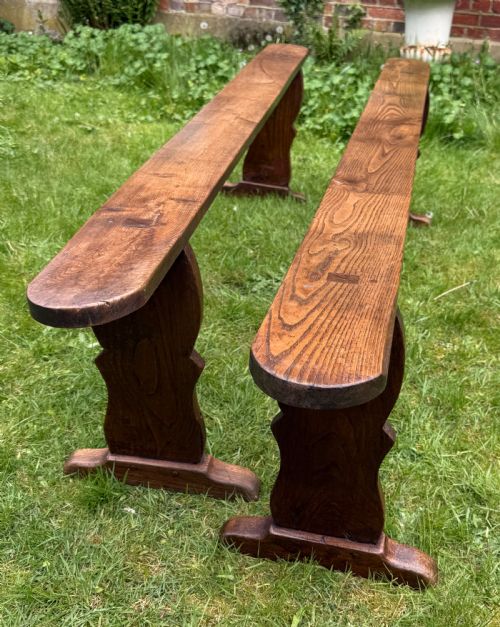
Most examples function as dining seating or hall perches, constructed to accommodate multiple sitters along a single span. The presence of shaped trestle ends and pegged joints defines the physical architecture of these communal seats.
Materials and Construction Methods
Carpenters relied on sturdy domestic and European hardwoods and softwoods, utilising pine, oak, elm, sycamore, cherrywood, and fruitwood. Solid timber boards form the tops, often left scrubbed or finished with natural wax to highlight the grain.
Trestle ends connect to the main seat boards through traditional joinery, including pegged mortise and tenon joints that provide structural rigidity. Heavy oak and elm variants utilise thick stock timber to withstand decades of daily use in communal spaces.
Several examples retain ink stains and notch marks left by nineteenth-century school children and church organists.
Distinguishing Quality and Proportion
Quality rests in the balance of timber selection and the integrity of the original construction. Superior examples feature dense, well-figured wood with substantial thickness in the seat top and structural members, avoiding excessive thinning from historic sanding.
The sophistication of the trestle ends and the harmony of proportion dictate the standing of a piece. Hand-shaped supports, original pegged joints, and honest surface wear elevate utilitarian furniture into objects of notable craft.
The Vintage Wooden Trestle Bench Glossary
- Trestle
- A structural support consisting of a horizontal beam fixed to two splayed vertical feet. This design allows maximum legroom along the length of the bench.
- Refectory
- A long dining hall style associated with communal eating spaces in monasteries, schools, and taverns. Pieces bearing this descriptor typically offer substantial length and sturdy timber framing.
- Scrubbed
- A surface finish achieved by vigorous washing and scouring of softwood or hardwood tables and benches. This process removes old finishes to reveal clean, pale timber.
- Mortise and tenon
- A traditional woodworking joint where a protruding tongue fits tightly into a matching cavity. This method secures legs and trestles without relying on metal fasteners.
- Patina
- The surface sheen and colour acquired by wood through age, handling, and wax polishing. This quality develops naturally over generations of use.
Vintage Wooden Trestle Bench: Frequently Asked Questions
How do I style a vintage wooden trestle bench at home?
Position the bench alongside a matching refectory table or let it stand independently against a hallway wall. Pair the timber surface with simple textiles or leave the grain bare to showcase its age.
Ensure adequate clearance beneath dining surfaces so the trestle ends do not restrict legroom for guests. The linear profile works effectively in narrow spaces where chairs would obstruct movement.
What woods were used for these benches?
Cabinet makers and country joiners utilised whatever local timber was available, leading to a variety of domestic and continental woods. Pine appears frequently in school and utility seating, while oak, elm, cherrywood, and sycamore provide denser surfaces for heavy daily use.
French and English country workshops favoured fruitwoods and elm for their tough, resilient fibre. Each timber species ages differently, producing distinct surface patinas over time.
How do I clean and maintain a wooden bench?
Dust the surface regularly with a soft, dry cloth to prevent grit accumulation in the grain. Apply a traditional beeswax sparingly to nourish unsealed timber and preserve the historic finish.
Avoid placing wooden furniture near direct heat sources or in fluctuating humidity to prevent splitting. Spills should be wiped promptly with a damp cloth rather than chemical cleaners.
Were these benches originally made for dining?
Many examples served utilitarian functions in churches, schools, farms, and taverns rather than domestic dining rooms. Church pews, organist seats, school forms, and workshop benches were routinely adapted for household seating.
Their robust construction made them suitable for communal gatherings and heavy use in public spaces. Today, these diverse origins translate into versatile seating for modern homes.