


Antique French Hallway Table
An antique french hallway table brings classical proportion and surface warmth to a narrow space through timber, stone, and giltwood.

Antique French Hallway Table
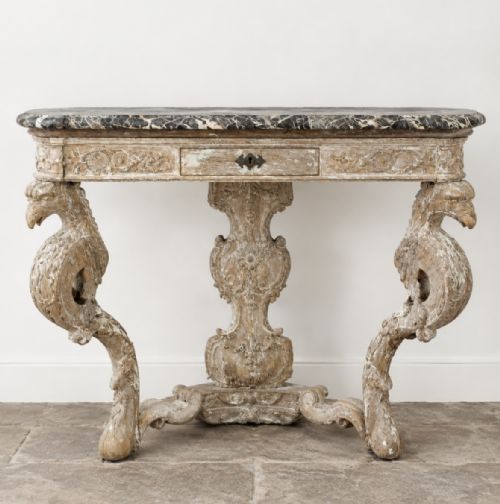
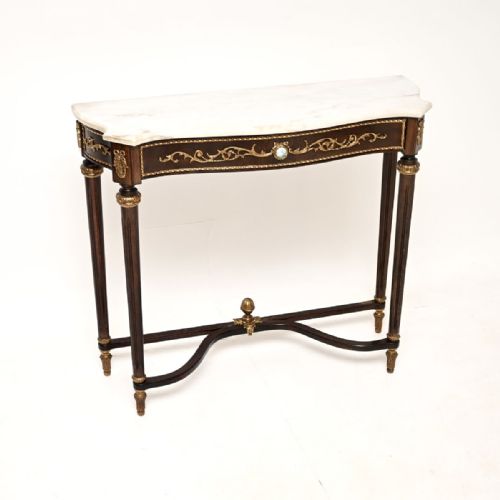
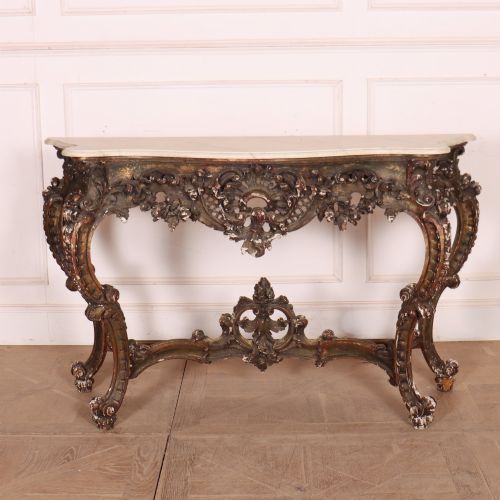
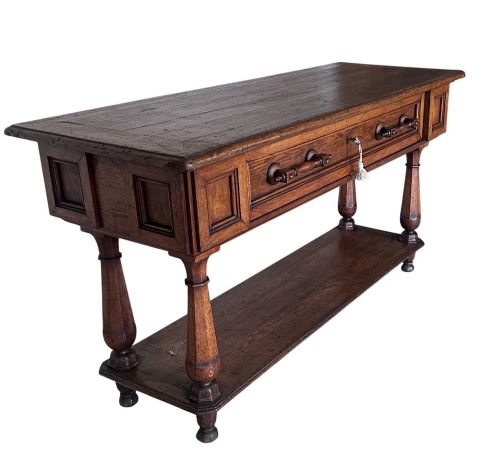
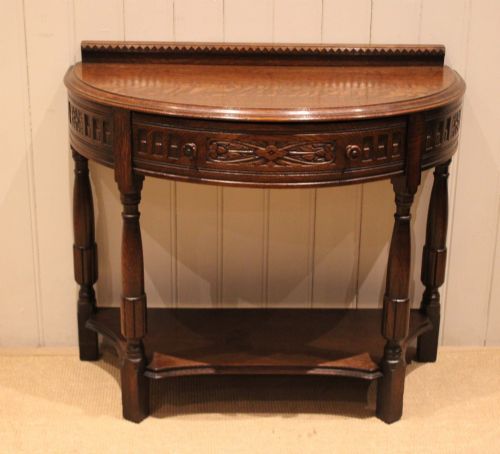
When you search for an antique french hallway table, you encounter console tables, serving tables, and demi-lune forms designed to sit flat against a wall in an entrance or corridor. The examples on this page span the eighteenth, nineteenth, and early twentieth centuries, drawing upon regional provincial traditions and formal court styles alike.
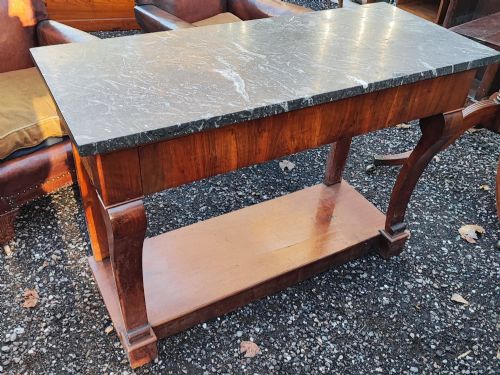
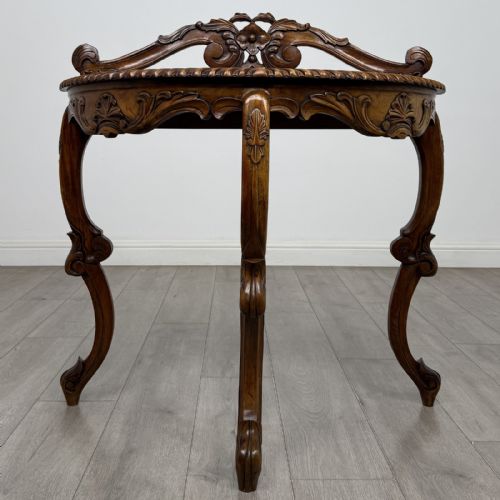
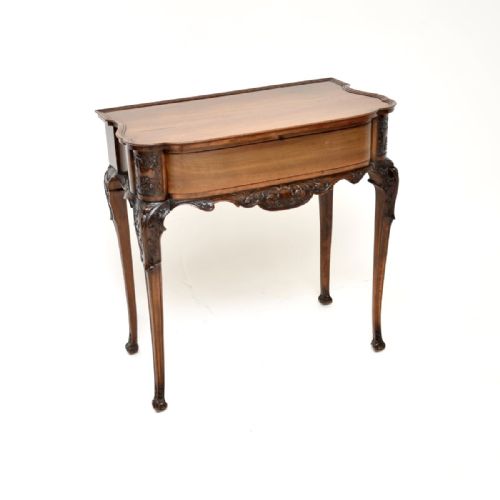
The most common formats include rectangular console tables, often paired with pier mirrors, alongside semicircular demi-lune tables fitted with single or multiple drawers. Timber frameworks in oak, mahogany, walnut, and cherry predominate, frequently surmounted by marble slabs in white, grey, or rouge tones.
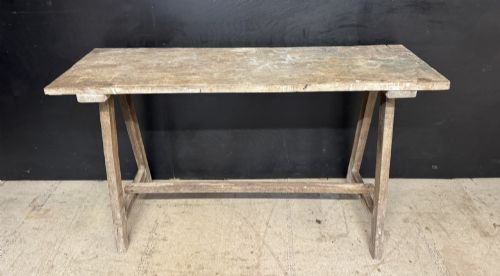
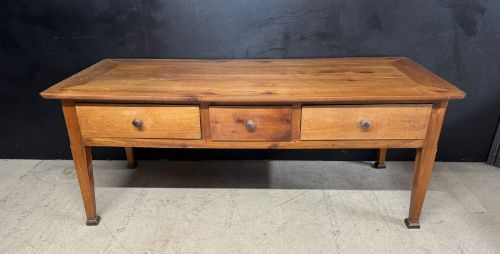
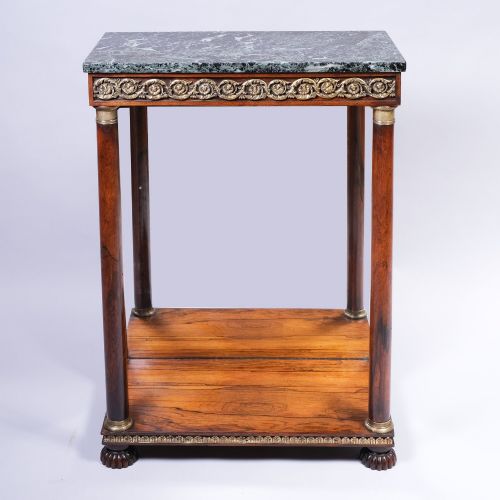
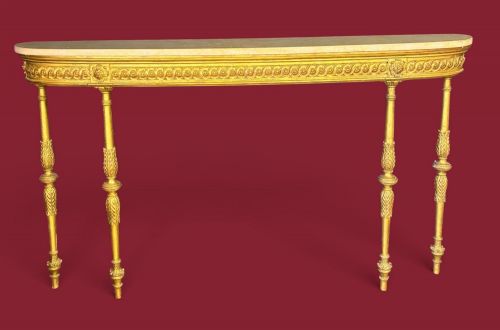
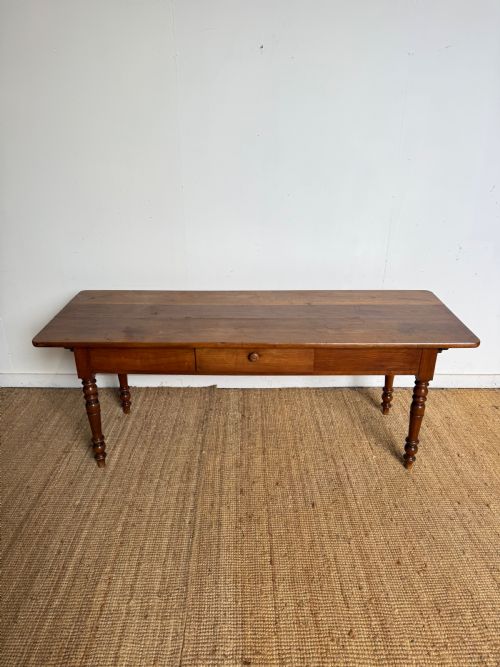
Origins range from rural workshops producing scrubbed pine and oak farmhouse tables to urban cabinet-makers executing intricate giltwood, ormolu-mounted rosewood, and parcel-gilt neoclassical designs. These pieces served practical domestic functions for holding correspondence and decorative objects while establishing the decorative tone of an interior.
Materials and Construction
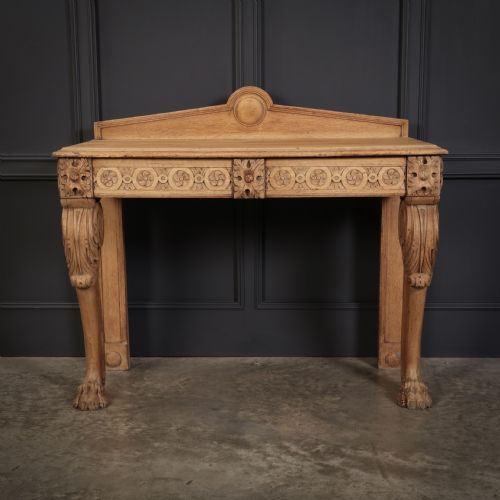
Cabinet-makers built the structural frames of these tables using solid hardwoods such as oak, mahogany, walnut, and cherry, occasionally employing deal or pine for secondary timbers and drawer linings. Joinery relied upon traditional mortise and tenon frames, hand-cut dovetails for drawer construction, and shaped aprons carved directly from the solid wood.
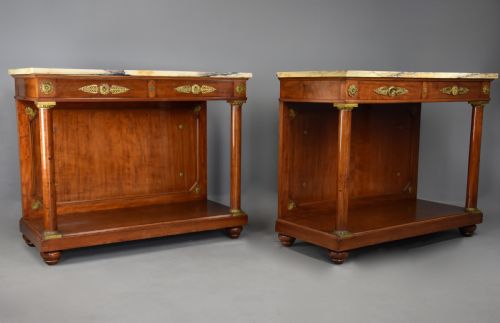
Surface decoration incorporated multiple techniques, from carved giltwood and gesso to hand-applied paint finishes, parcel-gilt highlights, and brass or ormolu mounts. Heavy marble slabs, cut to follow serpentine or straight top contours, rested directly upon the wooden frames without mechanical fixings.
Veneers of rosewood, satinwood, and burr birch appeared on finer neoclassical and empire examples, laid over stable carcass woods to create decorative grain patterns. Scrubbed pine and painted pine pieces received simple wax or pigment treatments suited to provincial domestic use.
Antique French Hallway Table Retail Price Guide 2026
Typical asking prices for french hallway table among the pieces listed under this phrase on Sellingantiques today, from the lower quarter to the upper quarter. They describe what is for sale here now, not the wider market.
Console tables, serving tables, and demi-lune forms appear alongside paired pier mirrors and centre tables.
Assessing Quality
The distinction between ordinary and exceptional pieces rests upon the crispness of hand-carved ornamentation and the integration of secondary materials. High-grade examples display deeply undercut foliage, sharp moulding profiles, and well-cast ormolu mounts that sit flush against the timber.
Material selection dictates the upper tier of the range, visible in heavily figured mahogany, dense burr birch, and thick slabs of polished marble with active natural veining. Lesser pieces utilise plainer secondary woods and simpler turned legs rather than shaped, carved, or fluted supports.
Structural integrity depends upon the original relationship between the marble top and the wooden base, as well as the retention of untouched painted or gilded surfaces. Altered heights, replaced marble slabs, and stripped secondary finishes diminish the coherence of the object.
Krieger Paris
The Antique French Hallway Table Glossary
- Console table
- A table designed to stand against a wall, traditionally fixed with brackets or supported by front legs. These pieces provide narrow surface space suitable for entrance halls and reception rooms.
- Demi-lune
- A half-moon shape used for tabletops and commodes. This curved profile allows the furniture to project minimally into a hallway or narrow passage.
- Ormolu
- Gilded bronze ornamentation applied to furniture frames, popular during the neoclassical and empire periods. The metal is cast and chased before receiving a gold amalgam coating.
- Trumeau
- A decorative wall mirror combined with a painted or carved panel above the glass. These items frequently hung directly above console tables in formal interiors.
- Serpentine
- A furniture front or top curving outward in the centre and inward at the sides. This flowing contour requires advanced woodworking skill to shape from solid timber.
Antique French Hallway Table: Frequently Asked Questions
How did people use hallway tables historically?
Historically, these tables stood in entrance halls to receive callers, hold correspondence, and support lighting devices such as candlesticks or lamps. Their narrow proportions ensured they did not obstruct the movement of people passing through corridors.
In wealthier households, matching console tables and mirrors created a formal focal point immediately upon entering the residence. They also displayed decorative objects, pocket watches, and calling cards.
Will a marble top be too heavy for my floor?
The marble slabs on these tables are substantial, but the weight distributes evenly across the wooden frame and floor contact points. Most domestic floor surfaces support them without difficulty.
For stability, particularly with taller console and mirror combinations, wall fixings are often employed to prevent tipping. The marble usually lifts off the wooden base separately to ease transportation.
How do I distinguish empire style from provincial pieces?
Empire style tables emphasise classical symmetry, architectural proportions, and dark timbers like mahogany or rosewood, frequently enhanced by brass mounts and gilt details. They reflect urban neoclassical tastes derived from nineteenth-century court aesthetics.
Provincial pieces utilise local woods such as scrubbed pine, oak, cherry, or fruitwood, featuring simpler turned or square tapered legs. Their decoration relates to regional vernacular traditions rather than academic classical revivals.
Can I place a console table on an uneven floor?
Many antique tables developed minor discrepancies in leg length over centuries of use, meaning they may rock slightly on modern hard floors. Small felt pads or discreet levelers placed beneath the feet correct this movement.
Avoid forcing rigid wall attachments that pull the frame out of square, as antique joinery requires a natural resting posture to prevent stress on the glue joints.