
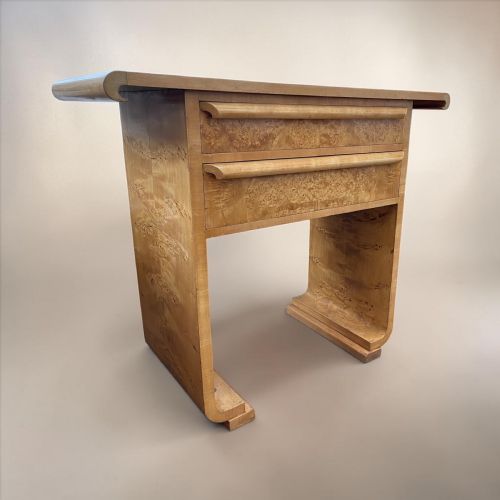


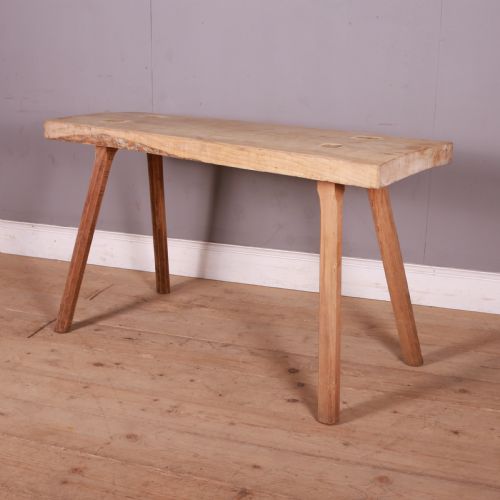


Blond Wood Console Table
A blond wood console table brings warmth and pale grain to a hallway or drawing room.
Blond Wood Console Table
When you search for a blond wood console table, you are looking at pale timber surfaces designed to stand against a wall or in a narrow room. The pieces recorded here span the nineteenth century and the art deco period, offering light-toned wood options from various European origins.
The styles range from Biedermeier and Empire revival to French provincial and art deco. Such variety means the form adapts easily to both period interiors and modern spaces requiring pale natural timber.
How they were made
Makers utilised distinct pale veneers and solid timbers, notably burr birch, burr maple, birds-eye maple, sycamore, and bleached mahogany. These woods were selected for their striking natural figuring and lighter colouration.
Construction techniques combined robust timber frames with decorative veneering methods. Contrast was frequently introduced through ebonised wood details or brass mounts, defining the visual character of nineteenth-century and art deco pieces.
The listings span the nineteenth century up to the art deco period of nineteen thirty, featuring birch, maple, mahogany, oak, and ash.
What varies in quality
Quality rests in the selection of the timber veneer and the precision of its placement. Highly figured burr birch or birds-eye maple displays a rich, natural movement across the surface that lesser timbers lack.
The refinement of secondary woods, such as oak or ash within the structure, and the integration of contrasting elements like ebonised trim or brass details, separate standard items from finer cabinetwork.
Fortnum and Mason
The Blond Wood Console Table Glossary
- Console table
- A table designed to stand flat against a wall, frequently fitted with front legs and secured at the back. These pieces often serve decorative or display functions in entrance halls and reception rooms.
- Burr birch
- A specialised timber cut from a tree growth or burr, yielding a swirling, highly decorative grain pattern. It is prized by cabinetmakers for creating striking veneered surfaces.
- Biedermeier
- A central European style dating from the nineteenth century characterised by utilitarian comfort and clean lines. It highlights the natural beauty of blond wood veneers without excessive ornamentation.
- Ebonised wood
- Timber treated with a dark stain or finish to imitate ebony. This dark contrast is often paired with pale blond wood veneers.
- Sofa table
- A rectangular occasional table originally designed to stand in front of a sofa. These pieces typically feature drop leaves and double pedestals or trestle supports.
Blond Wood Console Table: Frequently Asked Questions
Where should I place a blond wood console table?
These tables suit narrow circulation spaces like entrance halls, corridors, and landings where depth is limited. Their pale timber tones also work well beneath mirrors or artwork in living rooms.
Because the surfaces are finished in natural wood, avoid placing them in direct, harsh sunlight to prevent fading of the delicate burr birch or bleached mahogany.
How do I clean pale wood surfaces?
Dust regularly with a soft, dry cloth to prevent dirt settling into the grain of the veneer. Avoid silicone sprays and abrasive polishes that can damage antique polishes.
Apply a traditional beeswax sparingly if the timber appears dry, buffing gently to maintain a soft natural sheen without creating build-up.
Are these tables suitable for daily use?
Most antique console tables function well for holding lamps, small objects, or correspondence. Occasional and sofa table variants offer sturdiness for general daily interaction.
Use coasters or mats beneath drinks to protect vintage polished timber surfaces from moisture rings and heat marks.