
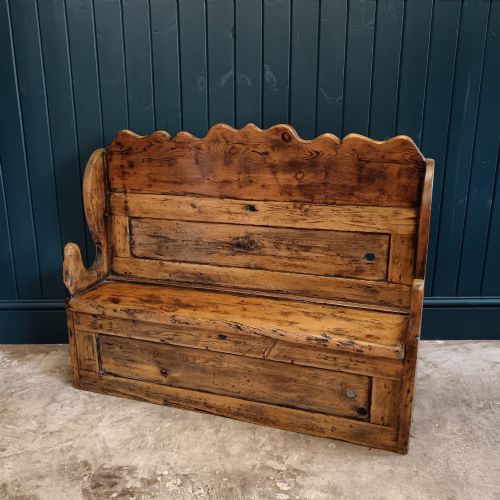
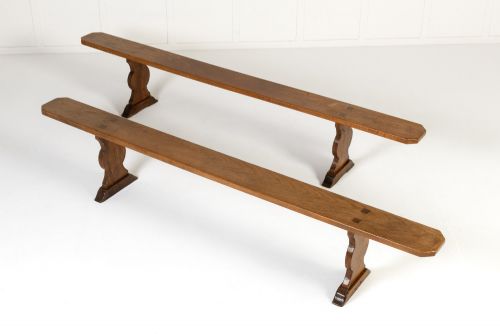
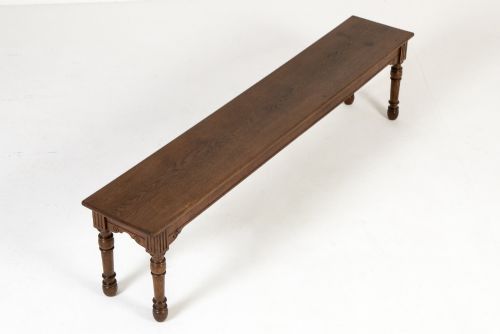
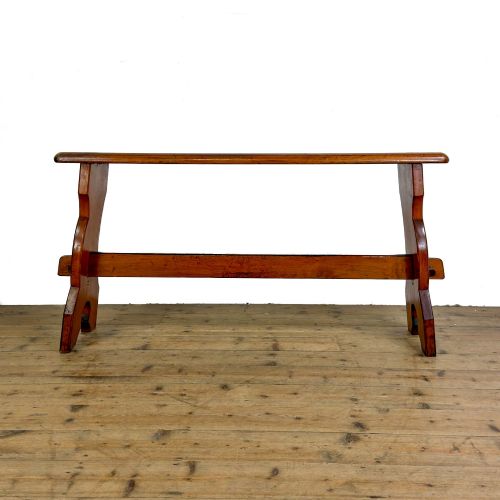
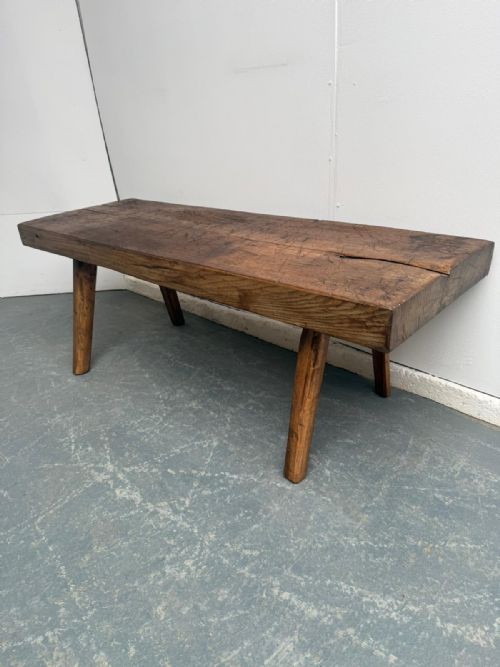


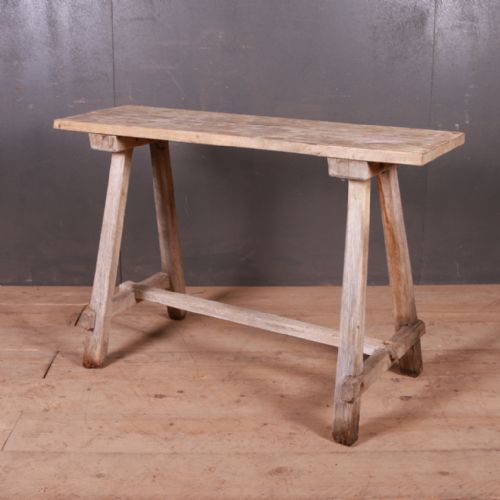

Narrow Wooden Bench
A narrow wooden bench offers practical seating for hallways and tight spaces, combining sturdy timber construction with straightforward utilitarian charm.
Narrow Wooden Bench
A narrow wooden bench serves as a functional seat or low table in hallways, corridors, and compact rooms where floor space is at a premium. When exploring this selection, buyers frequently encounter pieces designed for utilitarian purposes, including hall benches, organ benches, and scrubbed tables.
The available examples span the nineteenth century, including Victorian pieces alongside French country and provincial variants. These items range from simple elm and pine seating to carved hardwood forms originating from Qing Dynasty traditions.
Forms often double in purpose, serving alternately as window seats, side tables, or low coffee tables depending on their proportions and height. Such versatility makes them adaptable additions to both traditional and rustic interior schemes.
Materials and construction
Makers utilised a variety of native and imported timbers, relying heavily on oak, pine, elm, and sycamore for daily utility. These woods were selected for structural resilience, with denser hardwoods providing sturdy support for frequent use.
Surfaces often show the marks of historical scrubbing, bleaching, or simple lacquering rather than heavy veneer work or elaborate polish. Joinery is straightforward and robust, built to withstand the demands of farmhouse and provincial workshops.
Materials documented across the inventory include oak, bleached oak, pine, elm, sycamore, hardwood, timber, and lacquer.
Distinguishing quality and character
Quality rests in the integrity of the timber and the honesty of the surface finish, whether left as scrubbed sycamore or pale bleached oak. Pieces that retain their original proportions and uncompromised structural joins hold greater visual coherence.
Subtle differences in carving, such as the detailed work found on Qing Dynasty items, contrast with the stark utility of European rustic forms. The presence of natural grain variation and patination accumulated through decades of use elevates the character of each example.
The Narrow Wooden Bench Glossary
- Bleached oak
- Timber treated to lighten its natural tone, producing a pale, neutral surface popular in nineteenth-century French furniture. This process highlights the grain while modernising the appearance of heavy wood.
- Scrubbed
- A surface finish achieved by vigorous cleaning with water and a stiff brush, removing old dirt and wax to reveal raw timber. This treatment is common on utilitarian tables and seating from country workshops.
- Trestle table
- A table or long bench construction featuring a horizontal beam supported by two trestles or upright frames. This design maximises legroom beneath the top.
- Elm
- A tough, interlocking hardwood valued for its resistance to splitting, frequently used for seats and benches where strength is essential. Its characteristic wavy grain adds distinct visual texture.
- Organ bench
- A long, narrow seat originally designed for musicians to use at a keyboard instrument. Their slim proportions make them suitable for modern hallways.
Narrow Wooden Bench: Frequently Asked Questions
Where should I place a narrow wooden bench?
These pieces suit narrow hallways, entryways, or positioned beneath a window as a low seat. Their compact depth prevents them from obstructing walkways.
They also function effectively behind sofas or as low coffee tables in living spaces, depending on their height.
How do I clean and maintain wooden benches?
Dust regularly with a dry cloth and occasionally treat unfinished or scrubbed timber with appropriate beeswax to nourish the wood. Avoid excessive moisture on antique surfaces.
Keeping timber away from direct heat sources prevents warping and splitting over time.
Are these benches comfortable for daily seating?
Most historic examples were built for utility rather than cushioned lounging, offering firm wooden surfaces. Adding a small textile pad or cushion can improve comfort for extended sitting.
Their primary strength remains their sturdy construction and narrow profile for brief seating tasks.
How do I identify a nineteenth-century piece?
Look for traditional hand-cut joinery methods, timber shrinkage, and natural patination that indicates decades of handling. Tool marks left by the maker often provide clues to the period.
Comparing the wood type and style against known regional furniture traditions helps confirm the era.