

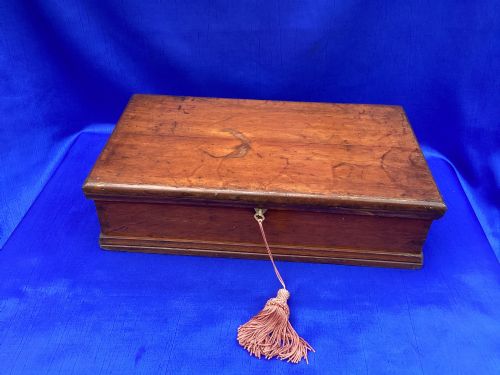
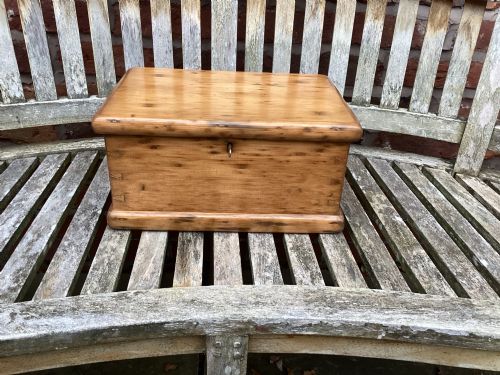
Vintage Wooden Document Box
A vintage wooden document box keeps paperwork and letters securely stored while adding texture and history to a room.
Vintage Wooden Document Box
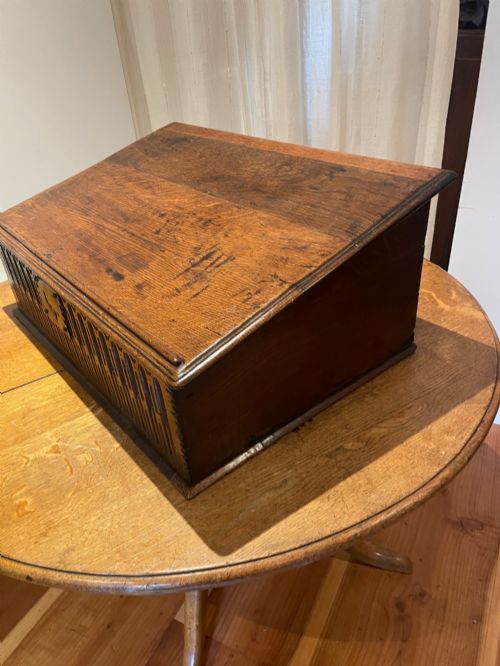
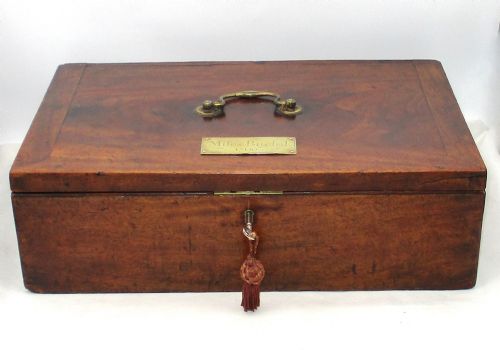
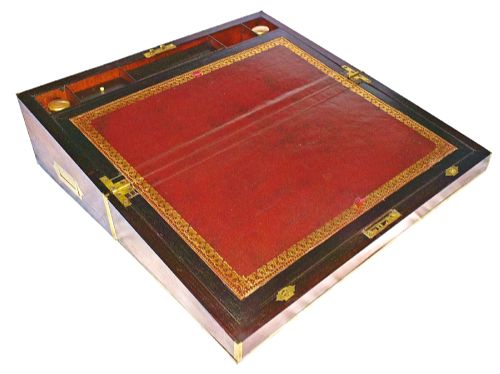
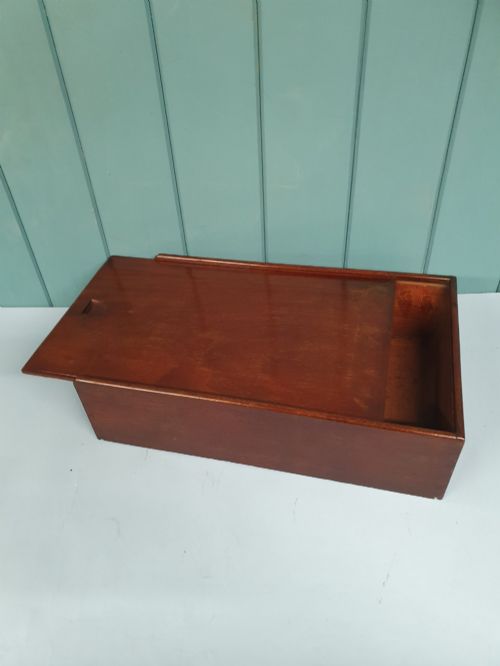
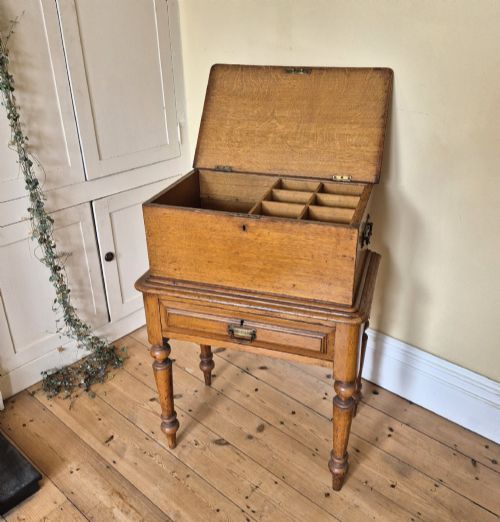
A vintage wooden document box encompasses utilitarian deed storage, fitted writing slopes, and Bible boxes designed to protect important papers. These items range from sturdy 17th-century oak and pine strongboxes to refined Victorian mahogany and rosewood slopes.
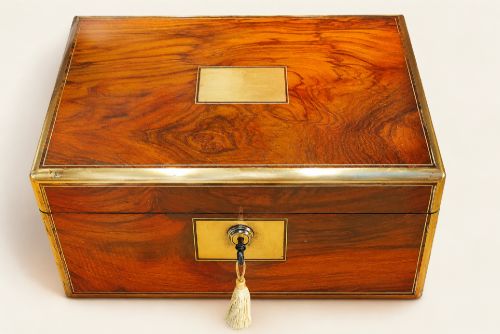
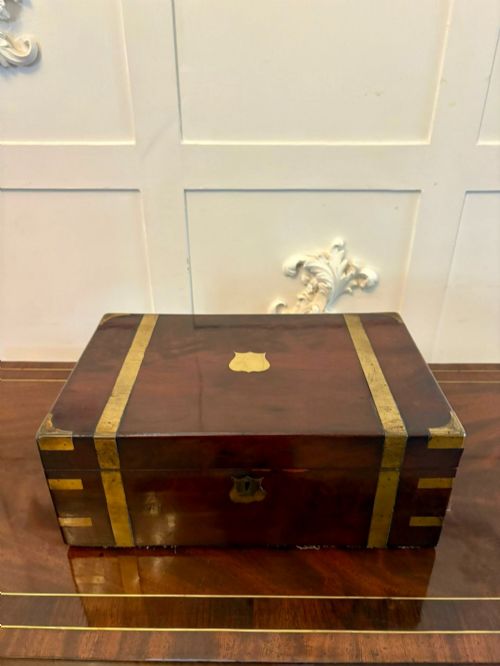
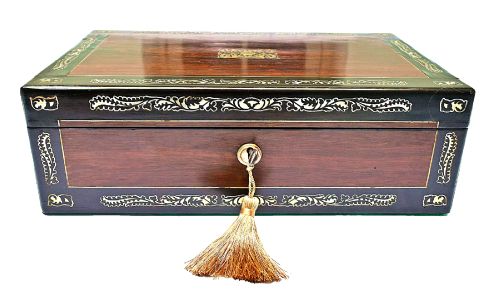
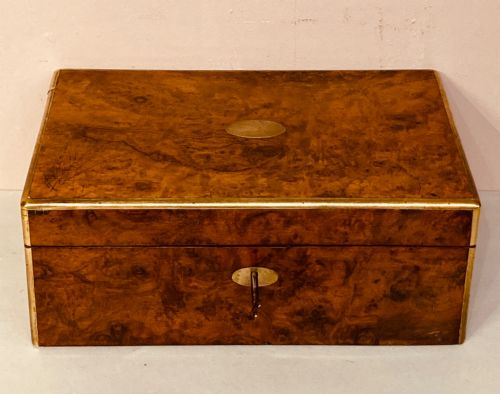
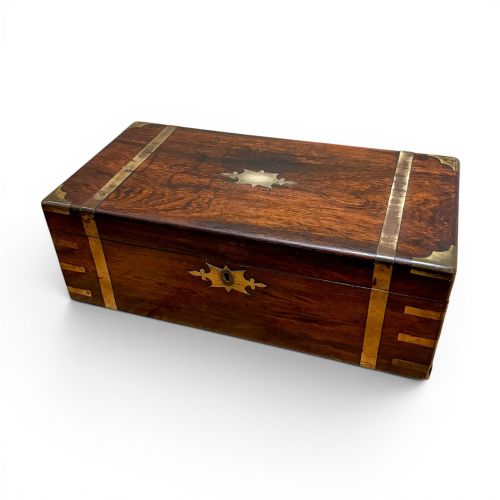
The version most commonly met on this page is the 19th-century mahogany or rosewood writing slope, frequently fitted with brass banding and secret compartments. Buyers also frequently encounter Scandinavian painted pine strongboxes and early oak deed boxes.
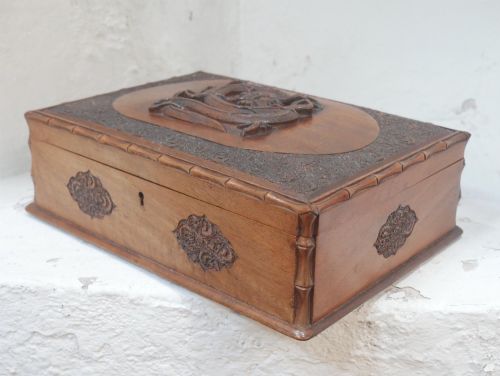
Originating from diverse traditions including Georgian Britain, Anglo-Indian workshops, and Scandinavian folk art, these containers serve modern desks and living spaces just as securely as they did centuries ago.
Materials and construction
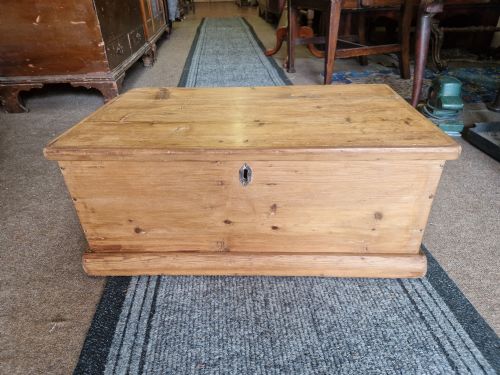
Cabinet makers utilised dense hardwoods like mahogany, walnut, rosewood, and oak for durability and a polished finish, alongside simpler pine for robust utility boxes. Timber selection dictates the weight and structural integrity of each piece.
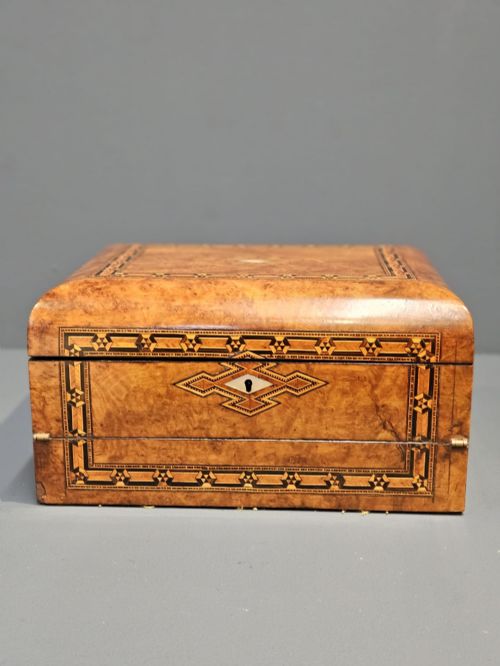
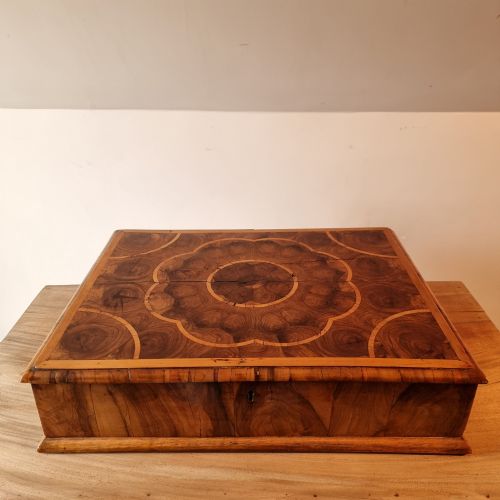
Metal reinforcement through brass corners, iron bands, and secure locks provides practical security, while decorative inlays such as Tunbridge work, mother of pearl, and bone add surface detail. Hand-painted finishes appear on regional Scandinavian pieces.
Internal joinery involves dovetailed corners and fitted partitions, creating secret drawers and compartments designed to hold inkwells, letters, and valuables safely.
Vintage Wooden Document Box Retail Price Guide 2026
Typical asking prices for vintage wooden document box among the pieces listed under this phrase on Sellingantiques today, from the lower quarter to the upper quarter. They describe what is for sale here now, not the wider market.
The inventory includes items spanning four centuries, moving from heavy 17th-century oak Bible boxes to refined Victorian rosewood slopes and 20th-century painted folk art pieces.
Assessing craftsmanship
The distinction between standard utility boxes and exceptional pieces lies in the precision of the timber matching, the complexity of the interior fittings, and the finesse of the brass or inlay work. Superior examples exhibit seamless dovetailing and retain original working locks with keys.
Regional and stylistic execution also define a piece, from the crisp hand-carving on Anglo-Indian stationery boxes to the authentic folk art pigments on Swedish painted strongboxes. Intact interiors with original velvet surfaces and functioning secret compartments elevate the standing of a writing slope.
The Vintage Wooden Document Box Glossary
- Writing slope
- A box with a hinged sloping lid that opens to reveal a desk surface and fitted interior for writing materials. These often include hidden compartments for confidential papers.
- Bible box
- A small, heavy wooden chest traditionally used to store family Bibles and important household documents in the 17th century. They generally feature hinged lids and sturdy oak construction.
- Strongbox
- A heavily reinforced box utilising iron bands or heavy wood to protect valuables and currency from theft and damage. They frequently date to the 17th and 19th centuries.
- Tunbrdige inlay
- A form of mosaic woodwork using tiny tinted wooden blocks to create geometric or pictorial patterns. This technique is commonly found on Victorian decorative boxes.
- Campaign box
- Portable furniture and storage designed for travel, typically fitted with flush brass handles and protective corner brackets. These pieces prioritize robust portability.
Vintage Wooden Document Box: Frequently Asked Questions
What is a document box used for?
These boxes served to protect deeds, correspondence, and valuable papers from dust, dampness, and unauthorized access in homes and offices. Today, they provide practical storage for modern letters, photographs, and keepsakes.
Their sturdy construction and fitted compartments make them ideal for organising desktop items while displaying natural wood grain on a shelf or table.
How do I date a wooden box?
Dating relies on examining the timber species, construction methods such as hand-cut dovetails, and the style of hardware like locks and hinges. 17th-century examples typically show heavy oak framing, whereas Victorian pieces often feature rosewood, mahogany, and brass banding.
Secondary woods inside the box, tool marks, and fastener types also offer clear clues to the manufacturing period.
Are writing slopes difficult to maintain?
Maintenance requires keeping the wood conditioned with appropriate wax and protecting the surfaces from direct sunlight and extreme humidity changes. The internal velvet or leather writing surfaces benefit from gentle dusting rather than liquid cleaners.
Careful handling of original hinges and working keys ensures the mechanical parts remain functional for everyday use.
What is the difference between a deed box and a bible box?
Deed boxes generally date from the Georgian and Victorian eras, often featuring mahogany, pine, or brass-bound construction suited for legal papers. Bible boxes are typically earlier 17th-century oak pieces with slanted lids designed to hold sacred texts and household records. Nooks and internal layout differences reflect the specific administrative needs of the respective centuries in which they were built.