

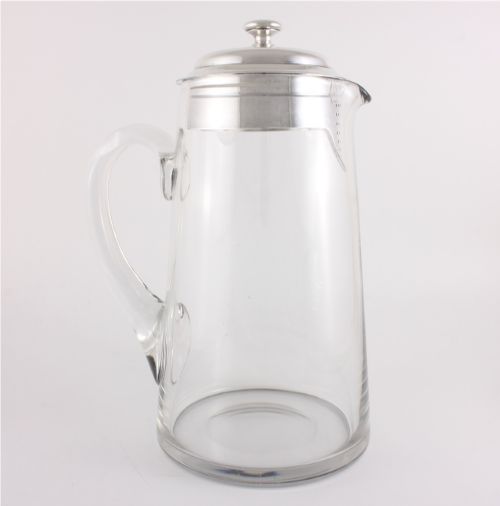

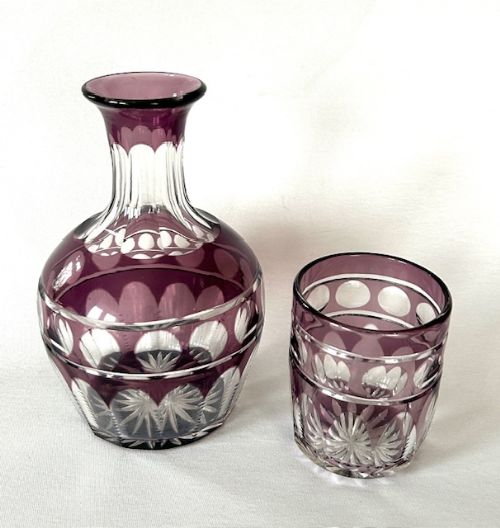


Vintage Water Carafe
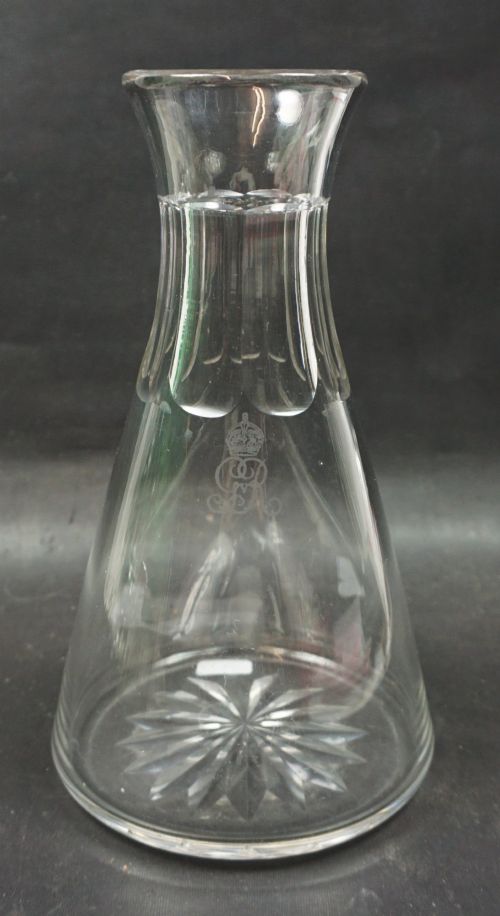
These vintage water carafe pieces bring tactile weight and historic charm to a table, combining clear glass and silver mountings for everyday utility.
Vintage Water Carafe
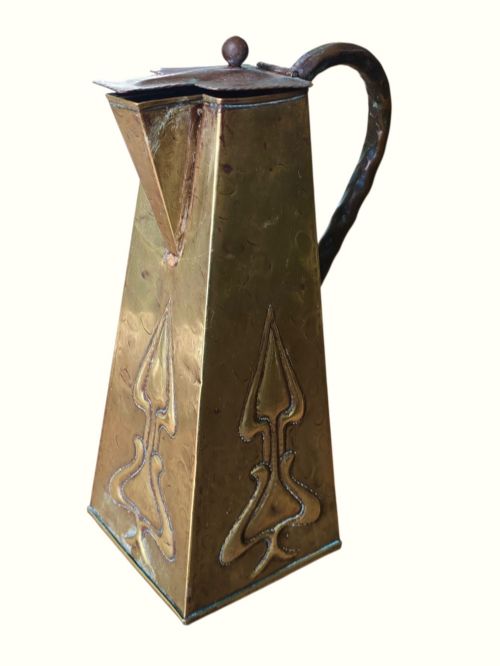
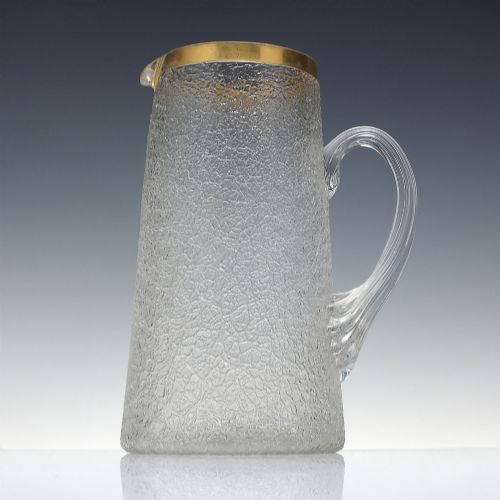
Makers shaped these objects in varied styles including Edwardian, Art Deco, and Islamic Revival. Buyers will encounter clear glass vessels alongside coloured options like cranberry, amethyst, and teal.
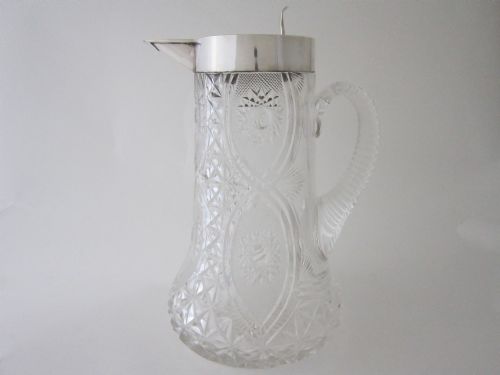
Many examples incorporate metal mounts in sterling silver or silver plate. Some pieces feature ice tubes or matching tumblers for functional service.
Materials and construction
The construction of these vessels relies heavily on glass-blowing, moulding, and deep cutting techniques. Craftsmen applied wheel-engraving and etching to decorate the body with motifs such as grapes and vines, or dolphins.
Metalwork components required smithing and casting, particularly for the sterling silver or silver plated mounts, handles, and hinged lids. Artisans secured these mounts to the glass necks using specialised collars and pins.
Vintage Water Carafe Retail Price Guide 2026
Typical asking prices for vintage water carafe among the pieces listed under this phrase on Sellingantiques today, from the lower quarter to the upper quarter. They describe what is for sale here now, not the wider market.
Materials span cut glass, lead crystal, sterling silver, silver plate, enamel, gold leaf, and stoneware across Victorian and mid-century styles.
Assessing quality in execution
The standard of a piece depends on the depth and crispness of the glass cutting. Superior items display sharp, well-defined facets that refract light clearly without surface distortion.
The weight and balance of the vessel define its craftsmanship. Heavier lead crystal bodies paired with substantial silver mounts indicate superior materials and more laborious manufacturing.
Christofle·Mappin & Webb·Richardsons·Tiffany·Lobmeyr·H F Fearncombe & Co
The Vintage Water Carafe Glossary
- Cut Glass
- Glass decorated by grinding facets or patterns into the surface using rotating wheels. This technique creates a textured finish that catches ambient light.
- Lead Crystal
- Glass containing metallic oxide that increases weight, brilliance, and clarity. It allows for deeper and sharper cutting than standard soda-lime glass.
- Silver Plate
- A base metal such as copper or Britannia metal coated with a thin layer of pure silver. This process provided the appearance of solid silver at a lower cost.
- Ice Tube
- A metal cylinder inserted into the centre of a jug to cool liquids without dilution. It is filled with ice and secured beneath the lid.
- Ewer
- A large jug with a wide spout and a flared shape, traditionally used for holding and pouring water.
Vintage Water Carafe: Frequently Asked Questions
How do I clean an antique glass carafe safely?
Wash the vessel by hand using warm water and a mild detergent, avoiding harsh abrasive pads that might scratch the vintage glass or damage silver mounts.
Dry the metal components immediately with a soft cloth to prevent tarnishing, and store the carafe upright in a stable cabinet.
What is an ice tube used for?
An ice tube is a sealed metal cylinder that drops into the vessel to chill water without melting ice directly into the drink.
This keeps the liquid cold during dining without diluting the contents as the ice melts.
How do I date a Victorian water jug?
Examine the style of the glass cutting, the handle attachment, and any hallmarks stamped on the silver mounts if present. Victorian pieces often feature heavy etching, cranberry or green glass bodies, and naturalistic motifs.
Reference stylistic cues like the grape and vine engravings commonly seen on late nineteenth-century vessels.
Can I use these carafes for daily dining?
Many of these vessels are robust enough for regular use on the dining table, provided they are handled with care. Solid construction in lead crystal or stoneware makes them practical for serving water or wine.
Avoid placing pieces with sterling silver mounts or delicate glass handles in a modern dishwasher.