



Glass Lemonade Pitcher
A glass lemonade pitcher serves summer drinks with style, bringing tactile weight and sparkling clarity to the table.
Glass Lemonade Pitcher
A glass lemonade pitcher is a functional serving vessel designed for cold beverages, appearing in forms such as water jugs, drinkware sets, and pitchers with integrated ice containers.
Buyers browsing this selection encounter pieces originating from the Victorian, Edwardian, and Art Deco eras, spanning the mid-nineteenth century through the 1930s.
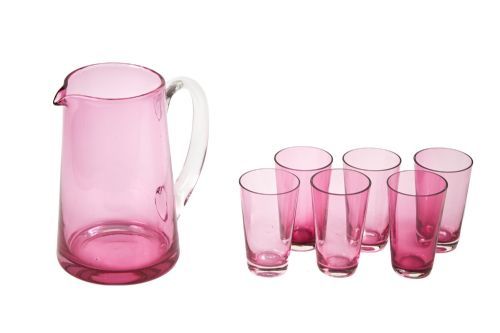
The most common variants on this page include clear cut glass jugs, vibrant cranberry glass vessels, and robust examples mounted with silver plate or sterling silver fittings.
Materials and construction
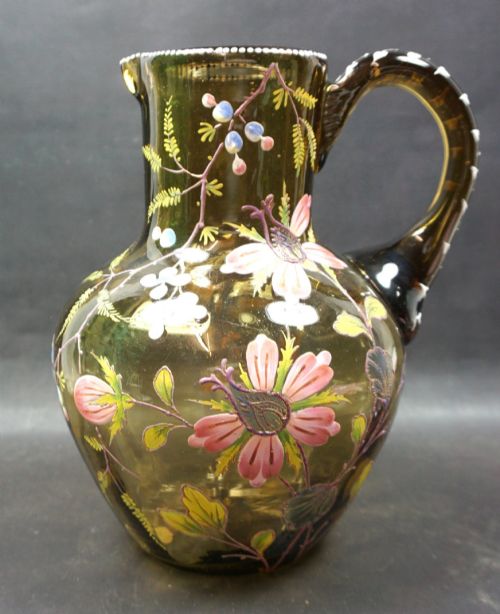
These vessels are fashioned from glass, lead crystal, clear glass, and cranberry glass, often utilising cutting and etching techniques to create decorated surfaces featuring birds and branches.
Metal mounts and details are executed in silver plate, sterling silver, and enamel, providing structural rims, handles, and internal ice tubes for chilling contents without dilution.
Glass Lemonade Pitcher Retail Price Guide 2026
Typical asking prices for glass lemonade pitcher among the pieces listed under this phrase on Sellingantiques today, from the lower quarter to the upper quarter. They describe what is for sale here now, not the wider market.
Listings feature glass lemonade pitchers spanning from the Victorian period through Edwardian times and into 1930s Art Deco production.
Distinctions in quality
Quality rests upon the clarity of the glass, the depth and crispness of the cutting, and the heft of the lead crystal.
The integration of metalwork distinguishes standard production from high-end pieces, particularly where substantial sterling silver mounts or fitted ice tubes by notable silversmiths are present.
Mappin & Webb·Elkington & Co·Tiffany·Asprey & Co
The Glass Lemonade Pitcher Glossary
- Cranberry glass
- A rich red-pink transparent glass coloured by the addition of gold chloride during manufacture. It appears frequently in Victorian and Edwardian drinkware.
- Lead crystal
- Glass containing metal oxide that increases weight, brilliance, and refractive index. This material allows for deep, sharp wheel-cutting.
- Silver plate
- A base metal foundation coated with a thin layer of silver. It offers the appearance of solid silver at a different cost point.
- Ice tube
- A cylindrical metal insert placed inside the pitcher to hold ice. This cools the liquid directly without melting water into the beverage.
- Overshot glass
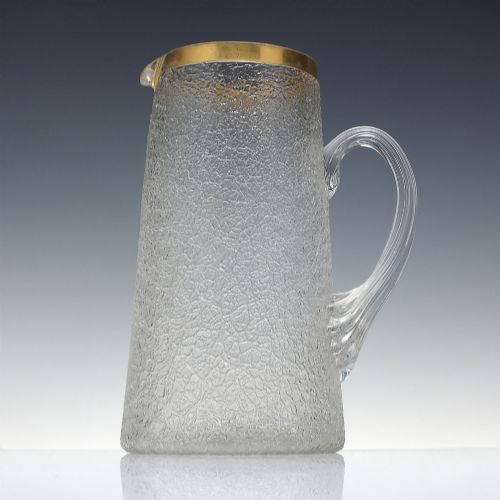
- A textured glass surface created by rolling a hot gathering of glass over crushed glass fragments before reheating and blowing.
Glass Lemonade Pitcher: Frequently Asked Questions
What is a glass lemonade pitcher?
A glass lemonade pitcher is a decorative and practical vessel designed for serving cold beverages at the table. These pieces often feature spouts, applied handles, and sometimes metal mounts or lids.
Historical examples frequently incorporate cut crystal, etched motifs, or coloured glass bodies intended to catch the light during afternoon gatherings.
How were ice tubes used?
Ice tubes are cylindrical metal containers that slot vertically into the centre of a pitcher. They allow hosts to chill liquids thoroughly without diluting the drink as the ice melts.
This feature appears on finer Victorian and Edwardian examples fitted by established silversmiths and metalworkers.
How do I date a glass pitcher?
Dating relies on observing a combination of manufacturing traits, decorative styles, and any accompanying metal hallmarks. Victorian pieces often display heavy wheel-cutting and robust cranberry tones, while Art Deco items from the 1930s favour geometric Czech designs.
Handle shapes, pontil marks on the base, and silver hallmarks provide specific chronological markers for attribution.
Can I use these pitchers daily?
These pitchers function well for serving drinks today, provided they receive careful handling and hand washing. Antique glass and delicate silver mounts require gentle maintenance to preserve their surfaces.
Avoiding sudden temperature changes protects older lead crystal and coloured glass from thermal shock.