
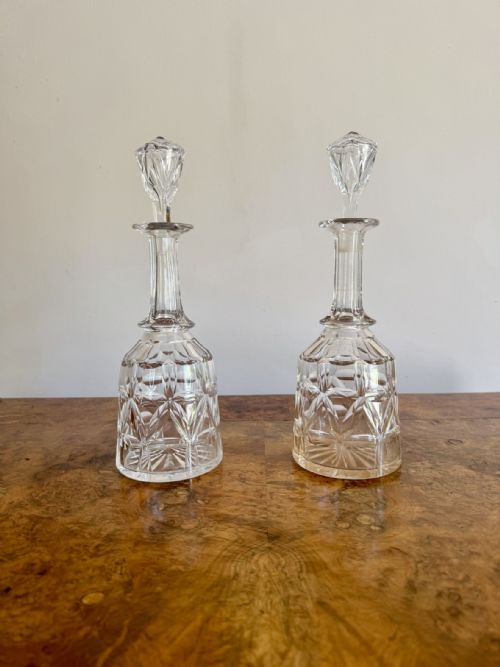
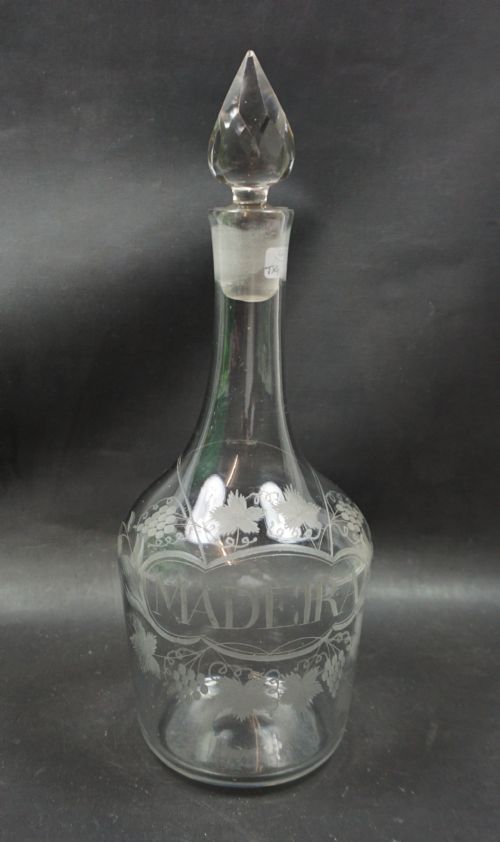


Lead Crystal Carafe
These lead crystal carafe pieces bring heavy, brilliant glass to the table, offering a sparkling way to serve wine and spirits.
What they are
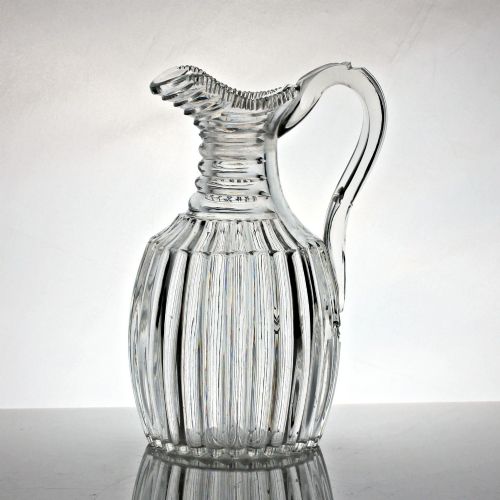
When you search for a lead crystal carafe, you are looking at substantial vessels designed for holding and pouring drinks. The examples found here span the Victorian and Edwardian eras, reaching back through the nineteenth century.
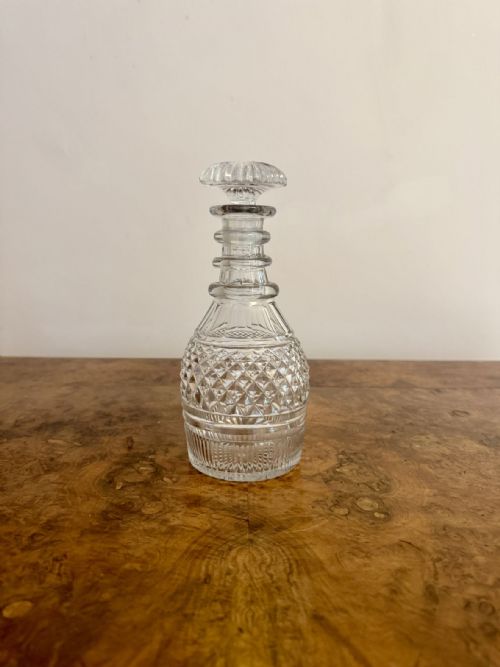
Most pieces on this page appear as decanters or carafes, often presented as individual vessels or matching pairs. They range from pieces dated around eighteen fifty up to nineteen hundred, showing the enduring popularity of heavy glass servingware.
How they were made
The materials recorded in these pieces include crystal, crystal glass, lead crystal, and cut glass. Artisans shaped these heavy materials while hot, forming the basic body of the vessel before any surface decoration began.
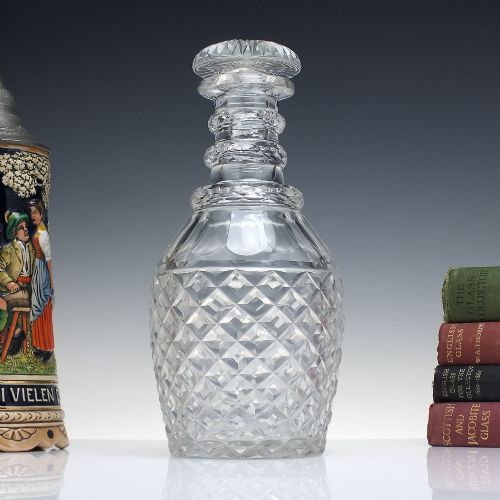
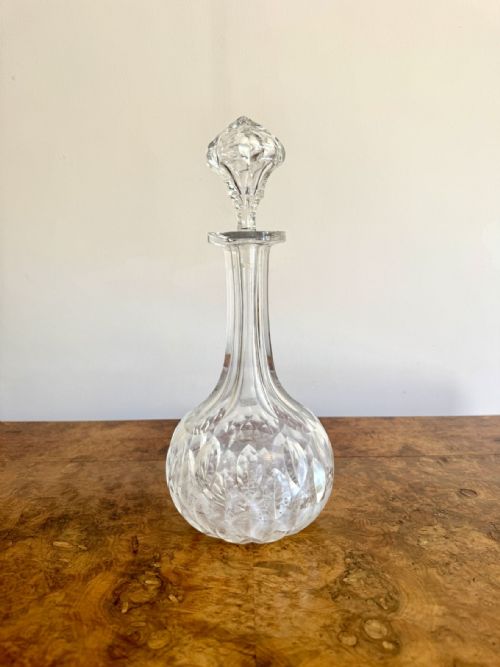
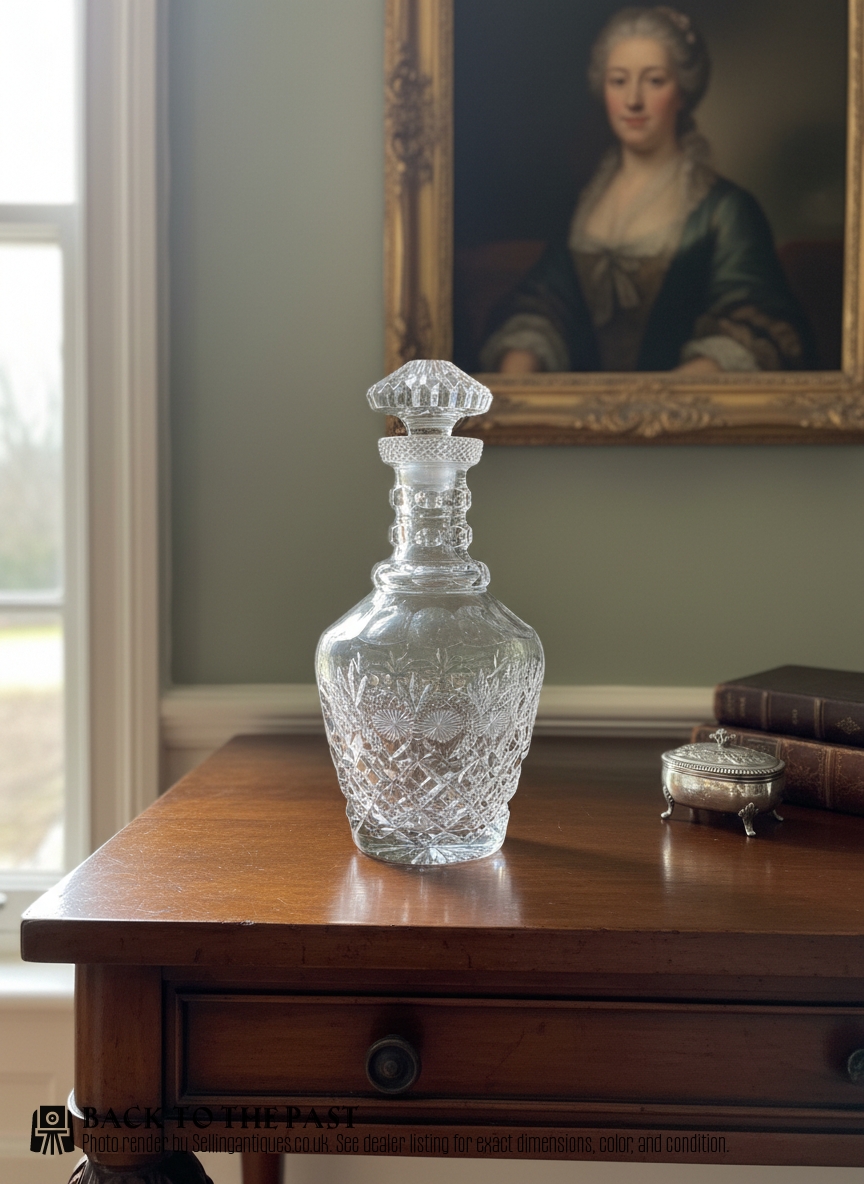
Makers applied deep surface cutting to the glass blanks to create complex geometric patterns that catch and refract the light. This labour-intensive method required skilled handling to achieve crisp facets across the thick material.
Retail Price Guide 2026
Typical UK retail prices for lead crystal carafe, calculated from the Sellingantiques database of over a million retail prices indexed since 2003. This retail price guide relies exclusively on Sellingantiques data; no external sources or auction records are used, so the figures do not describe the wider market.
Materials recorded across these items consist of crystal, lead crystal, crystal glass, and cut glass.
What varies in quality
Quality in these items rests upon the clarity of the material and the precision of the surface cutting. Finer vessels display sharp, clean facets without distortion, showing absolute transparency in the crystal body.
Heavier glass weight and well-proportioned forms distinguish the superior examples from standard production. The crispness of the cut patterns directly reflects the hand of a more accomplished artisan.
The Lead Crystal Carafe Glossary
- Lead crystal
- Glass containing a significant proportion of lead oxide to increase weight, brilliance, and workability. This composition allows for deeper, sharper cutting than standard soda-lime glass.
- Cut glass
- Glass decorated by abrasive wheels that grind away portions of the surface to create decorative facets. The resulting patterns scatter light across the body of the vessel.
- Decanter
- A stoppered glass vessel used for holding and serving wine or spirits. These pieces often feature heavy necks designed for secure handling during pouring.
- Carafe
- An open-topped glass container used for serving water or wine at the table. Unlike decanters, traditional carafes typically omit the fitted stopper.
- Victorian
- A nineteenth-century period associated with heavy, ornate decorative arts and deep cut glass production. Pieces from this era often display robust proportions and intricate surface work.
Frequently Asked Questions
What is a lead crystal carafe used for?
These vessels serve water, wine, and spirits at the dining table, combining practical function with decorative presence.
The heavy glass body keeps liquids contained securely while the cut facets catch the candlelight during meals.
How do I date a cut glass carafe?
Dating relies on stylistic clues, cutting depth, and overall form, alongside any recorded period details from the nineteenth century.
Victorian and Edwardian examples show distinct handling of the glass surface compared to later production methods.
Are pairs common for these decanters?
Matching pairs appear frequently among nineteenth-century serving vessels, offering balanced presentation for the table.
These paired items share identical cut patterns and proportions, indicating they were produced together for formal dining.
How do I care for antique crystal?
Wash these pieces gently by hand in lukewarm water using mild detergent to protect the brilliant surface.
Avoid sudden temperature changes and abrasive sponges to preserve the crisp edges of the cut glass facets.