

Vintage Walnut Writing Table
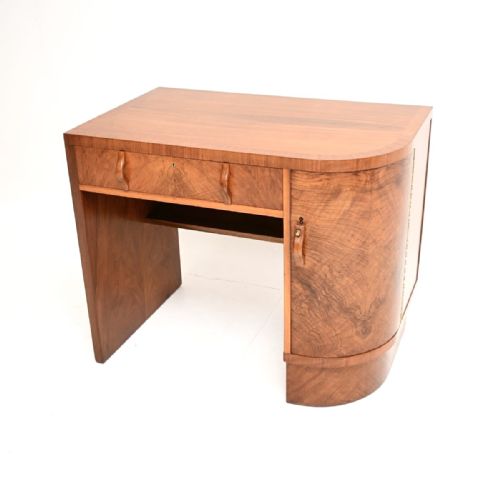
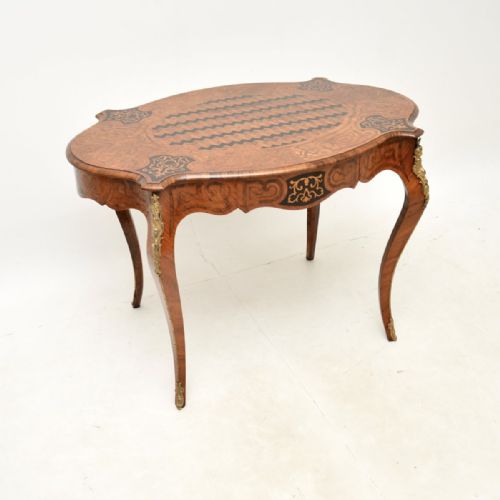
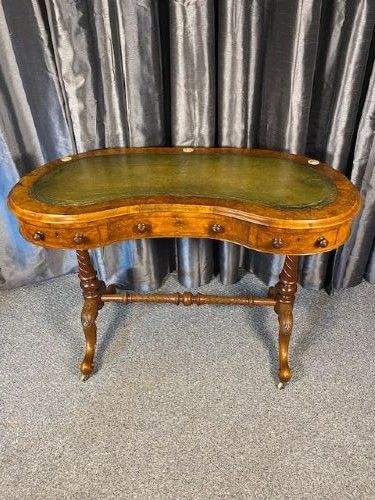
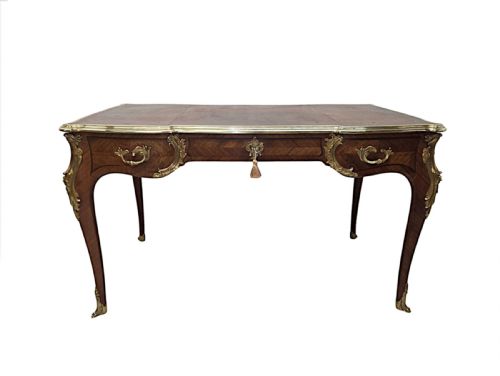
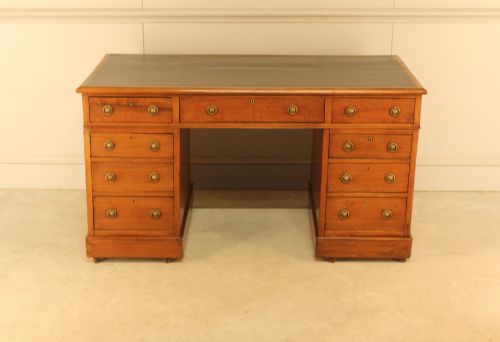
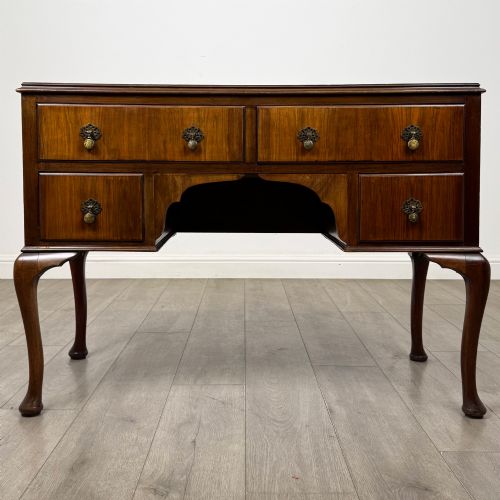
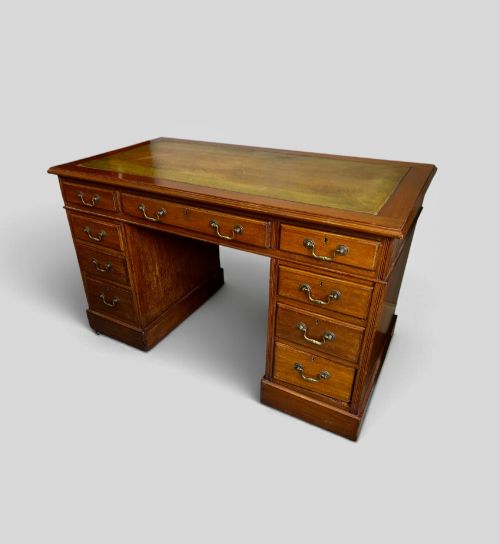
A vintage walnut writing table brings rich timber grain and period character to a study.
Vintage Walnut Writing Table
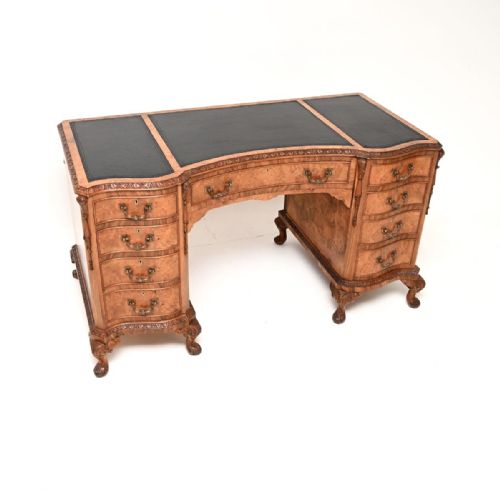
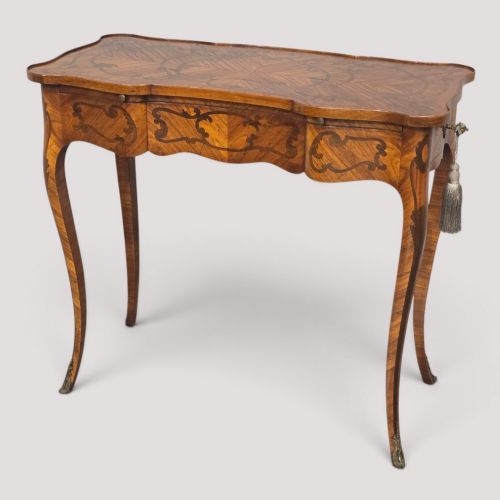
A vintage walnut writing table is a dedicated surface for correspondence and paperwork, shaped by the design movements of the nineteenth and twentieth centuries. These desks range from compact Edwardian pedestal forms to striking Art Deco interpretations.
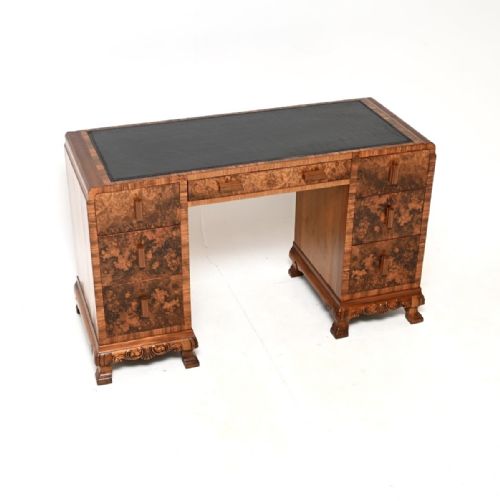
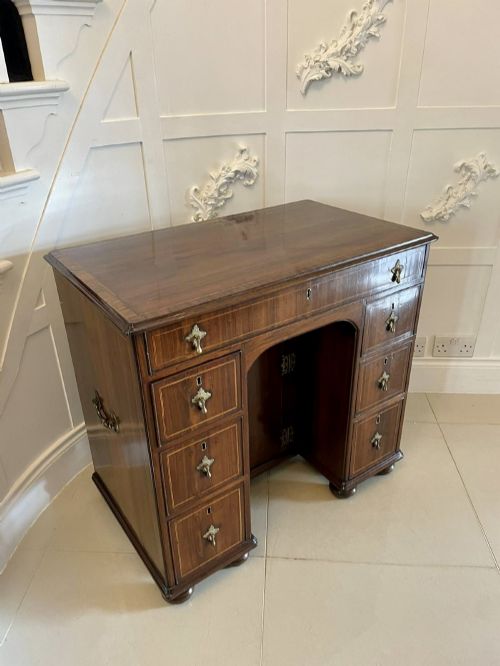
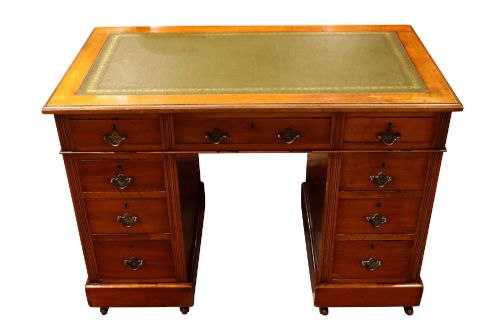
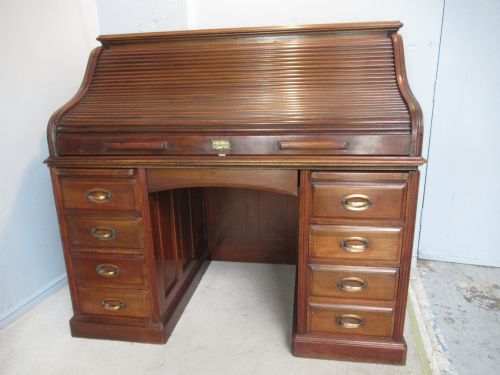
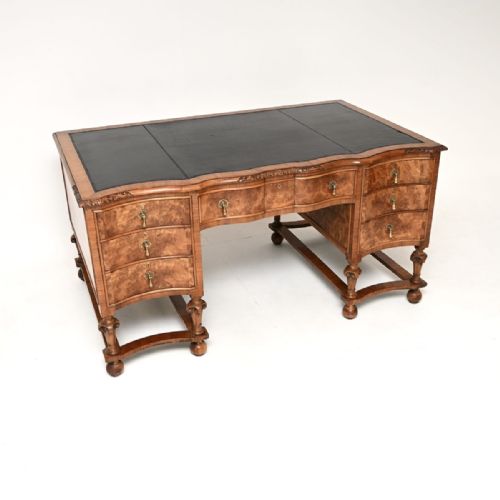
The versions most commonly encountered on this page date from the Victorian era up to the nineteen-thirties. They appear in forms such as kneehole desks, partners desks, and bureau plat tables.
Makers utilised both solid timbers and decorative veneers to create these pieces. They often incorporate leather inserts and multiple drawers for practical use.
How they were made
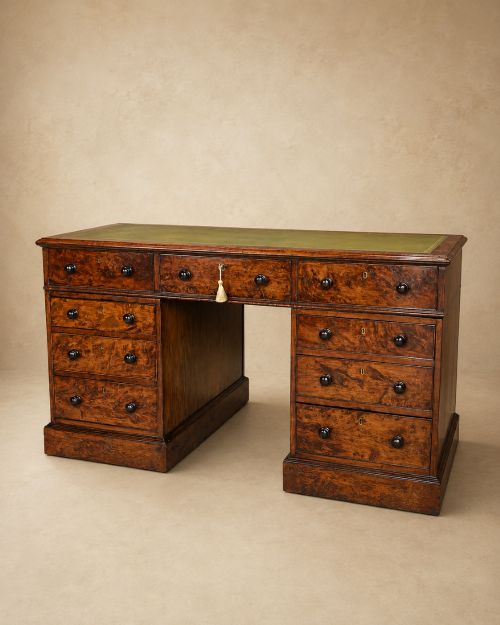
Cabinet makers constructed the foundational carcase from timbers such as oak, applying figured walnut or burr walnut veneer to the visible exterior surfaces. This technique highlighted the swirling grain patterns of the wood.
Writing surfaces frequently received inserts of tooled leather, complemented by brass handles, locks, and occasional ormolu mounts on French-influenced pieces.
Vintage Walnut Writing Table Retail Price Guide 2026
Typical asking prices for vintage walnut writing table among the pieces listed under this phrase on Sellingantiques today, from the lower quarter to the upper quarter. They describe what is for sale here now, not the wider market.
Form variations on this page include kneehole desks, partners desks, bureau plat tables, lowboys, and glass skyscraper office desks.
What varies in quality
Quality rests primarily on the selection of the veneer and the crispness of the cabinet work. Pieces featuring matched burr walnut across the drawer fronts demand greater skill from the maker than plain timber surfaces.
The internal construction of the drawers, including the use of hand-cut dovetails and solid secondary woods, distinguishes standard commercial production from workshop pieces commissioned for prominent offices and homes.
Maple and Co·Wylie and Lochhead Glasgow·McIntosh
The Vintage Walnut Writing Table Glossary
- Burr walnut
- A prized veneer taken from the wart-like growth on a walnut tree, producing intricate, swirling grain patterns. It is frequently seen on the top surfaces and drawer fronts of formal desks.
- Pedestal desk
- A heavy freestanding desk supported by two pedestals containing banks of drawers, with a central space for the user's legs. This form offers substantial storage capacity.
- Bureau plat
- A French style of writing table, typically freestanding with cabriole legs and an inset leather writing surface. These pieces often display marquetry or ormolu mounts.
- Lowboy
- A small low dressing or side table featuring one or more rows of drawers beneath the top. Eighteenth-century examples serve as compact writing surfaces.
- Partners desk
- A large pedestal desk designed with drawers and cupboards on both sides so two people can work opposite each other. These pieces were traditionally used in libraries and institutional offices.
Vintage Walnut Writing Table: Frequently Asked Questions
How do I identify an Art Deco writing table?
Art Deco writing tables from the nineteen-thirties typically feature streamlined geometric silhouettes, waterfall edges, and highly figured burr walnut veneers. They often omit traditional mouldings in favour of clean, sweeping lines.
Makers of this period occasionally combined walnut with glass or chromium elements to reflect modern industrial tastes while retaining warm timber tones.
What is the difference between a writing table and a pedestal desk?
A writing table generally stands on four legs without built-in banks of drawers underneath the top surface. It offers a lighter appearance suitable for a drawing room or bedroom.
A pedestal desk rests on two columns of drawers, providing heavier proportions and significantly more storage for papers and stationery.
How should I care for a leather desk insert?
The leather writing surface benefits from occasional cleaning with a slightly damp cloth followed by a neutral leather cream to prevent cracking. Avoid using harsh chemical cleaners or excess water.
Keeping the leather conditioned maintains its suppleness and preserves the gold-tooled borders often found on nineteenth and twentieth-century desks.
Are partners desks suitable for modern rooms?
Partners desks work well as central focal points in large rooms because they are finished on all sides. Their generous proportions provide ample workspace for multiple users.
Ensure you measure the room carefully, as these double-sided desks require significant floor clearance to allow chairs to pull out comfortably.