

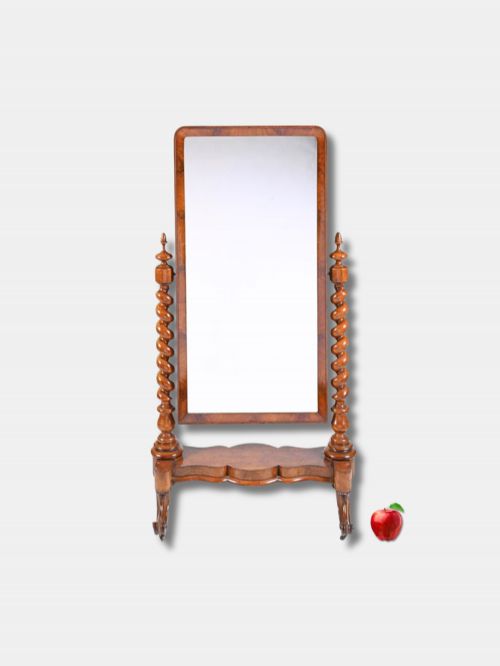
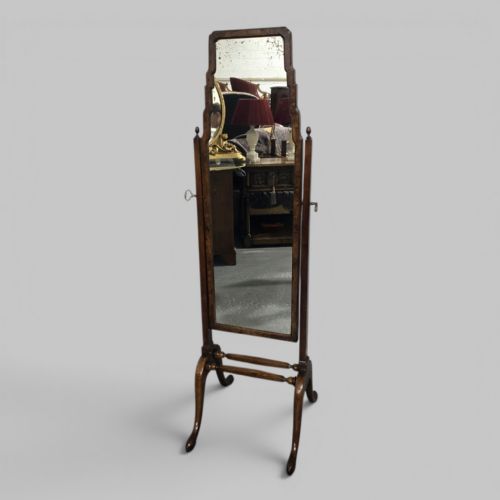


Vintage Walnut Cheval Mirror
These vintage walnut cheval mirror pieces bring adjustable glass and rich timber grain to the bedroom, offering full-length reflection.
Vintage Walnut Cheval Mirror
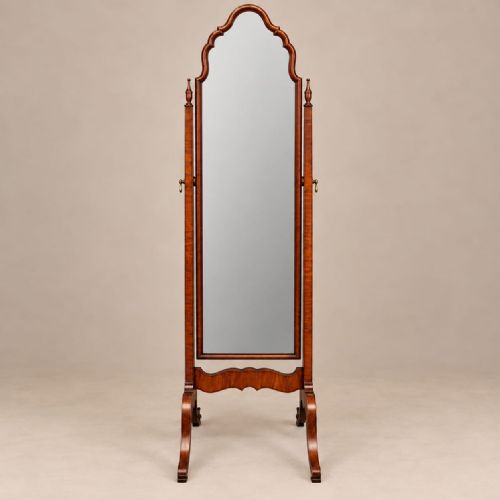
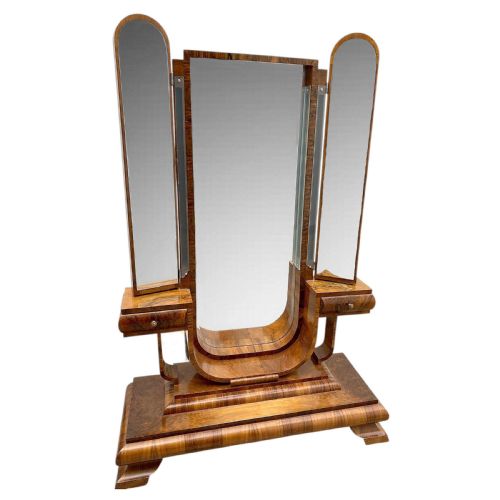
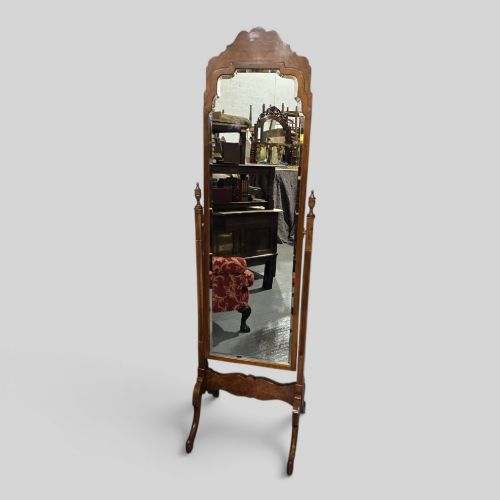
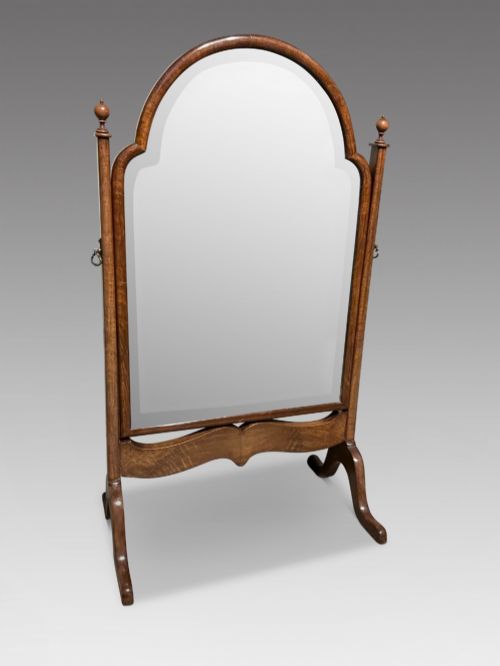
A vintage walnut cheval mirror is a freestanding full-length glass set within a pivoting frame, designed to stand directly on the floor. The examples on this page span the Victorian era, the Edwardian period, and the 1920s and 1930s. Most pieces appear in Queen Anne style, Queen Anne revival, Art Deco, and Louis XV style.
Beyond tall floor-standing cheval mirrors, the selections include table mirrors, dressing mirrors, and toilet mirrors made from walnut. These smaller variants sit atop surfaces like dressing tables or chests of drawers. Origin and period influence the exact proportions, ranging from barley twist supports to sleek art deco lines.
Makers and designers worked in walnut and burr walnut, sometimes incorporating kingwood, brass, and gilt bronze details. The pivoting frames allow the user to tilt the mirror glass to various angles for dressing. These furnishings bridge utilitarian function and decorative cabinet work across multiple decades.
How they were made
Makers utilised solid walnut and walnut veneer over supportive secondary timbers, often selecting burr walnut sections for highly figured grain patterns on the frames. Cabinet makers applied these veneers carefully to curved surfaces and flat panels alike. Brass fittings and hardware secured the pivoting mechanism that holds the mirror plate.
Glass production yielded heavy mirror plates held securely within wooden rebates behind wooden backs. Carved details, barley twist supports, and moulded edges demonstrate traditional joinery techniques from the nineteenth and early twentieth centuries. Gilt bronze mounts and kingwood crossbanding appear on specific stylistic interpretations.
Vintage Walnut Cheval Mirror Retail Price Guide 2026
Typical asking prices for vintage walnut cheval mirror among the pieces listed under this phrase on Sellingantiques today, from the lower quarter to the upper quarter. They describe what is for sale here now, not the wider market.
One dressing mirror on record arrived straight from a gents outfitters.
What varies in quality
The choice of timber creates a primary distinction, particularly where select burr walnut veneer displays rich figuring across the frame. Craftsmanship shows in the stability of the pivoting mechanism and the precision of the joints supporting the weight of the glass plate. Elaborate carving or restrained Queen Anne proportions reflect the ambitions of the original maker.
The clarity and condition of the mirror glass contribute substantially to the character of each piece. Superior examples maintain original mercury or silvered plates that integrate harmoniously with the walnut frame. Structural integrity in the legs and upright supports ensures the heavy glass tilts smoothly without wobble.
Whytock & Reid
The Vintage Walnut Cheval Mirror Glossary
- Cheval mirror
- A tall, freestanding mirror suspended on a pivoting frame between two upright posts, allowing the glass to tilt. This form stands directly on the floor.
- Burr walnut
- Timber sliced from walnut tree growths, producing swirling, highly decorative grain patterns. Cabinet makers prized this material for prominent surface veneers.
- Barley twist
- A carved wooden support shaped like a spiral or helix. This turning technique appears frequently on nineteenth-century furniture frames and legs.
- Toilet mirror
- A smaller mirror designed to sit on a dressing table, chest, or tabletop. These pieces often incorporate small drawers in the base structure.
- Kingwood
- A dense, dark exotic timber with contrasting lighter streaks. Makers used it for banding and decorative inlay on finer furniture.
Vintage Walnut Cheval Mirror: Frequently Asked Questions
What is a cheval mirror?
A cheval mirror is a full-length dressing glass mounted in a frame that pivots on vertical floor supports. The design allows the user to tilt the glass to check an entire outfit.
These mirrors have served dressing rooms and bedrooms since the eighteenth century. They remain practical freestanding furniture pieces that require no wall mounting.
How do I date a walnut mirror?
Dating relies on stylistic clues, construction methods, and hardware details like screw types and pivot design. Victorian pieces often feature heavy mouldings or turned barley twists, while Edwardian and 1920s versions show lighter frames or geometric Art Deco lines.
Walnut veneer thickness and secondary woods also help indicate whether a piece originates from the nineteenth century or the interwar period.
Where should I place a floor mirror?
Floor mirrors work well in bedrooms, dressing areas, or hallways where natural light can reflect across the room. Positioning them opposite a window brightens dark corners.
Because cheval mirrors require clearance to tilt, ensure the surrounding floor space allows the frame to angle freely without hitting furniture or walls.
What is burr walnut?
Burr walnut comes from a tree growth that creates swirling, knotty grain patterns with rich visual depth. Cabinet makers sliced this wood into thin veneers for decorative surfaces.
Its distinct grain makes each mirror frame unique, catching the light differently than straight-grained walnut timber.