
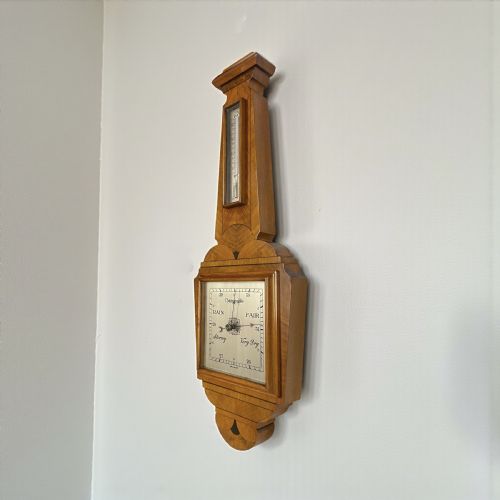


Vintage Walnut Barometer
These vintage walnut barometers measure atmospheric pressure while bringing rich timber grain and carved detail to a wall.
Vintage Walnut Barometer
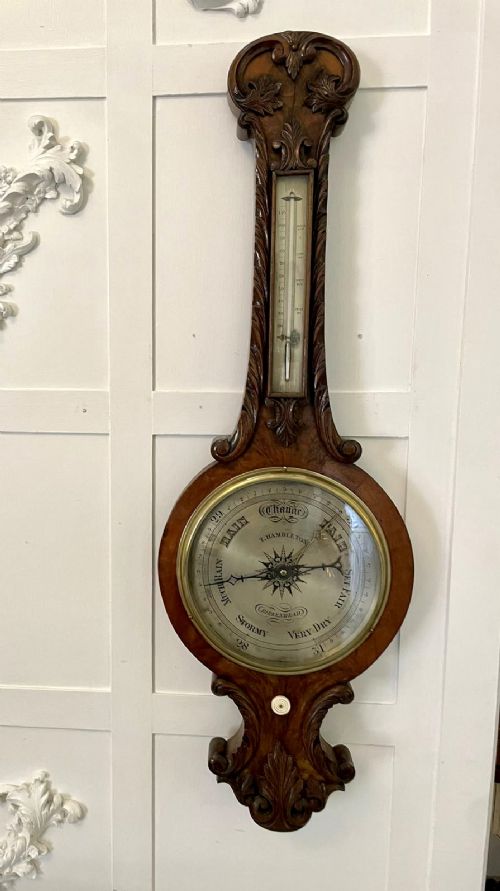
A vintage walnut barometer combines a scientific instrument for measuring weather with a decorative wooden case, often taking the form of a banjo or wall barometer. The pieces found here span from the nineteenth century into the art deco period, reflecting shifting domestic tastes.
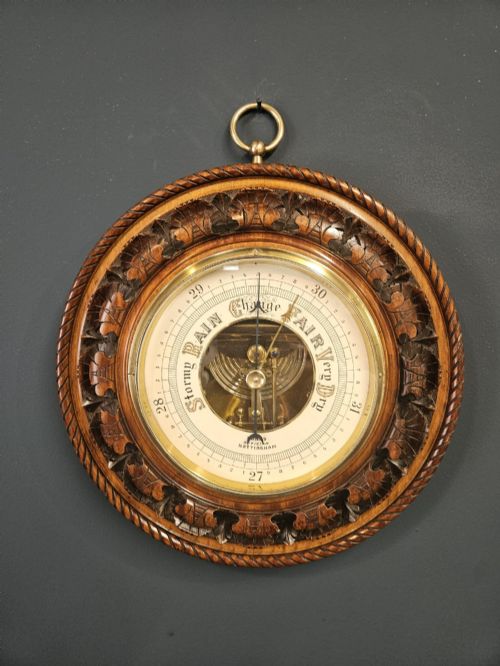
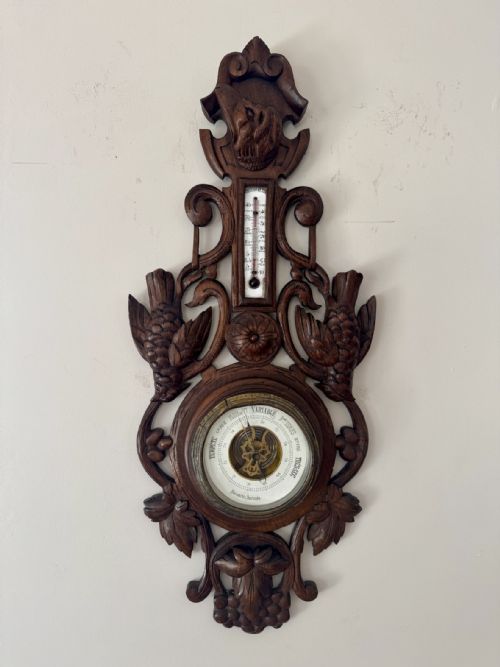
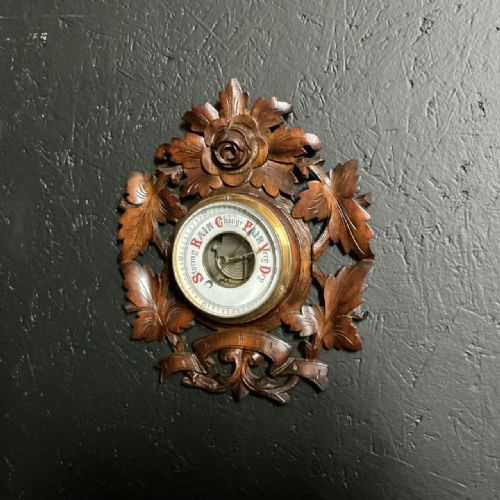
Victorian and Edwardian examples dominate the selection, frequently featuring carved walnut or burr walnut cases alongside dial indicators for weather reading. Black Forest interpretations appear regularly, showcasing deeply carved wooden foliage and animal motifs around the central dial.
How they were made
Cabinetmakers shaped the enclosures from solid walnut and burr walnut, applying hand-carving techniques to create ornate bezels, crests, and surrounds. Wood veneer also appears across flat surfaces to highlight the figured grain of the timber.
Makers integrated brass bezels, glass dial covers, and ceramic faces to house the delicate aneroid or mercurial mechanisms within the timber housing. Combined instruments frequently incorporated thermometers and clocks into the same walnut chassis.
Materials span walnut, burr walnut, glass, brass, and ceramic dials housed in carved wood frames.
What varies in quality
The depth and crispness of the wood carving dictate the distinction between standard production and finer examples, particularly in Black Forest or Victorian banjo styles. Highly figured burr walnut grain adds visual complexity that plain timber surfaces lack.
The integration of multiple instruments, such as combined clocks and thermometers, elevates the complexity of the piece. Signed instrument makers also separate standard utility barometers from superior scientific works.
Depree and Young Ltd Exeter·Negretti and Zambra London
The Vintage Walnut Barometer Glossary
- Aneroid barometer
- An instrument that measures atmospheric pressure using a flexible metal capsule without liquid. It relies on internal springs to move the dial pointer.
- Banjo barometer
- A wall barometer shaped like a banjo, featuring a circular dial at the top and a long trunk containing auxiliary instruments.
- Barograph
- A mechanical barometer that records atmospheric pressure changes over time onto a revolving paper chart. It usually sits in a glazed wooden case.
- Mercurial barometer
- A weather instrument that uses a column of mercury in a glass tube to measure atmospheric pressure. Changes in air pressure raise or lower the fluid level.
Vintage Walnut Barometer: Frequently Asked Questions
How do I read a vintage walnut barometer?
Read the main pointer against the pressure markings on the dial face, noting whether the needle points toward fair, change, or rain indicators. Many dials include a manually set reference hand to track daily pressure shifts.
Auxiliary dials on the same face often display temperature through an attached thermometer, providing a fuller picture of current indoor or outdoor conditions.
Where should I hang a wall barometer?
Hang the instrument on an interior wall away from direct sunlight, heating vents, and damp areas to protect the walnut timber case and internal movement. Stable indoor temperatures ensure the wood does not warp and the mechanism functions accurately.
Ensure the wall anchor supports the weight of the timber and glass assembly securely, as denser carved woods can be surprisingly heavy.
What is a Black Forest style barometer?
A Black Forest style barometer originates from central European woodworking traditions, known for elaborate hand-carved foliage, animals, and rustic motifs. These pieces utilise rich walnut timbers shaped into deeply textured frames around the dial.
They often display high levels of sculptural detail on the crests and borders, making them prominent decorative wall fixtures.