



Traditional Mercury Barometer
A traditional mercury barometer measures atmospheric pressure through a column of liquid metal enclosed in glass, bringing historic science and handsome woodwork into a room.
Traditional Mercury Barometer
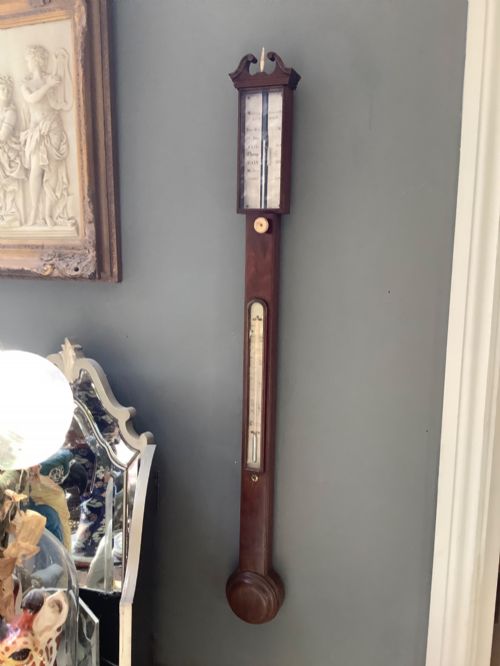
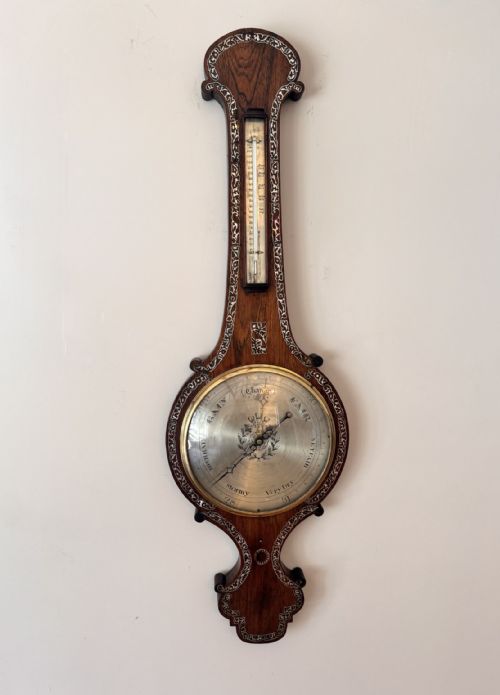
When you search for a traditional mercury barometer, you encounter instruments spanning the Georgian, Victorian, and Edwardian eras, produced in upright stick formats or curved banjo layouts. These pieces range from simple domestic weather glasses to grand maritime instruments signed by provincial and London makers.
The stick barometer presents a tall, narrow profile often housed in mahogany or walnut, whereas the wheel or banjo barometer widens into a circular dial face at the base. You will frequently find these instruments enriched with mother of pearl inlay, carved oak, or rosewood cases that reflect the aesthetic tastes of the nineteenth century.
Origins stretch across British workshops as well as 19th Century Continental and American makers, demonstrating how widely barometer production spread during the period. Surviving examples incorporate thermometers and silvered metal dials that chart changing weather patterns with remarkable physical presence.
Materials and construction methods
Cabinetmakers constructed the wooden housings using dense timbers such as mahogany, oak, walnut, rosewood, and ebonised wood, shaping them into slender trunks or expansive banjo bodies. These cases often incorporate bone details, mother of pearl inlay, and brass bezels that frame the instrument faces.
The working heart relies on glass tubing containing liquid mercury, paired with silvered metal scale plates inscribed with weather descriptors and barometric measurements. Makers mounted mercury thermometers alongside the primary tube to record ambient temperature changes concurrently.
Admiral Fitzroy packed his barometers with so many stern weather warnings that checking the glass feels like receiving direct advice from an anxious Victorian sailor.
Assessing quality in historical barometers
The distinction between standard and superior instruments lies in the crispness of the case carving, the choice of cabinet timbers, and the legibility of the engraved silvered metal dial. Finer examples display meticulous mother of pearl inlay, balanced proportions, and robust mechanical construction that has endured through centuries.
Signed instruments bearing the names of established instrument makers or retailers generally command greater interest due to documented provenance. The integrity of the original glass column and the preservation of the wooden case determine the overall standard of any surviving piece.
Jenkins Of Old Swindon·James H Kelly of Glasgow·Vecchio & Co of Shaftsbury·Admiral Fitzroy·Bianchi Ipswich·Ciresa of Milan·A Rivolta·Negretti & Zambra·George Dollond of London
The Traditional Mercury Barometer Glossary
- Stick barometer
- A tall, narrow instrument housing a vertical mercury tube directly within a wooden trunk. This linear form represents the earliest and most direct method of measuring atmospheric pressure.
- Banjo barometer
- A domestic weather glass featuring a bulbous lower body shaped like a banjo, housing a large round dial face. These instruments became popular during the Georgian and Victorian periods for domestic display.
- Silvered metal
- A brass or copper dial plate treated to achieve a bright, silvery finish before being engraved with weather scales. This surface provides high contrast for legible readings.
- Aneroid barometer
- A barometer that measures pressure using an expanding metal capsule rather than liquid mercury. This later invention eliminated the need for a tall column of fluid.
- Admiral Fitzroy barometer
- A specific domestic weather glass design developed to provide storm warnings for fishermen and coastal communities. These units often feature detailed instructions and printed remarks alongside the mercury column.
Traditional Mercury Barometer: Frequently Asked Questions
How do I read a traditional mercury barometer?
You read the height of the mercury column against the engraved silvered metal scale to observe rising or falling pressure. Readings indicate impending weather shifts based on whether the fluid moves toward fair or stormy indicators.
Secondary dial indicators on wheel barometers allow you to manually set a reminder needle over the current pressure level. This makes it easy to spot whether atmospheric conditions have improved or worsened since your last check.
Can these barometers still be hung on a wall?
Most surviving instruments retain their original hanging brackets or reinforced mounting points on the rear of the wooden case. Securing the piece firmly to a wall stud ensures it hangs plumb and steady.
Because the internal column relies on precise vertical alignment, hanging the barometer straight is essential for accurate mechanical operation. Checking the fit of the case prevents any strain on the antique timber.
Where should I place a barometer in my home?
Selecting a spot away from direct sunlight, radiators, and exterior doors protects the timber case from sudden temperature swings and humidity shifts. Interior hallways or stable living areas provide an ideal climate.
Keeping the instrument clear of heavy foot traffic prevents accidental knocks against the protruding glass tubes or delicate wooden bezels. A stable environment preserves both the cabinetwork and the internal mechanism.
How do I tell a Georgian barometer from a Victorian one?
Georgian barometers often display restrained architectural lines, simpler mahogany stick cases, and understated dial layouts characteristic of the eighteenth century. Makers of this period focused heavily on clean proportions and functional elegance.
Victorian instruments tend to introduce heavier carved oak, burr walnut, rosewood veneers, and more ornate banjo shapes with mother of pearl accents. The decorative flourishes expand significantly as industrial techniques and domestic display styles evolved.