



Vintage Wall Hanging Fragment
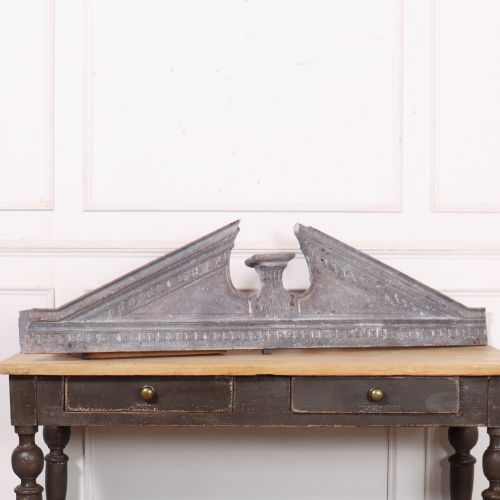
These curated vintage wall hanging fragment selections encompass tribal bag faces, tapestry borders, and painted panels that bring historic textile art directly into modern interiors.
Vintage Wall Hanging Fragment
A vintage wall hanging fragment represents a surviving portion of a larger textile or decorative scheme, repurposed for display. Buyers searching this phrase encounter remnants of tribal weaving, European tapestries, and painted panels.
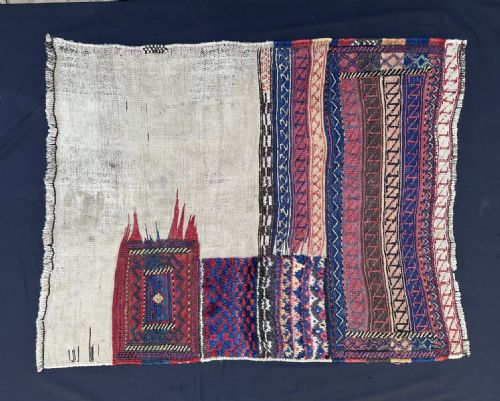
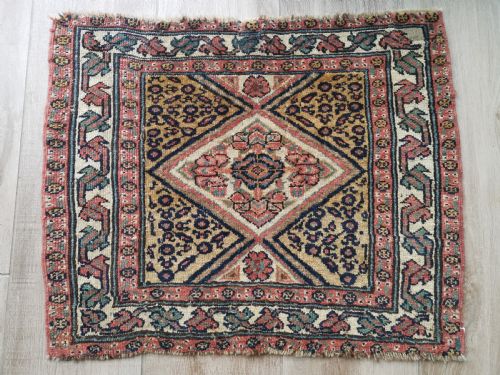
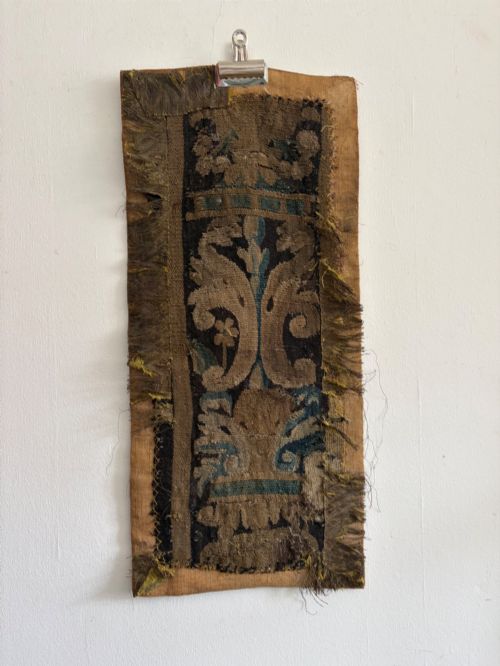
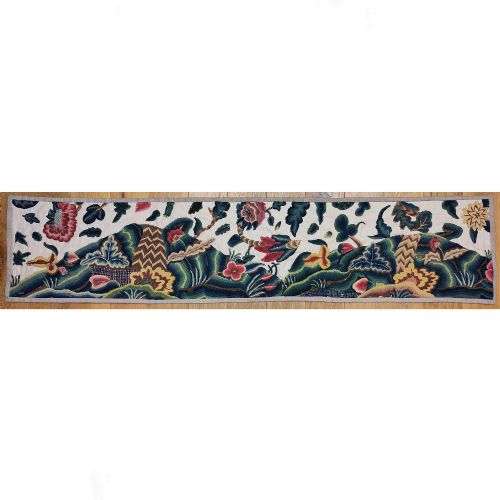
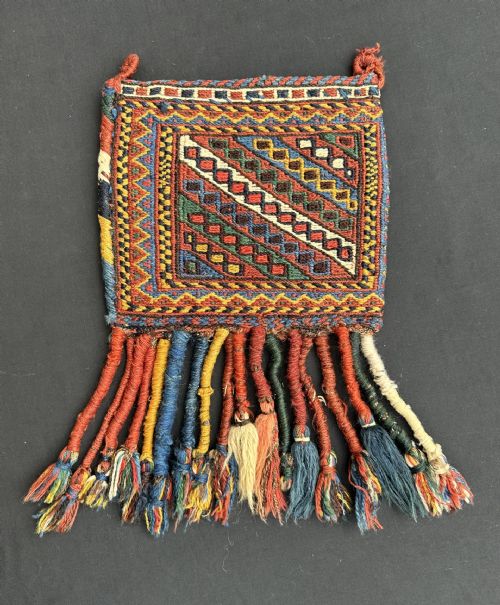
The material on this page frequently takes the form of nineteenth-century Persian and Central Asian nomadic bag faces, torbas, and saddle fragments, alongside seventeenth- and eighteenth-century European verdure tapestries and crewelwork.
These sections of rugs, sacks, and wall coverings allow collectors to examine intricate tribal patterns and historic needlework up close, mounted and prepared specifically for wall mounting.
How They Were Made
Makers utilised natural materials such as hand-spun wool, cotton, linen, and silk, dyed to achieve lasting colour and depth. Artisans combined these textiles with wooden supports, zinc, or lead mountings for structural integrity.
Techniques range from nomadic sumac weaving and tribal knotting to English crewelwork embroidery, French hand-painting, and Flemish tapestry weaving. Surviving edges are often secured to linen backings to preserve the fragile structure of the fragment.
Styles represented include Persian, Central Asian, and Turkmen tribal traditions alongside Baroque and Neoclassical European panels.
What Varies in Quality
Quality rests upon the integrity of the surviving material, the clarity of the design, and the density of the weave. Finer nomadic bag faces and seventeenth-century tapestry borders display superior handling of natural dyes and precise execution of traditional motifs.
Condition and stabilization dictate the standard of the piece, distinguishing items with robust, lustrous wool and secure linen mountings from those with extensive degradation.
The Vintage Wall Hanging Fragment Glossary
- Bag face
- The decorative front of a nomadic utility sack or saddlebag, preserved after the plain back wore away. These panels showcase the primary weaving skill of the tribe.
- Torba
- A small storage bag produced by Turkmen tribes, often featuring characteristic gul motifs. They were traditionally hung inside nomadic tents.
- Crewelwork
- A style of embroidery utilising wool yarn on a linen ground. English examples from the early eighteenth century typically depict flowing floral and arboreal patterns.
- Verdure tapestry
- A European wall hanging featuring landscape or foliage motifs, popular in Flemish and French workshops. Fragments often isolate dense thickets of leaves and trees.
- Gul
- A medallion-like primary design element repeated across Turkmen and Central Asian weaving. Each tribe utilised distinct versions to signify identity.
Vintage Wall Hanging Fragment: Frequently Asked Questions
What is a bag face?
A bag face is the ornamented front panel of a nomadic storage sack, detached once the utility back wore through. Collectors mount these panels to display intricate tribal patterns on walls.
These pieces capture the primary artistic output of weavers from regions like Persia and Central Asia without requiring space for a full rug.
How do I hang a textile fragment?
Many fragments arrive pre-mounted on linen backing or wooden battens to distribute weight evenly. This stabilization prevents distortion and allows for secure wall attachment.
Consult a specialist framer if a piece requires custom mounting behind conservation-grade glass or open display with a discreet velcro fastening system.
How are different tribal origins identified?
Tribal origins are determined by specific colour palettes, structural techniques, and repeating motifs such as guls or boteh designs. Afshar, Yomut, and Shahsavan weavers each employed distinct structural traits.
Comparing knotting styles and wool quality helps narrow down the specific nomadic group and geographic region of manufacture.
Are these fragments cut from larger pieces?
Some fragments originate from larger functional textiles, such as damaged carpets, complete saddlebags, or full tapestries, salvaged when the surrounding material degraded. Other items, like specific torbas and amulet holders, were created as independent compact objects.
Conservation practices historically involved framing these surviving sections to preserve the finest portions of historic needlework.