




Louis XV Wall Panel
A louis xv wall panel brings fluid French rococo grace into a room, offering carved wood, painted surfaces, and woven tapestries that transform ordinary walls.
Louis XV Wall Panel
A louis xv wall panel encompasses architectural salvage, hand painted boiserie, trumeau mirrors, and woven textile art that evoke French chateau interiors. When searching for a louis xv wall panel, buyers encounter both original eighteenth-century creations from periods like 1750 and later nineteenth-century revivals dating through 1870, 1880, 1890, 1900, and 1920. These pieces typically take the form of painted wooden panels, overdoor panels, architectural doors, entre-fenêtre tapestries, and decorative wall hangings.
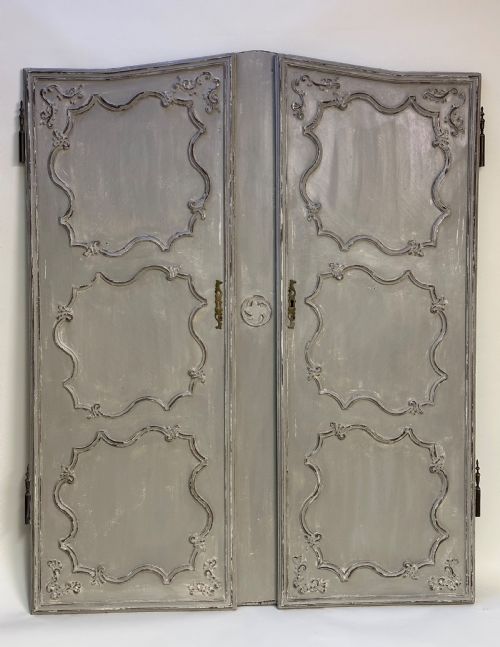
The selection ranges from rustic French provincial doors to finely detailed gilt and painted trumeau mirrors integrated with glass. Buyers most frequently meet nineteenth-century interpretations alongside genuine eighteenth-century wall hangings and needlework panels. Each variation captures the characteristic asymmetrical curves and naturalistic motifs associated with French rococo design.
Materials and construction
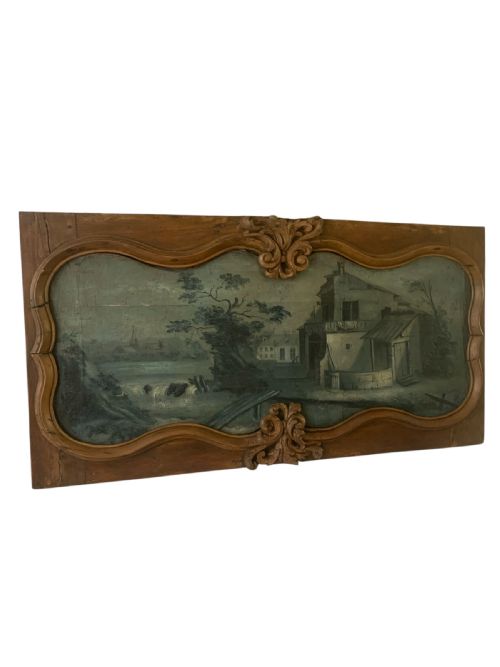
Wood serves as the primary structural foundation for carved boiserie panels, architectural doors, and trumeau frames, frequently enhanced with giltwood or painted finishes. Artisans applied hand-carved details and decorative paint directly onto timber substrates to achieve the signature French provincial and rococo aesthetic.
Textile works incorporate silk and wool within needlework panels and Aubusson entre-fenêtre tapestries, requiring specialised weaving techniques. Glass panels are integrated into trumeau mirrors, while iron elements occasionally appear in structural hardware on doors and salvage pieces.
Listings feature periods spanning from the eighteenth century through the nineteenth and early twentieth centuries, incorporating wood, giltwood, glass, paint, silk, wool, and iron.
Assessing quality and craftsmanship
Quality in a louis xv wall panel rests on the crispness of hand carving within the wood and the subtlety of decorative paint layers. Finer examples display deeply sculpted asymmetric scrolls and organic motifs rather than flat, machine-cut replication.
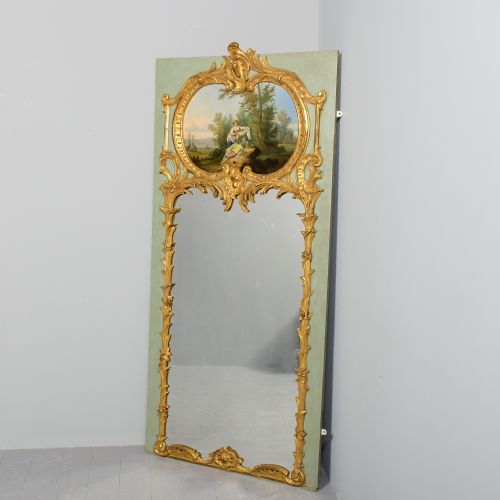
The integrity of integrated materials, such as original mercury glass in trumeau mirrors or hand-woven wool and silk in Aubusson tapestries, distinguishes superior pieces. Preservation of original painted surfaces without excessive modern restoration maintains the historical character of both eighteenth-century and revival pieces.
The Louis XV Wall Panel Glossary
- Boiserie
- French interior wood panelling carved in relief, often painted and gilded to adorn grand rooms. These panels define the architectural envelope of classical French interiors.
- Trumeau mirror
- A decorative wall mirror featuring an upper painted panel or artwork integrated above the glass plate. They were traditionally hung between windows or over mantelpieces.
- Aubusson tapestry
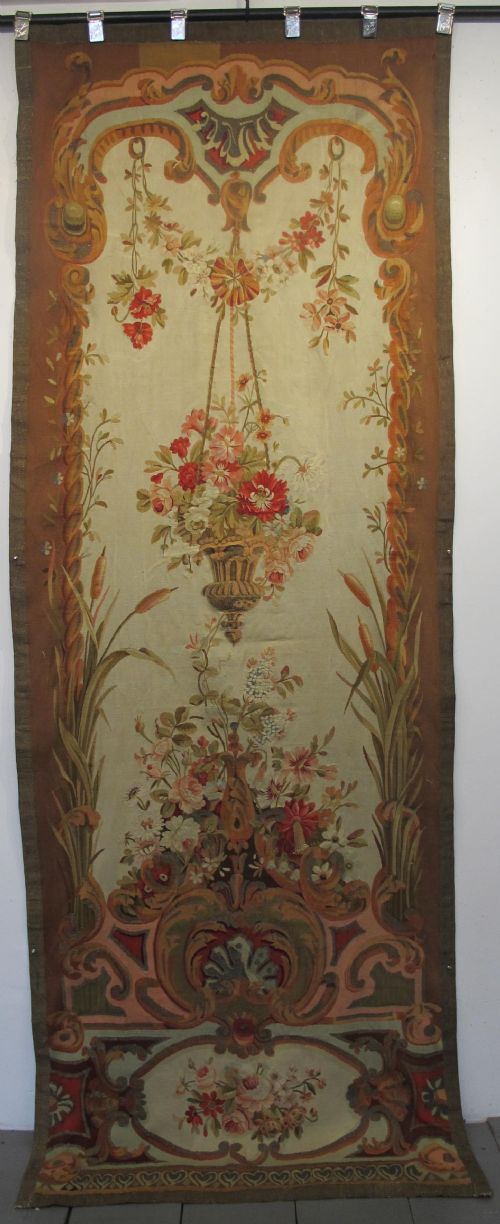
- A hand-woven textile originating from the French town of Aubusson, utilised as wall hangings or entre-fenêtre panels. These woven artworks typically depict pastoral or floral scenes.
- Entre-fenêtre
- A narrow tapestry or wall panel specifically designed to hang on the wall space between two windows. They bring vertical balance and colour to brightly lit rooms.
- Rococo
- An ornate design style characterised by C-scrolls, S-scrolls, shell motifs, and asymmetrical natural forms. It dominated French decorative arts during the eighteenth century and inspired later revival periods.
Louis XV Wall Panel: Frequently Asked Questions
What is a louis xv wall panel?
A louis xv wall panel includes carved boiserie, painted wooden boards, trumeau mirrors, and woven tapestries reflecting French rococo design. These pieces originate from eighteenth-century workshops as well as nineteenth-century revival periods.
They serve as architectural decoration, bringing historical French character and sophisticated craftsmanship directly into modern interiors.
Where were these panels placed?
Original panels and boiserie were fitted directly into the walls of formal French chateaux and salons, creating cohesive architectural schemes. Narrow entre-fenêtre tapestries were specifically hung in the wall spaces between windows.
Overdoor panels were positioned above doorways to unify the vertical proportions of high-ceilinged rooms.
How do I hang a heavy wooden panel?
Heavy carved wooden panels, doors, and trumeau mirrors require robust wall fixings secured into structural studs or masonry. Professional installation is recommended to support the substantial weight of timber and glass.
Ensure the hanging hardware distributes the load evenly across the frame to prevent structural strain.
How do I distinguish 18th-century pieces from revivals?
Eighteenth-century pieces display genuine age-related wear in the wood grain, hand-forged hardware, and oxidized paint surfaces. Nineteenth-century revival pieces often utilise heavier machine preparation while closely copying authentic rococo motifs.
Examining the back of the wood and the construction joints provides further clues to the manufacturing date.