




Vintage Wall Corbel
These vintage wall corbel pieces bring architectural weight to an interior, offering sturdy shelf support with classical carving.
Vintage Wall Corbel
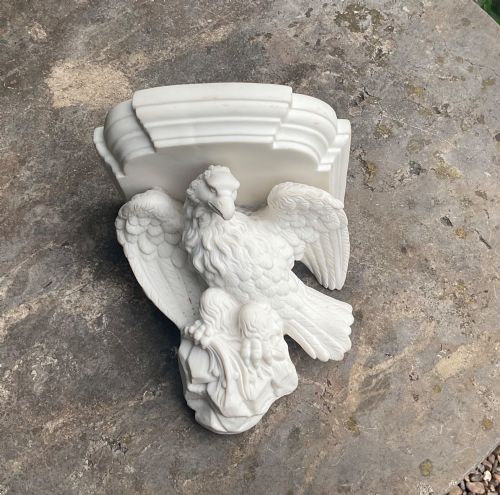
When you search for a vintage wall corbel, you encounter architectural elements and decorative brackets designed to project from a vertical surface and support a weight above. The examples here span from the eighteenth century through to the interwar period, taking the form of wall brackets, console shelves, and architectural salvage.
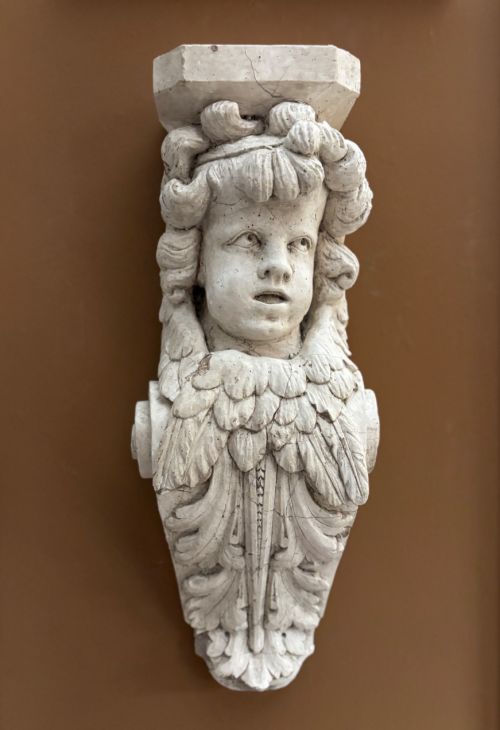
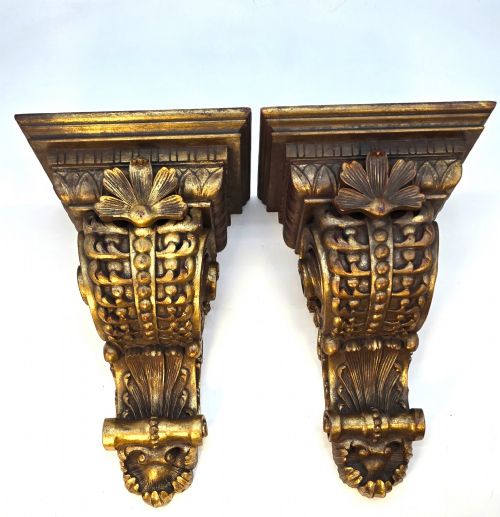
The selection ranges from heavy cast iron and wrought iron shelf brackets to ornate carved wood cherub brackets and gilded Italian pieces. You are likely to meet paired items dating from the nineteenth and early twentieth centuries, finished in paint, gold leaf, or gesso.
How they were made
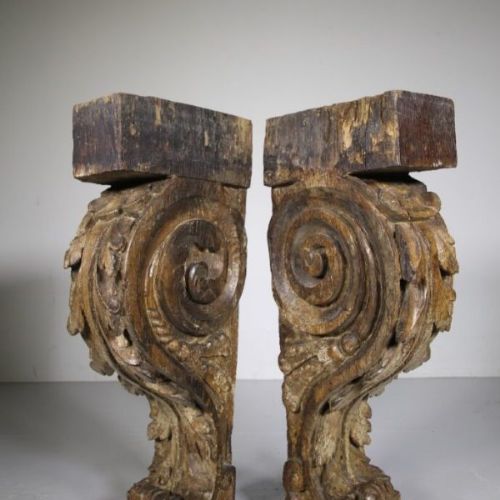
Makers shaped these supports using traditional joinery and carving techniques on hardwoods such as oak, walnut, and unspecified carved wood. Artisans applied gesso and gold leaf to create gilded surfaces, or finished the timber with paint.
Metal versions utilise cast iron and wrought iron, formed through founding and smithing to achieve structural strength for load-bearing shelf brackets. Plaster was also moulded for architectural wall ornaments.
Several pieces feature carved tiger heads and cherubs keeping watch over the room from the wall.
What varies in quality
The depth and crispness of the hand carving separate standard items from finer decorative works, particularly in walnut and giltwood examples. Crisp detailing on figures such as putti, lions, and cherubs indicates superior craftsmanship.
The integrity of the original surface finish, whether paint, gilding, or patinated wood, determines the desirability of the piece. Heavier cast iron items depend on clean casting lines and robust structural condition.
The Vintage Wall Corbel Glossary
- Corbel
- A structural member projecting from a wall to carry a weight above. It often takes a decorative scroll or bracket form.
- Giltwood
- Timber that has been coated with gold leaf or a gold-coloured substance. This finish is frequently found on Italian and Victorian decorative brackets.
- Gesso
- A plaster-like mixture applied to wood as a base for gilding or painting. It allows for intricate moulded surface details.
- Wrought iron
- Iron that has been heated and shaped with tools by a smith. This material provides durable strength for industrial and architectural brackets.
Vintage Wall Corbel: Frequently Asked Questions
How do I hang a heavy corbel?
Heavy iron and carved wood corbels require secure fixing directly into wall studs or masonry using appropriate wall anchors.
Weight distribution matters, so ensure the internal fixings match the load the bracket will bear.
Can these brackets hold a shelf?
Many of these pieces function directly as shelf brackets or console shelves to support books or display objects.
Check the top flat surface area to confirm it accommodates your intended board width.
What is the difference between a corbel and a bracket?
A corbel traditionally projects from a wall to support a heavy weight, often possessing a solid block form.
A bracket generally has a more open profile, though both terms describe wall-mounted supports.
How do I clean gilded wood?
Dust gilded surfaces gently with a dry, soft brush to avoid damaging the delicate gold leaf layer.
Moisture and harsh cleaning agents will strip the historical finish from the wood.