

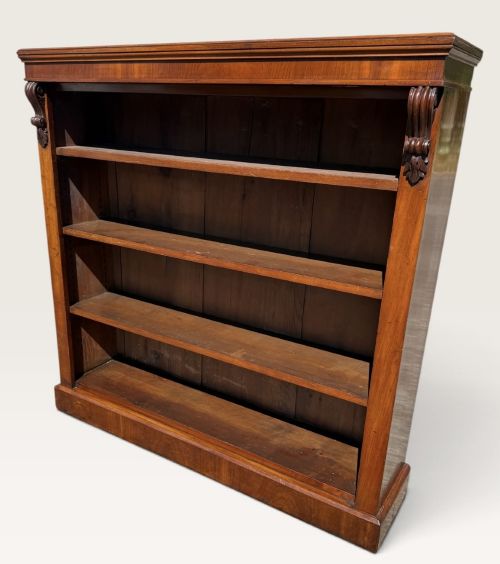


Victorian Wooden Corbel
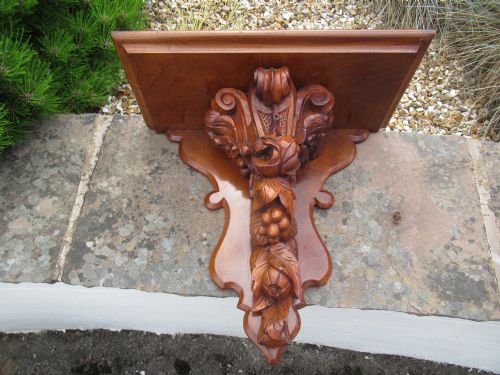
These Victorian wooden corbel pieces are robust architectural supports and wall brackets built to carry weight or frame interiors with substantial presence.
Victorian Wooden Corbel
A Victorian wooden corbel is a projecting architectural support designed to carry the load of a shelf, mantel, or beam above. When searching for a Victorian wooden corbel, buyers encounter functional architectural carvings and decorative wall brackets salvaged from period interiors.
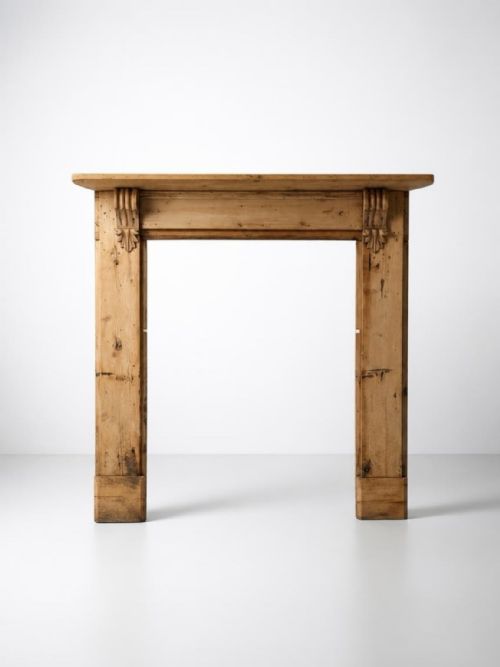
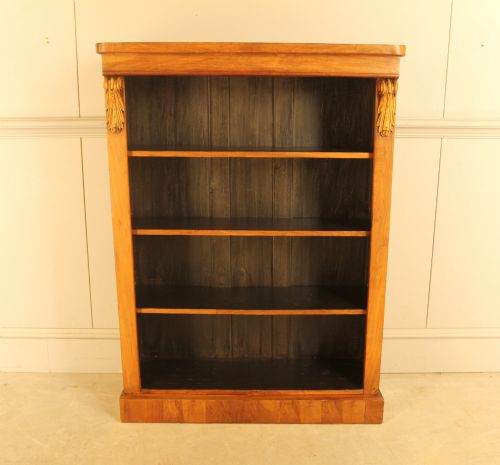
The selections span the nineteenth century, including specific dates across the decades alongside pieces attributed broadly to the period. Forms range from dedicated pairs of corbels to integrated supports on larger furniture such as bookcases, sideboards, and fire surrounds.
Makers and carvers utilised diverse stylistic influences, producing pieces that vary from Gothic Revival austerity to ornate Rococo Revival curves and naturalistic Black Forest animal carvings. Anglo-Indian and Burmese pieces also appear, demonstrating global stylistic exchange during the era.
Materials and Carving Techniques
Makers fashioned these pieces from a variety of dense and workable timbers recorded in the evidence, including mahogany, walnut, oak, pitch pine, limewood, and teak. Wood selection dictated the depth and intricacy achievable in the carving process, with close-grained hardwoods allowing for crisp, enduring detail.
Craftsmen employed hand-carving techniques to shape complex architectural profiles, foliage, and figural motifs such as animal heads and angelic forms. Surfaces were left to display the natural grain of the timber or finished with traditional polishes appropriate to domestic interior settings.
Watch out for fiercely staring Tiger and Lion heads peering out from the Black Forest wall brackets.
Factors of Quality
The standard of a carved wooden corbel depends upon the crispness, depth, and spatial balance of the hand-carving. Superior examples exhibit confident undercutting and spirited detail that bring foliage, figures, or animal forms into sharp relief.
Material selection also distinguishes the range, as dense woods like walnut and mahogany hold precise carving work far better over time than softer timbers. Integration with original furniture or architectural elements further elevates an item's contextual integrity.
The Victorian Wooden Corbel Glossary
- Corbel
- A structural piece of stone, wood, or metal projecting from a wall to carry a weight. In this context, it functions as a decorative and load-bearing architectural bracket.
- Gothic Revival
- An architectural and decorative style drawing inspiration from medieval design. Pieces often feature pointed arches, trefoils, and heavy structural moulding.
- Black Forest
- A nineteenth-century carving style originating in Switzerland and Germany known for realistic animal and nature motifs. Items typically depict bears, lions, or tigers rendered in high relief.
- Wellington Chest
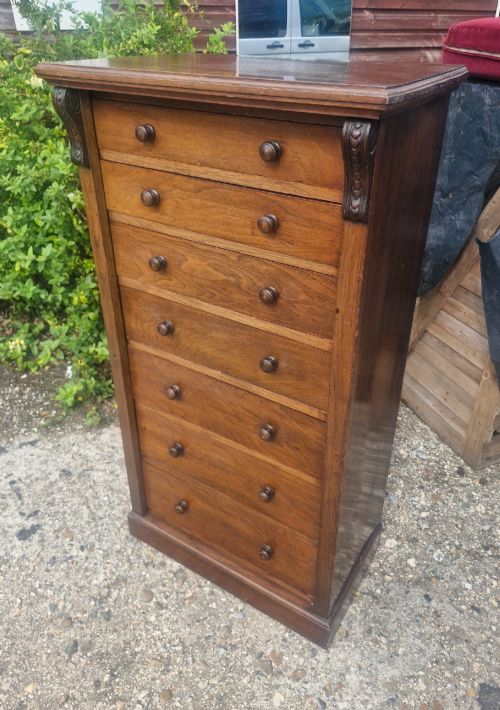
- A tall, narrow chest of drawers secured by a hinged locking stile on one side. They frequently incorporate applied corbels or architectural mouldings.
- Chiffonier
- A low sideboard or cabinet developed during the nineteenth century. These items often incorporate carved corbels framing lower cupboards or upper display shelves.
Victorian Wooden Corbel: Frequently Asked Questions
What is a wooden corbel?
A wooden corbel is a projecting bracket fixed to a wall to support a heavy shelf, beam, or mantel.
They combine structural strength with decorative carving to accent architectural spaces.
How were corbels used?
Builders used them beneath mantelpieces, library shelves, and ceiling beams to distribute weight.
Smaller examples served as wall brackets for displaying clocks, ornaments, or figures.
What woods were used?
Carvers worked in domestic and exotic hardwoods such as mahogany, walnut, and oak.
Pine and limewood also appear frequently, selected for their responsiveness to detailed hand-carving.
How do I date a corbel?
Dating relies on stylistic markers such as Gothic Revival motifs or Black Forest animal carvings.
Timber choice and the tool marks left by the carver also indicate nineteenth-century production.