
Vintage Upholstered Open Armchairs
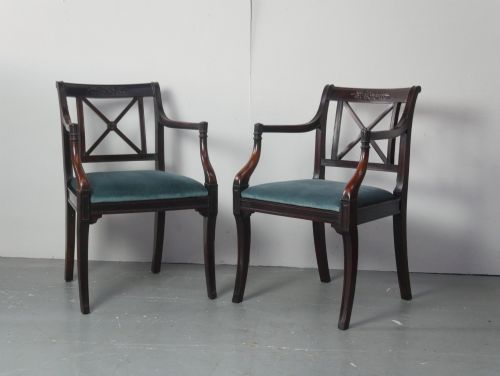
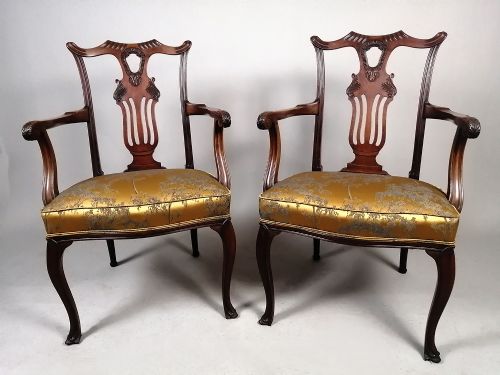
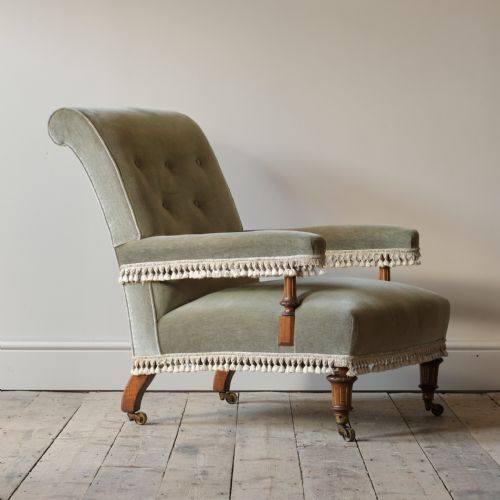
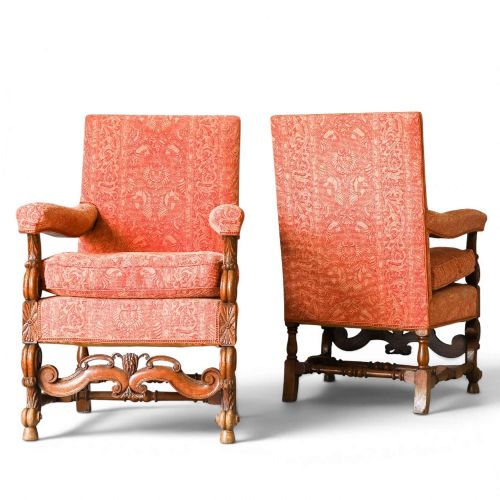
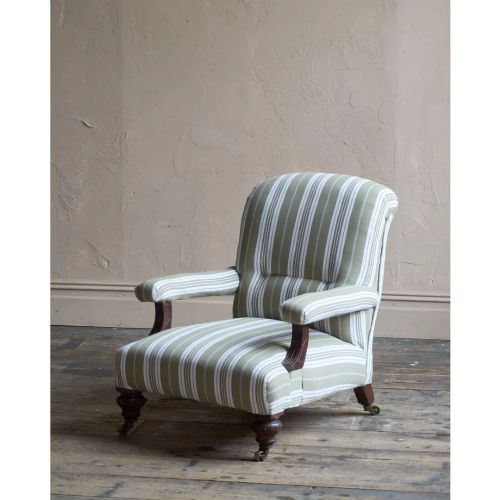
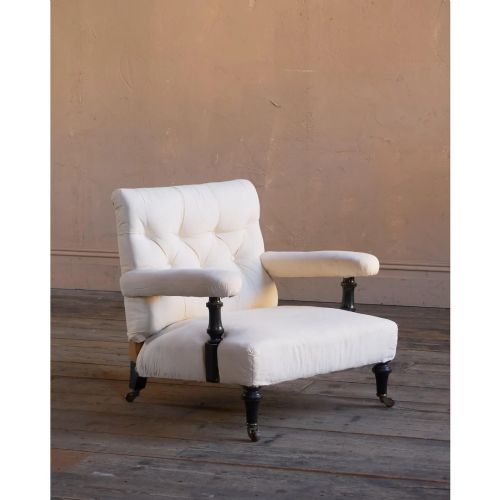
These vintage upholstered open armchairs combine supportive timber framing with generous cushioning to provide a comfortable seat for a library, drawing room or desk.
Vintage Upholstered Open Armchairs
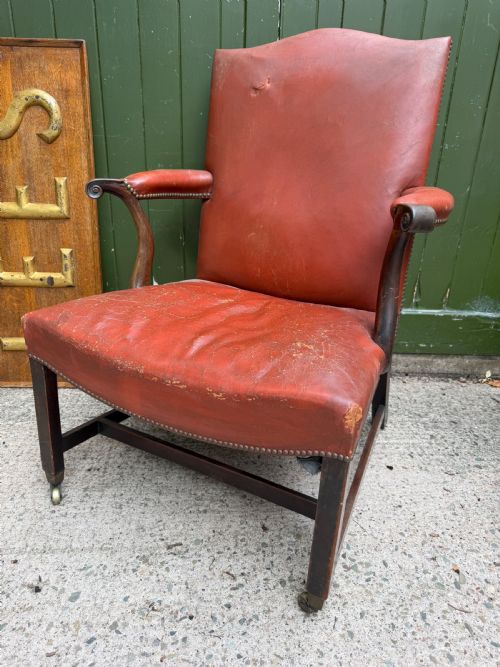
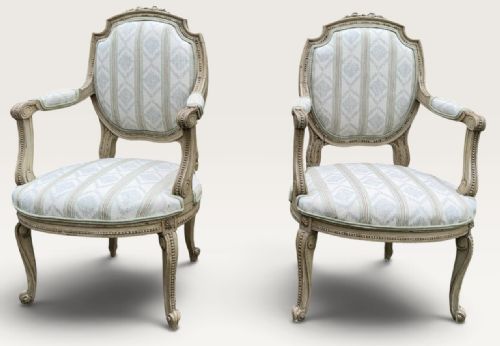
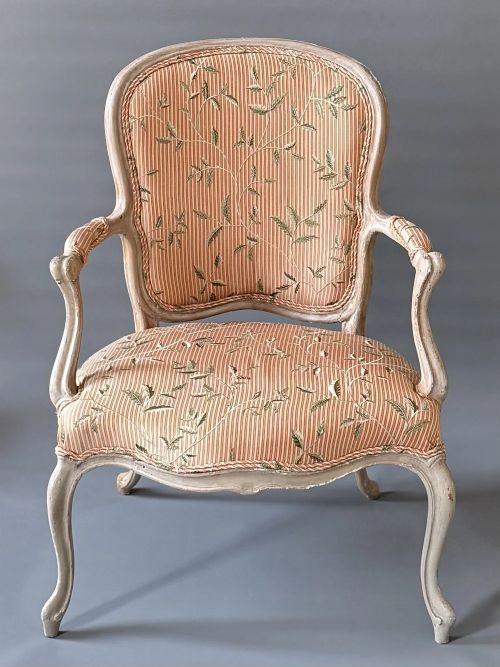
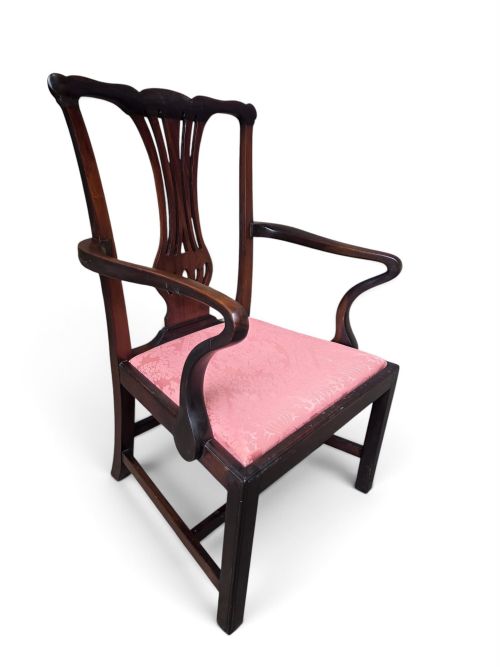
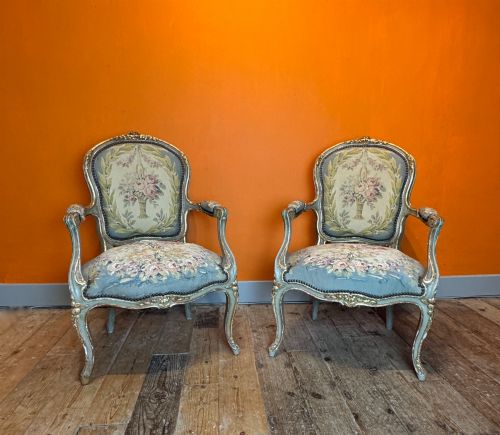
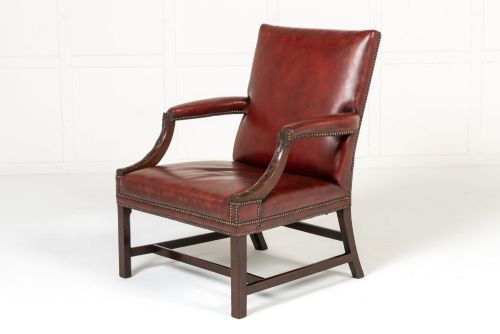
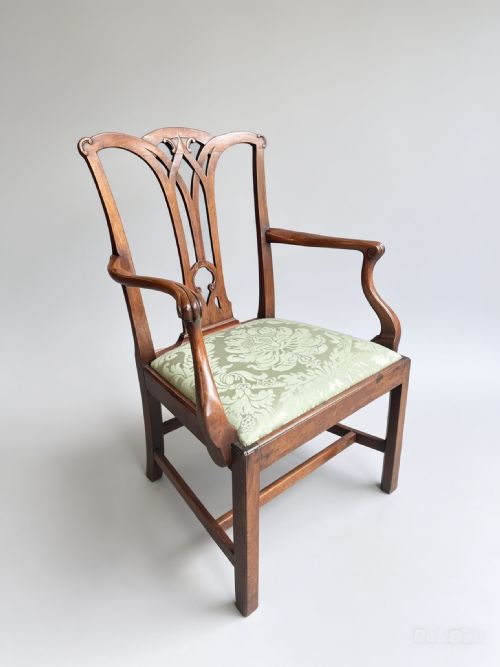
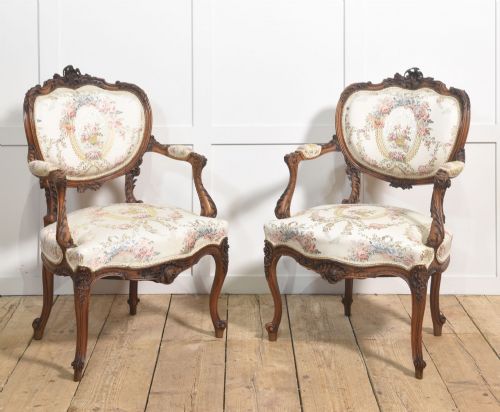
Vintage upholstered open armchairs span multiple periods, ranging from eighteenth-century George III library chairs to later nineteenth-century revival styles and twentieth-century occasional seating. The selection includes library armchairs, Gainsborough chairs and French fauteuils featuring exposed wooden frames alongside padded seats and armrests.
Most examples originate from English and French workshops, though Swedish and Irish pieces also appear across the listings. Buyers encounter single armchairs, matched pairs and occasional elbow chairs constructed from mahogany, walnut, oak and painted wood.
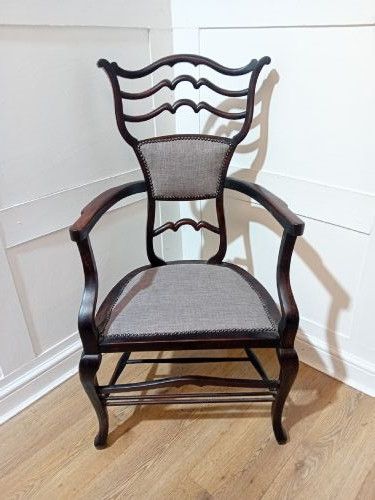
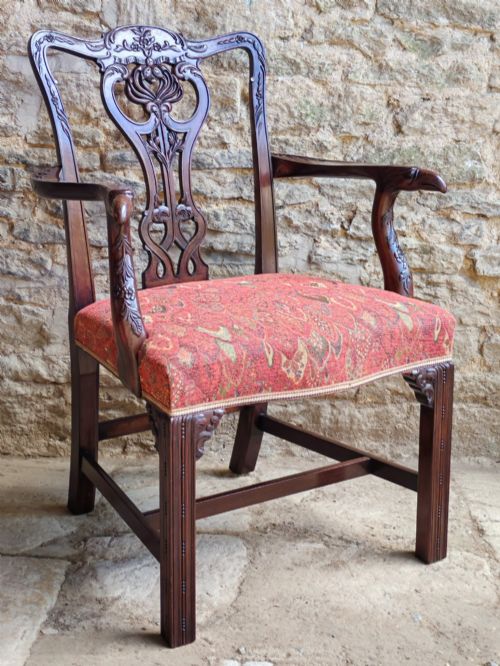
The phrase encompasses both formal revival designs, such as Chippendale and Hepplewhite styles, and simpler country or Arts and Crafts forms. These seating options suit studies, bedrooms and living spaces where exposed woodwork meets soft textile or leather upholstery.
How they were made
Makers shaped the structural frames from solid hardwoods like mahogany, walnut, oak and elm, often applying carved details, parcel gilding or original paint finishes to the exposed timber. Cabinetmakers joined these components using traditional jointing methods to ensure stability under daily use.
Upholstery techniques combined internal webbing, stuffing and springs with outer coverings of velvet, leather, needlepoint panels or woven textile. Brass tacks frequently secure the fabric edges to the wooden framework, hiding the underlying construction.
Materials span mahogany, walnut, oak and elm, paired with leather, velvet, needlepoint and standard upholstery fabrics.
What varies in quality
The distinction between standard production and superior craftsmanship lies in the crispness of the wood carving and the weight of the timber frame. Finer examples display deep, hand-carved ornamentation on the arms and legs rather than shallow machine moulding.
Originality of surface finish and the retention of period textiles or period-appropriate leather determine the character of each chair. Pieces retaining their initial paintwork, gilding or early upholstery demonstrate greater historical integrity than heavily altered examples.
Howard and Sons·Gillows·Mellier and Co·Liberty of London
The Vintage Upholstered Open Armchairs Glossary
- Fauteuil
- An open-armed upholstered armchair originating in France, characterised by exposed wooden framing around the back and seat. These chairs typically feature padded armrests and carved details along the rails.
- Gainsborough chair
- A type of eighteenth-century English armchair with a padded back, upholstered arms and an open wooden frame above square or cabriole legs. They were originally designed for libraries and writing desks.
- Carver chair
- A term used for an armchair, often matching a set of smaller dining chairs, positioned at the head of a table. In later periods, the designation applies more broadly to sturdy wooden elbow chairs.
- Needlepoint
- Canvas work embroidery using wool or silk yarn to create dense pictorial or geometric patterns. It frequently covers the seat panels and backs of nineteenth-century French and English chairs.
- Parcel gilt
- A decorative technique where specific carved portions of a wooden frame receive a thin application of gold leaf while the remaining timber shows its natural grain or painted finish.
Vintage Upholstered Open Armchairs: Frequently Asked Questions
How do I identify a French fauteuil?
A French fauteuil is distinguished by its exposed wooden frame, which outlines the upholstered backrest and seat. Unlike fully upholstered armchairs, these pieces leave the carved timber of the arms and legs visible.
They often incorporate French provincial or neoclassical design motifs, such as fluted legs, carved floral crests and painted or gilt surfaces.
Where should I place an open armchair?
These armchairs suit spaces where a compact profile and comfortable seat are both required. They work well beside a fireplace, paired with a small table in a reading corner or positioned at a writing desk.
Because the wooden arms remain exposed, they occupy less visual space in a room than fully upholstered club chairs.
How do I care for antique upholstery?
Maintenance involves regular, gentle vacuuming using a low-suction attachment to remove dust from the fabric crevices and crevices around the wooden frame. Keeping the chairs away from direct sunlight prevents the textile colours and leathers from fading over time.
For leather surfaces, applying an appropriate specialist conditioner helps maintain flexibility and prevents drying or cracking in the material.