




French Style Mahogany Armchairs
French style mahogany armchairs bring substantial timber framing and Continental design together, offering both robust support and formal seating.
French Style Mahogany Armchairs
French style mahogany armchairs combine rich timber frames with seating designed for salons, libraries, and studies. These pieces span periods from the eighteenth century through the twentieth century, capturing historical revivals and regional interpretations.
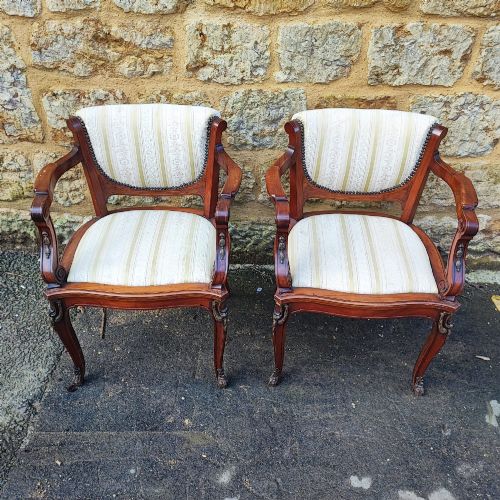
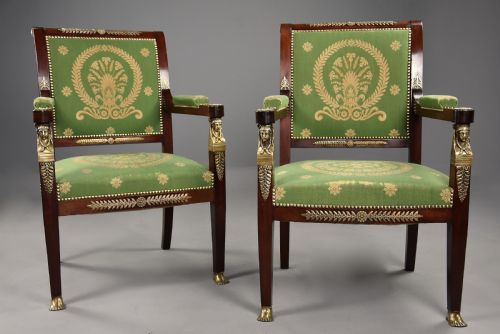
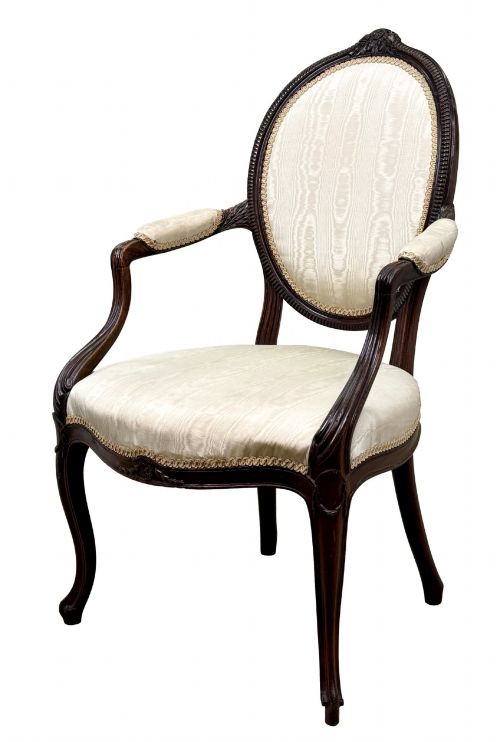
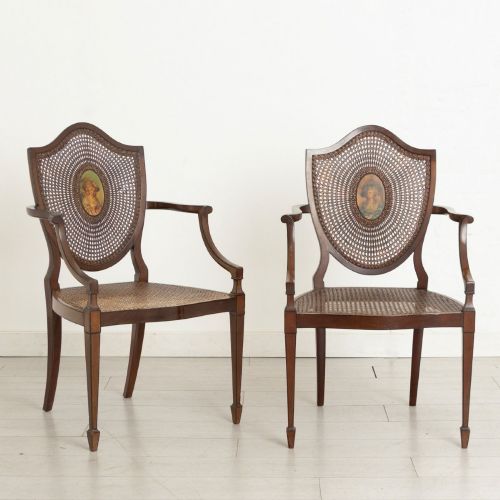
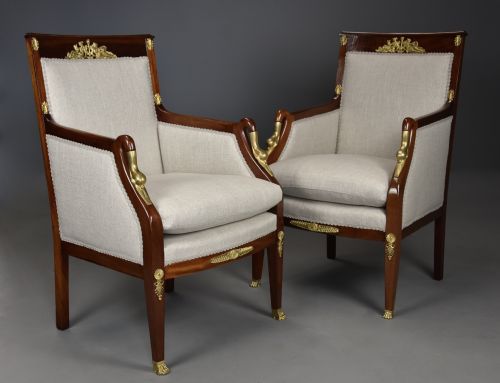
The most common iterations on this page include nineteenth-century armchairs and pairs built in the French Empire style, alongside Louis XVI revivals and occasional Georgian or Hepplewhite pieces. Forms range from open armchairs and fauteuils to bergères, desk chairs, and library armchairs.
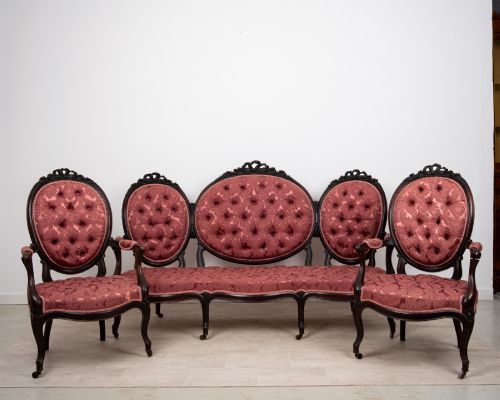
Buyers will encounter single chairs, matched pairs, and larger salon suites complete with auxiliary seating or footstools. These variations provide options for both focal seating and coordinated room schemes.
What varies in quality
Quality reveals itself in the crispness of the timber carving and the fidelity of the designated style, such as Empire or Louis XV revival. Sharp hand-carved mouldings and balanced proportions distinguish finer examples from simpler provincial frames.
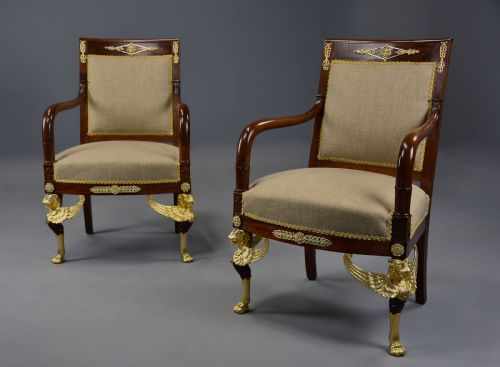
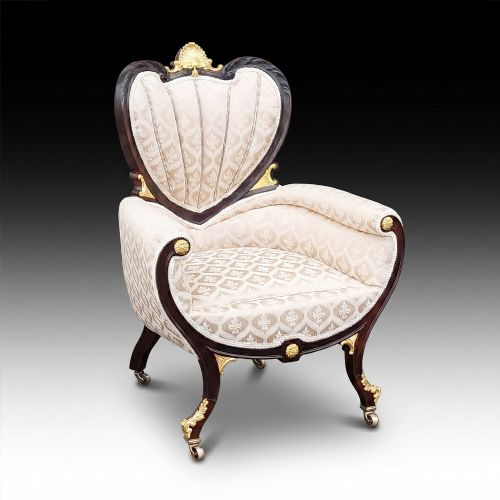
The integration of metal mounts separates standard builds from high-end pieces, where cast ormolu and gilt bronze ornaments are meticulously chased and fitted to the mahogany. Inferior versions rely on plain brass or lack auxiliary metal ornamentation altogether.
Upholstery materials and execution dictate the finish of the seat, with heavy silk velvets, supple leathers, and careful buttoning representing higher-tier commissions. Frames that retain their original structural integrity without excessive timber shrinkage or replacement parts command greater interest.
Several armchairs arrive with matching footstools, ensuring that nineteenth-century lounging could proceed without interruption.
The French Style Mahogany Armchairs Glossary
- Fauteuil
- An open-arm armchair with upholstered back and seat, typically featuring exposed wooden framing. This form originated in France and remains common in formal salon settings.
- Bergère
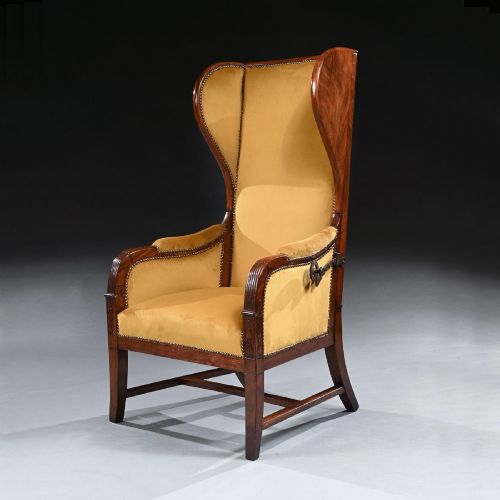
- An enclosed upholstered armchair featuring padded armrests and a solid upholstered back, often built with a visible wooden frame. It provides a deeper and more enclosed seat than an open armchair.
- Ormolu
- Gilt bronze mounted onto furniture frames as decorative ornamentation. This technique was widely utilised during the French Empire period.
- Empire
- A neoclassical design style spanning the late eighteenth and nineteenth centuries, characterised by heavy mahogany construction, classical motifs, and military or imperial symbols.
- Medallion chair
- A chair featuring an oval upholstered backrest framed by carved wood. This style is frequently associated with Louis XVI revivals.
French Style Mahogany Armchairs: Frequently Asked Questions
What is a fauteuil?
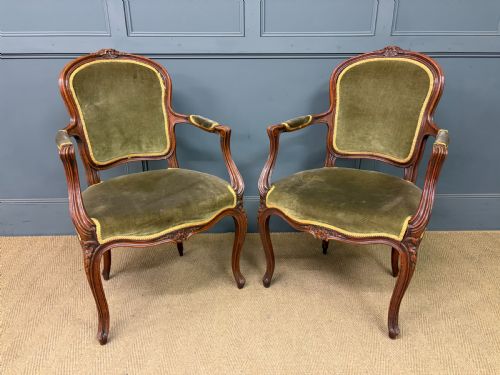
A fauteuil is a traditional French open armchair characterised by upholstered armrests, a padded back, and exposed wooden framing. These chairs were designed for formal reception rooms and domestic comfort.
They appear frequently in nineteenth-century interpretations and revival styles, offering an alternative to fully enclosed seating.
How do I identify Empire style?
Empire style pieces utilise dark mahogany timbers combined with cast ormolu or gilt bronze mounts, reflecting classical architectural forms. The lines tend to be architectural, drawing inspiration from ancient Roman and Greek designs.
These chairs often feature substantial frames and formal decorative motifs rather than delicate curves.
Are these chairs suitable for daily use?
Many of these armchairs are structurally robust enough for regular seating, provided the mahogany frame and internal joinery remain stable. Upholstery condition varies, so contemporary seating comfort depends on the state of the padding and fabric.
Library and desk chairs within this group were built specifically for prolonged sitting and practical tasks.
How do I care for mahogany frames?
Mahogany requires minimal maintenance, relying on occasional dusting with a soft cloth to preserve the polished wood finish. Direct sunlight and fluctuating humidity should be avoided to prevent timber splitting or fading.
Metal mounts require gentle cleaning without abrasive polishes to protect any original gilding.