
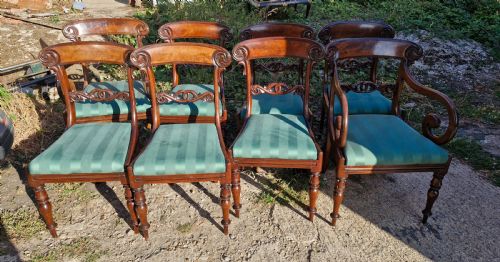
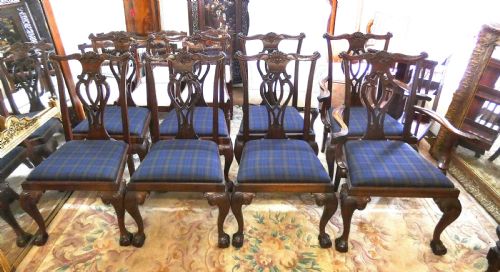
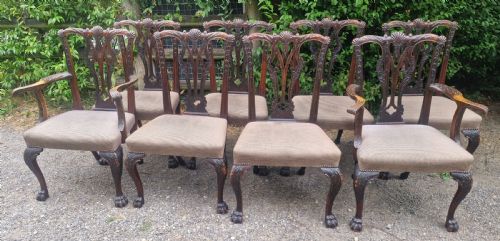
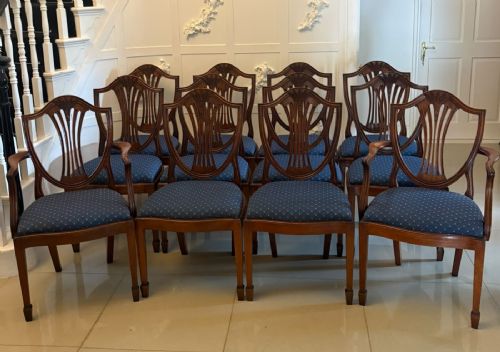
Carved Mahogany Side Armchairs
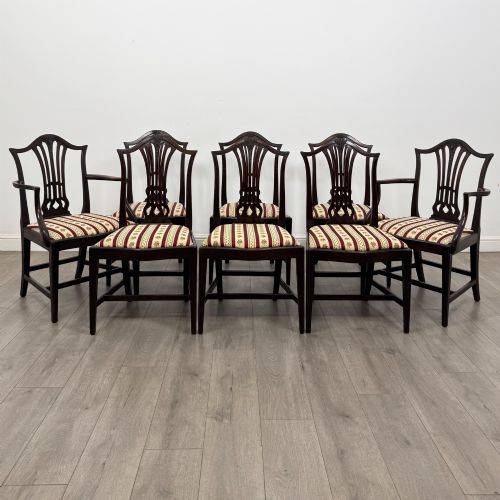
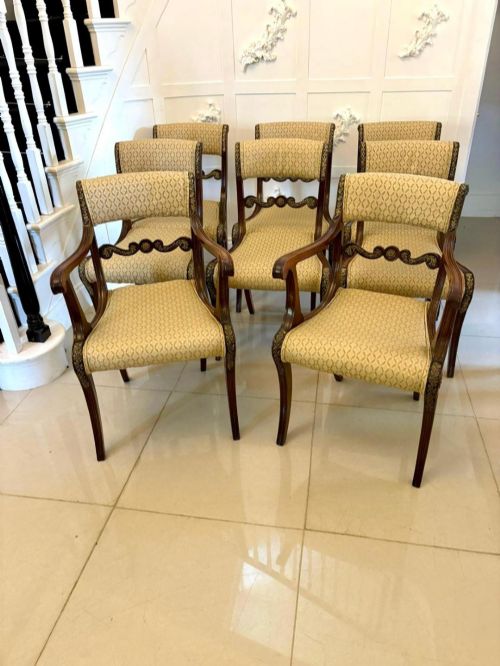
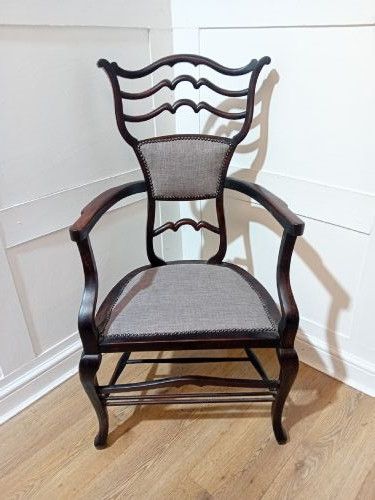
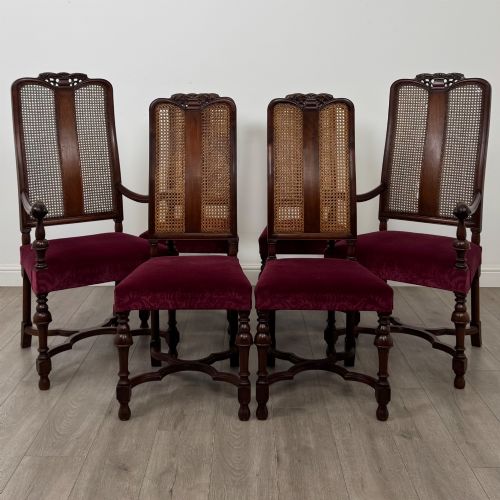
These carved mahogany side armchairs unite structural timber with formal carved detail across Georgian, Regency, Victorian and Edwardian periods.
Carved Mahogany Side Armchairs
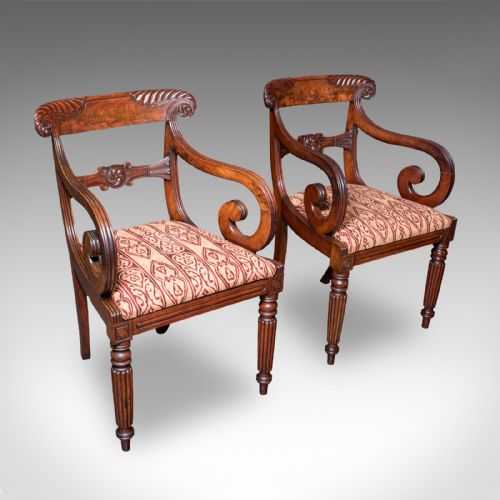
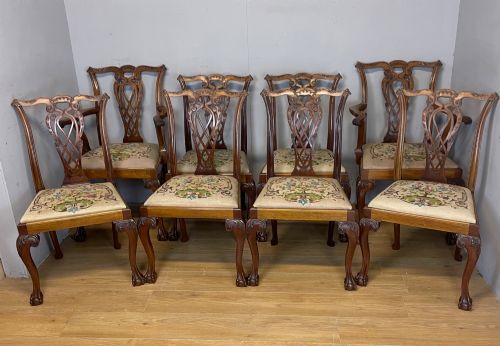
When you search for carved mahogany side armchairs, you examine seating built from solid timber across the Georgian, Regency, Victorian, Edwardian and later revival eras. The forms range from single library seats and reception elbow chairs to large dining sets incorporating carvers alongside standard dining chairs.
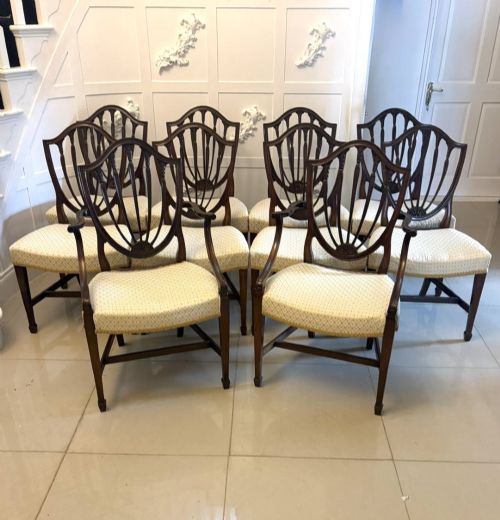
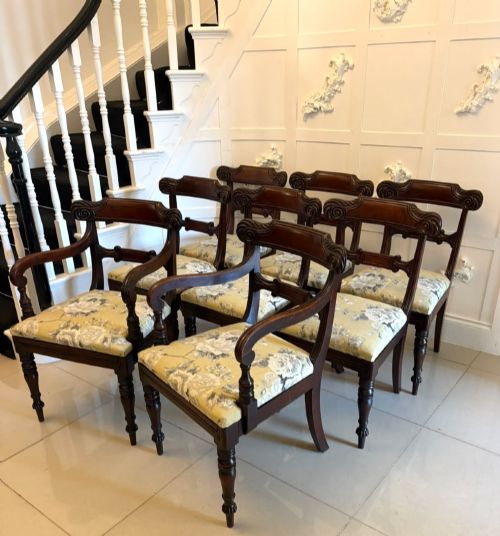
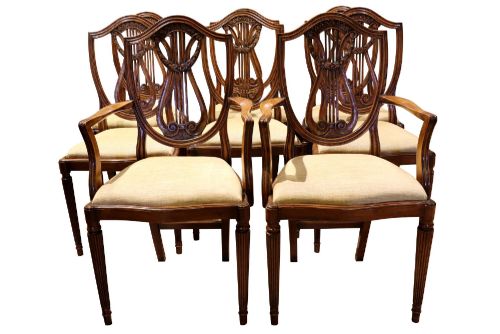
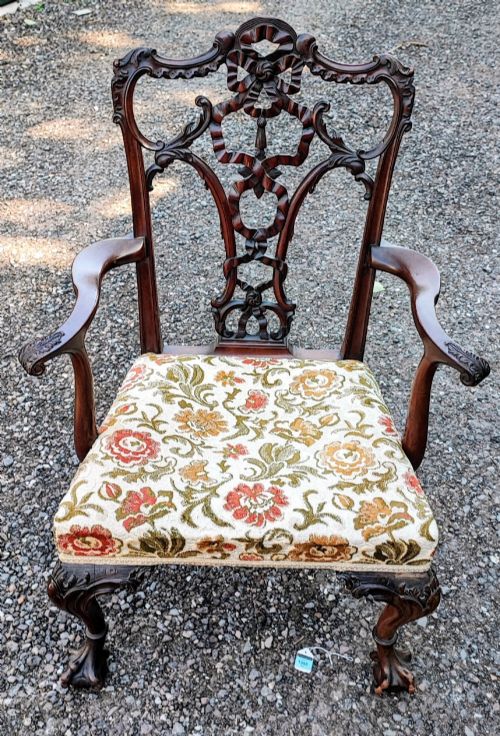
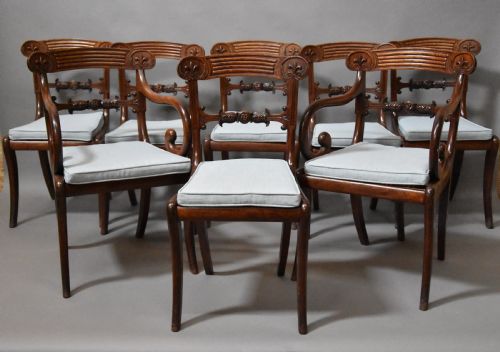
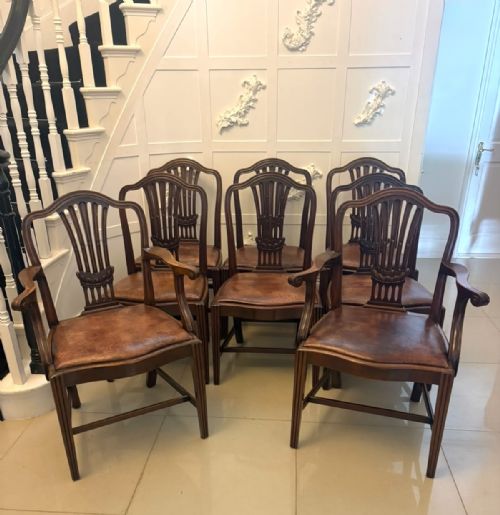
The most common examples on this page date from the nineteenth century and the Edwardian period, frequently adopting Chippendale, Hepplewhite or Regency revival styles. Makers patterned these seats with shield backs, bar backs, lyre backs and open arms designed for formal rooms.
Timber and Joinery
Joiners built these frames from dense mahogany, shaping structural rails, legs and crest rails to withstand daily sitting. Carvers worked directly into the solid timber of the splats and top rails, producing pierced strapwork, foliage and ribbon motifs without relying on applied composition ornaments.
Upholstered elements rely on traditional stuffing and webbing beneath coverings of leather, velvet or woven fabric. Brass fixings and studs appear on specific periods to secure leather edges and structural joints.
Spider web back designs on Victorian desk chairs prove that someone once wanted their study furniture to mimic an arachnid.
Carving Depth and Timber Selection
The distinction between standard workshop output and exhibition grade seating rests upon the depth and crispness of the timber carving. Superior chairs display undercut work and sharp relief on the splats and rails, whereas simpler pieces show shallow, mechanical tool marks.
Timber figure and frame integrity dictate the upper tier of the market. Uniform grain, original blocking in the seat frame and minimal timber replacement preserve structural rigidity and aesthetic harmony.
Warings·Maple and Co
The Carved Mahogany Side Armchairs Glossary
- Carver
- An armchair designed with elbow rests, traditionally made to match a set of dining side chairs.
- Shield back
- A chair back shaped in the outline of a heraldic shield, popularised in the eighteenth century and revisited in later revival periods.
- Bar back
- A horizontal wooden slat crossing the uprights of a chair back, characteristic of Regency and William IV seating.
- Splat
- The vertical central strip of wood in a chair back, frequently pierced and carved in Chippendale or Hepplewhite designs.
Carved Mahogany Side Armchairs: Frequently Asked Questions
How do I spot a revival chair?
Revival pieces exhibit machine-cut precision, harder modern adhesives and timber finishes that lack the dry, oxidised patina accumulated over centuries of handling. Workshops produced these copies during the late nineteenth and early twentieth centuries to satisfy demand for earlier aesthetic styles.
Examine the construction joints beneath the seat rails where hidden secondary woods and modern screw types often reveal the true manufacturing date rather than the stylistic period imitated.
Were these chairs used at desks?
Armchairs and side chairs with sturdy mahogany frames served multiple domestic functions, including use at partners desks, in morning rooms and around dining tables. Elbow chairs provided comfortable seating for writing and reading.
Library and desk variants frequently incorporate lower seats or revolving mechanisms, distinguishing them from standard dining room carvers.
How should I care for old mahogany?
Maintain stable room humidity to prevent timber shrinkage and the subsequent loosening of frame joints. Apply traditional wax polish sparingly to nourish the polished surface without building up greasy residue.
Avoid placing these chairs near direct heat sources or strong sunlight, which bleaches the rich reddish-brown tone characteristic of mature mahogany.
What is the difference between a carver and a side chair?
Carvers feature integrated armrests designed to support the occupant's elbows, making them wider than standard chairs. Side chairs lack arms, allowing them to tuck neatly beneath dining tables or against room walls.
Dining sets historically paired two carvers for the heads of the table with a larger number of armless side chairs.