
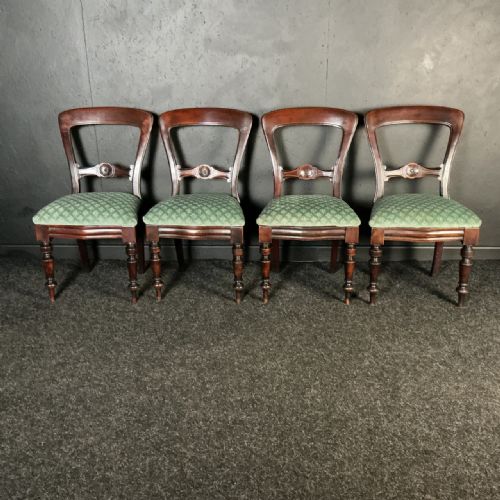
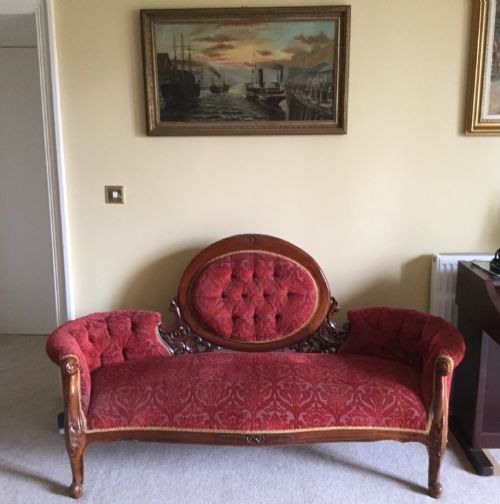
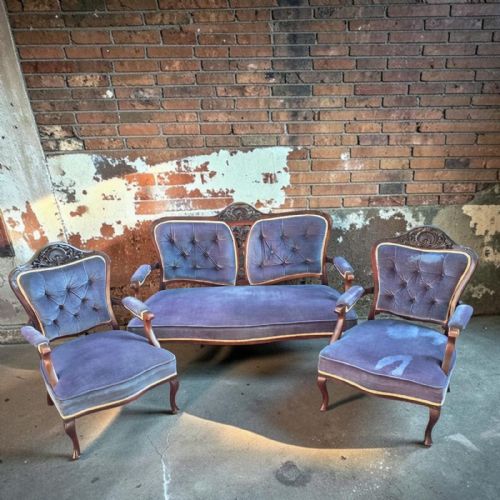
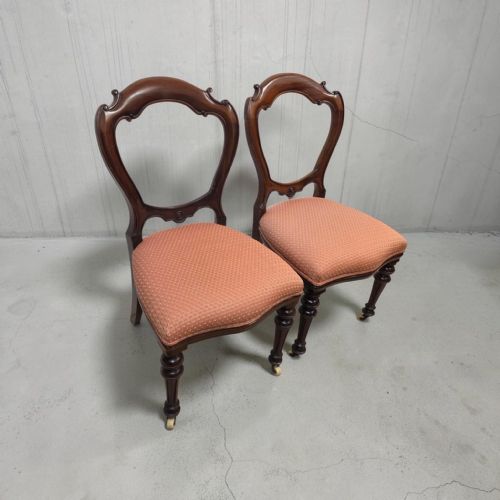
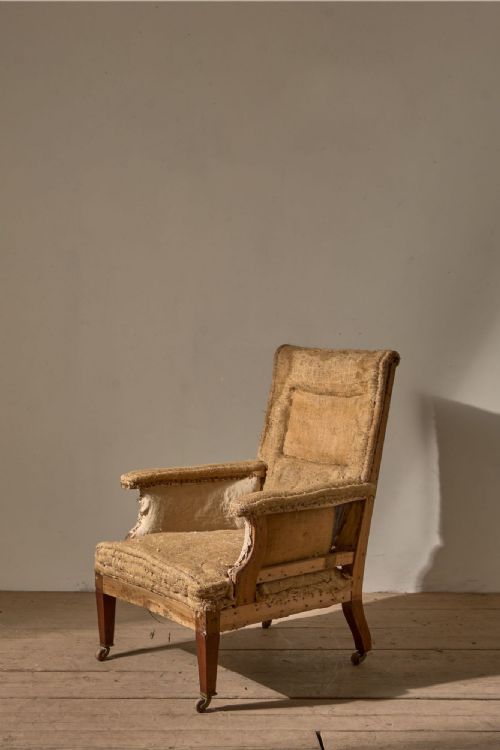
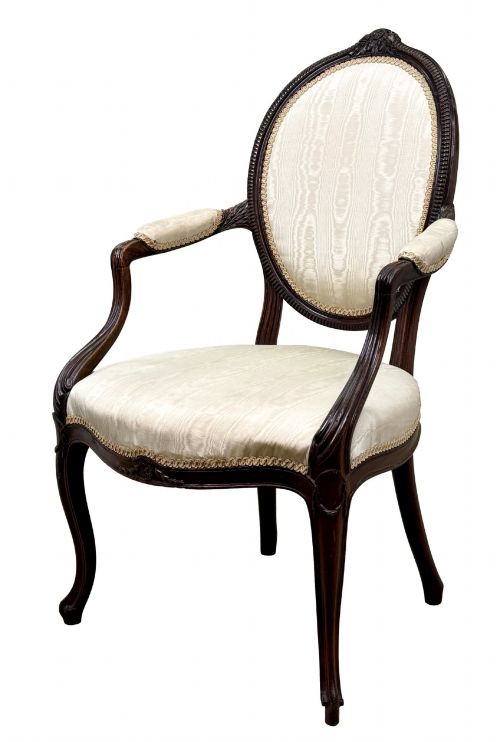
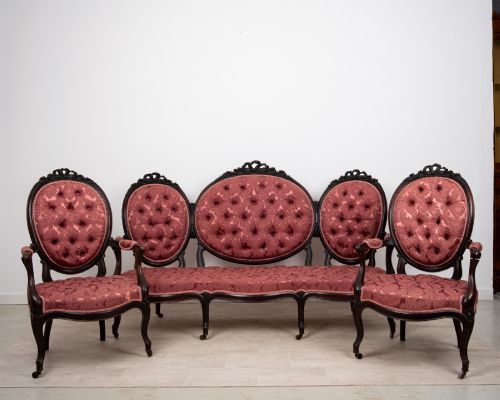
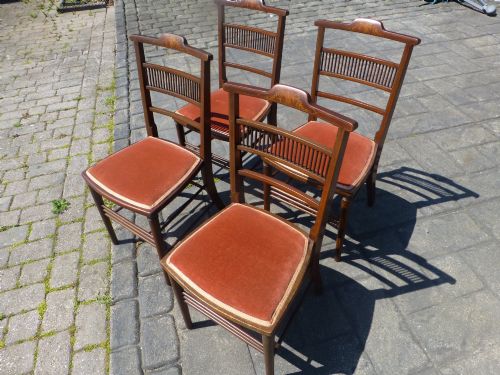
Carved Mahogany Salon Chairs
These carved mahogany salon chairs combine robust nineteenth-century timber frames with ornate period detailing, offering both formal elegance and everyday usability.
Carved Mahogany Salon Chairs
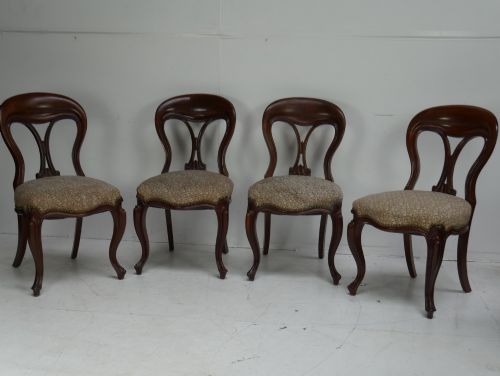
When you search for carved mahogany salon chairs, you encounter seating designed for the formal reception rooms of the nineteenth and early twentieth centuries. These pieces encompass various forms including single side chairs, occasional chairs, and matched pairs intended for drawing room use.
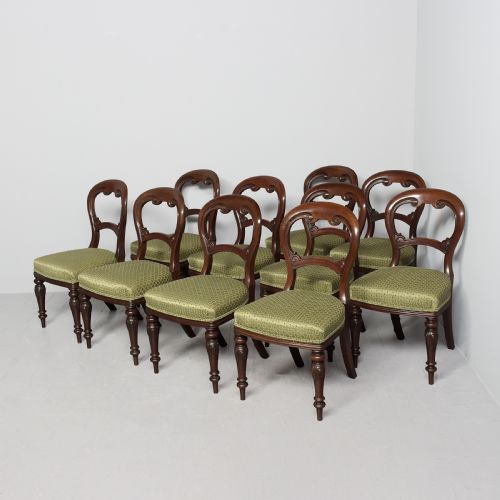
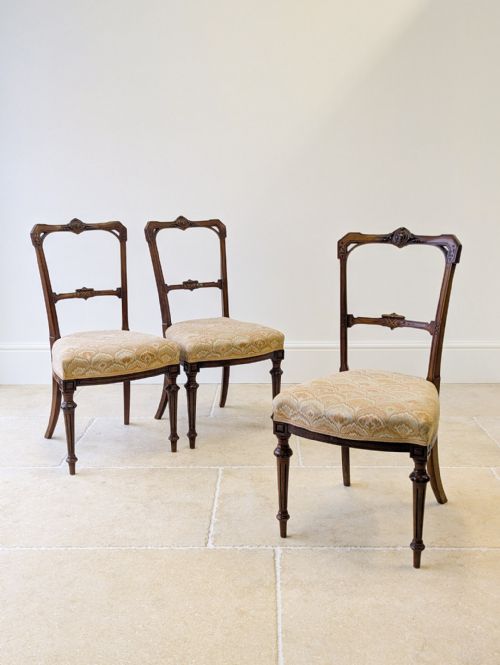
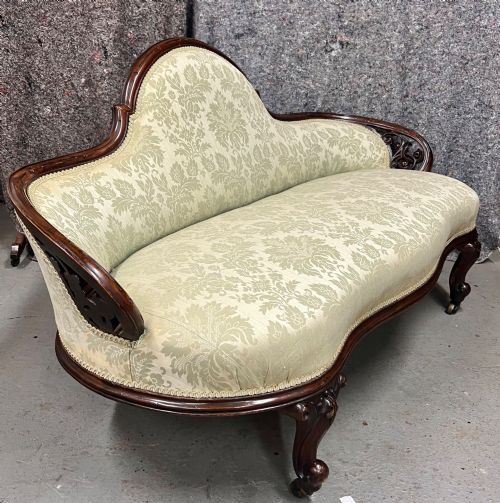
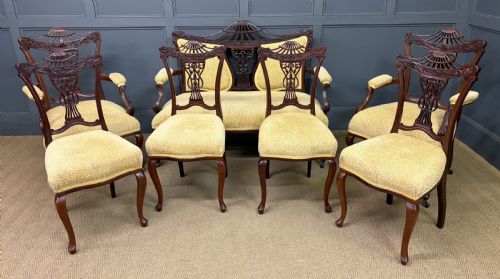
The versions most frequently met on this page date from the Victorian and Edwardian eras, displaying stylistic influences ranging from balloon-back designs to Neoclassical and Sheraton Revival motifs. They served both a decorative function and a practical purpose in period interiors, often appearing alongside matching settees and armchairs.
Makers utilised rich dark timbers and decorative upholstery to create seating that complemented the prevailing tastes of the 1800s and early 1900s. Whether acquired as isolated single seats or in sets of matching chairs, they remain adaptable items for contemporary spaces.
Materials and construction methods
The primary material across these listings is solid mahogany, selected for its dense grain and capacity to hold intricate carved details. Artisans shaped this timber into curved rails, cabriole legs, and elaborate balloon backs using traditional joinery techniques.
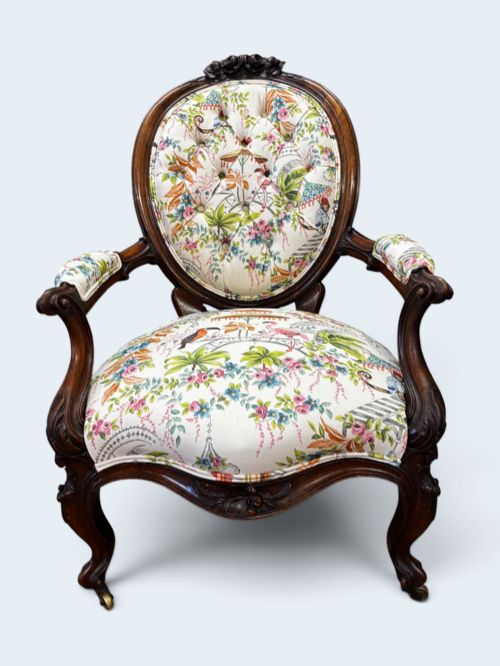
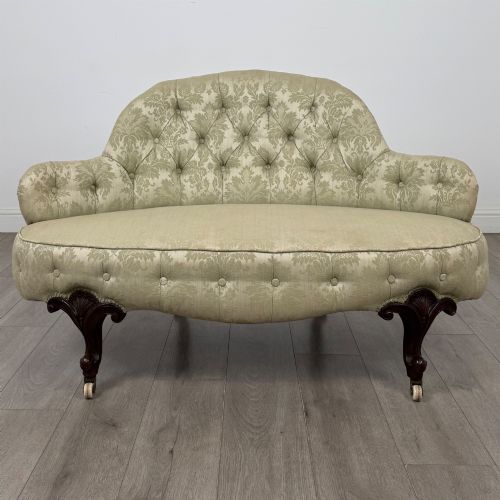
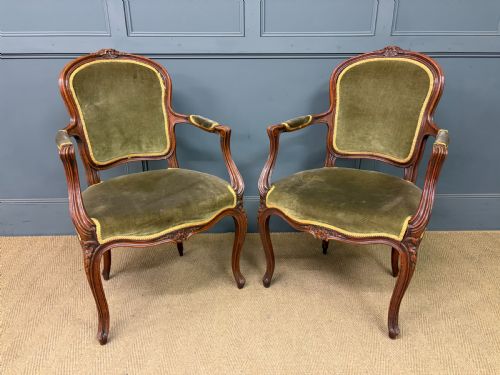
Upholstery forms a vital component of the construction, utilising materials such as velvet, damask, fabric, and deep-buttoned padding supported by sprung seat bases. Brass elements and delicate inlay work occasionally accent the timber frames to enhance the visual depth of the furniture.
Some nineteenth-century makers thoughtfully designed matching 'His and Her' armchairs with subtle height variations for ultimate Victorian parlour comfort.
Assessing quality in period seating
Quality in these chairs rests upon the crispness of the timber carving and the structural integrity of the frame joints. Superior examples exhibit deeply sculpted details that retain sharp edges, whilst lesser pieces may show softer or more mechanical ornamentation.
The standard of the upholstery materials and the fidelity of the period style further distinguish the pieces. Cohesion between the timber frame and appropriate fabric choices determines the overall finish of the seating.
Blyth & Sons·Hewetson & Milner
The Carved Mahogany Salon Chairs Glossary
- Balloon-back
- A chair design featuring an oval or looped wooden backrest resembling the shape of a balloon, popular during the Victorian period. This profile offers ergonomic support whilst showcasing the grain of the mahogany.
- Cabriole leg
- A furniture leg that curves outward in a convex arc before tapering inward in a concave sweep, often ending in a pad or carved foot. It appears frequently on mid-nineteenth-century salon and dining seats.
- Sheraton Revival
- A late nineteenth-century design movement inspired by the lighter neoclassical furniture of the eighteenth century. Pieces in this style typically feature inlaid woodwork and restrained proportions.
- Settee
- A medium-length upholstered wooden bench with a back and armrests, designed to seat multiple people. They frequently accompany salon chairs in matched suites.
- Damask
- A reversible figured fabric traditionally woven from silk, wool, or cotton, used extensively for period upholstery. Its patterns catch the light to add texture to reception room furniture.
Carved Mahogany Salon Chairs: Frequently Asked Questions
How do I identify a Victorian salon chair?
Victorian salon chairs typically feature dark mahogany frames with curved balloon-backs, cabriole legs, or elaborate carved details drawn from revival styles.
They often include upholstered seats covered in velvet, damask, or deep-buttoned fabric suited to nineteenth-century drawing rooms.
Are these chairs comfortable for daily use?
Many salon chairs were built with sprung seat bases and padded backrests intended for formal sitting rather than lounging.
Modern comfort often depends on the condition of the internal webbing and upholstery padding within the historical frame.
What is the difference between salon and dining chairs?
Salon chairs are generally lighter, more decorative, and designed for occasional use in reception rooms or parlours rather than around a dining table.
They frequently feature more ornate carved details, lower seats, and varied back shapes such as the balloon-back configuration.
How should I care for antique mahogany frames?
Maintain mahogany timber by keeping pieces away from direct heat sources and strong sunlight to prevent the wood from drying out.
Gentle dusting with a dry cloth preserves the polished surface without damaging the aged patina of the finish.