


Victorian Ladies Chair
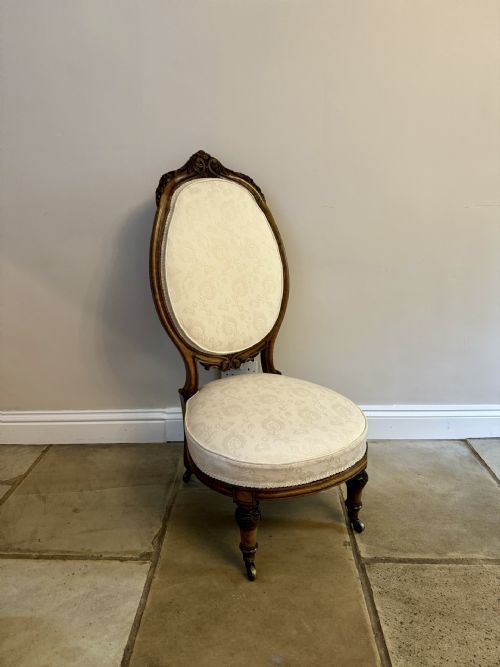
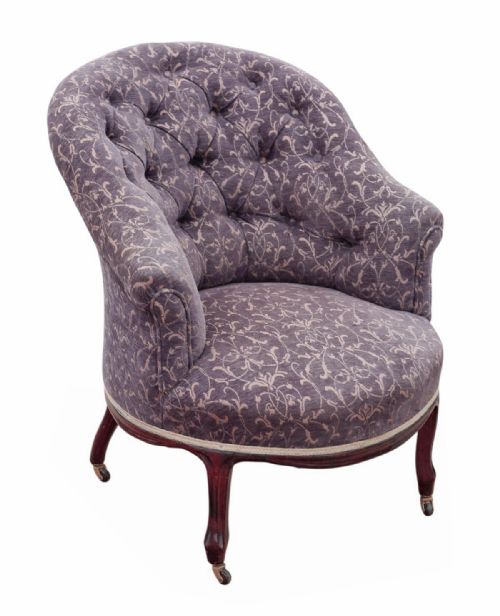
These walnut and mahogany victorian ladies chair models offer a low-slung, intimate seat designed for formal drawing rooms.
Victorian Ladies Chair
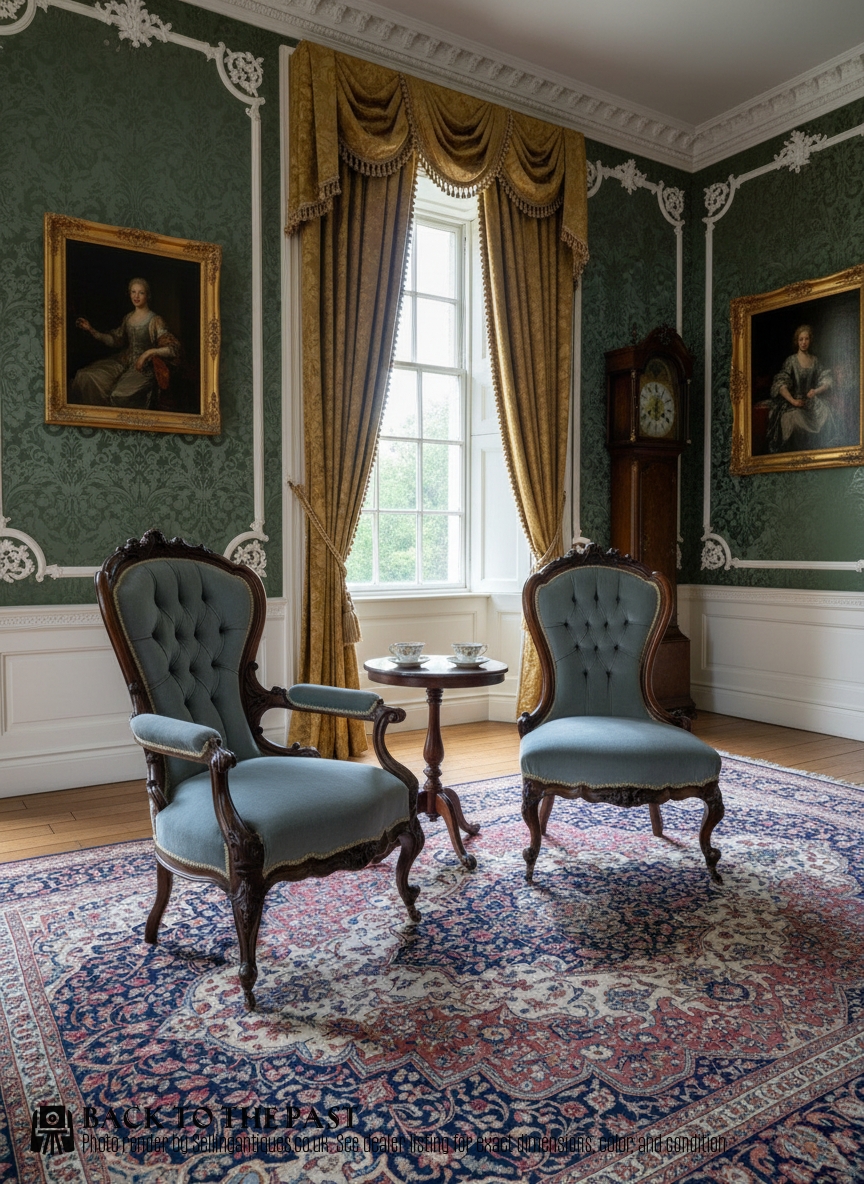
A victorian ladies chair typically takes the form of a low, upholstered armchair or nursing chair created to accommodate the voluminous skirts of the period without high wooden armrests getting in the way.
The evidence shows these seating pieces appearing across the nineteenth century in walnut, mahogany, and rosewood, frequently accompanied by matching gentleman's armchairs in pairs or larger drawing room suites.
Buyers most commonly encounter walnut frames shaped in Victorian, Early Victorian, and Victorian Rococo Revival styles, featuring low seats and distinctively curved backs.
Materials and construction methods
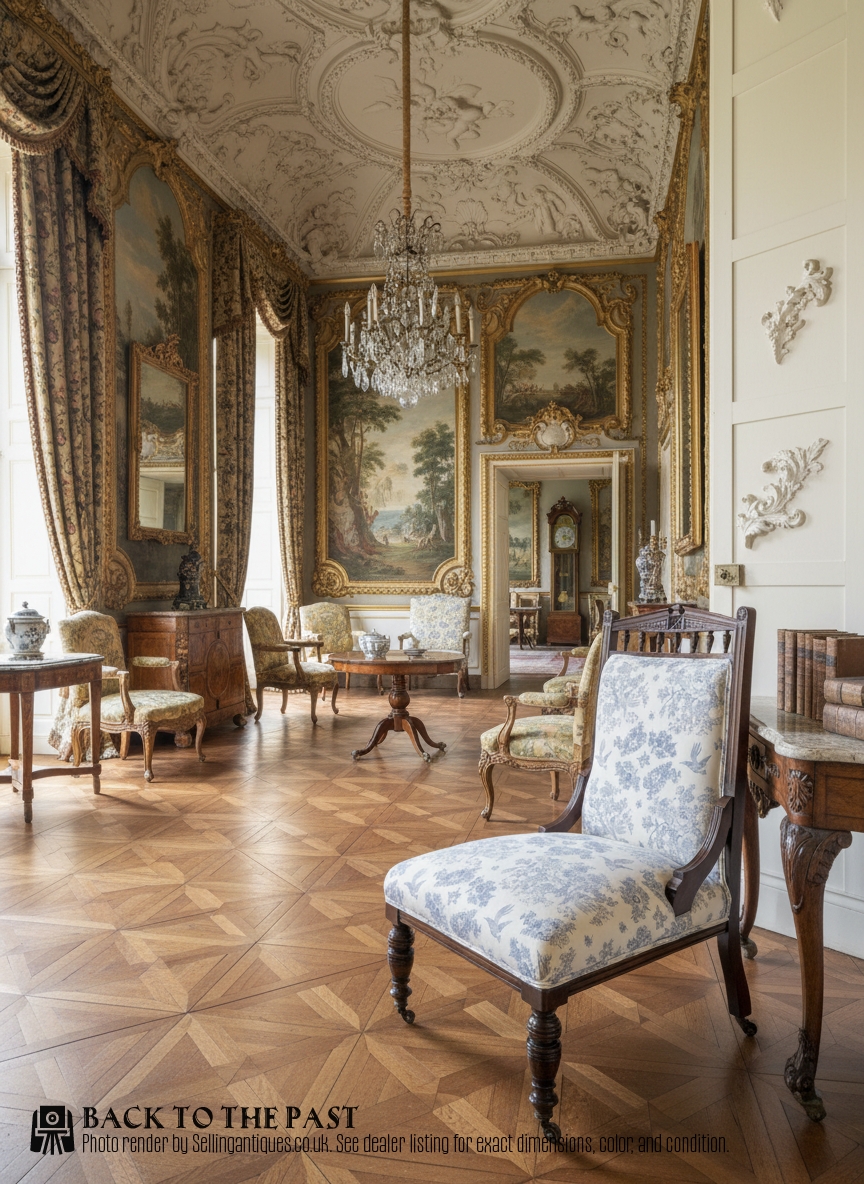
Frames are constructed from solid timbers such as walnut, mahogany, rosewood, and oak, often shaped with carved details or turned supports.
Upholstery relies on traditional textile coverings including velvet, fabric, and leather, frequently finished with button back techniques over supportive interior stuffing.
Victorian Ladies Chair Retail Price Guide 2026
Typical asking prices for victorian ladies chair among the pieces listed under this phrase on Sellingantiques today, from the lower quarter to the upper quarter. They describe what is for sale here now, not the wider market.
Listings feature walnut frames most frequently among these nineteenth-century seats, alongside mahogany and rosewood.
Distinctions in construction and finish
The refinement of the carved wooden ornament on the walnut or mahogany frame separates standard examples from more elaborate drawing room seating.
Depth and precision of the button back upholstery work alongside the selection of primary timbers to determine the overall integrity of the piece.
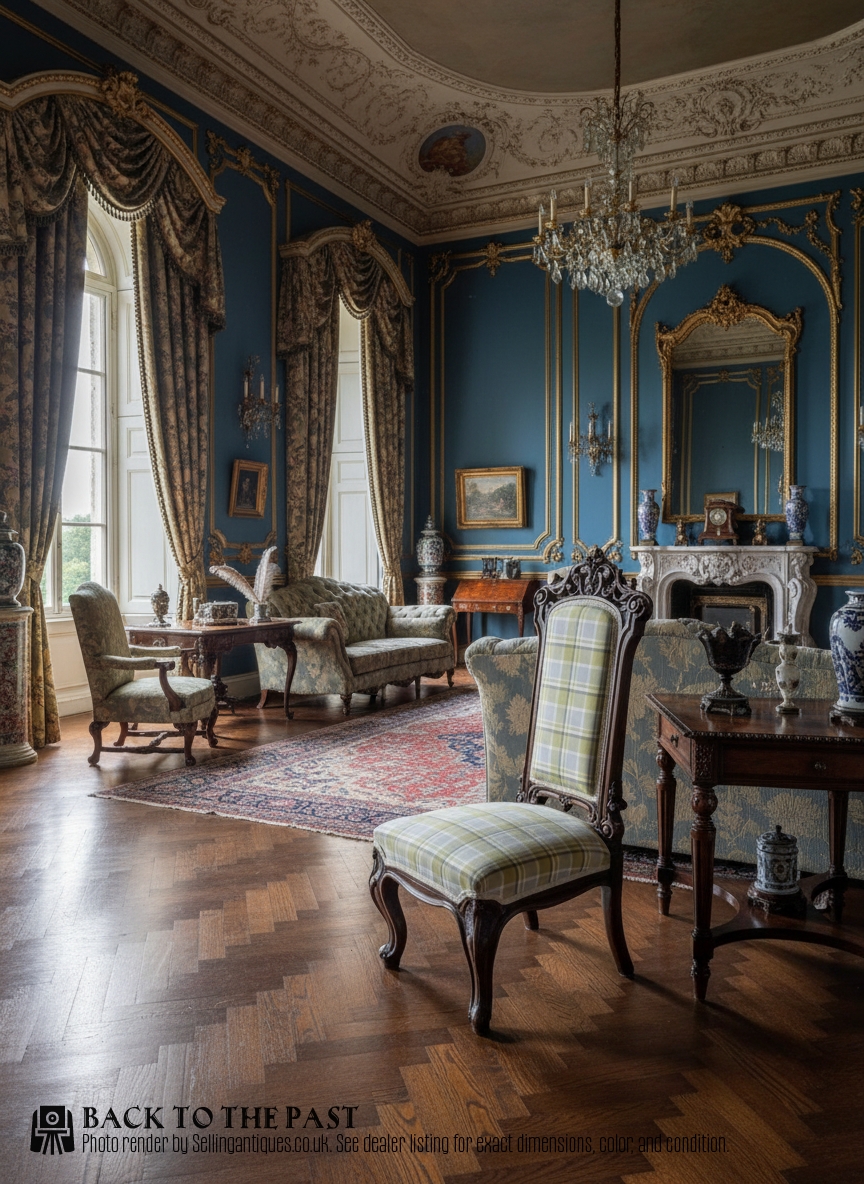
The Victorian Ladies Chair Glossary
- Button back
- A method of upholstery where depressions are formed in the padding by stitching through to secure buttons, creating a tufted surface.
- Spoon back
- A chair back shaped like the bowl of a spoon, curved to fit the human spine and commonly found on Victorian seating.
- Nursing chair
- A low-seated chair designed originally for infant care, featuring an absence of arms to allow full freedom of movement for garments.
- Rococo Revival
- A nineteenth-century design style drawing on eighteenth-century French motifs, characterised by asymmetrical curves and naturalistic floral carvings.
Victorian Ladies Chair: Frequently Asked Questions
How do I spot a genuine vict?
Examine the timber frame and joinery methods underneath the upholstery to verify nineteenth-century construction techniques. Look for hand-carved walnut or mahogany rather than modern moulded substitutes.
Check for period-appropriate textiles and traditional stuffing materials like horsehair beneath the fabric surface. Genuine examples show appropriate wear consistent with nineteenth-century domestic use.
Were these chairs used alone?
These seats often appeared as part of larger drawing room suites or paired alongside matching gentleman's armchairs. They served primarily in formal rooms for sitting and socialising.
Many examples were also placed in bedrooms or fireside settings. The lower seat height accommodated the heavy fashion of the era.
What is a spoon back?
A spoon back refers to a wooden frame hollowed and curved deeply to cradle the sitter's back comfortably. This shape became a defining characteristic of mid-nineteenth-century seating.
The contoured wooden rim surrounds an upholstered central panel, often decorated with carved floral motifs at the crest.
How do I care for velvet?
Protect antique velvet upholstery from direct sunlight to prevent fading of the textile pile over time. Regular gentle brushing maintains the nap and removes accumulated dust.
Avoid moisture on historic fabrics and consult a specialist restorer for professional cleaning. Proper environmental humidity preserves both the textile and the underlying wooden frame.