


Brown Mahogany Nursing Chair
These brown mahogany nursing chair pieces are low-slung seating designed for comfort, offering sturdy timber frames and heritage fabrics.
Brown Mahogany Nursing Chair
A brown mahogany nursing chair is a low-slung seat originating from the nineteenth and early twentieth centuries, designed primarily for household use in bedrooms or firesides. When searching for this specific phrase, buyers encounter varied forms spanning the Victorian and Edwardian eras, including low salon seats, button-backed armchairs, and slipper chairs.
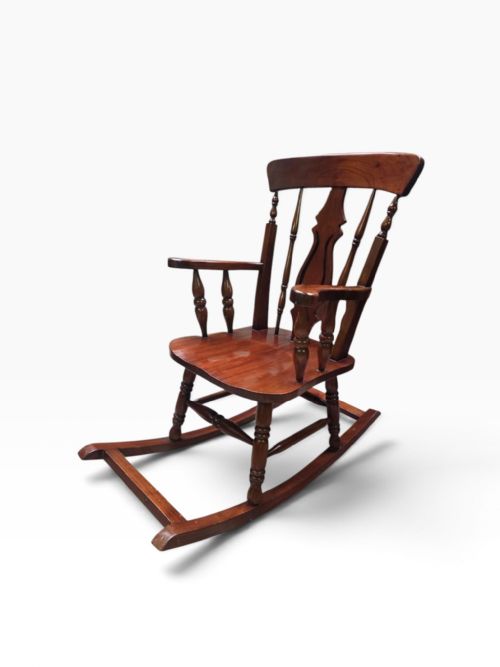
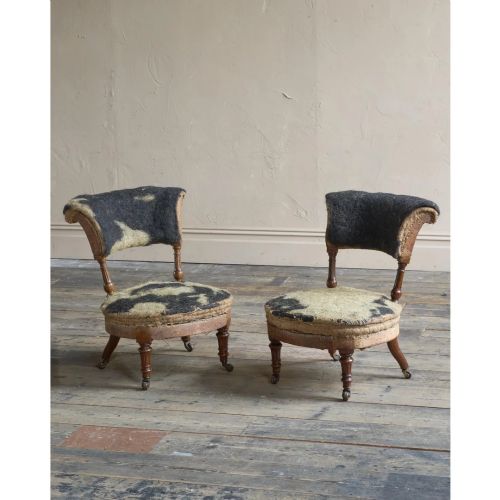
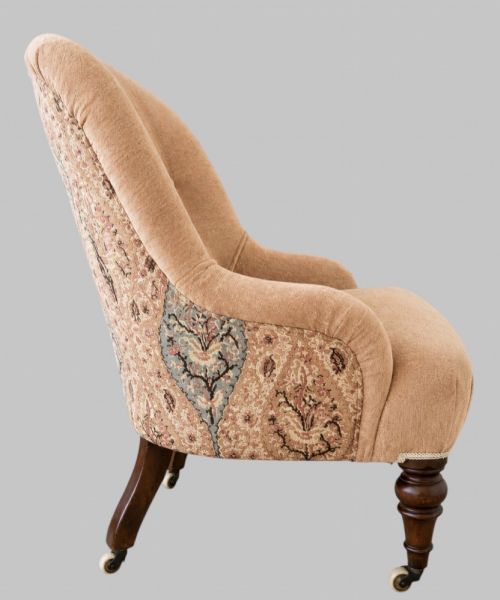
The pieces listed on this page showcase forms such as pairs of round-seat chairs, inlaid rocking chairs, and bedroom seating featuring turned front legs with castors. Originating across periods like 1860, 1890, and 1900, these items demonstrate traditional styling that ranges from plain mahogany frames to Chippendale style carved low salon nursing chairs.
Most examples of a brown mahogany nursing chair found here adhere to Victorian and Edwardian design principles, utilising rich wood alongside modern or period upholstery. Buyers frequently encounter low seating built to accommodate domestic routines of the past, preserved through various stages of restoration and recovered in fabrics like velvet and geometric prints.
Evaluating quality and craftsmanship
Quality in a brown mahogany nursing chair rests in the execution of the timber frame, from crispness in carved Chippendale style details to the stability of turned legs fitted with original metal castors. Superior pieces display thoughtful joinery and dense, well-figured mahogany that has aged with a deep lustre.
The standard of upholstery and internal webbing also defines the tier of a piece, distinguishing between straightforward re-covering and meticulous restoration that respects nineteenth-century methods. Balance in proportion, particularly the relationship between the low seat height and the backrest angle, separates finer salon and bedroom seating from simpler utilitarian forms.
Listings span the nineteenth and early twentieth centuries, featuring Victorian, Edwardian, and Aesthetic Movement periods alongside Scottish vernacular styles.
Wheeler Of Arncroach
The Brown Mahogany Nursing Chair Glossary
- Nursing chair
- A low-seated chair traditionally used in the nineteenth century for feeding infants or general bedroom tasks. Its reduced height allowed the sitter to manage long skirts or tend to a child with ease.
- Slipper chair
- An upholstered bedroom chair with no arms and short legs designed for sitting while putting on shoes or stockings. It shares the low profile characteristic of nineteenth-century domestic seating.
- Aesthetic Movement
- A late nineteenth-century design style focusing on visual and artistic qualities rather than narrative or moral themes. Pieces from this movement often emphasise simplified lines and refined craftsmanship.
- Castor
- A small wheel mounted on a swivel attached to the foot of a chair leg for ease of movement. Victorian examples frequently utilise brass or metal fittings.
- Button back
- An upholstery technique where buttons are pulled deep into the padding to create a quilted, diamond pattern. This method secures the internal stuffing while adding textural detail to the backrest.
Brown Mahogany Nursing Chair: Frequently Asked Questions
What is a brown mahogany nursing chair used for?
Originally designed for domestic tasks in bedrooms and nurseries, these low chairs provided a comfortable seat near the fire or for personal grooming. Their compact proportions made them versatile additions to nineteenth-century domestic interiors.
Today, buyers use them as accent chairs in living rooms, bedrooms, or reading corners where a lower seat height creates an intimate and relaxed seating arrangement.
How do I date a Victorian nursing chair?
Dating relies on observing stylistic markers, framing techniques, and the materials used in the wooden structure. Mid-nineteenth-century pieces often feature simpler turned legs, while later Victorian and Edwardian examples may incorporate inlaid mahogany or elaborate carving.
Internal upholstery methods and the presence of original castors also provide clues to the decade of manufacture, aligning with broader shifts in Victorian and Edwardian furniture design.
Are these chairs comfortable for daily use?
Their comfort depends largely on the quality of the modern or period upholstery and the support within the seat base. Many pieces have been restored with renewed webbing and padding to ensure they function well for modern sitting.
Because they were built with low profiles and supportive backrests, they offer a distinct sitting posture compared to standard contemporary armchairs or dining seats.
What distinguishes a nursing chair from a slipper chair?
While both share a low seat profile designed for bedroom or fireside use, nursing chairs often feature supportive backs and sometimes arms for longer periods of sitting. Slipper chairs typically present an armless silhouette specifically shaped for dressing tasks.
Both types utilise similar Victorian and Edwardian timber frames and upholstery methods, making their practical distinction a matter of backrest design and arm configuration.