

Vintage Fireside Lounge Chairs
These vintage fireside lounge chairs bring deep seats and sturdy timber frames to sitting rooms, offering a practical anchor for a traditional interior.
Vintage Fireside Lounge Chairs
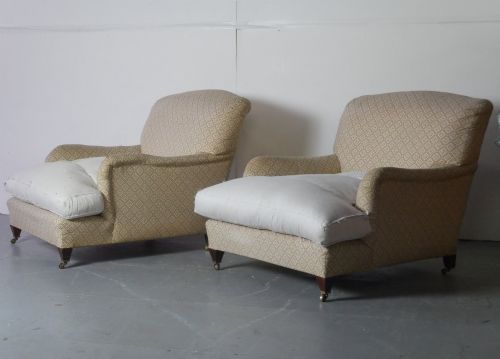
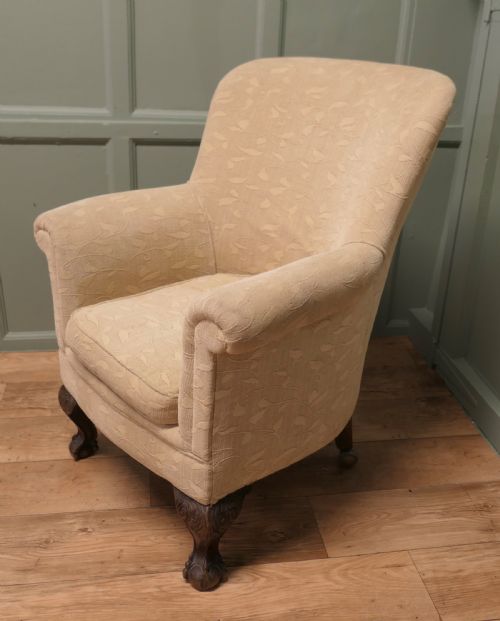
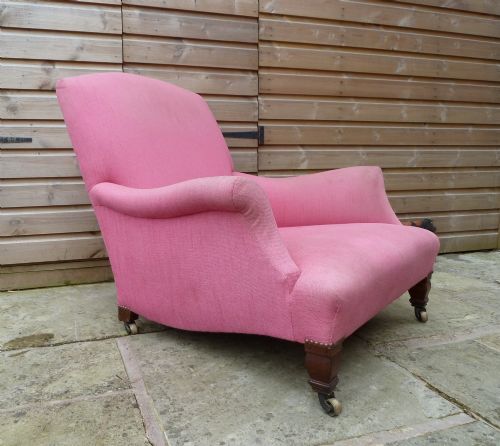
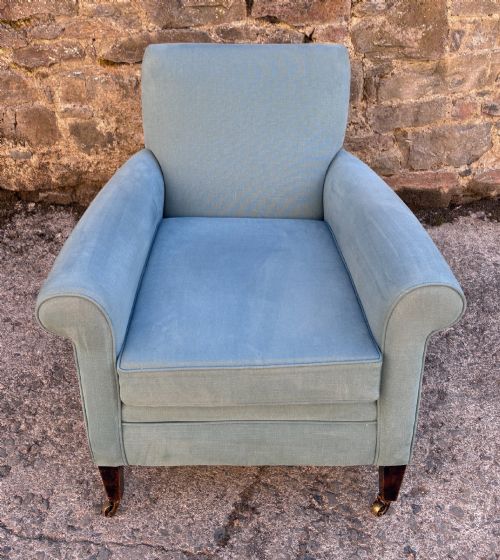
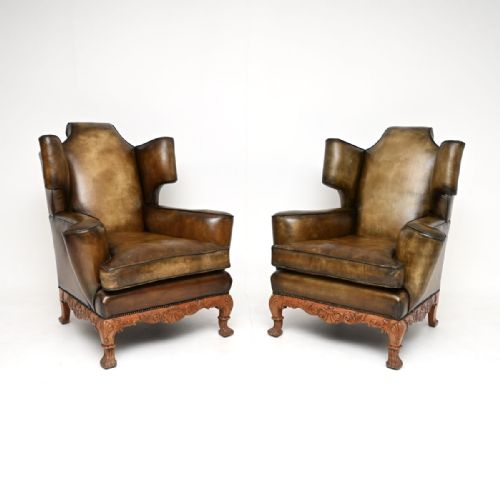
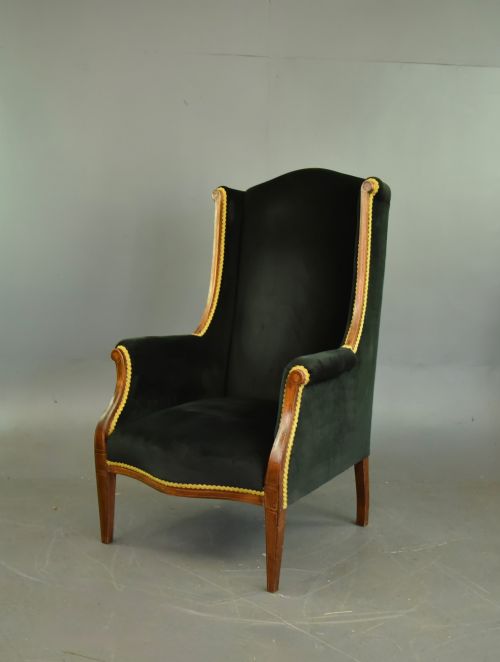
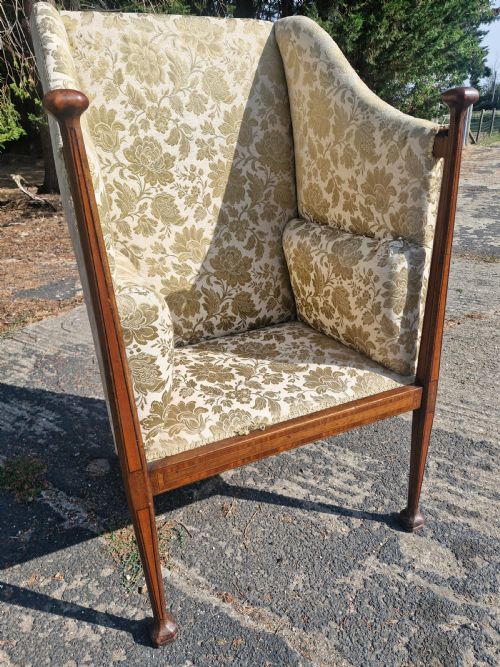
Vintage fireside lounge chairs span the nineteenth century, the Edwardian era, and the nineteen-thirties, encompassing heavy upholstered armchairs, wingbacks, club chairs, and low slipper seats. Buyers encounter timber frames paired with deep cushioning, designed originally for drawing rooms and fireside comfort.
The selection ranges from Victorian walnut and mahogany armchairs to early twentieth-century leather club chairs and Edwardian deep-seated models. Many items arrive in pairs, showing regional English, French, and Swedish influences across varied revival styles.
How they were made
Frames rely on hardwoods such as mahogany, walnut, oak, and rosewood, often shaped with turned supports or exposed wooden arms. Joinery relies on traditional carpentry methods suited to heavy daily use.
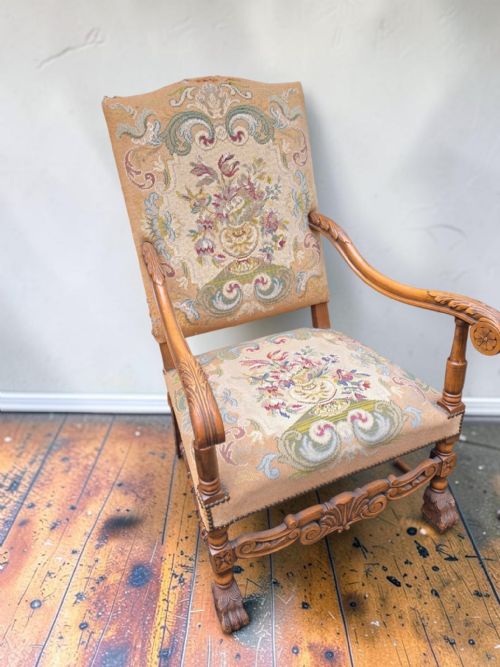
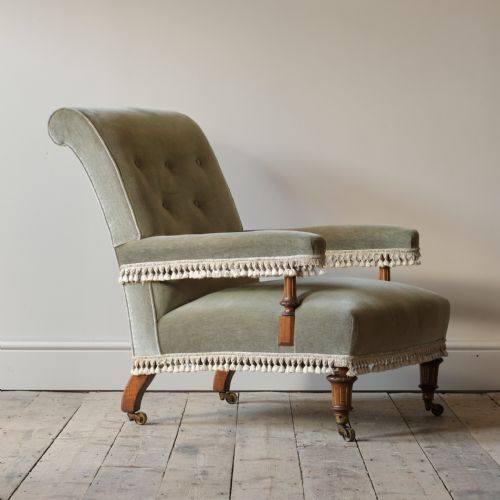
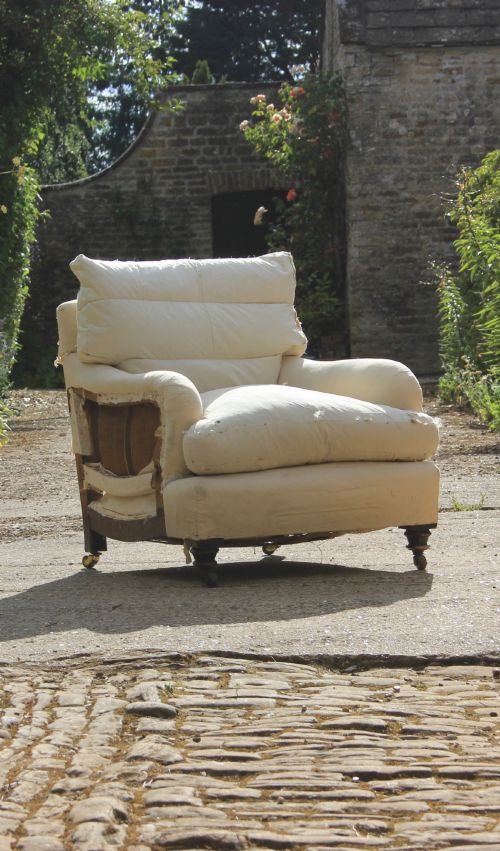
Upholstery combines traditional filling materials with surface coverings in leather, velvet, tapestry, and woven fabric. Button-backing and nailed trim appear frequently on Victorian and Edwardian examples.
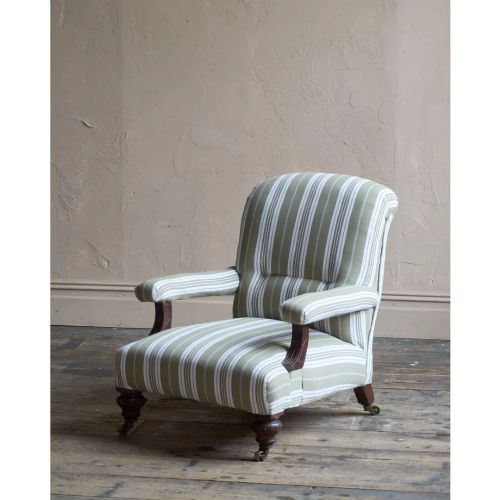
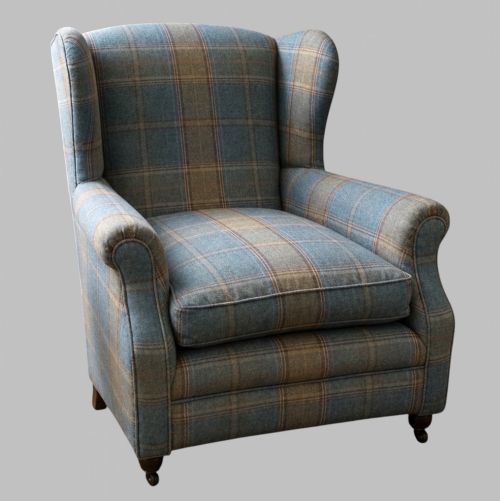
Coverings span leather, velvet, tapestry, and patterned plaid fabric across armchairs, slipper chairs, and accent chairs.
What varies in quality
The standard of timber framing and carving sets individual examples apart, with substantial hardwood frames holding up better than lighter construction. Original show-wood details exhibit sharper tool work and better grain selection on superior pieces.
Internal stuffing and springing dictate the seating posture, where feather filling and intact original upholstery materials command attention. Well-maintained leather and sound fabric upholstery preserve the integrity of the seating.
Howard and Sons·Gillows
The Vintage Fireside Lounge Chairs Glossary
- Wingback
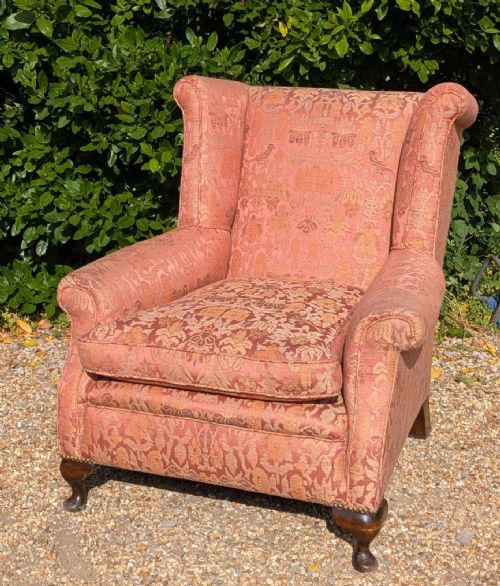
- An armchair with side panels designed to shield the sitter from draughts near a fireplace. These extensions catch heat and provide lateral head support.
- Bergère
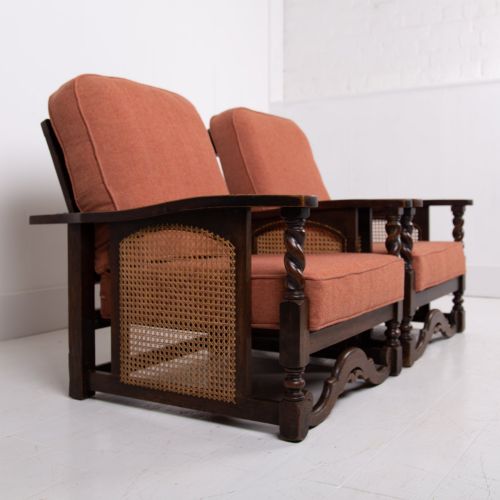
- An enclosed upholstered armchair with wooden framing and woven cane or fabric sides. This form originated in France during the eighteenth century and returned in later revival pieces.
- Slipper chair
- A low-seated chair originally designed for bedrooms to assist with putting on footwear. They feature compact dimensions and short legs.
- Tub chair
- A curved armchair where the back and arms form a continuous semi-circular rail. This enclosed shape creates a snug seating pocket.
- Barley twist
- A type of turning carved into wooden furniture legs and stretchers that resembles a twisted rope. It was popular during the Victorian period.
Vintage Fireside Lounge Chairs: Frequently Asked Questions
How do I date a leather armchair?
Dating relies on the framing style, the method of leather tanning, and the type of underlying webbing or springs. Earlier nineteenth-century models utilise simpler internal construction before coil springs became standard.
Secondary clues include the wood species used for the legs and any visible maker stamps on the castors or frame.
Are these chairs suitable for daily use?
Most pieces are built with sturdy hardwood frames that withstand regular sitting. Many retain deep padding and supportive sprung bases intended for long periods of relaxation.
Buyers should check whether internal webbing or cushions have been restored to ensure adequate support for modern living.
What is a club chair?
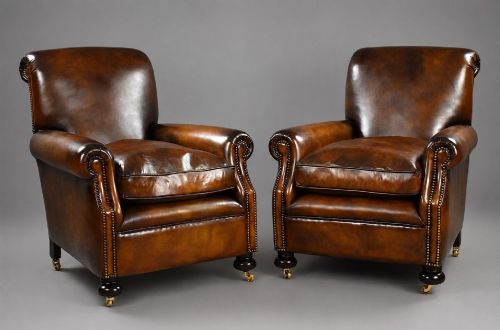
A club chair is a heavily upholstered armchair, typically covered in leather, featuring a deep seat and low back. Originating in France, they were designed for heavy comfort in smoking rooms and libraries.
They often appear in pairs and gain character through the patina of aged leather.
How do I distinguish Victorian from Edwardian chairs?
Victorian seating generally employs darker timbers like walnut and mahogany with heavier upholstery, button-backing, and ornate details such as barley twists. Edwardian pieces often display lighter proportions and simpler framing.
Revival styles overlap between these periods, making frame construction and textile choices primary indicators of age.