

Victorian Damask Upholstered Chairs
Victorian damask upholstered chairs bring nineteenth-century comfort and patterned textile elegance directly to the sitting room.
Victorian Damask Upholstered Chairs
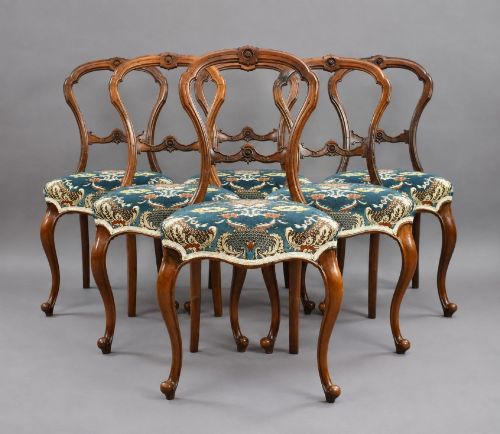
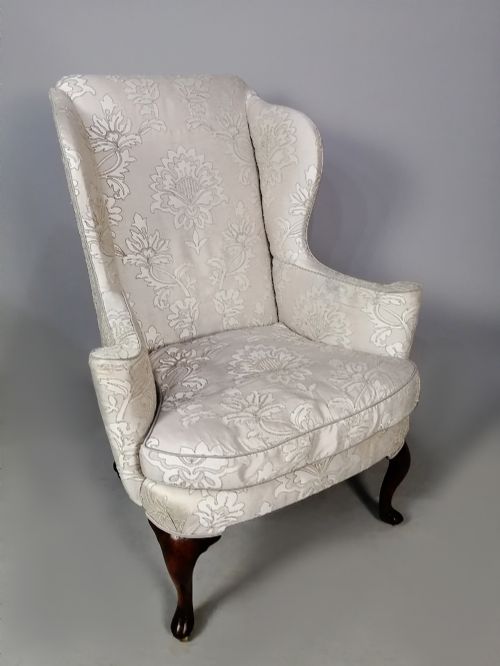
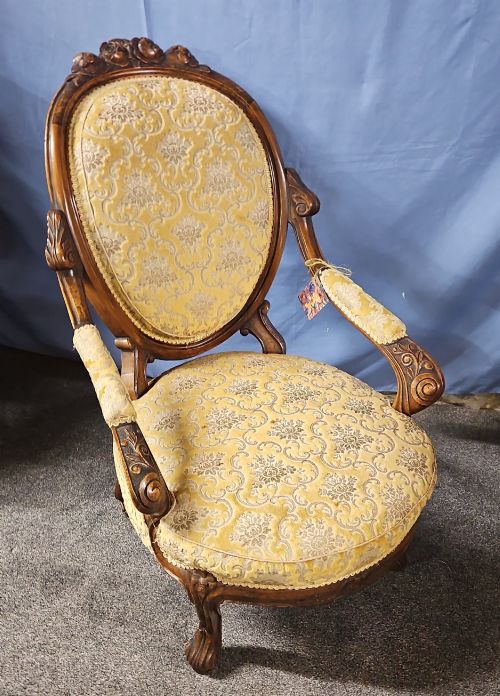
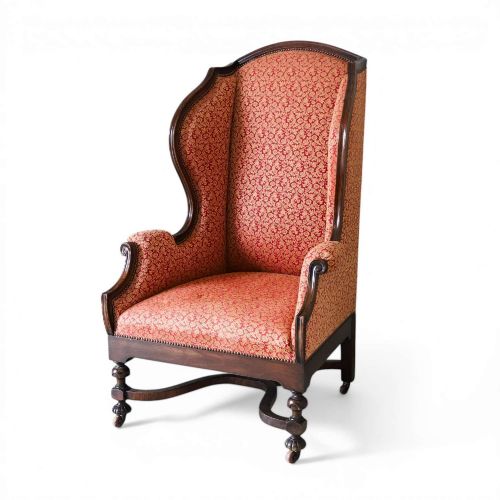
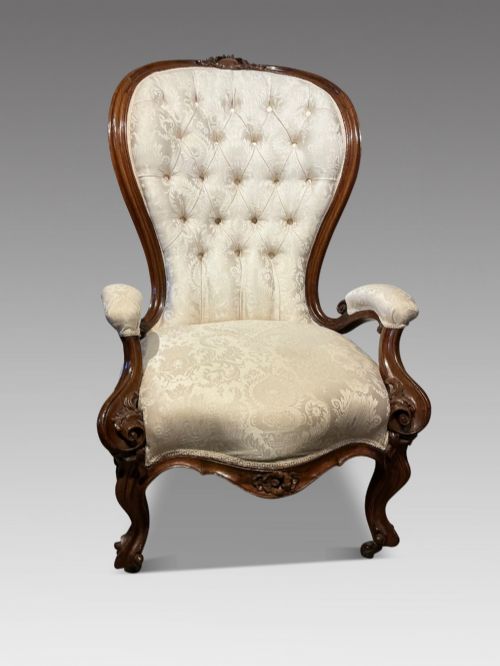
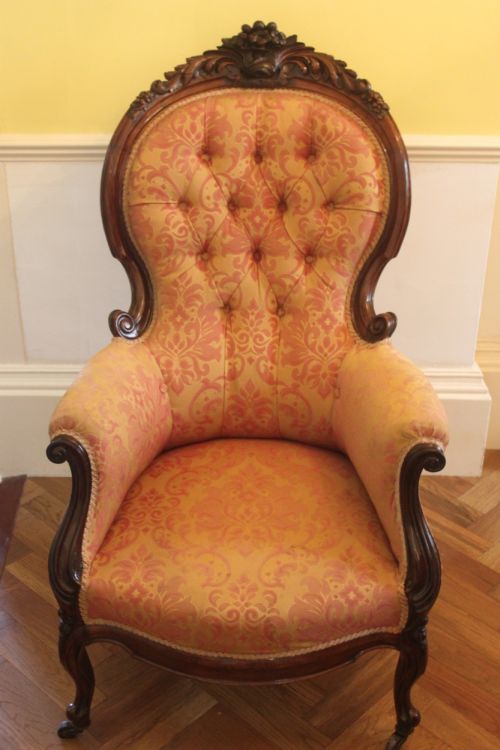
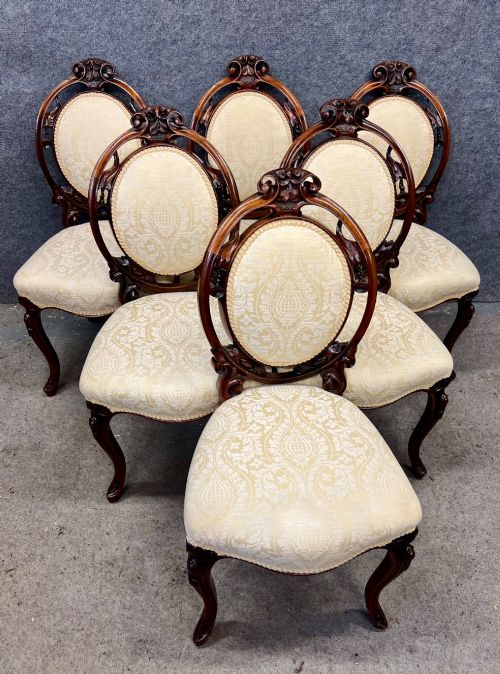
Victorian damask upholstered chairs encompass a wide variety of seating forms originating from the nineteenth century, including dining chairs, armchairs, and salon pieces. Buyers looking for victorian damask upholstered chairs will frequently encounter walnut and mahogany frames, often shaped in revival styles such as Rococo or Carolean.
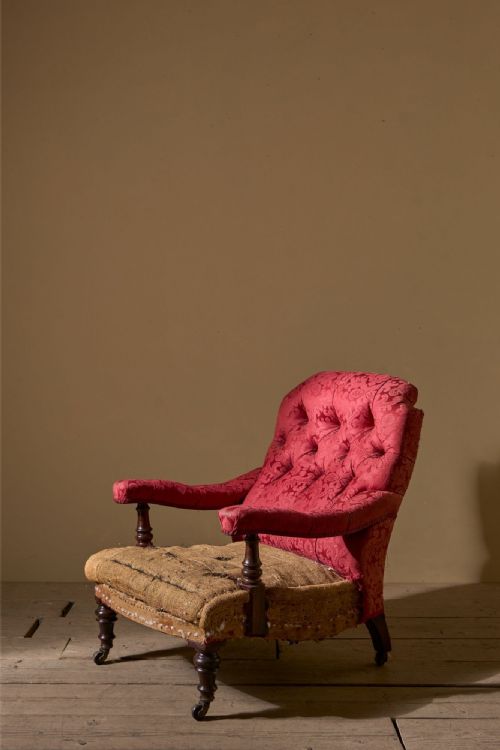
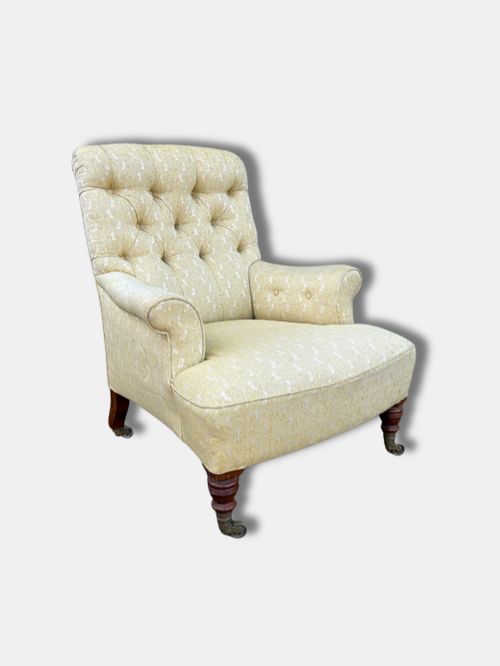
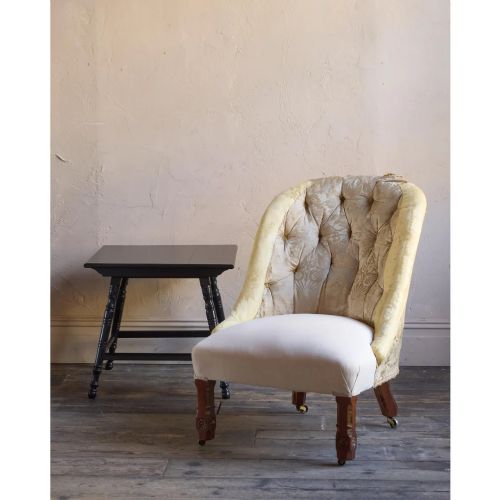
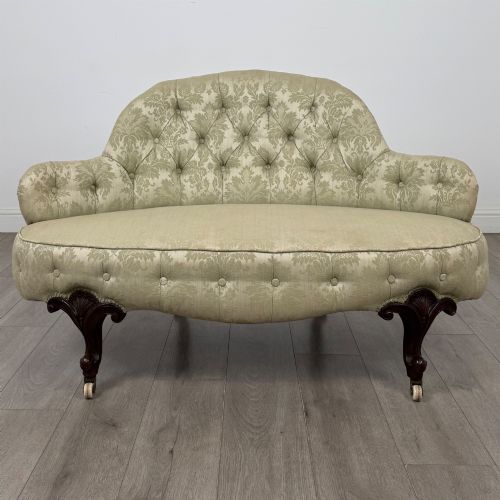
The selection ranges from intimate bedroom chairs and slipper chairs to large gentleman's armchairs and multi-piece drawing room suites. Many examples showcase button-backed upholstery or intricate carved wooden details alongside their patterned textile coverings.
How they were made
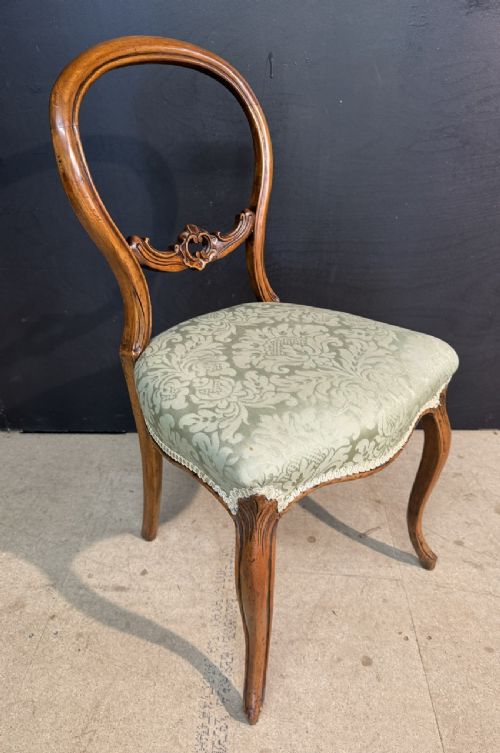
Cabinetmakers constructed the supportive frames using dense timbers such as walnut, mahogany, and rosewood, frequently incorporating brass elements for structural reinforcement or castors. Skilled artisans shaped the wood through turning and elaborate carving to achieve styles like the balloon back or cabriole leg.
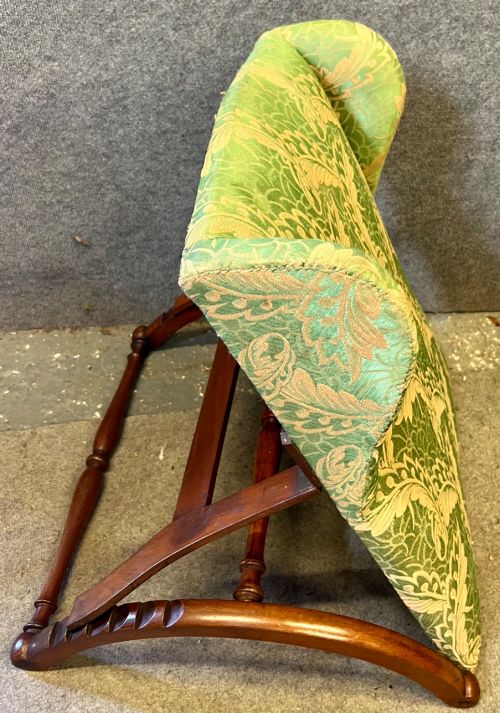
The textile component relied on woven damask fabric stretched over internal padding and secured to the wooden skeleton. Button-tufting and traditional stuffing techniques provided the characteristic shape and resilience of the period.
Current listings feature nineteenth-century seating constructed from mahogany, walnut, and rosewood, upholstered in damask and diverse textile fabrics.
What varies in quality
The distinction between standard seating and superior examples rests upon the depth of the timber carving and the architectural ambition of the frame. Pieces exhibiting crisply defined scrollwork or figural details command greater attention than plain commercial production.
Proportion and material selection also dictate the hierarchy of these chairs. Dense hardwoods combined with heavy gauge damask textile demonstrate a higher grade of nineteenth-century workshop output.
Howard and Sons·Harrods, London
The Victorian Damask Upholstered Chairs Glossary
- Damask
- A reversible figured fabric traditionally woven on a Jacquard loom, notable for its intricate patterns formed by contrasting warp and weft threads. It provides a formal sheen suited to period upholstery.
- Balloon back
- A rounded, oval-shaped wooden chair back popular during the mid-nineteenth century. This contour echoes the profile of a filled balloon and offers ergonomic support.
- Cabriole leg
- A furniture leg that curves outward in a convex arc and tapers inward in a concave arc, terminating in a ornamental foot. It derives from ancient furniture traditions revived during the Victorian era.
- Button back
- An upholstery method where the fabric is pulled tight and secured with deep-set buttons arranged in a grid or diamond pattern. This technique creates tufted indentations that add firmness and visual depth.
- Slipper chair
- A low-seated bedroom chair originally designed for ladies to sit upon while putting on shoes or garments. Its compact height distinguishes it from standard parlor seating.
Victorian Damask Upholstered Chairs: Frequently Asked Questions
How do I identify a Victorian chair?
Examination of the timber species, construction joints, and decorative vocabulary helps determine the era. Nineteenth-century pieces frequently display dense mahogany or walnut combined with revival motifs.
Upholstery styles such as button-tufting and the presence of woven damask further anchor the piece to this period of manufacturing.
Where were these chairs used originally?
These seats filled formal drawing rooms, private boudoirs, and dining spaces across nineteenth-century households. Different forms served specific social functions, from gentleman's armchairs in studies to salon chairs for entertaining.
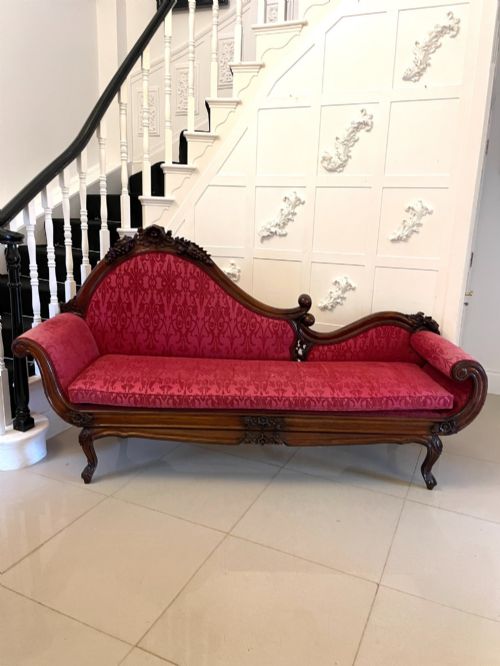
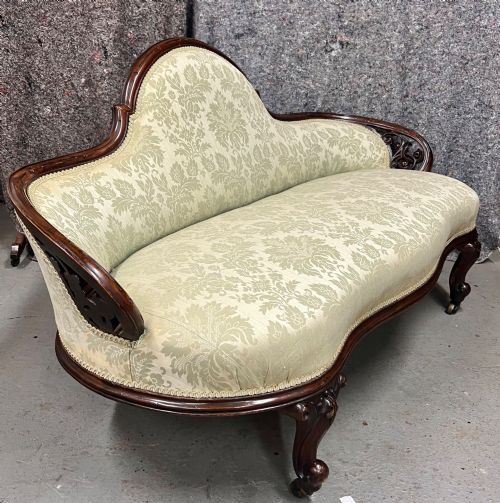
Larger conversation seats and chaise longues accommodated the elaborate seating arrangements demanded by Victorian domestic life.
Are these chairs suitable for daily use?
Original nineteenth-century frames provide sturdy seating when the internal structure remains sound. Their solid timber construction handles normal sitting provided the joints stay secure.
Maintenance of the fabric and periodic checks of the internal webbing ensure these pieces remain functional in modern living spaces.