



Ladies Nursing Chair
These ladies nursing chair pieces offer low seats and upholstered comfort, rooted primarily in Victorian and Edwardian drawing rooms.
Ladies Nursing Chair
A ladies nursing chair is a low-seated armchair designed for the nineteenth and early twentieth-century interior, appearing frequently in walnut and mahogany timbers. These seating forms span Early Victorian, Victorian, Late Victorian, and Edwardian periods, functioning as drawing room, fireside, salon, and occasional seating.
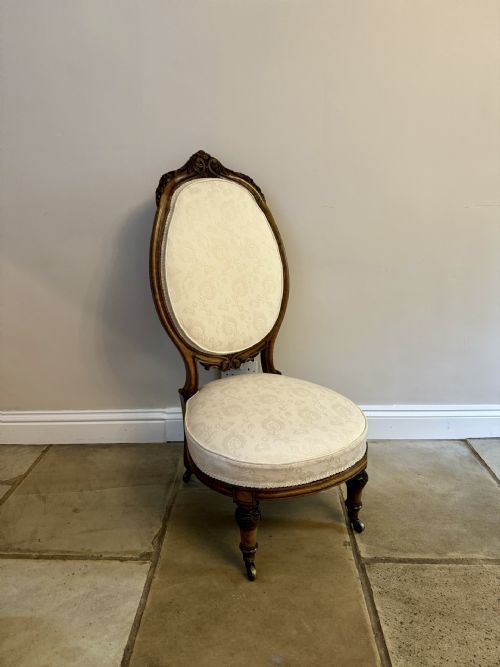
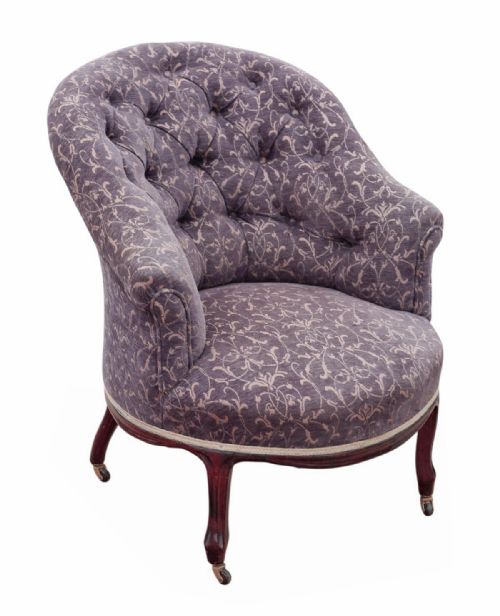
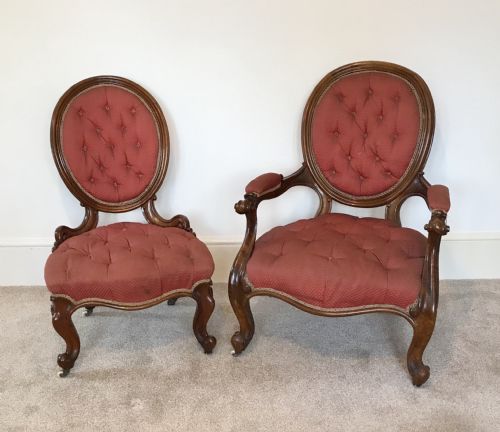
The version most commonly met on this page is the Victorian walnut carved ladies chair, often featuring button-backed upholstery and an open or spoon back. Many examples exist within matched pairs alongside gentleman's armchairs, whilst others appear as single side seats and tub chairs.
How they were made
Frames are constructed from solid timbers such as walnut, mahogany, rosewood, and ebonised wood, shaped with carved showwood details and scroll work. Joinery supports the low profile characteristic of nineteenth-century nursing and drawing room chairs.
Upholstery incorporates textile, fabric, and velvet, often finished with button backs and supported by brass castors on ceramic or metal fittings.
Listings span walnut, mahogany, and rosewood frames, paired with velvet, fabric, and textile upholstery across Victorian and Edwardian periods.
What varies in quality
The refinement of the carved walnut or mahogany showwood frame distinguishes standard production from finer cabinet work. Deep relief carving, balanced proportions, and timber selection indicate the standard of the original maker.
The integrity and execution of the upholstery, from buttoning to fabric choice, shape the visual weight and comfort of the piece within a room.
The Ladies Nursing Chair Glossary
- Showwood
- Timber framing left visible around the upholstered portions of a chair. This exposed wood displays the carving and grain quality selected by the cabinet maker.
- Button back
- An upholstery method where depressions are formed in the padding by pulling buttons tight into the fabric. This technique secures the stuffing and creates a textured surface.
- Spoon back
- A chair back shaped in a concave oval resembling the bowl of a spoon. This design supports the sitter's spine and appears frequently on Victorian seating.
- Tub chair
- An armchair with a curved, continuous back and armrest rail forming a rounded enclosure. These compact seats serve as drawing room and fireside chairs.
Ladies Nursing Chair: Frequently Asked Questions
What is a ladies nursing chair?
A ladies nursing chair is a low-seated nineteenth-century armchair designed for domestic spaces like drawing rooms and firesides. These chairs typically feature padded upholstery and exposed timber frames.
They provide compact seating with a lowered seat height, often associated with Victorian and Edwardian interior styles.
How do I date a nursing chair?
Dating relies on timber choices, frame styles, and upholstery characteristics recorded across the Victorian and Edwardian periods. Early Victorian and mid-nineteenth-century examples frequently utilise walnut and rosewood with ornate carving.
Late Victorian and Edwardian pieces introduce ebonised finishes and mahogany frames, reflecting changing domestic tastes around nineteen hundred.
Were nursing chairs made in pairs?
Many nineteenth-century seating options were produced as matching his and hers salon or fireside sets. These paired ladies and gentleman's chairs share timber types, carving details, and upholstery fabrics.
Single nursing chairs also appear frequently as standalone occasional or drawing room seats.
What woods were used for these chairs?
Cabinet makers utilised solid hardwoods such as walnut, mahogany, and rosewood for the structural frames. Ebonised wood also appears on specific Victorian examples.
These timbers support carved details and showwood surrounds that frame the fabric upholstery.