



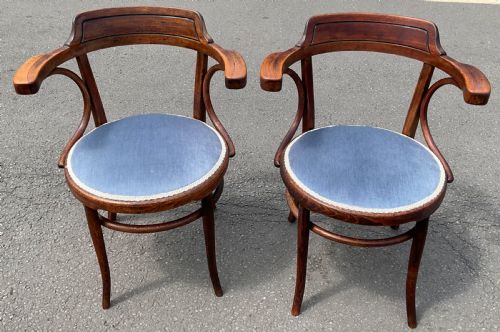


Vintage Thonet Armchair
These vintage thonet armchair examples offer ingenious steam-bent construction, bringing sculptural curves and enduring lightweight resilience to any room.
Vintage Thonet Armchair
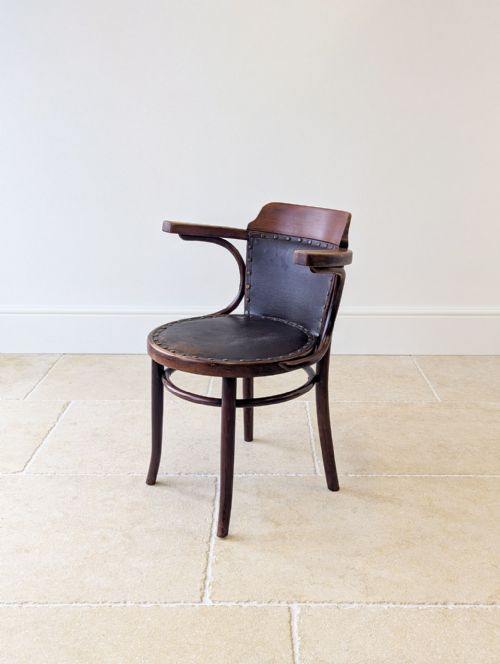
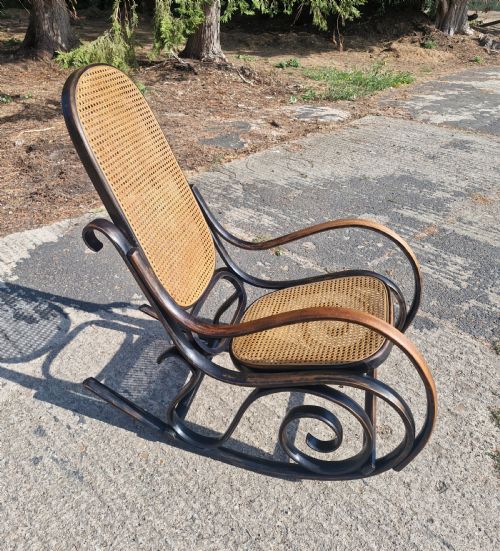
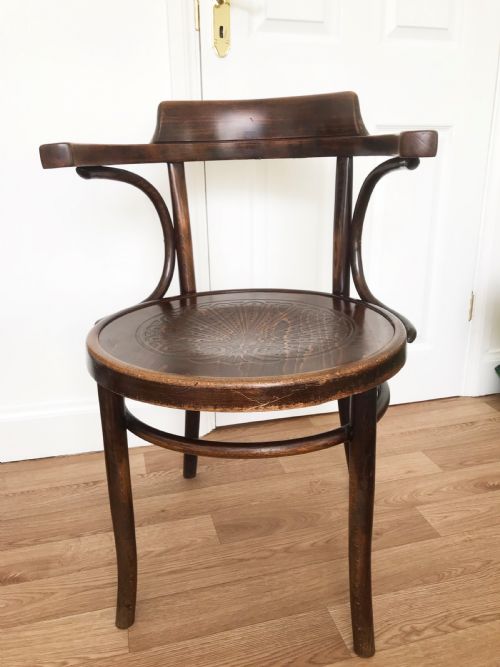
When you search for a vintage thonet armchair, you encounter seating built through pioneering steam-bending methods that defined late nineteenth and early twentieth century domestic interiors. These chairs survive in forms ranging from traditional rocking chairs and desk chairs to carver bistro seats and low tub armchairs.
The pieces on this page span the nineteenth century through the Edwardian era and the nineteen-twenties, incorporating distinct design movements such as Art Nouveau and the Vienna Secession. You are most likely to meet robust beechwood frames paired with cane work, leather upholstery, or plywood seats.
Originating from the pioneering workshops of the period, these functional seats combine organic fluidity with industrial efficiency. Collectors prize them for their ability to integrate architectural wood forms into modern living spaces without visual heaviness.
How they were made
The foundation of every piece relies on solid beech or beechwood subjected to steam heat until pliable, allowing craftsmen to pull straight timber into flowing, continuous curves. This technique eliminated heavy joinery, creating structurally sound frames from minimal components.
Makers integrated natural cane panels, shaped plywood, and supple leather inserts to provide seating surfaces that remained lightweight yet supportive. Brass fittings occasionally appear as structural accents or movement mechanisms, completing an assembly process designed for both mass production and lasting durability.
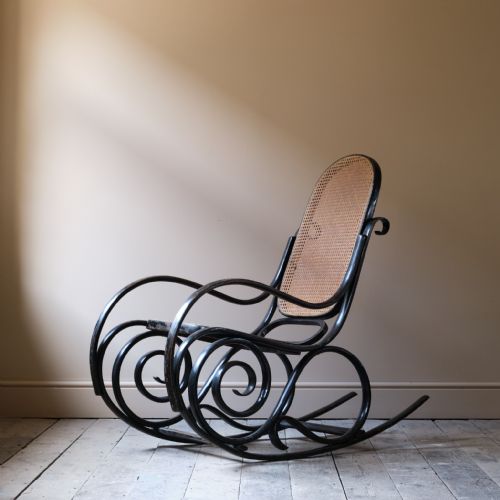
Object types documented in the inventory include rocking chairs, desk chairs, tub armchairs, and carver bistro chairs.
What varies in quality
The distinction between ordinary production and superior execution lies in the tightness of the steam-bent radii and the complexity of the frame geometry. Simpler bistro forms contrast with elaborate Vienna Secession rocking chairs that demand advanced manipulation of multiple wooden elements.
Original material retention dictates desirability, particularly the survival of intact woven cane seats, period leather upholstery, and verified attribution marks. Subtle variations in the turning of the wood and the grace of the armrest sweeps separate standard utility models from exceptional design pieces.
Thonet·Jacob and Josef Kohn
The Vintage Thonet Armchair Glossary
- Bentwood
- Wood that has been shaped by exposure to steam and pressure. This process allows furniture makers to create graceful, curved forms without relying on traditional mortise and tenon joints.
- Vienna Secession
- An artistic movement formed in eighteen ninety-seven by Austrian artists who seceded from the Association of Austrian Artists. It brought geometric rigour and clean lines to bentwood furniture design.
- Carver
- An armchair designed with arms, traditionally placed at the head of a dining table or used as a desk chair. In bentwood forms, these feature continuous curved armrests integrated into the back support.
- Cane
- Woven material made from the peeled bark of rattan palm. It provides a resilient, breathable seating surface that lightens the visual weight of wooden armchairs.
Vintage Thonet Armchair: Frequently Asked Questions
How do I identify a genuine vintage thonet armchair?
Look for stamped manufacturer signatures, paper labels beneath the seat, and characteristic steam-bent construction methods using solid beechwood. Genuine examples often display impressed maker marks on the underside of the wooden seat frame or along the stretcher.
Examine the fluidity of the curves and the quality of the wood bending, as authentic pieces maintain structural tension without excessive metal fasteners. Period context and traditional joinery details further confirm the origin of the chair.
Were these chairs used at desks or for relaxing?
Makers produced bentwood seating for various domestic and commercial purposes, including dedicated desk chairs, low tub armchairs, and expansive rocking chairs. Different forms suited specific domestic spaces, from study rooms to parlours.
Rocking models provided leisure seating, while carver and desk variants offered supportive upright posture for working environments. The versatility of the lightweight frames allowed owners to move them easily between rooms.
How should I care for cane and leather seats?
Maintain woven cane seats by occasionally wiping them with a damp sponge to keep the rattan flexible and prevent snapping. Avoid placing cane furniture in overly dry environments or direct sunlight.
Condition leather upholstery with appropriate specialist balms to preserve suppleness and prevent cracking over time. Gentle dusting with a soft cloth protects the polished beechwood finish from abrasive particle buildup.
What distinguishes Vienna Secession bentwood from Victorian styles?
Vienna Secession bentwood embraces rectilinear geometry and restrained ornamentation, reflecting early twentieth-century modernist ideals. These designs favour starker lines alongside the traditional curved wooden framework.
Victorian and earlier nineteenth-century pieces typically feature more exuberant, flowing Art Nouveau flourishes and complex scrollwork. The structural silhouette shifts from ornate decorative exuberance to architectural minimalism.