


Victorian Platform Rocker
A victorian platform rocker is a sprung or pivoted seat built for gentle motion, offering an enduring comfort that collectors prize.
Victorian Platform Rocker
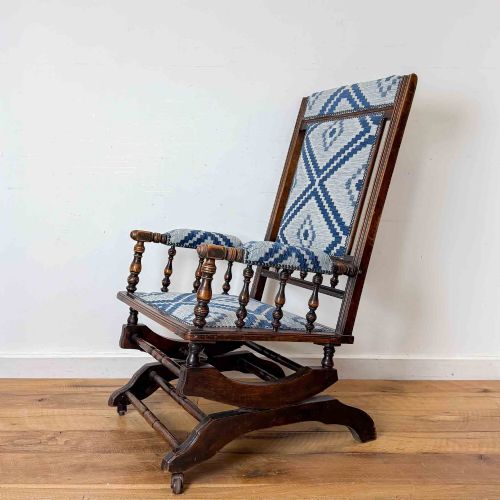
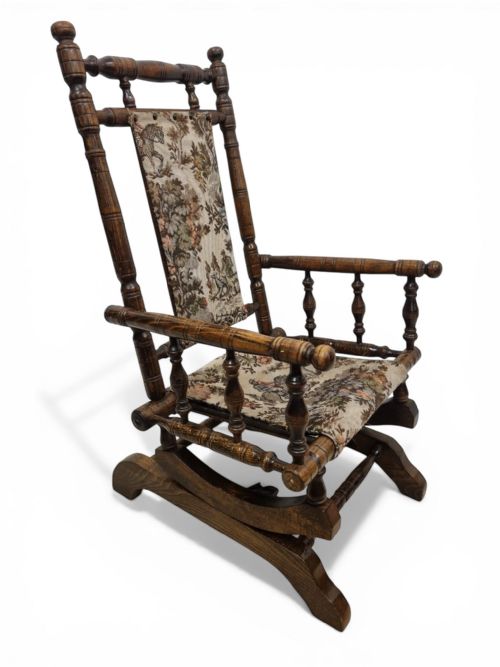
When you search for a victorian platform rocker, you encounter nineteenth century and early twentieth century seating designed around mechanical or spring rocking movements. These pieces appear in adult and child sizes, reflecting domestic life across the Victorian and Edwardian periods. Examples range from simple spindle forms to elaborate upholstered models.
The selections on this page span the nineteenth century, nineteen hundred, nineteen twenty, and the Edwardian era. Object types are primarily rocking chairs, taking the form of American style rockers, nursing chairs, and bentwood armchairs. You will find both full scale seating and children's variants among the offerings.
Materials and construction
Makers utilised a variety of timbers including walnut, beech, fruitwood, oak, and dark hardwoods. These woods were turned, bent, or carved to form the frames and structural supports of the chairs.
Upholstery forms a significant part of the construction, employing woven fabric, tapestry, and button back techniques. Metal components, including steel, provide the internal mechanisms and springs that enable the rocking motion.
Listings feature items spanning the 19th Century, Edwardian period, and 1920, utilising walnut, beech, fruitwood, and steel.
Distinctions in quality
Quality rests in the selection of timber and the complexity of the woodwork, from plain moulded panelled seats to intricate button back upholstery. The integrity of the original frame and the durability of the textiles separate standard examples from finer works.
Attribution also plays a role, as demonstrated by branded pieces such as those by Thonet. The sophistication of the mechanical action and the preservation of original fabric or woodwork define the standing of each piece.
The Victorian Platform Rocker Glossary
- Platform rocker
- A rocking chair mounted on a stationary base containing springs or pivots rather than traditional curved runners. This mechanism keeps the chair in one footprint while moving.
- Bentwood
- Wood steamed and bent into curved shapes, notably utilised by makers like Thonet. This technique creates strong, lightweight frames without traditional joinery.
- Button back
- An upholstery style where buttons are pulled deep into the padding to create a diamond pattern. It secures the stuffing while adding decorative depth to the backrest.
- Nursing chair
- A low seated chair traditionally used for feeding or tending to infants. They often feature upholstered seats and backs designed for comfort.
Victorian Platform Rocker: Frequently Asked Questions
What is a platform rocker?
A platform rocker is a chair that uses a stationary base with internal springs or linkages to rock back and forth. This design prevents the chair from moving across the floor during use.
Such seating became popular in the nineteenth century for parlours and nurseries. They offer a steady motion while protecting carpets from traditional curved runners.
How do I identify a Victorian rocking chair?
Victorian rocking chairs typically display period woods like walnut, oak, or beech along with specific upholstery styles. Look for turned spindles, moulded wooden panels, and button back fabric.
Many pieces also show the influence of American styles or incorporate bentwood and metal components. Maker marks, where present, help confirm the exact period of production.
Were these chairs used in nurseries?
Many smaller examples and low chairs served specifically in children's rooms or nurseries. Antique children rocking chairs often mirror the full sized designs found in parlours.
Lower seating heights made these pieces practical for adults tending to infants. Smaller proportions also suited children's rooms of the period.
How do I care for antique upholstery?
Preserving original upholstery requires gentle cleaning methods suitable for woven fabrics or tapestry. Avoid harsh chemicals and protect textiles from direct sunlight to prevent fading.
Checking the internal padding and frame stability helps maintain the chair. Professional conservation ensures the fabric and structure survive intact.