


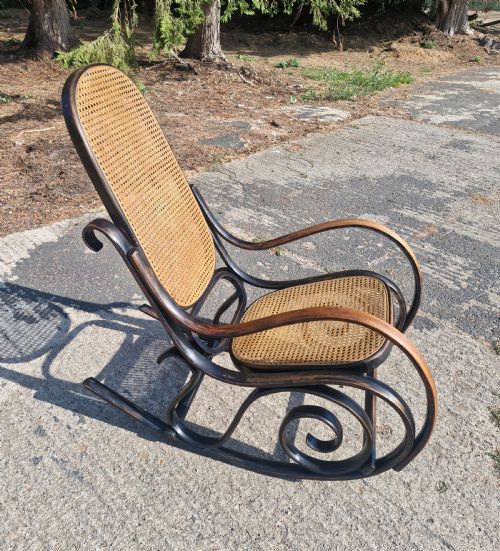
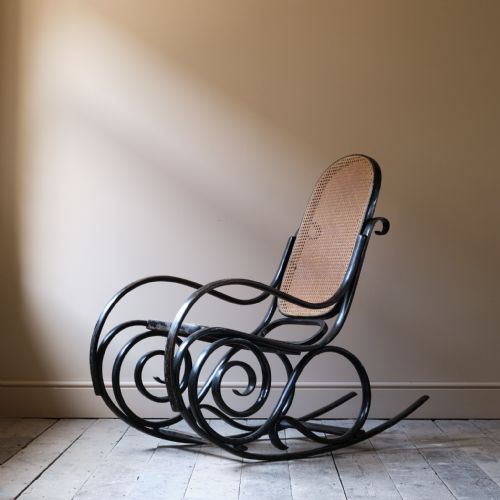


Bentwood Rocker
A bentwood rocker offers an elegant bounce and resilient spring, built through steaming and bending solid timber into sweeping curves.
Bentwood Rocker
A bentwood rocker represents a triumph of nineteenth-century seating design, utilising continuous loops of steam-bent timber to form a lightweight yet sturdy frame. Buyers browsing this selection encounter various forms, ranging from full-sized Victorian armchairs to smaller child's versions.
The pieces listed span multiple eras and origins, including 19th Century Victorian designs, 1900s Viennese productions, Edwardian examples, and 1920s Italian pieces. The most common version met on this page is the classic rocking armchair featuring woven cane work.
Makers such as Thonet and Jacob and Josef Kohn dominate the structural lineage of these items, bringing Vienna Secession and Art Nouveau sensibilities to domestic interiors. These chairs combine functional movement with decorative grace, suiting both period settings and modern spaces.
How they were made
Solid beech and beech wood form the primary structural backbone for these frames, chosen for its exceptional ability to hold a curve after steaming. Workers placed timber lengths in steam chests until pliable, then bent them manually against iron forms to create the characteristic sweeping arms and runners.
Plywood and bentwood elements provide rigidity to the seats and backrests, often pierced with intricate patterns or pressed with decorative motifs. Caning, rattan cane, leather, and fabric complete the seating surfaces, offering a flexible suspension that complements the sprung wooden frame.
Bentwood Rocker Retail Price Guide 2026
Typical asking prices for bentwood rocker among the pieces listed under this phrase on Sellingantiques today, from the lower quarter to the upper quarter. They describe what is for sale here now, not the wider market.
Materials across these listings include beech, cane, plywood, leather, bentwood, beech wood, rattan cane, and fabric.
What varies in quality
The finesse of the steam-bending separates standard production from superior examples, visible in the tightness of the curves and the absence of buckling along the grain. Master makers achieved smoother transitions and more harmonious proportions throughout the continuous frame.
The complexity of the pierced plywood seat panels and the intricacy of the Vienna Secession or Art Nouveau ornamentation indicate higher grade execution. Well-preserved cane work and original ebonised finishes also elevate an example above basic utilitarian production.
Jacob and Josef Kohn·Thonet
The Bentwood Rocker Glossary
- Bentwood
- Wood shaped by subjecting it to steam and bending it into curved forms. This technique eliminates traditional joinery for many structural curves.
- Caning
- Woven material made from rattan plants used for seats and backrests. It provides breathable flexibility to the chair.
- Ebonised
- Timber finished with a dark stain or polish to resemble ebony. This treatment was popular during the Victorian period for formal pieces.
- Vienna Secession
- An artistic movement formed in Austria that rejected historicism in favour of cleaner geometric lines. Pieces from this circle display distinct modernist tendencies.
Bentwood Rocker: Frequently Asked Questions
How do I date a bentwood rocker?
Dating relies on stylistic markers such as Victorian ebonising, Edwardian proportions, or the geometric lines associated with the Vienna Secession and 1900s production.
Maker labels, stamped signatures on the wooden underside, and the complexity of the bent plywood seat inserts also help establish the era of manufacture.
Are these chairs comfortable to sit in?
The combination of sprung wooden runners and flexible cane or fabric seating surfaces creates a gentle, natural bounce during use.
Unlike rigid armchairs, the curved framework offers a degree of give that accommodates natural movement while rocking.
How should I care for cane seats?
Cane requires moderate humidity to prevent the natural fibres from becoming brittle and snapping under tension over time.
Cleaning should involve only a damp cloth without harsh chemicals, followed by thorough drying to maintain the material's strength.
What wood was typically used?
Beech and beech wood serve as the predominant timbers across these listings due to their remarkable receptiveness to steam treatment.
Secondary materials include plywood for pierced seat bases and rattan cane for woven support panels.